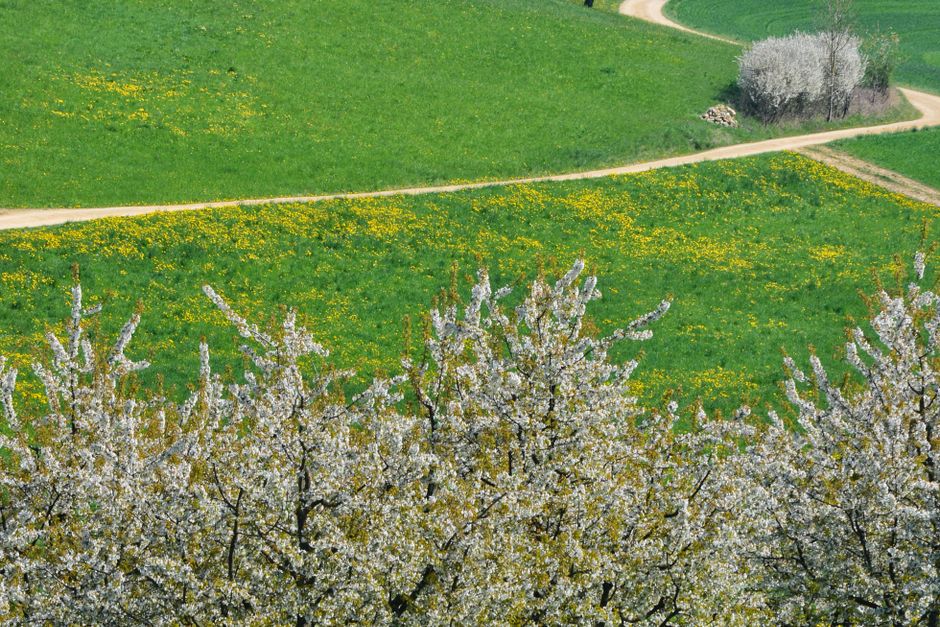
Fruit trees are generous. They give you apples, pears, cherries, plums, and occasionally a branch through your windshield if you leave them too long. (The last one happens when you skip the pruning.) The good news is that knowing when to trim fruit trees comes down to two categories and one rule.
The rule: prune at the right time for the species, during dry weather, with clean tools. Get one of those three wrong and you're not just wasting a morning — you're leaving the tree worse than you found it.
Quick answer: Apple and pear trees want late winter pruning — roughly mid-February to mid-March in Langley/Aldergrove — before the buds break. Stone fruits (cherry, peach, plum) do better with summer pruning, right after harvest, when cuts heal faster and disease pressure is lower. The correct window is that specific, and missing it by a month makes a real difference.
Below is the full breakdown, including BC-specific timing, what to cut, and honest prices for when you need a hand.

Best time to trim most fruit trees
The window most homeowners get right is winter. They get the species wrong.
Apple and pear trees — what horticulturalists call pome fruits — are dormant through the worst of winter. Prune them in late January through mid-March here in the Fraser Valley, after the hardest cold has passed but before the buds start to swell. In Langley/Aldergrove's coastal climate, that generally means from early February onward, depending on the year.
Why dormancy? When a tree is dormant, its energy is stored in the roots and trunk. Removing branches costs the tree less, and the diseases that enter through pruning wounds are also largely dormant in cold, dry weather. The combination is about as favourable as it gets.
Rule of thumb: prune your apple and pear trees during a dry spell in February or early March. If it has been raining for a week straight, wait for a break. Wet cuts in winter heal slowly and invite fungal trouble, and BC winters are generous with the rain.
This timing also fits neatly into the general guidance from ISA-certified arborists for temperate climates: prune in late dormancy, not mid-dormancy, so the tree can begin healing as soon as growth starts.
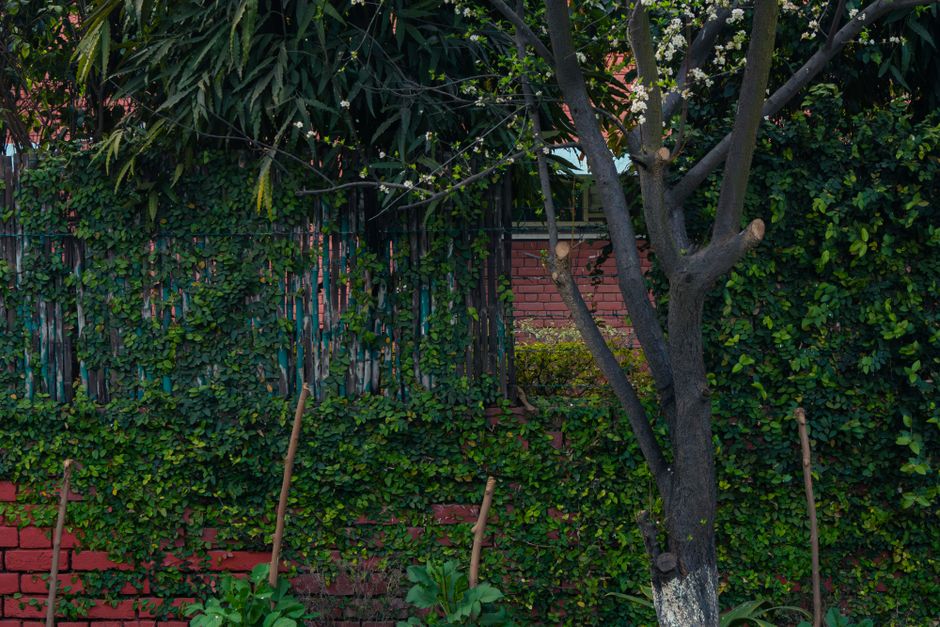
Stone fruits vs. pome fruits — the timing is completely different
Peach, cherry, plum, nectarine, and apricot trees are stone fruits. Their timing is different, and getting it wrong matters more than it does for apples and pears.
Stone fruits are highly susceptible to silver leaf disease (Chondrostereum purpureum), a fungal pathogen that enters through fresh pruning wounds. It is widespread in BC. Prune in winter and the cut stays wet and exposed for weeks — long enough for spores to move in. Prune in summer and the cut heals faster, spore pressure is lower, and the tree seals the wound before the wet season arrives.
For fruiting cherry trees, the rule is this: prune in July or August, right after harvest. Do not prune in winter, even if it is tempting to do everything in February alongside your apple trees. For ornamental cherries — the ones without fruit — light shaping can happen right after flowering, in May or early June.
Peach and nectarine trees are the most timing-sensitive of the group. They heal poorly in cold weather. In the Lower Mainland, that means waiting until late February at the earliest, or early March, when daytime temperatures are climbing. Plum trees are somewhat more forgiving — late winter or post-harvest summer pruning both work — but I still prefer late February or March for the same disease-risk reason.
I have seen homeowners ask why their peach tree keeps getting sick despite regular pruning. Nine times out of ten, they were pruning in November or December, leaving cuts exposed through the worst of BC's wet season. The BC Ministry of Agriculture's fruit production guidance backs this up clearly: summer is the preferred window for stone fruits in coastal BC.
Also worth knowing: summer pruning has a secondary benefit. Removing canopy in summer reduces vigour for the following season, which means the tree grows a bit smaller. If you are trying to keep a large peach or cherry tree at a manageable height, summer pruning is the better tool. For information on the specific timing by species, our posts on pruning peach trees and pruning fruiting cherry trees cover the detail.
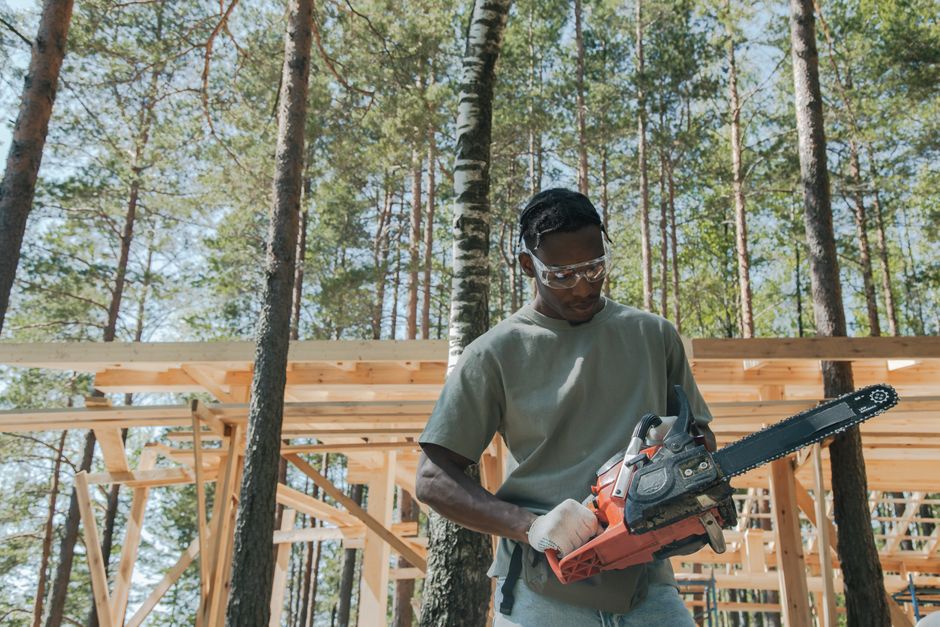
What to actually cut when you are up there
Knowing when is half the job. Knowing what to cut is the other half.
Dead, diseased, or damaged wood first. Scratch the bark — green or white inside means alive, brown means dead. Dead wood comes off regardless of season, whenever conditions cooperate.
Crossing or rubbing branches. Two branches fighting for the same space damage each other's bark and create disease entry points. Remove the weaker of the two back to a healthy lateral.
Water sprouts. Those vertical shoots growing straight up from horizontal branches. They are vigorous, they crowd the canopy, and they rarely produce fruit worth picking. Remove them entirely — do not head them back to a stub.
Root suckers. Vertical shoots from the base or below the graft union. If your fruit tree is grafted (most are), suckers from the rootstock will be a different variety than the tree you are growing. Remove them completely.
The 25% rule. Do not remove more than 25% of the canopy in a single season. I have seen homeowners go harder, thinking they are doing the tree a favour. A year later the tree has thrown up a forest of water sprouts trying to compensate, and the canopy looks worse than before the pruning started.
A homeowner in Langley learned this the hard way with his plum tree. He cut it back hard — probably 40% gone — in late October. The following spring the tree sent up forty-odd water sprouts and two competing leaders. It took a proper crown reduction ($700) the next winter to fix the structure. Would have been a $300 light prune if he had called first, or honestly just left it alone for the season. (The tree forgave him eventually. The invoice did not.)
What fruit tree pruning costs: honest numbers
Most tree services do not post prices. I reckon they should.
| Tree size | Scope | Approximate cost |
|---|---|---|
| Small (under 15 ft) | Water sprouts, deadwood, light shaping | $250–$450 |
| Medium (15–25 ft) | Crown thinning, deadwood, structural shaping | $400–$800 |
| Large / neglected | Crown reduction, competing leaders, structural work | $700–$1,400 |
Our standard assessment is $150, credited toward the work if you proceed. If you are not sure what the tree needs — or whether it needs anything at all — that is the right starting point.
For a broader look at what Langley/Aldergrove arborist work costs across different job types, the tree trimming cost guide breaks down the full range with the factors that move the price.
When not to call us
I will tell you straight when you do not need an arborist. This is the part most tree service websites skip.
If your fruit tree is under 15 feet and reachable from the ground or a six-foot ladder, you can handle the basics yourself: water sprout removal, dead wood, crossing branches. A decent pair of bypass loppers and a pruning saw is a $100 investment that will serve you for a decade. The ISA Canada arborist finder is also worth bookmarking if you want a second opinion before you start cutting — it costs less to ask than to fix.
Call us when:
- The tree is over 20 feet, near a structure, or within reach of power lines
- You are not sure what is dead versus dormant
- The tree has not been pruned in more than five years and the structure is a mess
- You are seeing signs of disease — silvery foliage, weeping sap, bracket fungus — and are not sure what to do
- The previous prune was done hard and wrong, and the tree is now fighting itself with competing leaders and water sprouts everywhere
And genuinely do not call us in November. Not for fruit trees. If you call in November asking about pruning, I will tell you to wait until February. I would rather lose a booking than watch a homeowner damage a tree that had another thirty years in it.