
Tree trimming service cost, like the tree itself, tends to branch out depending on what you’ve got. (I’ve been waiting to use that one. I reckon it earned its place.) Here’s the short version before we get into the detail: small ornamental tree, $200–$350. Medium tree past its second decade, $600–$1,200. Large tree anywhere near your roof, $1,200–$2,500. Those are Langley/Aldergrove 2026 prices, not industry averages from a content farm in Ohio.
The rest of this guide explains what moves the number in each direction, what the quote should include, when you can honestly handle it yourself, and what to watch for when comparing quotes.
Quick answer: Tree trimming service cost in Langley/Aldergrove depends primarily on tree height, species, and site access. Small trees run $200–$350. Medium trees $600–$1,200. Large trees $1,200–$2,500+. Stump grinding is almost never included. The cheapest quote is rarely the cheapest outcome — one missed factor on a complex job costs more to fix than the difference between quotes.
What tree trimming service actually costs
Nobody publishes real numbers. I reckon that should change.
| Tree size | Height | Typical range (CAD) |
|---|---|---|
| Small | Under 5 m (16 ft) | $200–$350 |
| Medium | 5–10 m (16–33 ft) | $600–$1,200 |
| Large | 10–15 m (33–50 ft) | $1,200–$2,500 |
| Very large | 15 m+ (50 ft+) | $2,500+, quoted individually |
| Per climber-hour (most crews) | — | $80–$120/hr |
These ranges assume a standard Langley/Aldergrove residential job: reasonable vehicle access to the tree, no live power line complications, and on-site cleanup and debris removal included. Stump grinding is priced separately — almost always. Budget $150–$400 if you want the stump gone.
What drives the price up or down
Two companies can quote the same tree and come back $600 apart. Here’s what’s actually behind that gap.
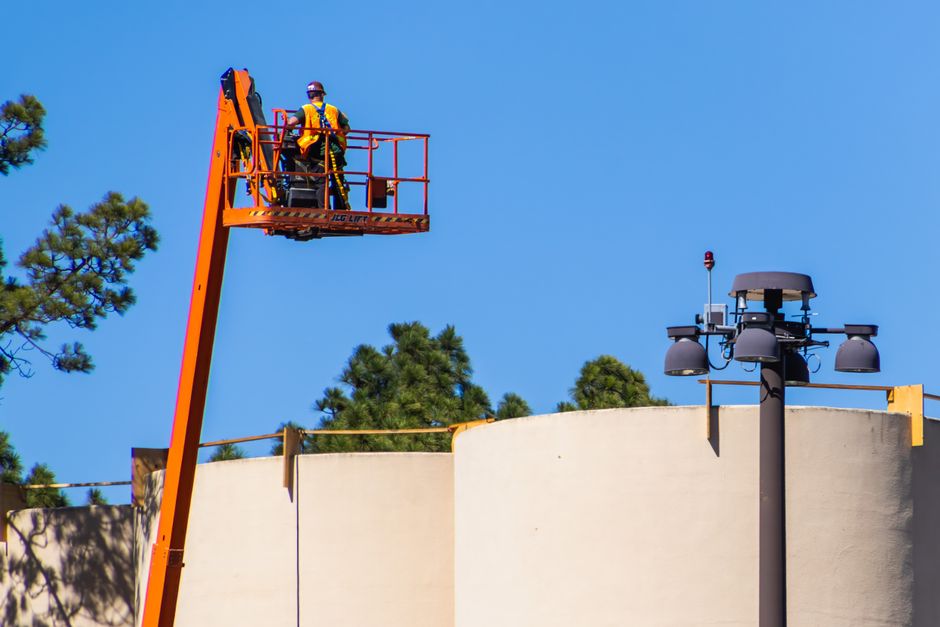
Tree height. This is the biggest variable. A 5-metre fruit tree can often be trimmed from the ground or a stepladder. A 15-metre Douglas fir needs a climber in a harness, a bucket truck, or both. The equipment cost gap between those two scenarios is several hundred dollars before anyone touches a branch.
Site access.Can a boom truck reach the tree? If there’s a locked side gate, a narrow path, or concrete that won’t take the weight — the crew has to climb manually. Manual climbing takes more time and carries more risk. That time and risk appear in the quote.
Tree species. Some trees are easier to work on than others. Japanese maples are predictable. Large Douglas firs near a structure are not. Cedar hedges are a different service entirely. Species affects how a crew approaches the work, how long it takes, and what gear they bring.
Health and stability. A tree with active decay, significant dead wood, or previous storm damage is harder and riskier to work in than a healthy one. Unstable limbs put climbers in difficult positions. Budget 10–20% extra for any tree you know has problems.
Scope of the job. A crown clean-out — removing dead wood and crossing branches — is a different scope than a full height reduction or a structural re-form. Getting quoted without specifying is how you get wildly different numbers from different companies. Be specific about what you want done before anyone quotes.
Debris removal.Some companies include on-site chipping and hauling away; others quote the trim work only. One leaves your yard tidy. The other leaves it in pieces. Always ask upfront which you’re getting.
Timing and urgency. Standard weekday rates run to the ranges above. After-hours, weekend, or emergency storm-damage jobs run 15–30% higher. Same tree, same crew, different day — different price.
The industry opinion I’ll back with a number: the cheapest quote is rarely the cheapest outcome. Nine out of ten jobs where we’ve been called in to fix someone else’s work involved a low quote that skipped something — the correct cut location, the debris cleanup, or an honest assessment of what the job actually required.

Cost by tree size: what each range actually covers
Small trees (under 5 m) — $200–$350. Think ornamental cherries, young Japanese maples, standard fruit trees in their early years, dogwoods. Often done with pole saws from the ground. Typically a one-person job, under an hour for a clean crown. These are also the trees homeowners can most honestly handle themselves — more on that later.
Medium trees (5–10 m) — $600–$1,200.Maples past their second decade, mature fruit trees that haven’t been maintained, birches, medium cedars, smaller ornamental pears. Usually requires ladders or a climber. A full crown clean-out typically takes 2–4 hours for two people. This is where the ladder-vs-bucket-truck question first comes up.
Large trees (10–15 m) — $1,200–$2,500. Mature oaks, large firs, substantial pines, well-established fruit trees. Almost always requires a climber in a harness or a boom truck. A full structural trim on a tree this size is a half-day job at minimum. Complexity varies significantly — an open-yard tree with vehicle access is a different job than the same tree wedged between your house and fence.
Very large trees (15 m+) — $2,500 and up, quoted individually. Large specimen trees, heritage trees, mature conifers. Crane access sometimes needed. Too many variables to range reliably — we’ve done jobs in this category from $2,800 to well over $6,000 depending on location, condition, and access. Get two written quotes, not just one. Our tree pruning and trimming service covers what an assessment involves if you want to understand scope before calling.
A note on hourly rates: some companies charge by the hour, particularly for smaller jobs or ongoing maintenance agreements. Typical rates for a qualified climber run $80–$120 per hour in the Fraser Valley. A single-climber job at $100/hr for three hours is $300 — roughly in line with a mid-range small-tree job. If you’re quoted hourly, ask for an estimated total range in writing before work starts.
What’s included — and what you have to ask for
A standard tree trimming service in Langley/Aldergrove typically includes:
- Removing dead, diseased, and crossing branches
- Cuts made just outside the branch collar (correct technique — not stub-cutting)
- On-site debris cleanup and chipping or bagging
What you usually have to ask about separately:
- Stump grinding. Almost never included. Budget $150–$400 depending on stump diameter.
- Crown reduction vs crown clean-out. These are different jobs. A clean-out removes dead and problem wood without changing the tree’s overall shape. A reduction shortens height. Make sure you and the crew are talking about the same thing before anyone starts climbing.
- Off-site disposal. Some companies chip and leave mulch on-site — which is fine if you want it. Others haul everything away. Ask upfront.
- Written report or follow-up assessment. Some crews will flag other issues they notice while up there. Worth asking for while they’re on-site. A good arborist will mention anything significant without being prompted — but it doesn’t hurt to ask.
Any company that starts cutting before confirming scope in writing should be asked to stop. If scope changes mid-job — a second issue becomes visible once the climber is up there — work should pause, you get a revised number, and you say yes or no. This is how it should work. It’s how we work. Not everyone does.

Timing: how to get a better price
Tree trimming has seasons — not because the trees demand it (though timing does matter for some species), but because homeowner demand does.
Peak demand runs from late spring through early fall. Trees are in full leaf, problems are visible, neighbours are looking. Crew schedules fill weeks in advance in June and July. Quoted rates reflect the demand pressure. If you call in July for a non-urgent job, expect to wait and pay full rate.
November through March is the quiet period for most Fraser Valley tree companies. For species like oaks and maples, it also happens to be the recommended pruning window — dormant season, lower disease risk, wounds that callus cleanly before the growing season opens. You get a better price and a better outcome for the tree. (The tree doesn’t appreciate the discount. Trees aren’t sentimental. But it’s still the right time to cut.)
Rule of thumb:if the job isn’t urgent, requesting a quote in January or February saves 10–15% compared to the same job in July. Not every company offers seasonal pricing explicitly — but most have more schedule flexibility in winter, and that flexibility translates.
For maples specifically, check when to trim maple trees in Langley/Aldergrove before booking — there’s a specific window where sap movement makes timing matter more than the price question.
Langley/Aldergrove permits: what you need to know first
This catches homeowners off guard more often than any other factor.
Under Langley/Aldergrove’s Tree Protection Bylaw No. 16100, certain trees require a Tree Cutting Permit before trimming work starts. Specifically: trees designated as Significant or Heritage Trees by the City. The fine for trimming a designated tree without a permit is up to $20,000.
Most residential trees in Langley/Aldergrove don’t fall under the designation. But Garry oaks — BC’s only native oak species — and large specimen trees on the city’s Schedule B list sometimes do. Before booking any work on a tree you suspect might be significant, call Langley/Aldergrove’s Tree Management Office at 604-501-5050. The arborists there are straightforward to deal with, and a two-minute call beats a five-figure fine.
If your tree requires a permit, we help with the application process. We don’t work around the bylaw.
For trees adjacent to BC Hydro lines, the process is different: Hydro clears the zone immediately around the conductors, but a certified arborist handles adjacent growth. The BC Hydro tree clearing program is a useful starting point if you’re not sure who handles what near your power connection.

When not to book tree trimming
This is the section we lose a booking or two over. Worth saying anyway.
Skip the call for:
- Trees you can safely reach from the ground.A small ornamental cherry, a Japanese maple under 3 metres, a young fruit tree with nothing larger than thumb-thick branches. Good secateurs and a small pruning saw, fifteen minutes, done. You don’t need a crew for this.
- Branches over the lawn with no structure below.If a limb is hanging over grass — not a roof, fence, power connection, or pathway — and it’s under 4 cm diameter, cut it yourself on a still day. Cut just outside the branch collar and walk away.
- A hedge that needs an annual clip. Hedge trimming is a separate service. Call your lawn maintenance provider, or rent a hedge trimmer for an afternoon.
- A tree that just needs leaves raked.Happens more than you’d think.
Do call us for:
- Any tree where the work requires a ladder, pole, or climbing gear
- Any tree near BC Hydro lines
- Any tree that might be designated under Langley/Aldergrove’s bylaw
- Any situation where a falling limb could land on a structure, vehicle, or person
- Any tree with visible decay, fungal growth, or structural damage — the assessment matters before the trim does
Nine out of ten homeowners who call us for a small tree quote get told the job is straightforward or they can handle it themselves. We’d rather you know that before spending the call-out fee finding out. And if you call and aren’t sure which category your tree falls into — we’ll tell you honestly. No charge to ask.