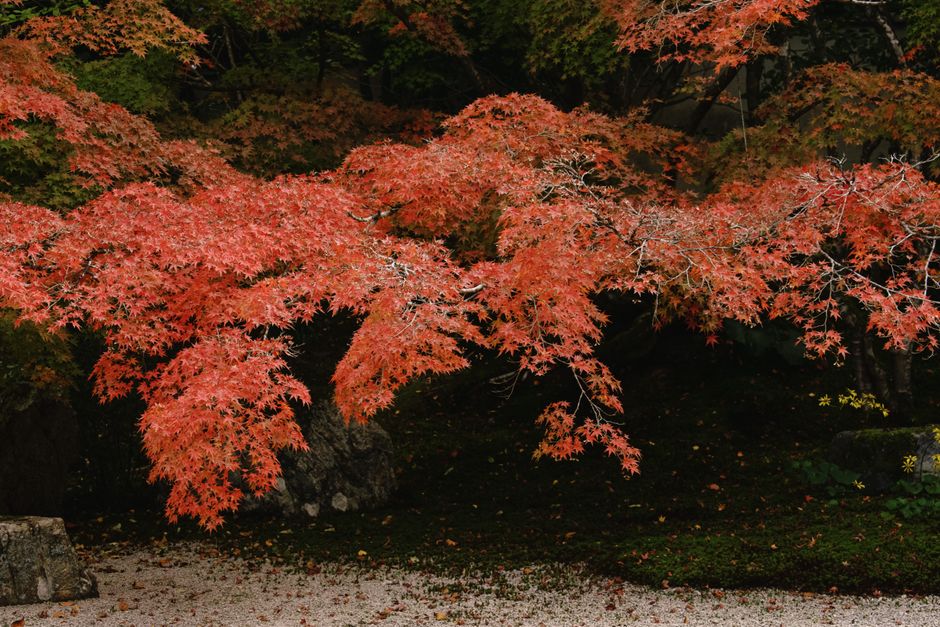
Maple trees are what arborists call bleeders. Trim one at the wrong time and you end up with a sap-covered driveway and a tree that looks like it's auditioning for a horror film. (They're fine. Maples are just dramatic.) The right time to trim maple trees in Langley/Aldergrove is late January through early March — while the tree is dormant and the sap isn't moving yet. Everything else is timing details and how much to take off.
Nine out of ten maple questions we get come down to two scenarios: someone trimmed in spring and panicked about the sap, or someone wants to know if they missed the window. Both are fixable. The first isn't actually a problem. The second has a backup in late summer.
Short answer: Trim in late January to early March (dormant season) for clean wounds and fast healing. Miss that? Wait until late July or August. Skip April, May, and June entirely — that's peak sap flow and you'll make a mess and a longer-healing wound.
The two trimming windows — and why winter wins
For most maples in the Fraser Valley, there are two workable windows each year.
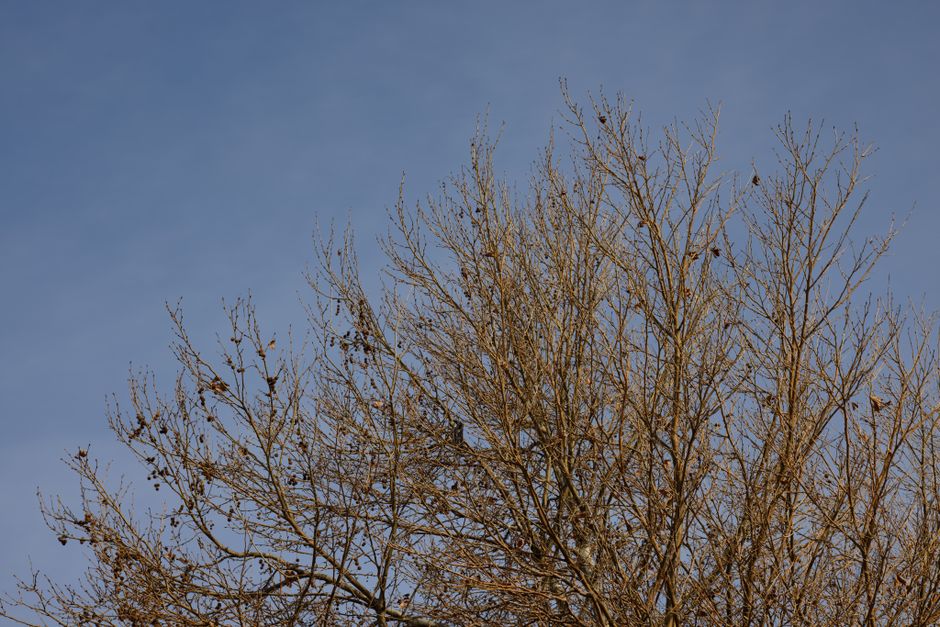
Late January to early March. This is the preferred window by a fair margin. The tree is fully dormant. Sap isn't running. Wounds close faster. And without leaves in the way, you can actually see the branch structure — which makes it much easier to spot what needs to come out. Most arborists in Langley/Aldergrove are booked up in February, so scheduling in January gives you better options and a more relaxed timeline.
Late July to early August. The secondary window. The spring growth push is done, so cuts won't bleed as much. It works well for shaping, deadwood removal, and structural work that can't safely wait until next winter. Not as clean as winter pruning, but it's the right call if you have a branch over a roof that's concerning you right now.
Times to avoid:
April and May. Sap is moving at full speed — the tree is actively pushing growth through the canopy. A cut in May doesn't kill the tree, but the wound site bleeds heavily and takes longer to seal. Open wounds in spring attract beetles and opportunistic fungi. The mess is the least of it.
September through November. The tree is heading into dormancy but isn't there yet. Cutting in this window can trigger late-season growth that then gets hit by frost. The timing is just awkward. Wait for December at the earliest, January if you can.
Why maple trees bleed — and why it's not actually a disaster
Maple sap runs through a pressure system. In late winter and early spring, the roots push stored starches up toward the canopy as the tree begins to wake up. Hit the tree with a cut during that period and sap seeps out of the wound like someone left a tap running. It's not blood. The tree isn't dying. It's just the physics of what's inside.
Sap flow doesn't kill a healthy maple. It's inconvenient, it makes the driveway sticky, and it can attract insects to an open wound — but it doesn't cause lasting damage to an otherwise healthy tree. What it tells you is that the cut happened at the wrong time. A winter cut on the same branch would have sealed cleanly within a season.
The sap-panic call is probably the most common one we get in May. Someone trimmed a lower branch in spring, the wound is weeping, and they're convinced the tree is infected or dying. Nine times out of ten it's just bad timing, not a sick tree. Clear sap running from a fresh wound: normal. Brown, black, or foul-smelling discharge: that's worth a proper assessment.
There's also no value in sealing the wound with paint or spray. Tree wound dressings were standard advice for decades. The ISA (International Society of Arboriculture) now recommends against them. Trees compartmentalise wounds on their own — the wound dressing interferes with that process more than it helps.
Which maples grow in Langley/Aldergrove — and does species change the timing?
Langley/Aldergrove has more maple species than most homeowners realise. The three you're most likely dealing with:
Bigleaf maple (Acer macrophyllum). BC's native species. Fast-growing, heavy bleeder, and more tolerant of aggressive pruning than most maples. The late-winter window applies here. If you have a bigleaf maple overhanging a roof or fence line, get it assessed before a windstorm makes the decision for you. These trees can drop significant limbs without much warning.
Japanese maple (Acer palmatum). The ornamental choice for Langley/Aldergrove gardens — slow-growing, fine-textured, and genuinely unforgiving of bad cuts. Japanese maples are actually better pruned in late summer than in winter. They bleed heavily from early spring cuts and are more susceptible to dieback from late frost after early pruning. The rule here: take off less rather than more, and do it in late July or August.
Norway maple (Acer platanoides). Technically invasive in BC but common in older Langley/Aldergrove neighbourhoods. Vigorous bleeder in spring. Treat it the same as bigleaf maple for timing — late winter is best. Worth knowing: if you're removing a Norway maple outright, Langley/Aldergrove's Tree Protection Bylaw may require a permit for larger specimens. The City of Langley/Aldergrove's tree protection page has the current thresholds — they change periodically.
Red maple and silver maple are both common in newer residential landscaping across Langley/Aldergrove and Langley. Late winter works well for both.
What to actually remove when you prune a maple
Rule of thumb: no more than 25% of the living canopy in a single season. This holds across every maple species. A structurally compromised tree might need more removed — but that's a judgment call that belongs with a certified arborist, not a general guideline you found online (including this one).
Start with these:
Dead branches. No timing rules. Dead material can come out any time of year because there's no live tissue — no wound to seal, no sap to manage. Get it out when you see it.
Crossing branches. Where two branches are growing into each other, one needs to go. Remove the weaker one, or the one growing in the less useful direction. Left alone, they'll rub until one opens a wound on the other.
Suckers and water sprouts. The fast vertical shoots that erupt from the base or from the trunk after pruning wounds. They're drawing energy without contributing useful structure. Pull them or cut them flush.
Overhanging limbs. Anything growing toward or over a structure, a parked vehicle, or a pedestrian path. Bigleaf maples especially — the limbs get heavy and the branch unions can fail without obvious warning signs.
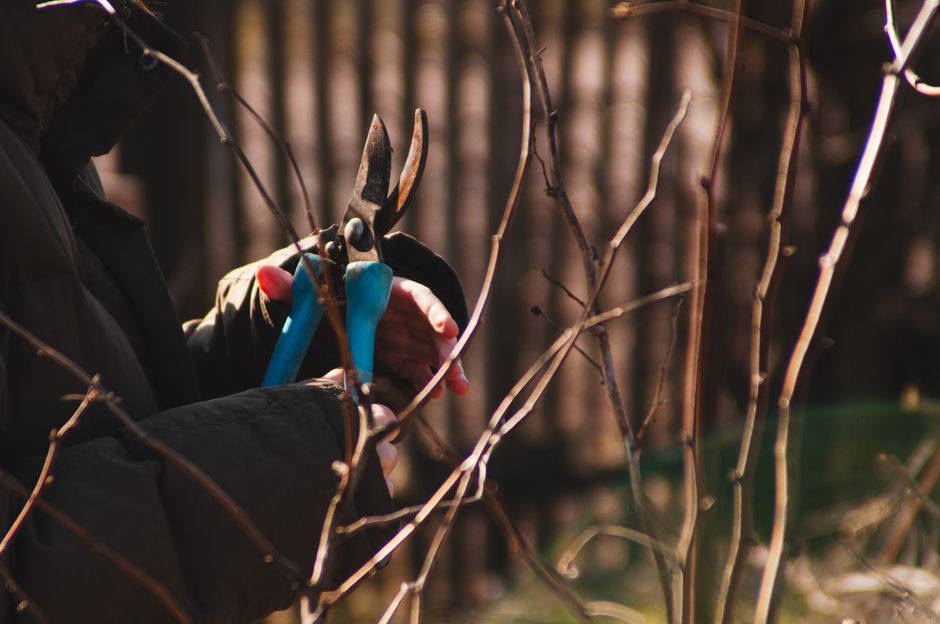
One cut detail worth knowing: make your cut just outside the branch collar — that slightly raised ring of tissue where the branch meets the trunk. Cut outside it, not through it. The collar contains the tree's wound-response tissue. Cut into it and the wound takes significantly longer to seal. The UBC Botanical Garden forum has good discussion on maple pruning specifics if you want to go deeper.
For our full range of tree pruning and trimming in Langley/Aldergrove, including what's included in a standard pruning visit, see the services page.
What it costs to have a maple trimmed in Langley/Aldergrove
Nobody lists prices. I reckon they should.
| Tree size | Rough range (CAD) |
|---|---|
| Small Japanese maple, under 4m | $200–$400 |
| Medium garden maple, 4–8m | $350–$700 |
| Large bigleaf or Norway maple, over 8m | $600–$1,500+ |
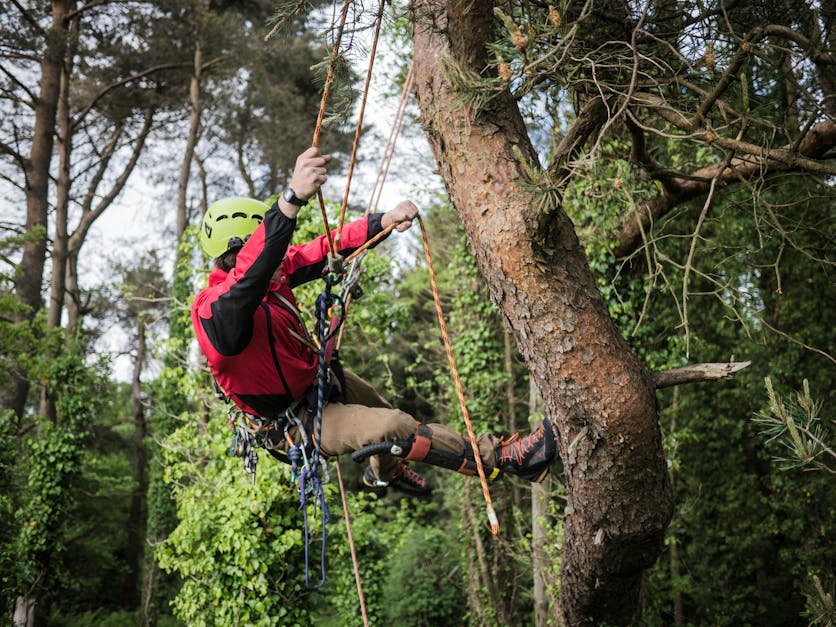
| Any tree requiring climbing or rigging | Add $200–$600 |
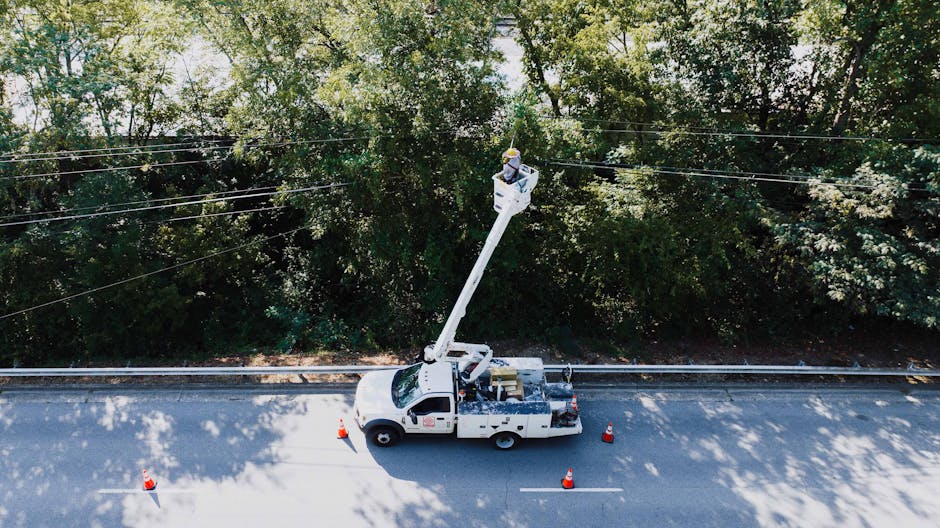
| Anything near a structure or requiring aerial lift | Quote on inspection |
These are honest ranges based on what we see in Langley/Aldergrove and the Fraser Valley. A straightforward lower-canopy trim on a healthy, accessible maple sits at the low end. If the tree needs climbing, or it's growing near a fence or roofline, it's toward the high end. We quote before we start — never after.
A note on quotes that sound low: if someone quotes you $120 for a large bigleaf maple with no crew and no equipment, ask how they're planning to reach the upper canopy. The answer will tell you something useful about the job you're about to get.
When not to call us
Here's where I talk myself out of a call-out fee. Worth doing.
A single low branch on a small Japanese maple that you can reach from the ground with a handsaw? Do it yourself. Cut just outside the branch collar at a slight downward angle. Done properly, that's a ten-minute job and you don't need a certified arborist for it. We'd rather you save the money.
A few years back a homeowner on 152nd called us out to look at a weeping wound on their maple. They'd cut a limb in May, it bled heavily, and they'd convinced themselves the tree was dying. We looked at it. The tree was fine — just a spring cut with the predictable sap response. We were there for maybe fifteen minutes. I felt guilty charging for that one. (We didn't.) If you're genuinely unsure whether something is sap bleed or disease, send us a photo. That call costs nothing.
Call us for:
- Any branch within fall distance of a structure or vehicle
- Any pruning that requires getting off the ground
- Trees that have lost major limbs or look structurally changed after a storm
- Any tree over 8 metres — height changes the risk profile significantly
- Anything you're not sure about after reading this guide
Not sure which side of the line you're on? Give us a call. We'll tell you honestly. For other tree care topics, the Little Tree Care blog covers storm cleanup, removal costs, and stump grinding as well.