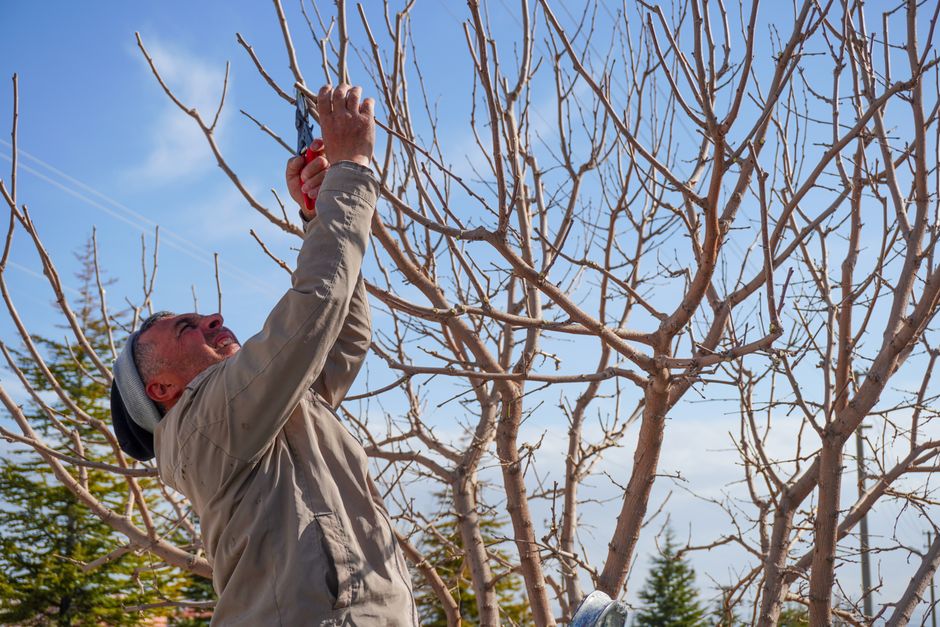
Peach trees are not forgiving of neglect the way a maple or an oak might be. Miss a year of pruning and you'll notice. Miss three years and you've got a tree that produces fruit the birds can reach and you can't. They need hard annual pruning — harder than most homeowners expect — and they need it at the right time.
Here is when to prune peach trees in Langley/Aldergrove: late February through mid-March. After the coldest weather has passed, before the buds open. That's the window. Everything else in this guide explains the why and the how.
Short answer:Prune in late February to mid-March, remove 30–40% of last year's growth, and aim for an open vase shape with 3–5 main scaffold branches. Miss that window? A light tidy in July is acceptable. Never attempt major structural work in autumn — it triggers soft new growth that gets caught by the first frost.
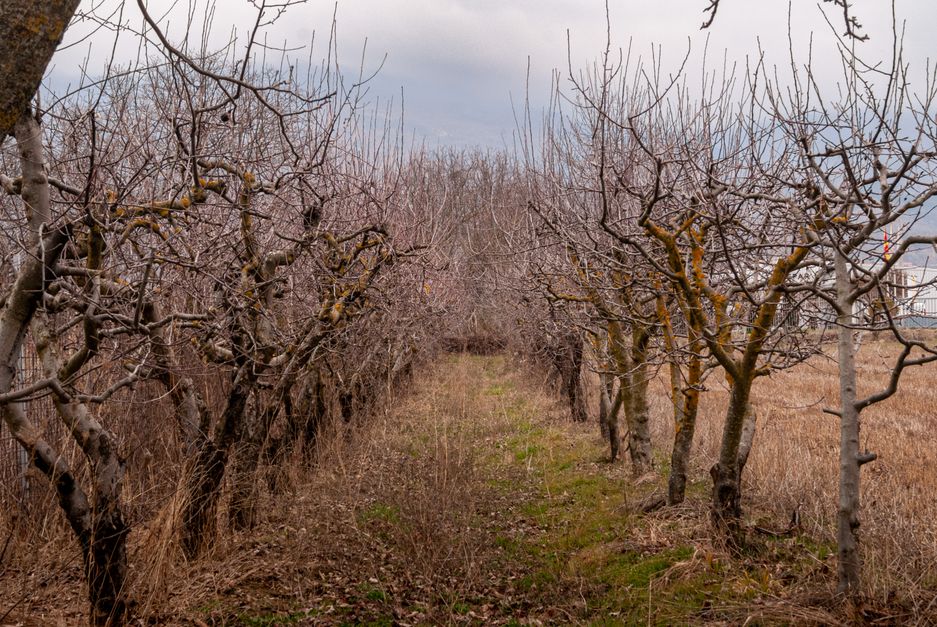
When to prune peach trees in Aldergrove, Langley/Aldergrove, Langley, and the Fraser Valley, BC
The timing matters more for peaches than for most other fruit trees. Two risks bracket the window: late frost damage to fresh cuts on one end, and bacterial canker on the other.
Late February through mid-March.This is the primary pruning window for peach trees in the Fraser Valley. The coldest nights are typically behind you by late February, so fresh cuts are less vulnerable to cold injury. The buds are starting to swell but haven't broken open yet. Cuts made now will callous cleanly and the tree will push new growth directly from the wounds within a few weeks.
Watch for the first blush of pink on the buds as your signal to start. If the buds have begun to open visibly — showing actual petal tissue — you've pushed past the ideal moment, though you can still prune. If the buds are fully open and the tree is in bloom, you've missed the window entirely for structural work this season.
Timing to avoid. The BC Ministry of Agriculture specifically recommends against pruning stone fruit in October and November, when bacterial canker infection risk is highest. Autumn cuts on peach wood heal slowly through winter and provide an entry point for Pseudomonas syringae, the pathogen responsible for bacterial canker. Avoid it entirely.
Summer pruning. July is acceptable for light maintenance — removing water sprouts that are heading the wrong direction, taking out any visibly diseased or dead wood. Not for heavy structural work. The heat stresses fresh cuts.
Why peach trees need hard annual pruning
Peaches are different from apples and pears in one important way: they fruit almost exclusively on one-year-old wood. The branch that produced this year's crop will not produce again next year. New growth that pushes from pruning cuts this spring is what carries next year's fruit.
This means that if you don't prune — or if you prune too lightly — you're not just leaving the tree tidy. You're leaving spent fruiting wood on the tree. The productive zone moves further out and further up each season. After a few unpruned years, the accessible fruit is gone.
The rule of thumb for established peach trees: remove 30–40% of last year's growth. That sounds aggressive if you're used to pruning apples or ornamental trees, where 10–15% is typical. For peaches, the ISA Canada and most stone fruit guidance aligns on the same figure. It's not a mistake — it's the requirement.
The open-centre vase shape
The target form for a peach tree is called the open-centre or vase shape. If you stand beneath the tree and look up, you should see sky — not a dense tangle of crossing branches.
The structure: 3–5 main scaffold branches radiating outward from the trunk at roughly 45-degree angles, spaced evenly around the tree and at different heights. The centre of the canopy is kept clear. No branch grows back toward the middle.
This shape matters for two practical reasons. First, airflow. A closed, crowded canopy stays damp after rain and creates ideal conditions for brown rot — the fungal disease that ruins peach crops faster than anything else in the Fraser Valley. Second, light penetration. Peach spurs and buds need direct sun to produce fruit. Shaded interior wood produces nothing and eventually dies back.
Achieving and maintaining the open-centre shape is the main goal of every annual pruning session. If the centre is filling in with vertical shoots (water sprouts), they come out first. If scaffold branches are crossing and crowding, the weaker one comes out. The shape drives every decision.
What to remove — the right sequence
Work through this sequence on every annual prune. Don't skip ahead.
1. The three Ds: dead, diseased, and damaged wood. Start here always. Remove everything dead, everything showing canker or disease symptoms (orange-brown sunken patches on the bark are cytospora canker — cut well below the infected tissue and sterilize your saw blade before the next cut), and anything that was damaged by wind, frost, or pest pressure. This is non-negotiable and has no timing exceptions.
2. Water sprouts. The vigorous vertical shoots growing straight up from scaffold branches or from the base of the tree. Remove them at their origin point — flush with the parent branch. They grow fast, produce nothing, and close the canopy quickly if left alone. If a water sprout is the only wood growing in a gap you need to fill, you can redirect it with a cut to an outward-facing bud, but in most cases they just come out.
3. Crossing and inward-growing branches. Anything that rubs against another branch or grows back toward the centre of the tree. Where two branches cross, remove the weaker or the one heading the wrong direction.
4. Last year's fruiting wood.This is the 30–40% removal. On each scaffold branch, identify the shoots that produced fruit this year — they're the ones with the small stub-like lateral spurs. Thin to the strongest, best-spaced shoots, leaving them at 15–20cm apart. Shorten each retained shoot by roughly one-third. This triggers new lateral growth that carries next year's crop.
For everything related to timing deciduous tree pruning in the Fraser Valley, the principle is similar — dormant period, before new growth breaks — but the intensity is different. Peaches need far more taken off than maples do.
Fixing an overgrown peach tree
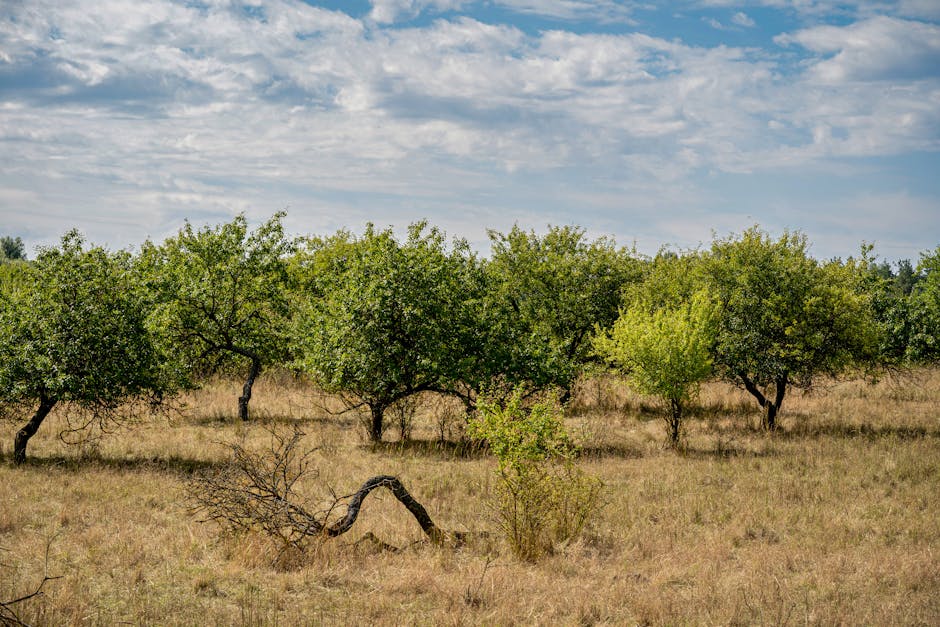
Nine out of ten neglected peach trees we look at in Langley/Aldergrove have the same problem: no pruning for three or more years, the crown has closed over, and the productive wood is now at the top where it's accessible only with a ladder. The urge is to fix it all in one session. Don't.
Removing more than 50% of the canopy in a single season triggers an excessive water sprout response. The tree throws up dozens of vigorous vertical shoots in an attempt to replace what was lost. You end up with a worse mess than you started with, and the stress can make the tree more susceptible to disease.
Spread the restoration over two to three years:
- Year 1: Remove all dead, diseased, and crossing wood. Open the centre by removing or shortening any branches that are filling the vase. Establish the scaffold structure you're working toward.
- Year 2: Reduce scaffold branches to a manageable height. Remove remaining water sprouts from year 1. Begin thinning last year's fruiting wood.
- Year 3: The tree should now be at or close to the target form. Maintain with normal annual pruning from here.
This approach is slower but it works. A two-season renovation produces a healthier result than a single aggressive cut every time. If you need a professional assessment of where to start, our tree pruning service in Langley/Aldergrove covers fruit trees across the Fraser Valley.
When to call a professional
Worth being honest about when it's a DIY job and when it isn't.
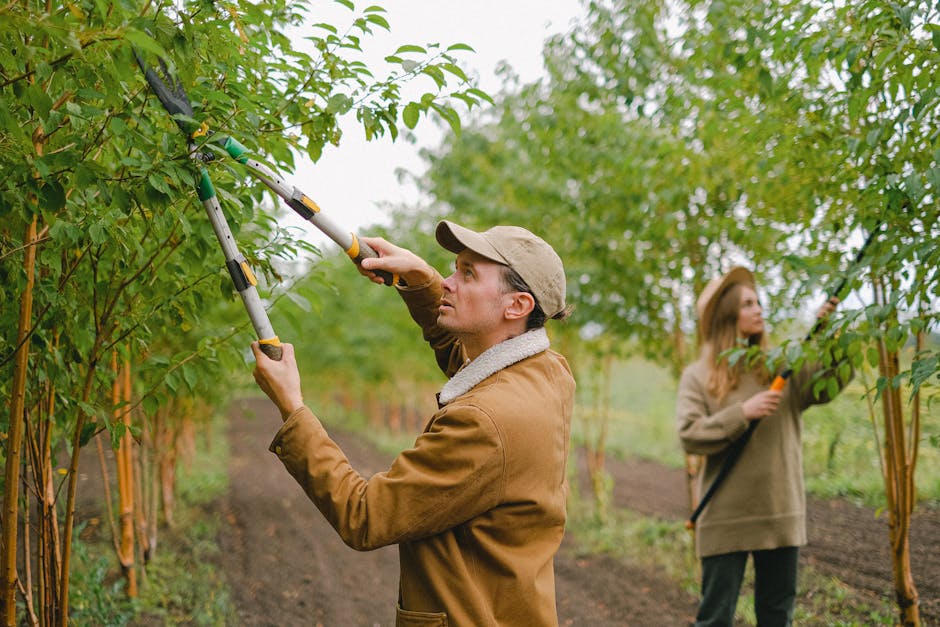
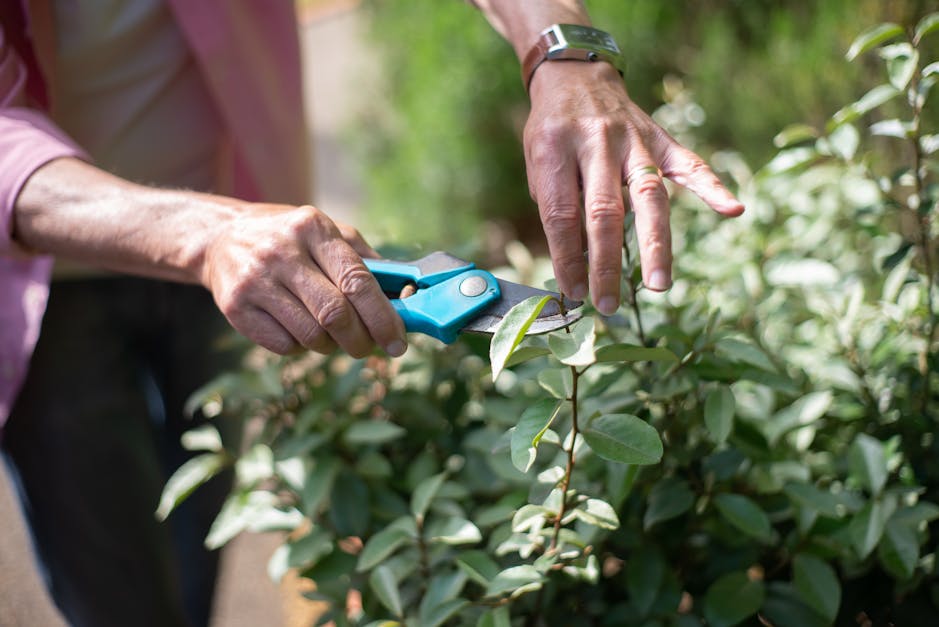
You can handle it yourself if: The tree is healthy and under 4 metres, you can reach all the branches from the ground or a stable stepladder, and the structure is clear enough that you can identify the three Ds and the water sprouts without guessing. A basic set of sharp hand pruners, loppers, and a pruning saw — sterilized before you start — is all you need.
Call us when:
- The tree is over 5 metres — at that height, chainsaw work from a ladder carries real risk
- You can see orange-brown sunken patches on the bark (cytospora canker) — improper cuts spread it further
- There's significant upper deadwood that needs rigging to come down safely
- The tree hasn't been pruned in several years and the scaffold structure isn't clear
- You're not confident in your identification of what to remove versus what to keep
Not sure which side of the line you're on? Call and describe the situation. We'll give you an honest answer — including if we think it's straightforward enough to handle yourself. More on what professional tree work involves on our tree pruning services in Langley/Aldergrove.
What peach tree pruning costs in Langley/Aldergrove — honest numbers
Nobody lists prices. We reckon they should.
| Scope | Rough range (CAD) |
|---|---|
| Standard maintenance prune, healthy tree under 4m | $180–$280 |
| Structural restoration, neglected or overgrown tree | $280–$450 |
| Larger tree (5m+) requiring ladder or elevated work | $350–$600 |
| Disease assessment + canker removal | $250–$400 |
| Multiple fruit trees, same property (per tree) | $120–$200 |
A few things that move the number. Trees that haven't been touched in several years take longer — the first session on a neglected tree always costs more than annual maintenance on the same tree would have. Disease work, particularly canker removal, requires careful technique and tool sterilization between cuts; it's slower than standard pruning. And multiple fruit trees on the same property get reduced per-tree pricing because setup and travel time is a fixed cost across all of them.
For the full picture on how tree service pricing works in Langley/Aldergrove and the Fraser Valley, our tree removal cost guide covers the variables in detail. Stump grinding, if needed after a removal, runs $150 and up depending on diameter.