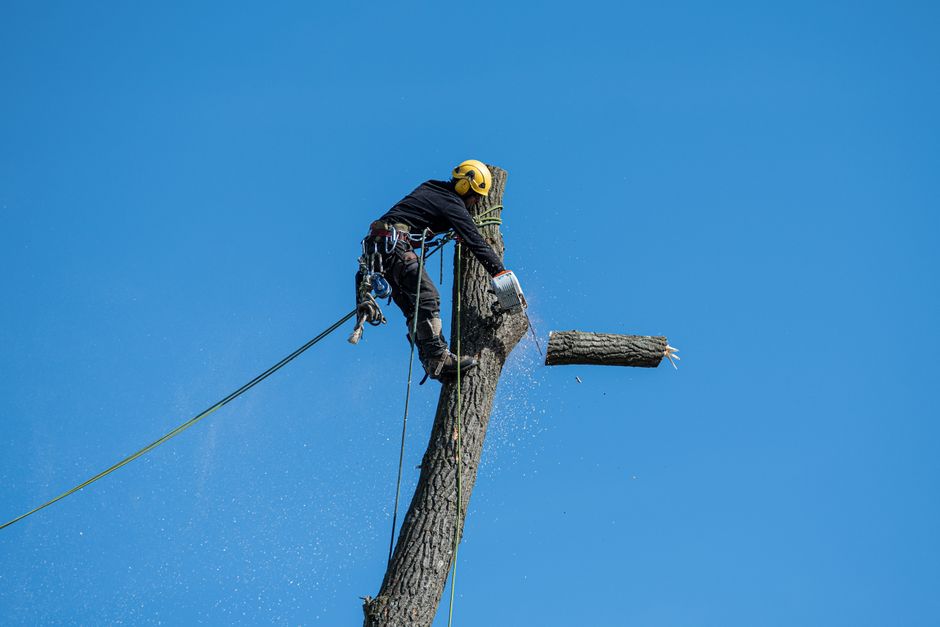
Getting a tree removed is expensive enough to make you want to give it another decade. Which, as it turns out, is exactly what most trees will do if you let them. (Patient creatures, trees.)
What does tree removal cost in Langley/Aldergrove? Between $560 and $3,360 for a single tree in 2026, with most residential jobs landing somewhere between $1,200 and $1,800. That’s a wide range — but so is the gap between a 3-metre ornamental cherry and a 25-metre Douglas fir pointing toward your roof.
Quick answer: Tree removal in Langley/Aldergrove runs from about $560 for a small ornamental to $3,500+ for a large mature tree. Emergency removal adds 20–50% on top of standard rates. Stump grinding is almost always priced separately. Get at least two written quotes before anyone starts cutting.
The size of the tree is the single biggest price driver. Everything else — access, condition, species, whether a crane is involved — stacks on top of that. I’ll break each factor down below.
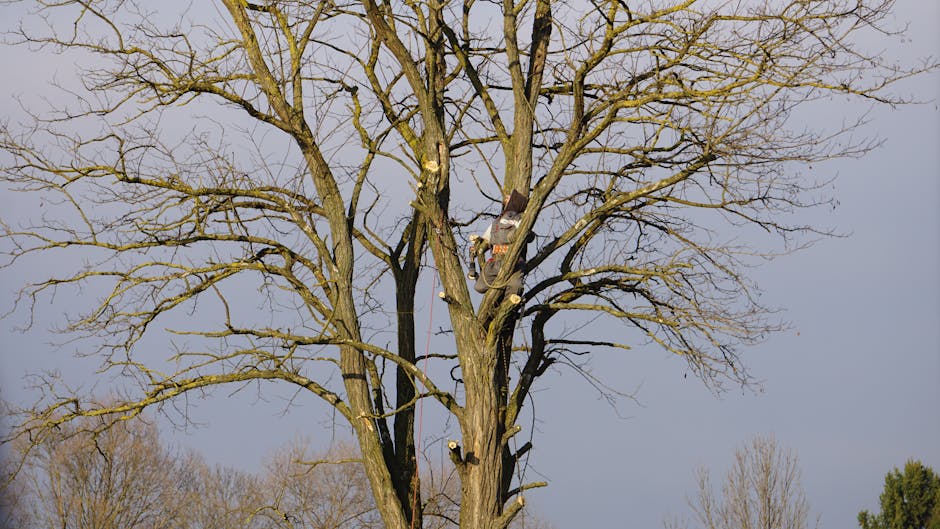
Tree removal cost by tree size
Height is what matters most. Not age, not species, not how much you liked it. A taller tree takes longer to dismantle, requires more rigging, and generates more debris to manage. Rule of thumb: budget roughly $600–$800 extra for every 5 metres of height beyond the first 5 metres — though that’s a rough guide, not a flat rate.
| Tree size | Typical height | Langley/Aldergrove price range (CAD) |
|---|---|---|
| Small | Under 5 m | $400–$800 |
| Medium | 5–10 m | $800–$1,800 |
| Large | 10–20 m | $1,800–$3,500 |
| Extra large | 20 m+ | $3,500–$7,000+ |
| Emergency premium | Any size | Add 20–50% |
| Stump grinding | Per stump | $150–$500 (always extra) |
These ranges assume reasonable access — a truck can get within about 20 metres of the tree. If the tree is behind a narrow gate, down a slope, or directly against a structure, adjust upward.
Langley/Aldergrove costs run about 12% above the Canadian national average. That’s partly labour rates, partly the density of mature trees in established neighbourhoods, partly the permit and compliance overhead. It’s not specific to any one company — it’s the market.
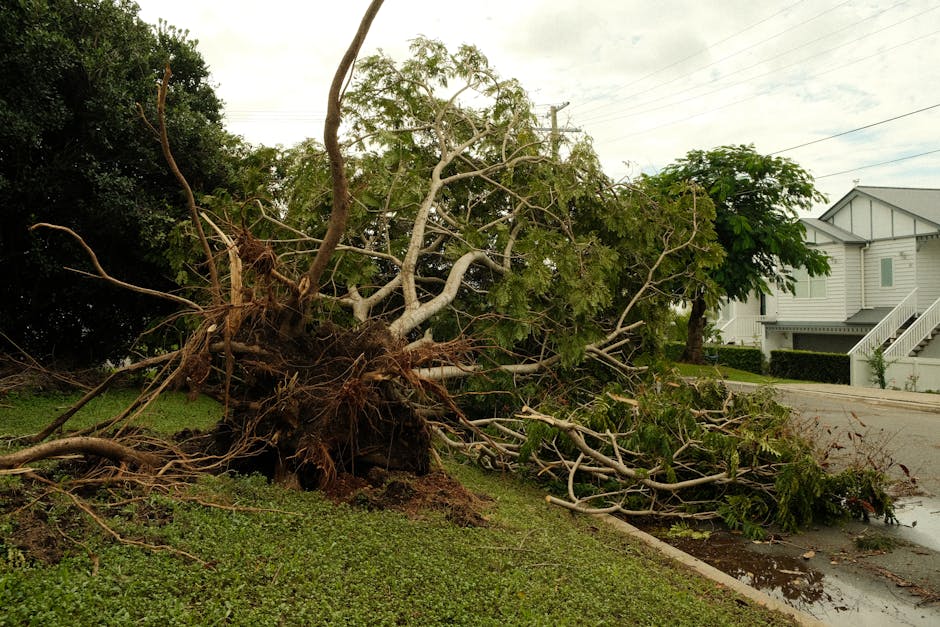
What actually drives the price
Nine out of ten jobs I quote are straightforward: tree in a yard, decent access, nothing critical in the fall zone. The other one needs a longer conversation. Here’s what changes the number:
Height and trunk diameter. These set the baseline. Everything else is a modifier.
Condition.A dead or diseased tree is more unpredictable than a healthy one. Brittle wood can snap mid-cut. That means more careful rigging, more time, and often a higher price. If a tree is actively failing, the work doesn’t get cheaper. It gets more careful.
Accessibility.If the truck can’t get close, the crew carries more by hand, takes longer, and sometimes needs additional equipment. A narrow gate, a steep slope, or no vehicle access can add $200–$600 to almost any job.
What’s adjacent to the tree.Anything in the fall zone that can’t be damaged — a house, a car, a greenhouse — requires rigging instead of felling. Rigging means cutting from the top down in sections, which adds significant time. A tree felling into open lawn is a different job from a tree next to your sunroom.
Species and wood density.Hardwoods like maple and oak take longer to cut and chip than softwoods like cedar and fir. The cost difference is roughly 10–15%. It’s real, but it’s not the biggest variable.
Time of year.In Langley/Aldergrove, not a major factor. BC’s mild winters don’t create the same off-season pricing gap you see in Ontario or Quebec. You’re not going to save 30% by booking in February.
I reckon the biggest misconception I encounter is people assuming a dead tree is cheaper to remove because "there’s nothing left to it." I understand the logic. The reality is the opposite.
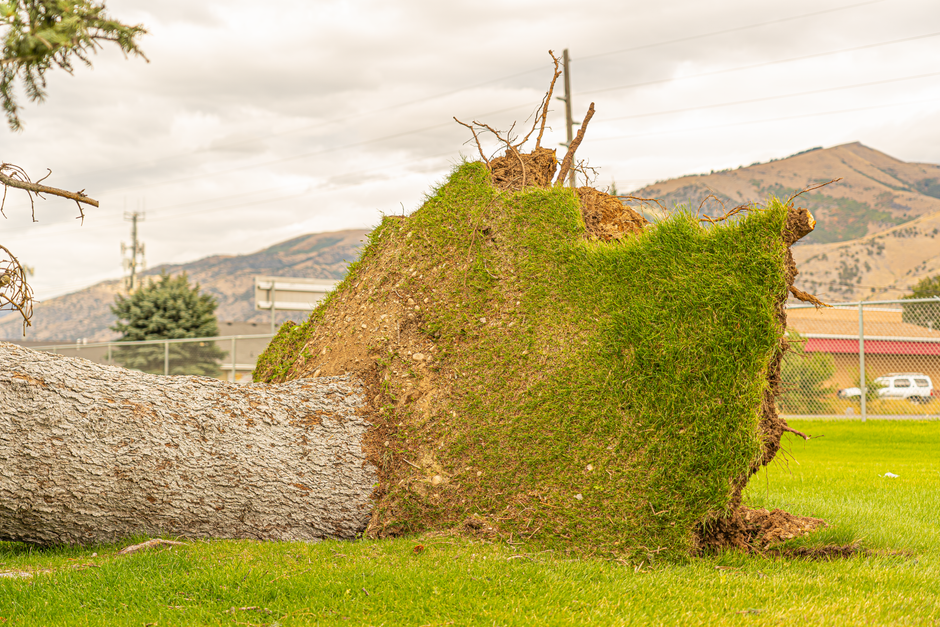
Stump grinding — the part everyone forgets
Nine out of ten people who call about tree removal also want the stump gone. About eight out of ten are surprised when I tell them it’s a separate quote.
Think of it like a dentist visit. The extraction is one thing. The root canal is something else entirely. (Yes, I know that analogy isn’t helping. I’m leaving it in anyway.)
Stump grinding in Langley/Aldergrove runs $150–$500 per stump. The industry standard is roughly $3–$6 per centimetre of trunk diameter at the base. A 40-centimetre stump — about the trunk of a mature ornamental cherry — runs $120–$240. A 90-centimetre stump from a large tree can be $270–$540.
What grinding does: removes the stump and major surface roots to about 20–30 cm below grade. The hole fills with wood chips and ground material. You can plant over it in roughly one growing season. It does not remove every root — deep roots stay put, decomposing gradually over 5–10 years.
If you want the area for a structure, a driveway, or a vegetable garden, ask specifically about root excavation. That’s a different scope and a meaningfully different price.
Always ask whether stump grinding is included before you sign anything. If it’s not itemised on the quote, it’s not included.
Langley/Aldergrove permits and the 2-for-1 rule
The City of Langley/Aldergrove has a tree protection bylaw. Before removing most trees — specifically, any tree with a trunk diameter over 20 centimetres measured at chest height — you need a permit.
The application is straightforward: describe the tree, state the reason for removal, and confirm replacement planting. Langley/Aldergrove requires a 2:1 replacement ratio — two new trees planted for every one removed. The permit fee is typically $50–$150. A reputable ISA Certified Arborist can pull the permit on your behalf and usually includes this in the quote. Confirm it’s included before you sign.
Two situations where you might not need a permit: trees under the size threshold, and trees on a City right-of-way that the City will remove at their expense. When in doubt, check the City of Langley/Aldergrove’s tree removal page before cutting anything.
Skipping the permit doesn’t create immediate problems. It tends to surface when you sell the house and someone pulls the permit history. That’s the tree equivalent of discovering you never filed a form — harmless for years, then briefly very relevant.
When removal isn’t the right call
I could spend an afternoon talking you out of removing a tree. I’m aware that’s not the optimal outcome for my call volume. But a tree that’s removed because it was "looking a bit rough" is gone permanently. Canopy that took 40 years to grow doesn’t come back in a weekend.
Worth considering before committing to removal, and what each typically costs:
Crown reduction or canopy thinning. If the concern is branch failure risk or too much shade, reducing the crown by 20–30% can address both without removing the tree. Typically $400–$900 for a mature tree. A good arborist will tell you honestly whether this fixes the problem or just postpones it — see our tree pruning services in Langley/Aldergrove for what that work involves.
Cable bracing.A structurally compromised tree with two competing main stems can often be stabilised with a cable. Standard installations run $350–$700 and last 10–15 years with annual inspection. Not every tree is a candidate, but it’s worth asking.
Dead-wooding.A crown full of dead branches is not automatically a tree that needs to come down. It’s often a tree that needs a clean-up. Dead-wooding runs $250–$500 and meaningfully reduces failure risk.
If a tree is actively dead, visibly declining with root damage, or has shifted so it would hit something on the way down — then removal is likely correct. If the issue is aesthetics, weight, or a general sense of nervousness — have the conversation with an arborist first, before spending $2,000 on something that might have had a $600 fix.
How to get a quote — and what red flags to watch for
Get at least two quotes for any job over $1,000. Not because tree services can’t be trusted — but because scope is subjective. One company might include stump grinding; another might not. Two quotes also give you a reality check on complexity and a baseline for what the job should cost.
A strong opinion, backed by numbers: the cheapest quote is almost never the cheapest outcome. A crew that quotes $600 for a large tree next to a structure is almost certainly skipping something — the site assessment, the rigging, or the cleanup. Usually cleanup. You discover this at 4pm on a Saturday when you’re looking at a pile of logs with no phone number for anyone.
What a good written quote includes: price per tree or scope, stump grinding listed as yes/no (with its own price if yes), debris removal specified, access requirements noted, and a price that is fixed before work starts.
Red flags worth paying attention to:
- A firm phone price without seeing the tree. Tree removal is too site-specific for a meaningful estimate without a site visit.
- No mention of liability insurance or WCB coverage. Ask for the certificate, not just the assurance.
- Pressure to sign the same day. Genuine urgency exists after storms — but a company managing their own schedule isn’t the same as a genuine emergency.
- Full payment required before work begins. A deposit is standard. Full payment upfront is not.
For anything involving power lines or active contact with structures, see our post on emergency tree service and what actually qualifies — the pricing and process are different from a planned removal.
When not to call us
We’ll tell you this even though it shortens the call queue.
- A tree under 3 metres with no obstacles nearby — if you have the gear and someone to watch the fall zone, a small ornamental in an open yard is a reasonable DIY job
- Branches under 10 cm diameter that have come down on their own — cut to length, pile or chip, no professional needed
- A healthy tree you want removed for aesthetic reasons with no structures nearby — in some cases, a permit application and a chainsaw rental will do it; call the City first
Where you do need a professional: anything near structures, power lines, or fences; anything requiring a ladder or climbing; anything large enough that a wrong cut is irreversible. Give us a call if you are genuinely not sure which category you are in. That conversation is free.