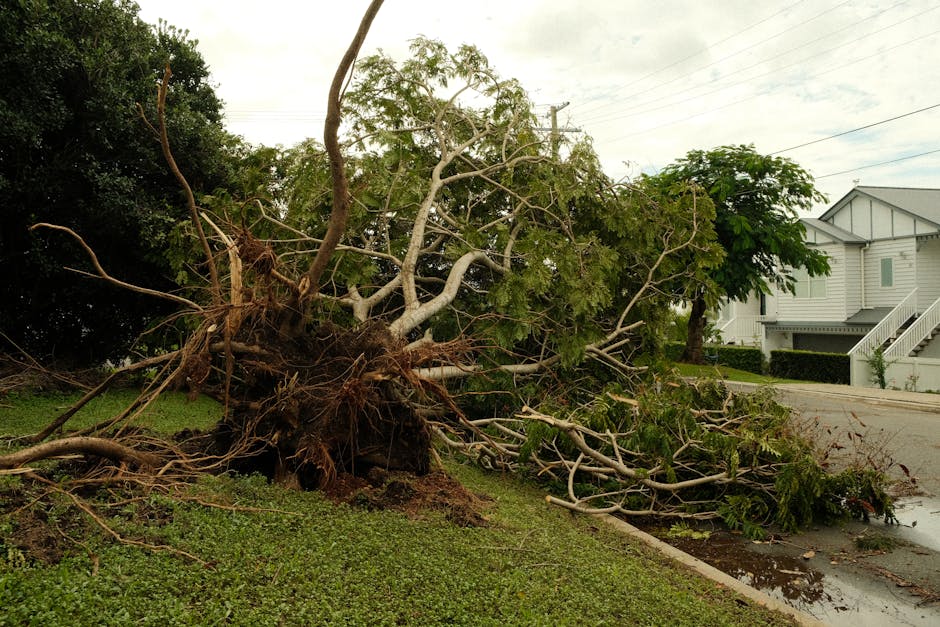
A tree fell in your yard last night. Or most of one did. The rest is still standing at an angle that would concern a structural engineer — or an architect, or honestly anyone with eyes.
The question isn't whether to deal with it. It's whether you need someone there at 10pm or whether 7am is fine, because that distinction is worth several hundred dollars and a decent night's sleep.
Quick answer: Call an emergency tree service now if the tree or any part of it is resting on a structure, touching power lines, or has visibly split at the base with something underneath worth keeping. If it's down in the yard but not threatening any structure, person, or live wire — it's urgent, not an emergency. Book for first thing tomorrow.
Nine out of ten after-storm calls we get fall into one of those two buckets. The tricky part is knowing which one you're in.
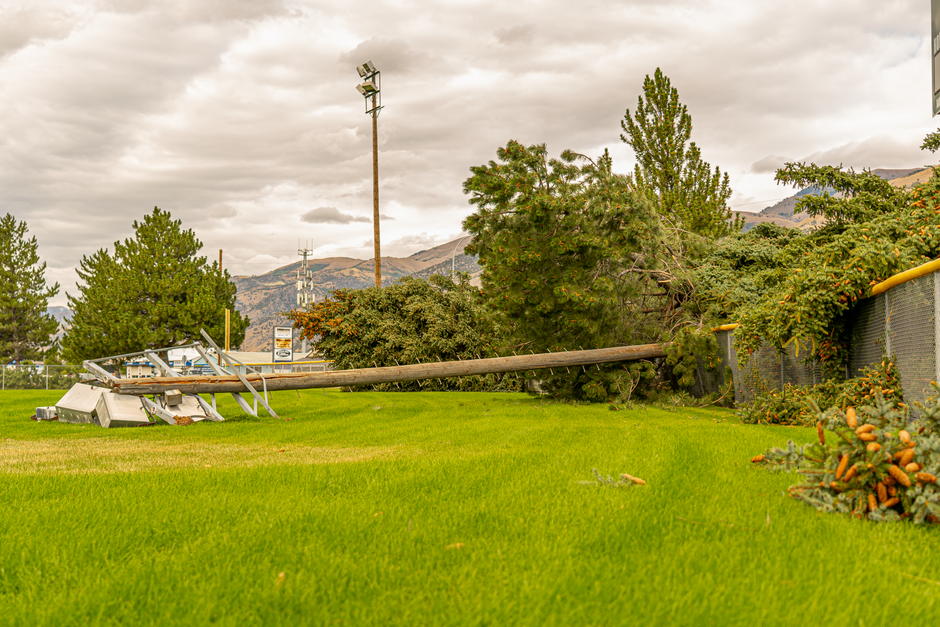
What actually qualifies as an emergency tree service
Not every downed tree is a tonight job, and not every company will tell you that before they invoice the call-out fee.
Call immediately — genuine emergency:
The tree or a limb is resting on a structure. Your house, garage, shed, car, or a shared fence. The load distribution changes as timber settles and shifts. What's sitting stable at 9pm sometimes isn't at 3am. Don't wait to find out.
Power lines are involved. Any contact — a branch touching a line, the full tree across one — stop everything. Call BC Hydro (or your local provider) first, not a tree company. Live lines can arc through wet timber to the ground around the tree. Don't go near anything in contact, including the soil within a few metres. BC Hydro's storm emergency line is 1-800-BCHYDRO.
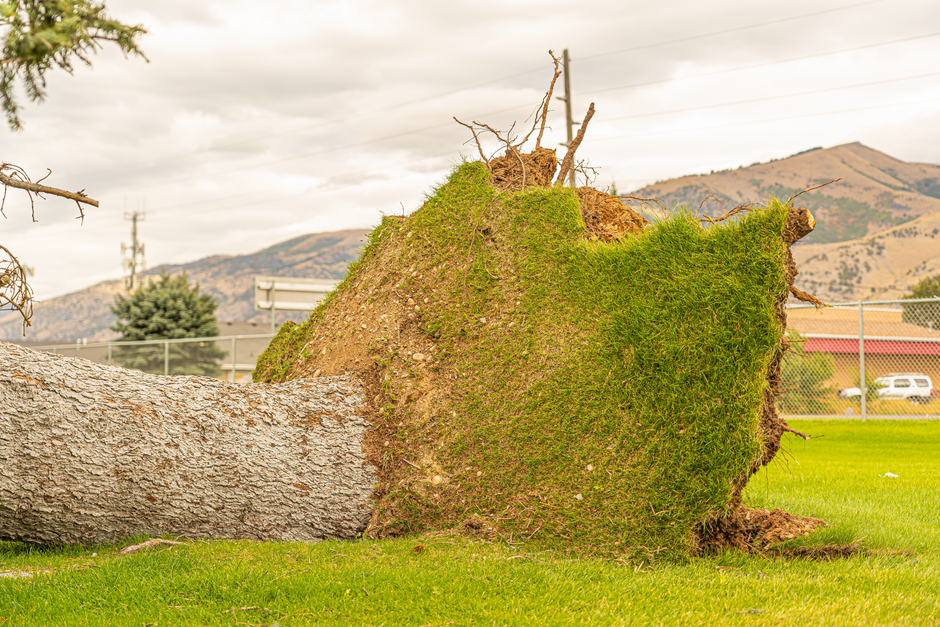
The trunk has split or the root plate is lifting. A split at the base is a tree formally resigning. The time between a visible structural split and full collapse is genuinely unpredictable — sometimes days, sometimes an hour. If anything's underneath — a path, a vehicle, a fence — don't sleep on it.
Urgent but not tonight:
A tree that's leaning but stable, limbs scattered on the lawn, debris across the yard. These need dealing with soon — but waiting until first light doesn't make anything worse. You'll get better conditions, more daylight, and a considerably lower price. If you're unsure whether a tree is structurally stable, an ISA Certified Arborist can assess it during daylight hours at a fraction of the emergency rate.
What to do while you wait
Most emergency tree guides skip this section. They probably should have included it.
Stay away from the fallen tree. Storm-damaged timber is under unpredictable tension. The part that came down shifted the load onto whatever's still attached. Moving around it before a professional assesses the scene is the part of this that can go wrong quickly.
Keep everyone away from the drop zone. That includes the kids, the neighbours who've come to look, and the person next door who "used to work in forestry." The casualty in most storm tree incidents isn't the homeowner — it's someone who came over to help.
Shut off electrical circuits near the impact area. If the tree's hit the house, treat everything in the area as potentially live until someone confirms otherwise.
Document everything now. Time-stamped photos from a safe distance, multiple angles. You'll need them for an insurance claim. Take them before any work starts — once cutting begins, the original scene is gone.
What happens when you call an emergency tree service
Someone real answers the phone. Not a message bank, not a form, not an answering service routing to whoever's cheapest that night. A tree professional who'll ask the same questions above and give you an honest read on whether it's a come-now or come-at-dawn situation.
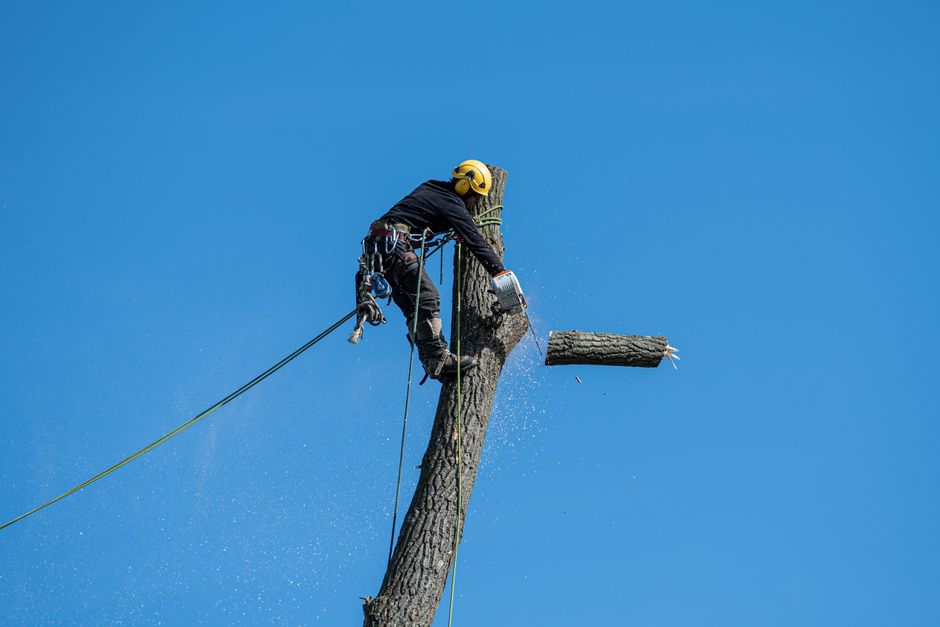
When the crew arrives: assessment before cutting. Every time. Where is the tree resting, what is it resting on, where can it safely come down, what equipment does that require. A tree sitting against your eave has to be rigged down in stages — you can't start from the base and hope for the best.
Price before the first cut. If scope changes mid-job — a second damaged limb becomes visible once we're up there — work stops, you get a revised number, you say yes or no. Any company that starts cutting and figures out the price at the end is passing the decision to you after you no longer have one.
What emergency tree services actually include
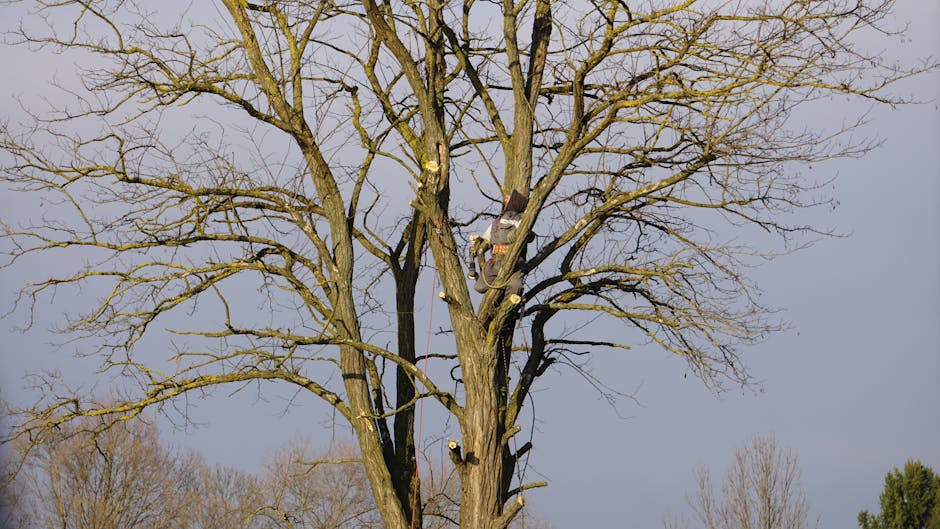
Hazard removal — the tree or limb actively on, or actively threatening, a structure. This is the primary scope. For a full picture of what we cover day-to-day, see our dangerous tree removal page.
Stabilisation — for large trees with split trunks, temporary cabling can hold the situation overnight so staged removal happens safely in daylight. Not always needed, but worth asking about.
Utility coordination — if power lines are involved, we work with BC Hydro to get the line isolated. We don't cut near live lines. Nobody should.
Debris management — this is a conversation, not an assumption. Emergency callouts don't automatically include full cleanup. Ask upfront what's included. Options are usually: on-site chipping with green waste taken away, cut to rounds and left, or full removal.
What emergency callouts don't generally cover:
- Stump grinding — loud, can wait until morning without making anything worse
- Crane work not booked in advance (though some companies carry cranes on-call — ask)
- Full site landscaping or replanting
Working around power lines
Near de-energised lines, yes. Near live lines, no — that's BC Hydro's territory first. The realistic sequence: tree contacts live line → you call BC Hydro → they isolate → arborists can work safely.
On a major storm night across the Fraser Valley, that isolation window can be several hours. A good emergency tree company uses that time productively: assessing the rest of the scene, staging what can safely be done away from the line, so the moment power is confirmed off, the crew moves efficiently.
What emergency tree removal costs: honest numbers
Nobody lists prices. We think they should.
| Scope | Rough range (CAD) |
|---|---|
| Single limb off a structure or vehicle | $400–$800 |
| Small tree (under 5m), after-hours | $600–$1,200 |
| Medium tree (5–10m), emergency removal | $1,200–$2,500 |
| Large tree (10m+), staged dismantling | $2,500–$5,500+ |
| Crane or elevated work platform involved | Add $800–$2,000 |
Rule of thumb: if a quote sounds too low for the complexity of the job, something's getting skipped — the assessment, the rigging, or the cleanup. One of those will cost you later.
A few years back we were called in after a homeowner paid $400 for "emergency removal" of a half-fallen cedar. The crew cut it wrong and dropped the remaining section into a cedar fence. Fence repair and correct removal ran $1,900 on top. The original $400 is not the amount anyone involved remembers spending.
Insurance and emergency tree removal
Most home insurance policies cover removal of the tree from a structure it fell on during a storm. Not necessarily removal of the tree from your yard. There's a difference — and it's usually buried around page four of your policy documents.
Before work starts: call your insurer, tell them a tree has fallen on a structure, ask what documentation they need. We provide itemised invoices that separate "removal from structure" from "site cleanup." Take your own photos before any cutting starts — time-stamped, multiple angles. Once work begins, the original scene is gone. The Insurance Bureau of Canada has clear guidance on what storm damage coverage typically includes.
When not to call an emergency line
We'll tell you this even though it's not optimal for our call volume.
Skip the emergency line for:
- Branches down on the lawn — clean-up job, not a hazard. Do it yourself or book a standard pruning visit
- A tree that's been leaning for months — that's a scheduled assessment, not a crisis
- Leaves and debris on the roof — your gutters want attention, not an arborist at midnight
- A neighbour's tree that looks concerning — call for a daylight assessment; liability questions are complicated
Do call if you're genuinely unsure whether a situation is stable. That call costs nothing. Guessing wrong costs considerably more.