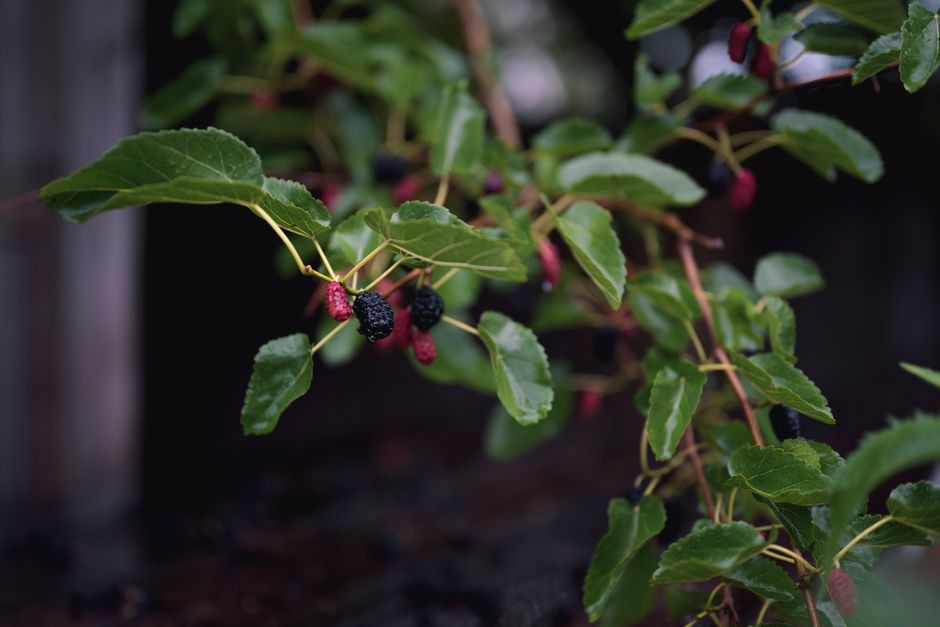
If you're searching “why are mulberry trees illegal” — the quick answer for Surrey, BC is: they're not.
(The purple stains on your driveway might feel illegal. That's between you and your pressure washer.)
The bans you've seen referenced are American, targeted at a very specific problem in very specific climates. In BC, mulberry trees are legal to plant and legal to keep. They're also genuinely annoying to manage if you don't know what you're doing — but that's a different problem, and we'll get to it.
The short answer: mulberry trees are not banned in BC
No Canadian municipality has enacted a mulberry ban, as far as I'm aware. The trees are legal to own and legal to plant. If a neighbour or a municipality has told you otherwise, ask to see the bylaw — I'd be genuinely surprised if it exists.
What you may have encountered is guidance around invasive species. White mulberry (Morus alba) is considered ecologically problematic in parts of Canada — not the same as illegal, but worth understanding. I'll get to that below.
If your question is “do I need to remove my mulberry tree for legal reasons” — the answer in Surrey is no. If your question is “should I remove my mulberry tree for practical reasons” — that's a more interesting conversation and we're going to have it.

Why some US cities actually banned mulberry trees
The cities that enacted mulberry bans — Tucson in 1984, Las Vegas in 1991, El Paso in 1992, Albuquerque around the same period — were dealing with a specific problem. Fruitless male mulberry trees that produce enormous amounts of pollen.
Fruitless mulberry was popular mid-century as a fast-growing shade tree for hot, dry climates. No fruit meant no mess. No mess meant HOAs loved it. The problem was the trade-off: male trees produce pollen instead of fruit, and a mature fruitless mulberry produces a genuinely staggering amount of it.
In desert cities with low humidity and persistent wind, that pollen hangs in the air for weeks. The result was a documented spike in respiratory complaints and asthma events across those cities every spring. Las Vegas was eventually producing enough allergy patients that the city formally banned new plantings.
The bans are narrow. They apply to fruitless male mulberry cultivars — the trees planted specifically to avoid fruit. Female fruit-bearing mulberry trees produce no pollen and were not part of the ban. Trees planted before the ordinances were grandfathered in.
In BC, we don't have that problem. Our climate is wetter, our pollen season behaves differently, and nobody ever planted fruitless mulberry at scale here. The conditions that made mulberry a public health issue in Nevada don't apply in Surrey.
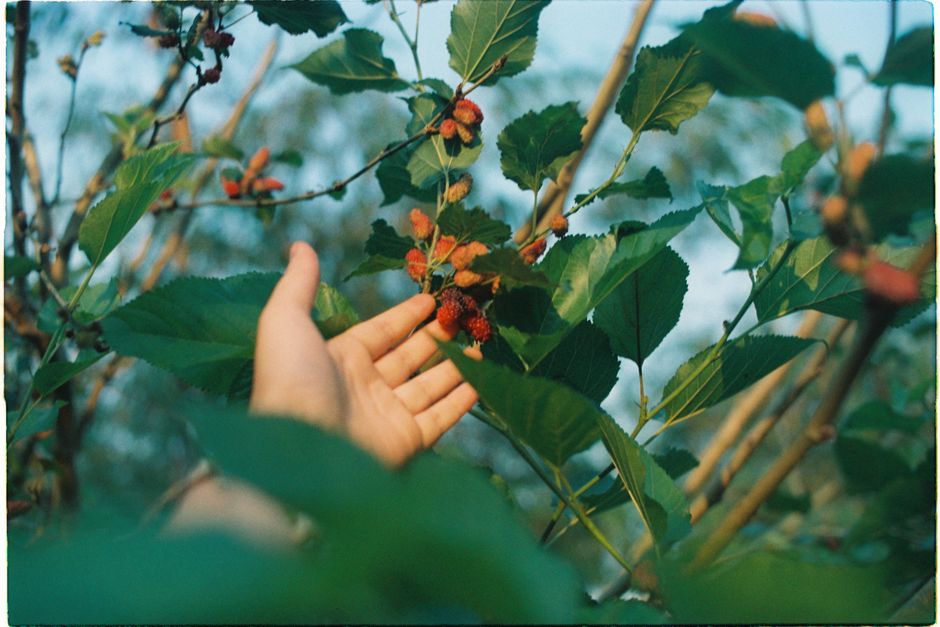
White mulberry vs. red mulberry: the species behind the problem
There are three main mulberry species in North America: white mulberry (Morus alba), red mulberry (Morus rubra), and black mulberry (Morus nigra). The one causing most of the trouble is white mulberry.
White mulberry came to North America in the 1600s with the European silk trade. Silkworms eat mulberry leaves. American entrepreneurs planted them hoping to establish a domestic silk industry. It didn't pan out commercially. The trees, however, did quite well on their own. (Nature: 1, entrepreneurs: 0.)
White mulberry grows fast — up to 2.5 metres a year under good conditions. It seeds prolifically. It hybridises with red mulberry, which is native to eastern North America. That hybridisation has put pressure on pure red mulberry populations in some regions, which is why white mulberry shows up on various invasive species watchlists.
The mulberry trees in Surrey gardens are almost certainly white mulberry. Red mulberry doesn't naturally occur this far west. If you've got a mulberry in your yard, it's the introduced species — and while that doesn't make it illegal here, it does mean the invasive-species information you might find online is at least partially relevant to what you've got.
I reckon most people in Surrey with mulberry trees got them one of two ways: someone planted them, or a bird did. Birds eat the berries and the seeds pass through. You can get a mulberry volunteer in a hedgerow without ever having bought one.
What to do if you have a mulberry tree in Surrey
Here's the honest arborist answer rather than the generic internet answer.
If it's young and in a location you don't want it — remove it now. A mulberry seedling is a ten-minute job with a spade. A ten-year-old mulberry with an established root system is a different proposition. Deal with it early.
If it's established and producing fruit you don't want— this is a management problem, not a removal problem. Options are: prune it to reduce the fruit load (works reasonably well), accept that you'll be sweeping purple berries in June, or weigh whether the shade value justifies the cleanup. Spoiler: for most trees, it does.
If it's a big established tree and not causing structural problems— I'd keep it. Mulberry trees grow to impressive size and provide real shade. The birds genuinely love the fruit. Taking one down is an irreversible decision, and most of the reasons people give me for removing mulberry trees are solvable short of that.

Pruning mulberry trees: what actually works
Mulberry trees respond well to pruning. They're one of the more forgiving species — they can take a fairly hard cut without significant stress, which makes them popular for pollarding (cutting the crown back heavily on a regular cycle to keep them at a manageable size).
When to prune:Late winter to early spring — after the worst frosts but before new leaves emerge. Mulberry bleeds sap heavily if pruned too late in spring, so timing matters. Avoid pruning in summer unless you're removing dead or damaged wood. (And yes, I know it's always summer when you finally get around to it. Late winter next year.)
What to remove:Dead and crossing branches first. Then anything structurally weak or growing into a structure. For size management, a crown reduction of 20–30% is the standard approach. More than a third off at once and you're asking the tree to do a lot of recovery work.
The fruit-reduction prune:If you're trying to reduce berry drop, prune the previous year's fruiting wood in late winter. It won't eliminate the crop, but it can meaningfully reduce it. Pair that with some crown thinning to improve airflow and you've got a more manageable tree.
The same dormant-season timing that works for fruit tree care applies here — our guide to trimming apricot trees covers the pruning principles in more detail if you want the full breakdown.
For mulberries over 20 feet, the work involves a chainsaw at height. That's a job for a professional — not because the tree is unusual, but because chainsaw work at height is where most tree-related injuries happen. The savings on the quote are not worth the medical bill. An ISA Certified Arborist is the right call for trees near structures or anything requiring climbing.

When you should actually remove a mulberry tree
Nine out of ten times I'm called out to assess a mulberry tree in Surrey, removal is not the right answer. In fifteen years and 3,200-plus jobs, I've recommended pruning over removal for mulberry trees at roughly a nine-to-one rate. They're resilient, manageable, and usually not causing the structural problems people are worried about.
That said, there are genuine cases for removal:
- Roots actively damaging infrastructure. If a mulberry root has found your drain line, cracked a foundation, or is lifting a concrete path near the house, the tree needs to come out. Pruning the top doesn't stop the roots. A root barrier can buy time, but if the damage is already happening, removal is the cleaner long-term answer. Our guide to removing tree roots covers what you can address yourself.
- The tree is dead or structurally compromised.A dead mulberry is a hazard — the wood becomes brittle relatively quickly and branches drop unpredictably. If it's dead, it comes out.
- It's in the wrong place for the long term.If you planted it close to the house ten years ago and it's now overhanging the roof, you have some choices. Crown reduction can work. But if the root system is also close to the foundation, a clean removal and replanting further out is often the better 20-year decision.
- It's volunteering into a natural area. If white mulberry is spreading into a riparian area or naturalized space on your property, managing it makes sense from an invasive species perspective. It won't hybridise with anything native in BC, but it will displace other plants if left unchecked.
When not to call us about your mulberry tree
I'll give you this one straight, even though it reduces our call volume.
Don't call us if the staining is your only complaint. If the tree is otherwise healthy and not causing structural problems, the staining is a management issue, not an arborist issue. Gravel under the drip line and a rinse in June gets you most of the way there.
Don't call us for a seedling.If you've got a mulberry volunteer under a metre tall — pull it or dig it out yourself. A spade and ten minutes. Calling an arborist for a seedling is like calling a plumber because your glass is empty.
Don't call us if someone just wants it gone for aesthetic reasons. Before removing a healthy established tree, ask yourself whether a proper prune and some fruit management would solve the problem. Nine times out of ten, it does. A second opinion before removal is worth the call — it costs $150 and often saves a lot more.
Do call usif the tree is over 20 feet and needs pruning, if there's a root concern near the house, if the tree looks structurally compromised, or if you want an honest read on whether it should stay or go. That conversation is free. A mulberry tree in the right place, managed properly every few years, is genuinely one of the better trees you can have in a Surrey garden. The fruit feeds birds, the shade is real, and the stains — well, you'll come to terms with them. Possibly around the third year.