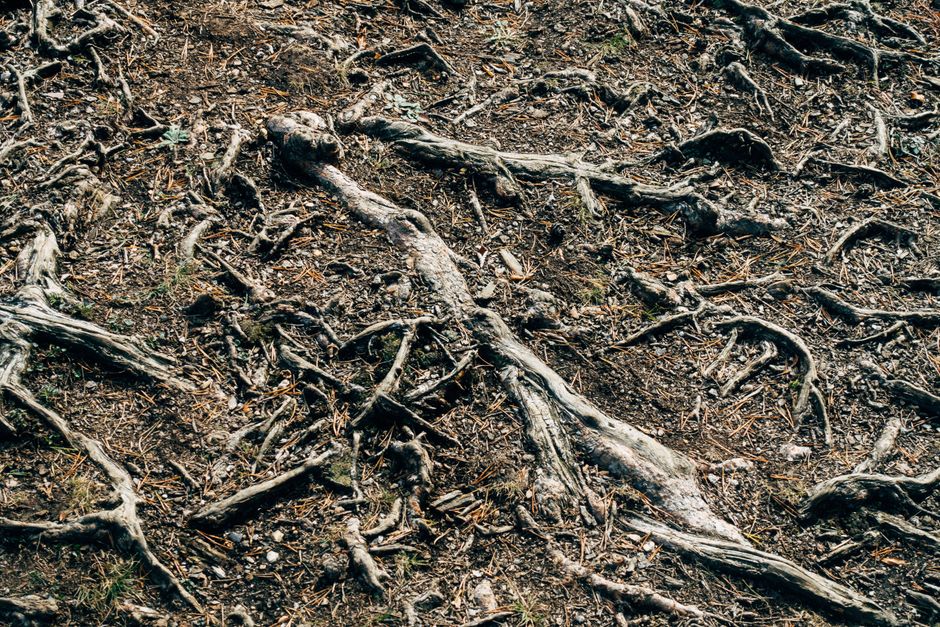
Tree roots are patient. They have nowhere to be, nothing to do, and apparently all the time in the world to lift your driveway one millimetre per year. (Fourteen years of growth, and the first thing you notice is a crack in the concrete. Nature: very committed.)
Here's the direct answer: surface roots smaller than 2 inches in diameter can be cut and removed without permanently harming the tree — as long as you stay at least 3 feet from the trunk and don't take more than 15% of the root mass at once. Anything larger, deeper, or near the foundation is a job for a certified arborist.
The short version: small surface roots are a weekend job. Larger roots near structures, under hard surfaces, or close to the trunk need a professional assessment before anyone picks up a saw.

When tree roots actually need to come out
Most root questions I get aren't really about the roots — they're about the problem the roots are causing. Nine times out of ten, the root itself isn't the issue you fix; the damage it's creating is.
Roots lifting or cracking hard surfaces. Driveways, patios, sidewalks. The concrete cracks, frost widens the gap each winter, and what starts as cosmetic becomes structural. This is worth dealing with. Left alone, it doesn't reverse.
Roots blocking or entering drains. Older clay pipes are particularly vulnerable — roots find the smallest join and exploit it. Slow drains with large trees nearby are often root-related.
Stump suckers after a removal. The old root system is still feeding new growth. Grinding the stump usually handles this. If suckers keep returning, the root network is still viable — different conversation.
What doesn't need action: exposed roots in the lawn, visible roots at the base of the trunk. Covering them with topsoil won't hold — the tree pushes them back up. Mow around them. They're doing their job.
What you can safely do yourself
Rule of thumb: if the root is under 2 inches in diameter, more than 3 feet from the trunk, and not running under a structure — you can handle it.
Tools you need: a sharp spade, a root saw or reciprocating saw, and a pry bar. That's the whole kit. If you're spending more than an afternoon, the root is probably larger than it looked from the surface.
The 15% rule. Don't remove more than 15% of a tree's root mass at one time. This isn't a made-up buffer — it's the threshold where visible tree stress begins. Beyond it, crowns thin, growth slows, and with older or already-stressed trees, the root plate can destabilise. A tree that looks fine the summer after root removal can still fail in the next heavy windstorm if too much was taken.
Cut cleanly. A rough saw cut is a wider wound and takes longer for the tree to seal. One clean cut with a sharp blade beats three rough ones every time.
How to remove surface tree roots: step by step
This applies to roots under 2 inches in diameter, away from the trunk and not running under a structure.
- Dig 6 inches either side of the root to expose it cleanly.
- Trace the root back from the problem area — cut well away from the trunk.
- Cut cleanly with a root saw. A reciprocating saw handles most roots under 2 inches.
- Lever out the section with a pry bar. Work from the cut end back toward the problem area.
- Backfill with topsoil and tamp it down.
- Water the area through the first season. The tree noticed what you did, even if it's not complaining yet.
The moment you uncover something significantly thicker than expected — stop. What looked like a secondary root from the surface can be a primary lateral once you're digging. Cutting a primary lateral on a large tree changes the structural picture. Worth a call before you proceed.
Mechanical and chemical removal options
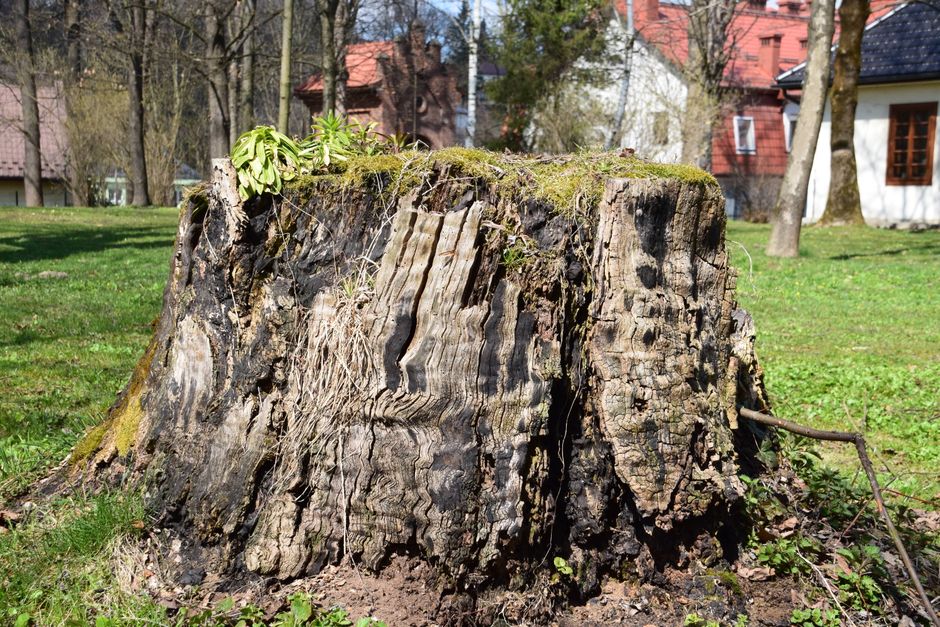
Stump grinding handles root mass from removed stumps. The grinder works down to 6–8 inches below grade. It doesn't reach lateral roots extending further out, but for sucker control and clearing the immediate area, it's the right tool. Standalone stump grinding runs $200–$500 depending on size — see our stump removal service page for current pricing.
Copper sulfate foam works for roots growing inside drain pipes. It kills the root mass inside the line without excavation. Effective for that specific problem — not a solution for structural roots or roots under hard surfaces.
Root barriers are worth considering for new construction near established trees. If you're extending a driveway or building a path within 15 feet of a large tree, installing a root barrier during construction is far cheaper than dealing with root damage later. Retro-fitting one after the fact requires excavation first, which usually costs $300–$700. The ISA's guidance on root management covers this in more detail for anyone who wants the technical read.

When to stop and call an arborist
I'll be honest about when not to hire us, because there's no point paying for something a Saturday and a root saw handles fine.
You do need a professional when:
- The root is 3 inches or more in diameter
- The root runs under or near the house foundation
- You're within 3–4 feet of the trunk
- The tree is already showing stress — thin crown, dead branches, bark discolouration
- You dig down and it's significantly larger than you expected
That last point matters more than people think. A few years back, a homeowner in Langley/Aldergrove was clearing roots from a bigleaf maple to fix a cracked driveway. Cut six or seven roots across two weekends. Tree looked healthy for over a year. Came down in a February windstorm — onto the fence and the neighbour's shed. A proper tree assessment before the root work would have flagged the risk. Professional root excavation with assessment would have run $800–$1,200. The fence and shed repair came to $4,400.
Professional root work also includes an assessment of the tree's overall condition. For trees with roots near a structure, that assessment is worth the $150 consultation fee even if the root work itself turns out to be straightforward. And that fee is credited toward the job if you proceed.
What it costs — honest numbers
Nobody publishes pricing. Here's ours.
| Job type | Range (CAD, all-in) |
|---|---|
| Tree assessment / consultation | $150 (credited toward work) |
| Surface root removal (small, under 2 inches) | $250–$450 |
| Professional root excavation (larger roots, near structures) | $600–$1,200 |
| Stump grinding (removes root mass from stump) | $200–$500 |
| Root barrier installation | $300–$700 |
The assessment fee is the part most people skip and later wish they hadn't. A 15-minute look before root work starts can save a tree — and avoid a significantly larger job down the road. If the situation is clearly a DIY job once we've had a look, I'll tell you that and credit the fee toward any future work. That's just the honest way to do it.
For broader context on how root work fits into overall tree health, the ISA Canada's arborist directory is a useful reference — it's also how you verify whether whoever you hire is actually certified.