
Trimming apple trees at the wrong time of year is like calling in sick on a Friday — technically fine, but everyone knows what you're doing. The correct window in Langley/Aldergrove is late January to mid-March, while the tree is dormant and frankly not interested in your opinion.
Most apple trees in the Fraser Valley want pruning once a year, in that dormant window before bud swell. Do it then, and the tree heals fast, produces more evenly, and gives you a decade of decent harvests. Do it in September, and you're asking for problems.
Quick answer:Trim apple trees in Langley/Aldergrove between late January and mid-March, while the tree is fully dormant. Remove crossing branches, water sprouts, dead wood, and suckers. Don't take more than one-third of the canopy in a single year.
Nine out of ten calls we get about apple trees struggling after pruning trace back to wrong timing, wrong cuts, or too much taken off in one session. This guide covers all three.

The right window — and why that timing matters
Langley/Aldergrove sits in the coastal zone. Winters are mild enough that apple trees often start waking up in late January — earlier than most people realise, and earlier than guidebooks written for colder inland climates suggest.
The window opens once the worst frosts have passed. In Langley/Aldergrove that's roughly late January in a mild year, mid-February in a typical one. It closes when you can see the buds starting to swell and colour. Once buds are green and moving, pruning stress goes up and the benefit of dormant-season timing is lost.
Three things happen in dormant season that don't happen any other time:
The tree isn't spending energy on leaves or fruit. It can direct resources to healing wounds quickly rather than keeping its canopy alive. A dormant wound often closes in the same spring it was made.
The structure is fully visible.Without leaves, you're not guessing which branch crosses which. You can see exactly what's there and make better decisions.
Disease pressure is lower. Fire blight — the main bacterial threat to apple trees in BC — spreads through fresh cuts in warm, wet conditions. In dormant season the organism is inactive. BC's Ministry of Agriculture fire blight guidance is worth reading if you've seen wilted, scorched-looking shoots on your tree.
What about summer pruning? There is one legitimate case: vigour control. If the tree is producing too much leafy growth at the expense of fruit, light summer tipping of new shoots in mid-July to early August can help redirect energy. This is a supplement to dormant pruning, not a replacement.
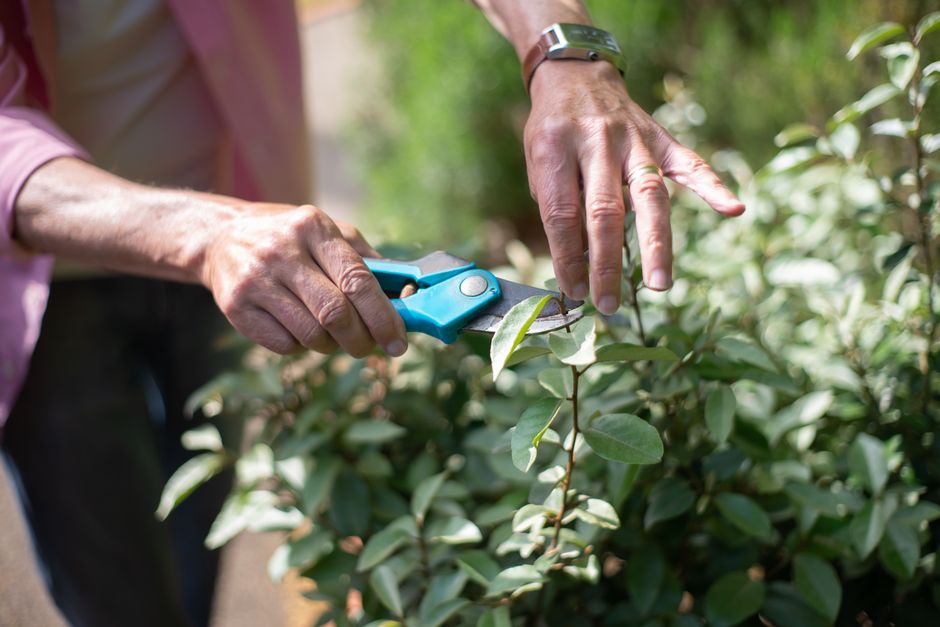
What to cut: five targets every year
This is where most homeowners go wrong. Not because it's complicated — because they try to do everything at once on a tree that hasn't been touched in years.
Start with these five, in order of priority:
Dead and diseased wood.Anything clearly dead gets removed entirely — back to live wood, to a lateral branch, or to the trunk. Diseased branches get cut well below the damage. Disinfect your tools between cuts. This isn't optional when fire blight is involved.
Crossing branches. Two branches rubbing against each other create a wound. Pick the one growing in a better direction, remove the other one. Simple call, meaningful result.
Water sprouts. The vertical, whippy growth that rockets upward from older branches. They produce no fruit. They shade out everything below them. Remove them at the base.
Suckers.Growth from the rootstock below the graft union. Pull rather than cut where possible — cutting stimulates more of them. If they're coming from underground, get them as close to the origin as you can.
Overcrowded scaffold branches. The hardest judgment call. The goal is enough light and airflow through the canopy that fruit can develop properly and disease pressure stays low. If a branch is shading out everything below it with no good reason to keep it, it goes.
For more on what a professional tree pruning service covers, our services page has the full breakdown.
Thinning cuts vs heading cuts
There are two types of cuts. Most people figure out which one they needed after they use the wrong one.
Thinning cuts remove an entire branch at its point of origin — back to the trunk, back to the branch collar, or back to a lateral. The cut surface is small. The tree heals it efficiently. The growth response is measured.
Heading cutsshorten a branch, leaving a stub. The tree's response is to throw out several new shoots below the cut. If you want dense, bushy regrowth, heading cuts are your tool. If you want a productive fruit tree, you mostly don't want dense, bushy regrowth.
Rule of thumb: thinning cuts for most structural work, heading cuts only for managing height or directing growth in young trees. If your cuts leave stubs rather than smooth collar-flush surfaces, you're heading when you should be thinning.
One other thing worth saying: make cuts clean. A dull saw tears tissue rather than cutting it. Wounds take longer to close, and ragged edges invite disease. I reckon a third of the “why isn't my tree healing” calls we get trace back to blunt tools. Sharpen before you start.
The ISA Canada arborist directory is a useful reference if you want a certified arborist to assess your tree before making cuts.
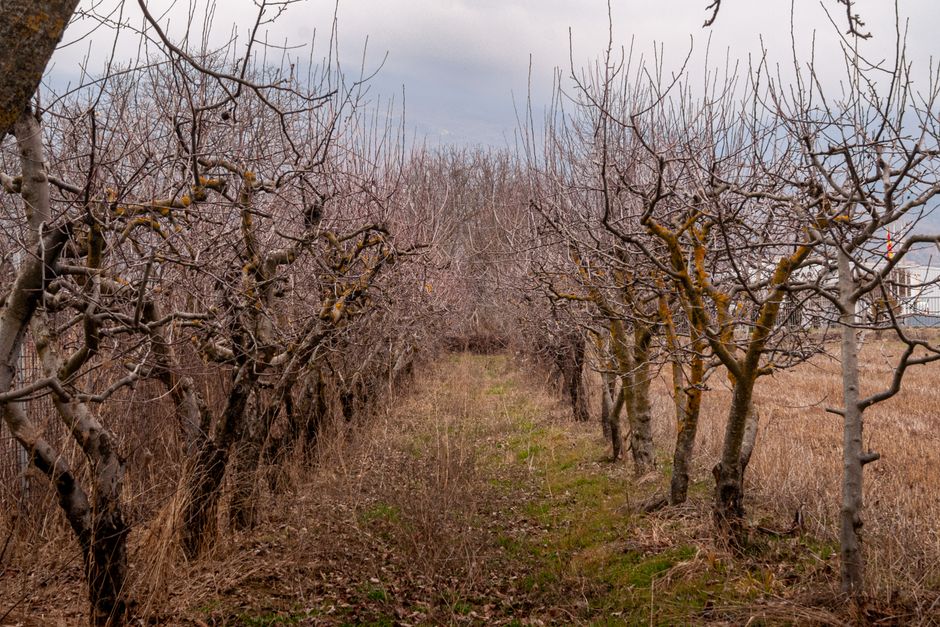
Overgrown apple trees: how to bring them back
This is where people get impatient and do more damage than the original neglect caused.
An apple tree that hasn't been pruned in five or ten years has built a structure that can't be corrected in one session. Taking 40% of the canopy off at once triggers a stress response: masses of water sprouts, weakened structure, and sometimes a tree that just stops producing fruit for the next two seasons. (The tree is not impressed. The tree has options.)
The three-year renovation method works reliably. Year one: remove the worst structural problems — dead wood, obviously diseased material, anything genuinely dangerous. No more than a third of the canopy. Year two: address crossing branches, begin opening the centre. Year three: fine correction.
Nine out of ten overgrown apple trees I've looked at in Langley/Aldergrove could be brought back to decent productivity in three seasons of patient work. A few aren't worth it — if the trunk is rotting at the base or the scaffold structure has completely failed, replacement is the honest answer. I'd rather tell you that on a first visit than spend three years billing you for renovation that isn't going to produce a crop.
If you're unsure which situation you're in, our guide on how to tell if a tree is dead or declining covers the structural warning signs to look for.

What it costs — Langley/Aldergrove arborist pricing
Nobody posts prices. We think they should.
| Service | Rough range (CAD) |
|---|---|
| Small apple tree (under 3 m), annual trim | $150–$350 |
| Medium apple tree (3–5 m), annual trim | $300–$600 |
| Large apple tree (5 m+), annual trim | $500–$1,200+ |
| Overgrown tree, first-year renovation | $400–$900 |
| Multi-tree orchard visit (3+ trees) | Priced by the job — ask |
These assume reasonable access. A tree overhanging a structure, sitting next to a fence, or requiring elevated equipment changes the number. For a full picture of what affects pricing, our tree trimming cost guide runs through every factor.
When not to call us
This is the section most companies skip. We'll give it to you anyway.
If your apple tree is under two metres, has no dead or diseased wood, and just needs a handful of water sprouts removed — do it yourself. A clean pair of bypass secateurs, late January, ten minutes. You'll save $150 and develop a feel for the tree that no arborist visit replaces.
If the tree is in good shape and you just want a light tidy-up, same answer. Come back with secateurs once a year. You don't need us for that.
Give us a call if:
- The tree is over four metres and you're working near a structure or fence
- You're seeing fire blight, significant dieback, or canker
- The tree hasn't been properly pruned in more than five years
- You're not sure whether what you're looking at is actually a problem
That last one is worth a call even if the job turns out to be nothing. Figuring out whether a tree needs work is different from doing the work. We'll tell you honestly if it's a “come back next season” situation.