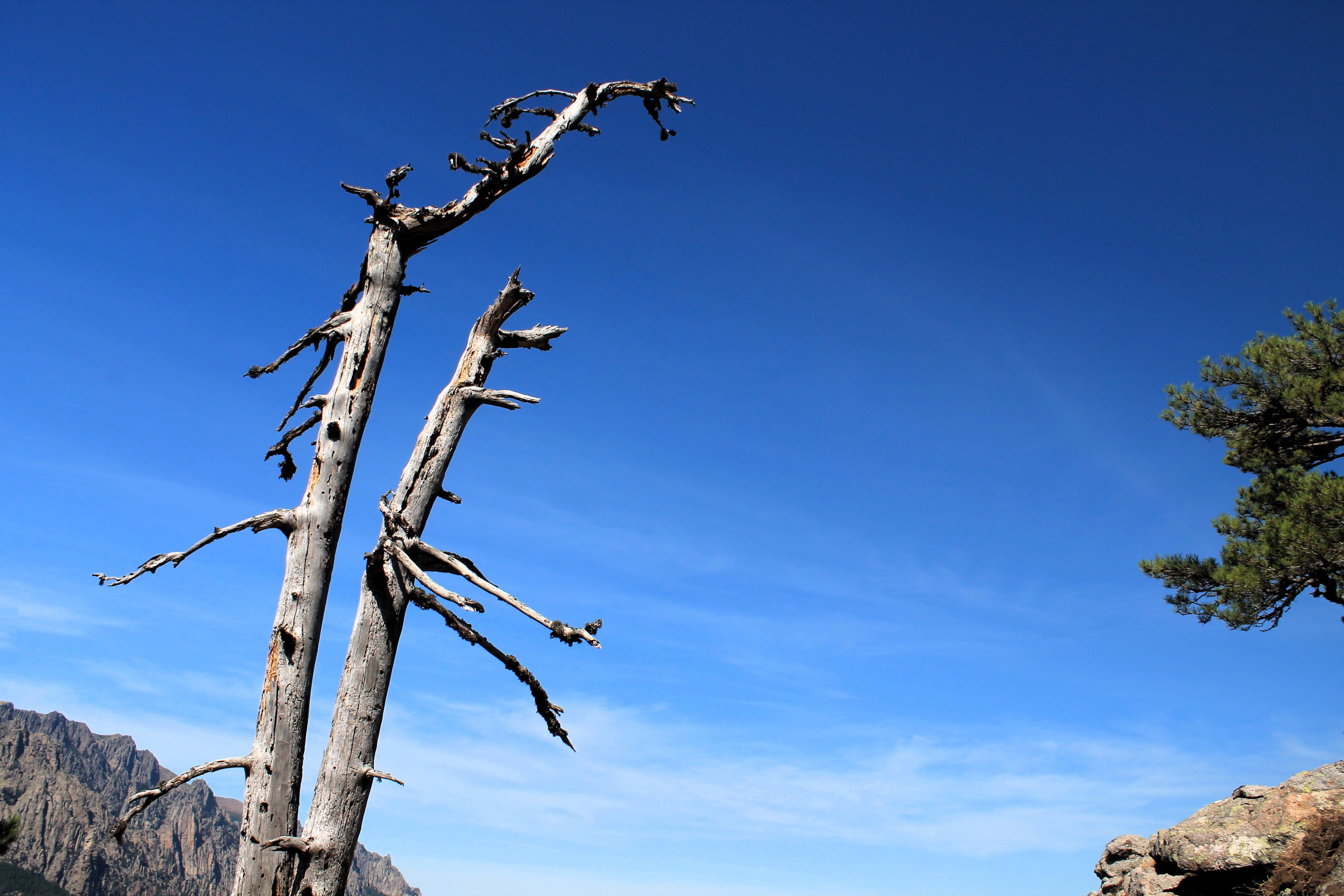
Trees are notoriously bad at asking for help. Forty years in your yard without complaint — though I reckon they communicate just fine once they've made up their mind to fall on something.
Here is how to tell if a tree is dead: scratch a small patch of outer bark from any pencil-diameter twig with your thumbnail. Green and slightly moist underneath means that branch is alive. Brown and dry all the way through means it's gone. Test three or four spots across the tree. If all of them come back brown, you're dealing with a dead tree.
Quick answer: The scratch test is definitive. Green cambium = alive. Brown cambium = dead. Do it in five spots — upper canopy, mid-trunk, and near the base. A tree that fails in every spot is dead. A tree that shows mixed results is stressed or partially dying, which is a different situation but still worth looking at.
Nine out of ten calls we get about "dead" trees turn out to be dormant trees, stressed trees, or trees with a single dead section in an otherwise healthy canopy. A small but important fraction are genuinely dead — and have been for a season or two, quietly becoming a structural problem.
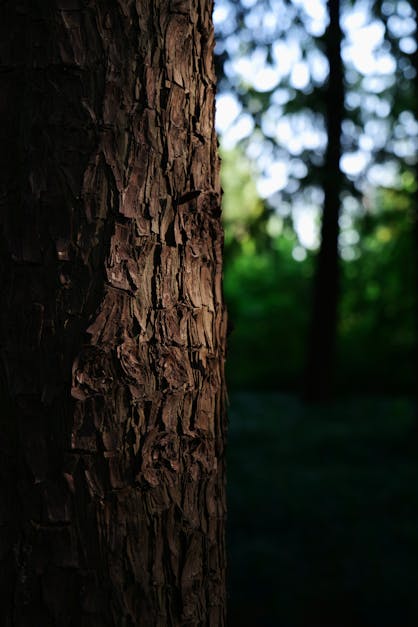
The scratch test — 30 seconds, one thumbnail
It's the first thing I do on every tree health assessment. It costs nothing and takes less time than unlocking your phone to look up "how to tell if a tree is dead."
Use your thumbnail — or a small pocketknife if you're doing a proper job of it — and scrape a patch of outer bark about the size of a fingernail from a pencil-diameter twig. Not the trunk, not a big limb. A small twig first.
The layer directly under the outer bark is the cambium. In a living branch it's green, sometimes pale yellow-green, and slightly moist. In a dead branch it's brown, dry, and lifeless all the way through. No ambiguity. You know instantly.
One dead twig is just one dead twig. Test five spots — two in the upper canopy if you can reach safely, two mid-canopy, one at the lowest accessible branch. A tree that's completely dead will fail in every location. A tree that's stressed or partially dying will show a mix.
Rule of thumb: if more than two-thirds of your test spots come back brown on a deciduous tree in the growing season, call a certified arborist for a proper assessment. Recovery at that point is possible, but requires professional eyes on the ground.
One thing that trips people up in winter: dormant trees look dead. No leaves, no growth, bare branches in every direction. But their buds are still alive. Check the branch tips — a dormant tree has tight, closed buds with a little moisture still in them. Crack one open: green inside means dormant. Dry and empty means that branch at least is done.
Five warning signs your tree is dead
These are the things worth looking at before you even get to the scratch test.
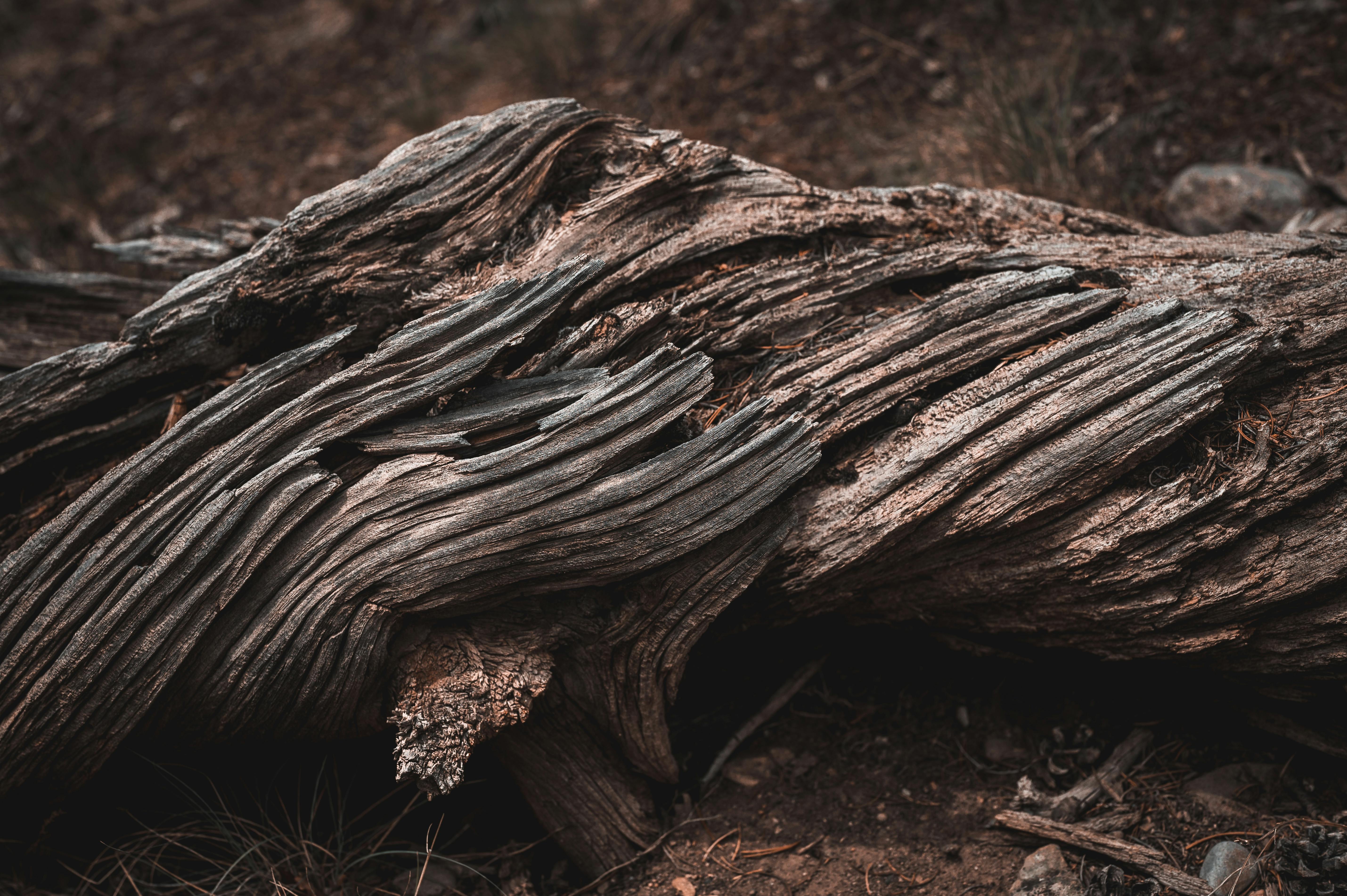
1. Bark falling off on its own. Living trees have bark attached to living cambium. A tree that has been dead for a season or two will have bark that lifts away with almost no effort — sometimes in large plates or slabs, leaving dry grey-brown wood underneath. You shouldn't have to peel it. It should be coming off by itself.
2. No leaves in season, and no buds. Late spring in Langley/Aldergrove and still bare? That's worth investigating. A dormant tree will break bud when temperatures are right — usually March to April in the Fraser Valley. If your neighbours' trees of the same species leafed out weeks ago and yours hasn't moved, do the scratch test today.
3. Branches that snap clean without bending. Bend a pencil-thin branch. Living wood flexes before it breaks — there's elasticity in it. Dead wood snaps clean, often with a hollow or brittle sound, with no give at all. Dead branches lose their flexibility within one or two seasons of the tree dying.
4. Multiple large dead branches throughout the canopy. A few dead branches in a large mature tree is normal maintenance — we call that deadwood, and it's part of any proper pruning job. All of the major scaffold branches coming back brown on the scratch test is a different situation entirely.
5. A lean that wasn't there before, or visible cracking at the base. This one isn't just about whether the tree is dead — it's about immediate safety. A dead tree loses structural integrity as the wood dries out and decay sets in. A sudden lean after a windstorm, or cracks appearing at the root flare, means the failure risk is no longer theoretical. For dangerous tree removal in Langley/Aldergrove, don't wait for the next inspection cycle.
Root and fungal problems — the ones under the surface
The scratch test tells you what's happening above ground. What's going on in the roots and the interior of the trunk is harder to see — and often more relevant to whether the tree is salvageable, or whether it's structurally compromised beyond what the crown is showing.
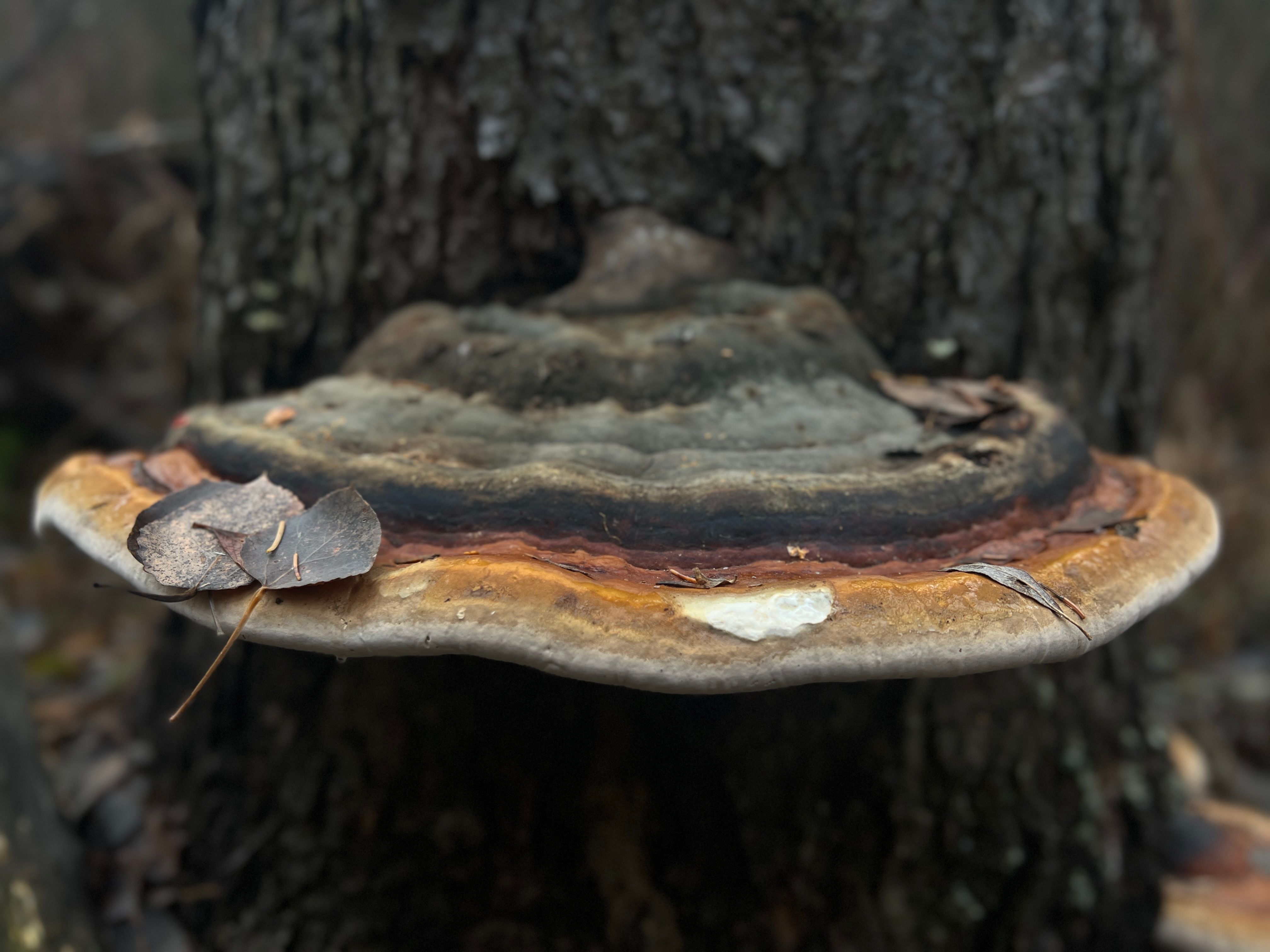
Mushrooms or bracket fungi growing at the base of the trunk. This is worth taking seriously. Bracket fungi — the shelf-shaped growths that stick out horizontally from the bark — and clusters of small mushrooms near the base are almost always signs of internal root or trunk decay. The fungal body you're looking at is just the surface expression. The mycelium has been working through the interior of the tree for years before that visible growth appears.
Langley/Aldergrove gets enough wind off the coast and through the Fraser Valley that a root-decayed tree near a structure is a genuine hazard, not a theoretical one. A tree can appear healthy in its crown right up until root failure causes it to topple.
Cankers, unusual bark discolouration, or oozing sap. These often indicate disease or pest activity killing the tree from the inside. Cytospora canker is common in BC conifers — it kills branches progressively and moves inward. Bronze birch borer does similar damage to birches, working from the top down over two or three seasons while the lower crown looks mostly fine. By the time the whole tree looks dead, the structural damage is already done.
Roots that are lifting, compacted, or recently disturbed. Construction damage, trenching for utilities, road salt runoff, and pavement over root zones all compromise the root system gradually. A tree can die slowly over five or six years from root stress sustained in a single construction season. The BC Ministry of Environment tree protection guidelines require a protection zone equal to the drip line radius — which is frequently ignored by contractors and almost never enforced on residential sites.
For any of these root or fungal signs, the only way to assess accurately is to have a certified arborist on-site. I can spot most of these from a walkround, but a proper assessment takes hands on the trunk and eyes at ground level.
When to call an arborist (even if you're not sure)
You don't need to be certain the tree is dead before calling. Figuring that out is our job, not yours.
Call for a professional assessment when:
- The tree is within fall distance of your house, garage, deck, fence, or power connection
- The scratch test shows mixed results — partially dead, partially alive
- You see bracket fungi or mushrooms growing at the base of the trunk
- Any large limbs look like they're hanging without support, or have already partially detached
- The tree leaned noticeably after a windstorm and the lean is new
- You're buying or selling a property and a large tree is involved
You can probably wait when:
- The tree is isolated in your yard, away from all structures, and looks simply dormant going into spring
- It's February or March and you're not sure yet — wait for bud break and see what happens by May
- The scratch test came back green in most spots and the tree is showing some new growth
I'll be direct about something: most trees people call us about are not dead. They're dormant, stressed, or dealing with a manageable issue. A healthy tree is worth keeping. If there's a real chance yours can recover, I'd rather tell you that and give you the treatment plan than quote for removal.
The ISA Canada arborist search lets you find certified arborists in your area if you want a second opinion. Certification matters — particularly if you need a written report for insurance or a strata council.
What dead tree removal costs in Langley/Aldergrove — honest numbers
Nobody lists prices. We think they should.
| Scope | Rough range (CAD) |
|---|---|
| Small tree, under 5m (most ornamentals, young trees) | $400–$900 |
| Medium tree, 5–10m (mature birch, smaller maple, cedar hedge) | $900–$2,000 |
| Large tree, over 10m (mature maple, large Douglas fir, cedar) | $2,000–$4,500+ |
| Stump grinding (add to any of the above) | $200–$600 |
| Crane or elevated work platform required | Add $800–$2,000 |
A few honest caveats on the numbers. Dead trees often cost more to remove than living ones of the same size — not less. Dead wood behaves unpredictably under a chainsaw. Branches don't have the elasticity that lets you control their fall. Rigging has to be more conservative, which means more time. A tree that's been dead for two seasons is a different job than one that died in the last spring.
The cheapest quote for dead tree removal is rarely the cheapest outcome. I've followed up after other companies and fixed work that cost the homeowner far more than a proper job would have. One job last year — a dead cedar that had been quoted and done for $600 — required a return visit because a major limb was left in tension against the fence. The fence came down in the next windstorm. Getting it right the first time, with a site assessment beforehand, is the actual low-cost option.
Rule of thumb: get two quotes, confirm both include debris removal and an on-site assessment before any price is given, and ask specifically what happens to the stump. If a company quotes over the phone without seeing the tree — that's not a quote, it's a guess, and the difference lands on you.
For the full picture on tree removal pricing in Langley/Aldergrove, our tree removal cost guide covers the variables in more detail.
When not to call us
We'll tell you this even though it's not great for our booking calendar.
- If your tree is clearly dormant — buds intact, scratch test returns green, a few new leaves pushing — wait. Give it until May. If it's still not moving by then, call.
- If the tree is small (under 3 metres), isolated, and you're comfortable with a handsaw and basic safety — most homeowners can handle this safely themselves. The BC Ministry of Environment has guidance on what counts as routine garden maintenance versus work that requires a permit.
- If your concern is a neighbour's tree — a conversation and photos go further than a call to a tree company at this stage. We can provide a written assessment if it escalates, but start with the talk.
- If it's February and the tree is deciduous — it's almost certainly dormant. Wait for spring bud break before concluding anything.
Do give us a call if you're unsure whether the situation is safe. That conversation costs nothing. Guessing wrong on a tree near your house costs considerably more. See our full range of tree removal services in Langley/Aldergrove if you're looking for what comes next.