
Every year, someone in Surrey calls us in late spring wondering why their hydrangeas aren't blooming. Nine times out of ten, I already know the answer before I look at the plant. They pruned it in September. (Sometimes August. Same result.)
The mistake for pruning hydrangeas is not about technique. It is about timing — and specifically, not knowing whether your variety sets its flower buds on old wood or new wood. That single piece of information determines when you can prune, how much you can cut, and whether you'll have flowers next summer or a very healthy, very leafy shrub that puts out nothing.
Quick answer:Pruning old-wood bloomers — bigleaf, oakleaf, and climbing hydrangeas — in fall or early spring removes the buds they set the previous season. The plant survives. The flowers don't. New-wood bloomers like panicle and smooth hydrangeas bloom on the current season's growth and are much more forgiving. Know your variety, match your timing to it, and you'll have no further problems.
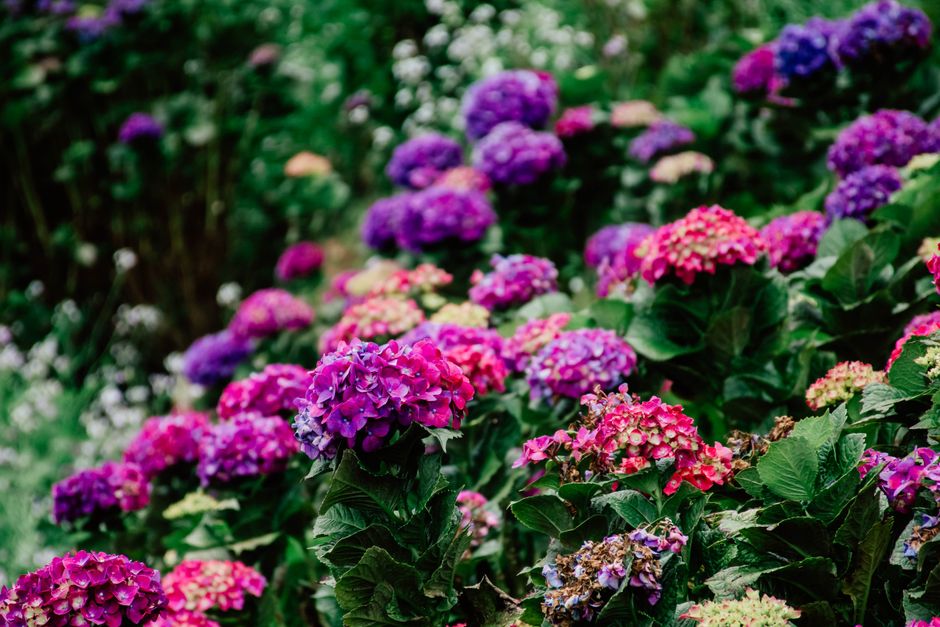
The timing mistake that kills a season of blooms
Most hydrangea pruning mistakes are not about how you cut. They are about when.
Old-wood bloomers form their flower buds in late summer and early fall, then carry those buds dormant through winter. The following summer, those same buds open into flowers. Cut them off in September — or during a mild February that makes the garden look ready for a tidy — and there is nothing left to bloom. The plant looks fine. It just won't flower.
The most common old-wood bloomer in Surrey BC gardens is the bigleaf hydrangea (Hydrangea macrophylla) — the classic with big round mophead clusters or flat lacecap flowers in blue, pink, or white. If you have a hydrangea in the Lower Mainland and you are not sure what kind it is, nine times out of ten it is a bigleaf. Rule for bigleaf hydrangeas: do not prune in fall, do not prune in winter, do not prune in early spring. If you must deadhead, cut the spent flower head back to the first set of healthy leaves in late summer — immediately after flowering. And leave the dried heads on through winter. They protect developing buds below from BC's frost events.
New-wood bloomers are completely different. Panicle hydrangeas (H. paniculata — cone-shaped white clusters that age to pink, including Limelight, Quick Fire, and PeeGee) and smooth hydrangeas (H. arborescens, including Annabelle and Incrediball) grow their buds on current-season growth. You can cut them back hard in late winter or early spring, before any new growth starts, and they will bloom fine. They actually benefit from it. The harder the cut, the bigger the individual flower heads — within reason.
Panicle hydrangeas are the most common variety in the Fraser Valley. They handle our wet winters, bloom late summer into fall, and tolerate neglect better than most. If you bought a hydrangea at a Surrey nursery in the last ten years, there is a good chance this is what you have.
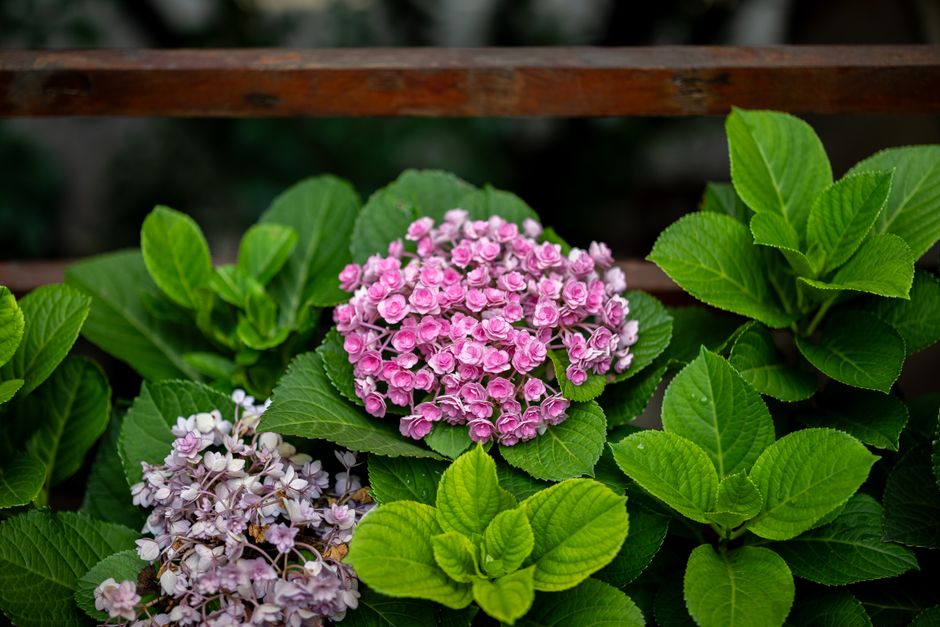
Old wood vs. new wood — the detail everything else depends on
Before you touch any hydrangea, you need to know which type you have. This is the five-minute identification that saves a year of waiting.
Old-wood bloomers — prune sparingly or not at all:
- Bigleaf hydrangea (H. macrophylla) — round mopheads or flat lacecaps; blue, pink, or white; the most common in BC
- Oakleaf hydrangea (H. quercifolia) — white elongated flower clusters; distinctive lobed leaves that turn red in fall
- Climbing hydrangea (H. anomala petiolaris) — self-clinging against walls or fences; white flat-topped flowers; prune only immediately after flowering
New-wood bloomers — prune in late winter or early spring:
- Panicle hydrangea (H. paniculata) — cone-shaped white clusters aging to pink; includes Limelight, PeeGee, Quick Fire, Pinky Winky
- Smooth hydrangea (H. arborescens) — large round white or pink heads; includes Annabelle, Incrediball, Invincibelle
A practical way to tell in early spring: look at last year's stems. Old-wood bloomers will show small swelling buds on older brown-barked canes. Those are your flower buds — treat them accordingly. New-wood bloomers tend to push fresh green growth from the base and older canes stay bare longer before leafing out.
The Royal Horticultural Society's hydrangea guide has a useful variety reference if you are still not sure after looking at the plant. The ISA also provides general guidance on ornamental shrub care through their ISA Canada resources.
I have assessed three different Surrey properties where the homeowners had cut their bigleaf hydrangeas every fall — thinking they were being diligent — and could not understand why they never bloomed. The plants were completely healthy. They had just been cut every year before a single bud could open. One of them had been doing it for six years. Six years of a perfectly healthy plant with nothing to show for it. (The homeowner was gracious about it. The plant bloomed the following summer. We did not discuss the six years.)
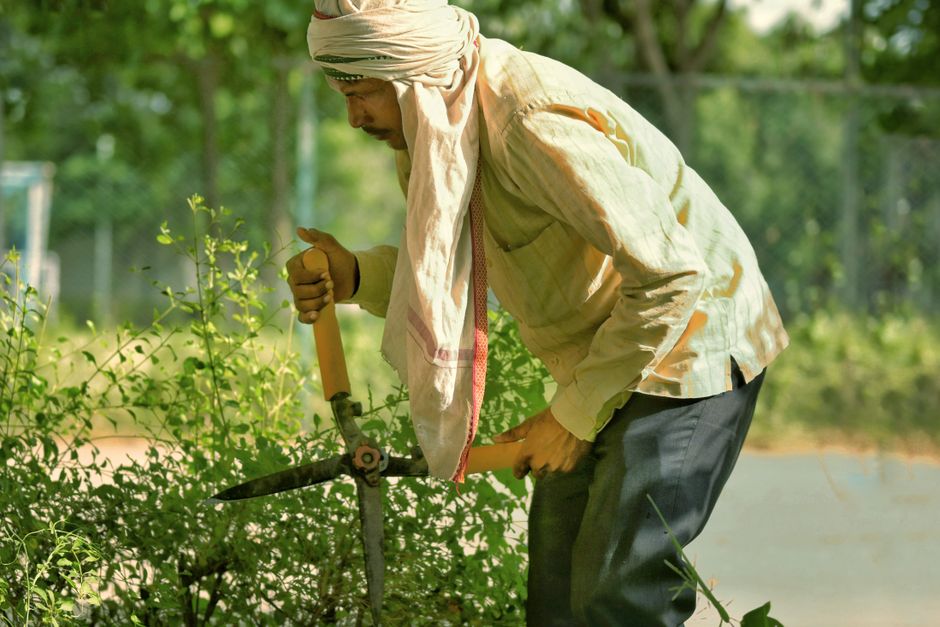
Technique errors that hurt more than they help
Once you have the timing right, technique is where the second round of problems lives.
Over-pruning. Removing more than one-third of the plant at once stresses it. The energy that would have gone into flowers gets redirected into rebuilding structure. For old-wood bloomers, over-pruning in the wrong season compounds the problem — you lose the buds and stress the plant simultaneously.
Pruning to control size. This one is worth naming directly: cutting a hydrangea shorter rarely keeps it shorter for long. Most varieties grow back to their natural size within one or two seasons. The only reliable way to have a smaller hydrangea long-term is to plant a smaller variety from the start. If you need something for a tight space, the compact panicle selections — Little Lime, Bobo, Fire Light Tidbit — are worth looking at. See our guide to pruning hydrangea trees for more on managing size over time.
Leaving stubs. A stub — a section of stem cut in the middle with no bud near the cut — dies back on its own and leaves an entry point for disease. Cut back to a healthy bud node or to the base cane. Clean cut, just above the bud, angled at about 45 degrees so water runs off rather than sitting on the wound.
Cutting new-wood bloomers too late in fall. Panicle and smooth hydrangeas are forgiving, but there is still a window. Deadheading after mid-September in BC can push tender new growth that gets caught by an early frost. If you want to deadhead for appearance, do it before the end of August. Otherwise leave the dried heads on — they look decent through winter and protect the buds below.
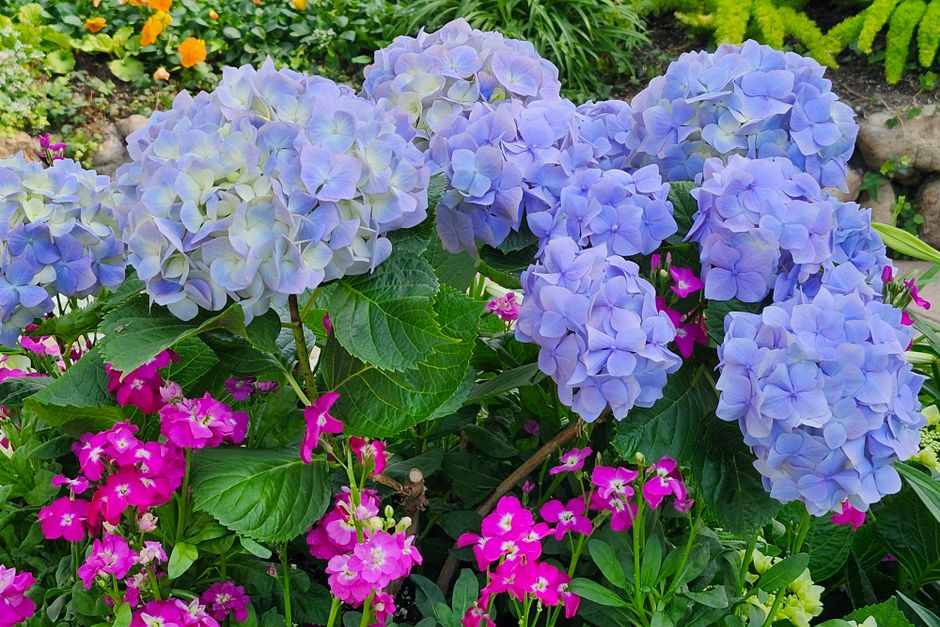
Tool hygiene — the boring one that actually matters
Nobody wants to talk about this part. But dull or dirty pruning tools are the reason a lot of hydrangea problems spread — and they are entirely avoidable.
Dull blades tear instead of cut.A torn stem does not heal cleanly. It leaves a ragged wound that callusses over slowly and gives fungal diseases an easy entry point. In BC's damp climate, botrytis (grey mould) and Phytophthora are both common. Sharp tools make a clean, fast-healing cut. Sharpening your secateurs takes about two minutes with a diamond honing rod and should happen at least twice a season.
Dirty blades spread disease between plants. If one plant has a fungal issue and you prune it, then use the same unsterilised shears on the next plant, you carry the pathogen with you. Wipe the blades between plants with a diluted bleach solution (1 part bleach to 9 parts water) or rubbing alcohol. Let them air dry before the next cut. It takes ten seconds and costs nothing.
This is the garden equivalent of washing your hands. Easy to skip. Visible consequences when you do. Our guide to sharpening pruning shears has a full walkthrough if you want to get the maintenance routine right.
When to call a professional — and when not to
I will say this plainly: most homeowners do not need an arborist for their hydrangeas. They need a correct variety identification and a calendar reminder. That is the whole job. If your hydrangeas aren't blooming and you now know why, you don't need to call us.
When a professional is worth it:
- Hydrangea trees (standard form). These are bigleaf or panicle hydrangeas trained onto a single trunk — grafted at the graft union. They require different timing and care to maintain shape without damaging the graft. One wrong cut sets them back significantly.
- Severely neglected mature plants. A hydrangea that hasn't been touched in ten years, with dead canes throughout and heavy crossing wood, benefits from a structured renovation approach — removing no more than one-third per season over two or three years. Trying to do it all at once usually fails.
- Plants growing into structures. Hydrangeas that have climbed into eaves, gutters, or against fences need careful removal of the growth without damaging either the plant or the structure. The pruning itself is straightforward; the angle and the cleanup sometimes aren't.
When to skip the call:
- A healthy plant that just needs deadheading
- A plant that was pruned at the wrong time and is now waiting out the season
- General size management on a panicle or smooth hydrangea
We provide shrub and ornamental tree pruning services across Surrey, Langley, White Rock, and Delta. If you are genuinely not sure which bucket your situation falls into, give us a call — that conversation is free. We will tell you straight whether it needs a professional or just needs another season to recover.