
Pruning a hydrangea tree at the wrong time of year produces two outcomes: regret, and fewer flowers. It is possible those are the same outcome.
The simple answer: prune in late winter, between mid-February and early March in Langley/Aldergrove. Cut each main stem back by roughly one-third. Remove suckers from the base and clear any dead wood. Nine times out of ten, that is the entire job — about thirty minutes and a clean pair of bypass pruners.
Quick answer: Hydrangea paniculata — the tree-form hydrangea most common in Langley/Aldergrove gardens — blooms on new wood. Prune it in late winter and the plant replaces everything you removed by June, then blooms on it in July. That is why timing matters. Everything below is how to do it right.
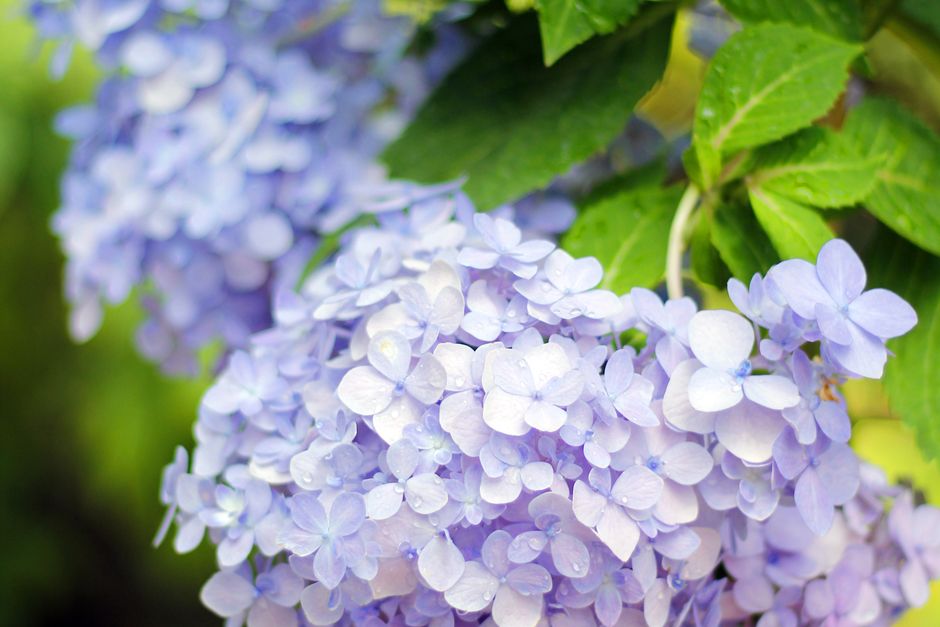
What actually is a hydrangea tree
A hydrangea tree is not a separate species. It is a panicle hydrangea — Hydrangea paniculata — trained onto a single clear trunk, called a standard. Common cultivars in Langley/Aldergrove gardens include Limelight, Quick Fire, and Phantom. All produce large, cone-shaped flower heads that open white or cream in midsummer and age through blush-pink and parchment by autumn.
The distinction that matters most for pruning: panicle hydrangeas bloom on new wood. The plant pushes fresh stems in spring, and those stems carry the summer flowers. Cut the old growth back in late winter and the plant completely rebuilds by June. This is in contrast to the bigleaf hydrangeas (Hydrangea macrophylla — the mophead and lacecap types, typically blue or pink), which bloom on last year's wood. Prune those in winter and you remove the flower buds.
If your search results keep saying “don't prune or you'll lose the blooms,” they are describing a bigleaf. For a tree-form panicle, winter pruning is exactly right. The Royal Horticultural Society's pruning guide covers both types if you want to cross-reference.
Nine out of ten “my hydrangea didn't flower this year” calls trace back to someone who pruned the wrong type at the wrong time — or didn't prune the right type at all. Both groups would have had better summers with this information and a pair of clean pruners.
When to prune your hydrangea tree in Langley/Aldergrove
The window is mid-February through early March.
The tree is dormant and the branch structure is easy to read without leaves. More usefully: live wood shows green when you scratch the bark with a thumbnail, and dead wood is dry and brown all the way through. That contrast is clearest in late winter. By late March, the plant is pushing new growth and the job gets awkward. For the same reason late winter is the best general window for tree trimming in Langley/Aldergrove.
A few signposts for getting the timing right:
Too early (before mid-February): Not harmful. Wound closure is slower in the cold, and the wood is harder to read — alive versus dead is easier to assess once the sap starts to move. If you do it now, the tree will be fine. Just marginally more guesswork.
Right time (mid-February to early March):The buds on last year's stems are just starting to swell. Live tissue is obvious. This is the window.
Late but acceptable (late March): The plant is pushing growth. You can still prune but you are working around early-season shoots and removing wood that has already invested energy for the year. It works. It is the arboricultural equivalent of sorting the recycling at midnight — fine, just not the ideal moment.
Wrong entirely (fall or early winter): Cutting in October or November stimulates new growth that cannot harden before frost. Langley/Aldergrove nights can drop below zero as early as late November. That soft new growth gets killed, and you remove the dead stubs in February anyway — meaning the same job done twice and the tree stressed in between. Avoid fall pruning entirely.
One thing to know: hydrangea paniculata sometimes bleeds sap from fresh cuts during warm spells in late winter. It looks alarming. The tree is not upset with you — it is a normal pressure response. If it concerns you, wait until the last week of February. Still within the window.

What to cut and how much to take off
Rule of thumb: cut each main stem back by about one-third. For a stem two to three feet long, that is roughly eight to twelve inches removed from the top. If you cut them all to roughly the same length, the resulting shape should be a loose dome.
The sequence that works best:
1. Dead wood first. Scratch the bark. Green underneath: live wood. Dry and brown all the way through: dead. Cut back to just above a healthy bud on living wood. No point leaving stubs.
2. Suckers. Look at the base of the trunk. Any growth shooting up from below the graft union — the slight swelling where the tree-form meets the rootstock — is a sucker from the rootstock. Remove these flush with the trunk. Left alone, they drain vigour from the top of the tree and, given a few seasons, will shade out the canopy entirely.
3. Crossing or crowding branches. Any branch growing toward the centre of the canopy, rubbing on another branch, or competing for the same space as an established stem — cut it to an outward-facing bud or back to the main trunk. The centre of the canopy should be open enough to let light through.
4. Final shaping. Step back. The canopy should look like a dome. If one side is longer than the other, even it out. Aim for open, not dense — good air circulation through the canopy is how you avoid powdery mildew in summer.
What not to do: Do not cut every stem back to six inches from the trunk each year. Some older guides recommend this hard reset. It produces large amounts of thin, floppy growth and smaller flowers for the next season or two. The one-third approach gives you better blooms and better structure. Also do not remove more than one-third of the total canopy in one season — the recovery period is real and the plant blooms less strongly in the year after a heavy cut.
How to prune it — the right cuts
Clean bypass pruners handle anything up to about finger-thickness. For thicker main stems (more than about 20mm), use loppers. The cut goes just above an outward-facing bud, at a slight angle — roughly 45 degrees — about five millimetres above the bud. Far enough above not to damage the bud; close enough that you are not leaving a stub.
Keep the blades clean. Wipe them between plants if you are doing multiple specimens — hydrangeas are not particularly disease-prone, but it is a habit worth forming. A quick wipe with rubbing alcohol between plants is all that is needed. No pruning paste, no wound sealant — both were standard practice for decades and have since been shown to do more harm than good. A clean cut and the plant handles the rest.
For context on how this fits into general tree pruning technique, the principles are the same across species: clean tool, correct angle, right position above the bud or branch collar. The hydrangea is just more forgiving than most if you get it slightly wrong.
Renovation pruning — what if it hasn't been touched in years
If the tree has not been pruned in several years, it likely has long, thin stems that flop dramatically under the weight of summer flowers. (This is a structural problem, not a moral failing. The plant is doing its best under the circumstances.)
The approach: in late winter, identify the five or six strongest main branches and keep them as the canopy framework. Cut the longest, most congested branches back harder — up to half their length rather than one-third. Remove anything weak, dead, or growing inward entirely.
You will get fewer flowers that first summer. The structure you are building is worth it. If the tree is severely overgrown — stems four or more feet long, significant overcrowding — spread the corrective work over two late winters rather than attempting it all in one go.
When not to call us
This is the section we include even though it is not optimal for our booking calendar.
For a standard hydrangea tree in good health, this is a reasonable DIY job. Skip the call if:
- The tree is under about four metres tall and you can reach the canopy from the ground — no ladder involved
- The branches you are removing are no thicker than your finger — bypass pruners handle this cleanly
- The tree looks healthy: no soft spots on the trunk, no shelf-like fungal growths, no significant lean
Call us if:
- The tree needs a ladder and power tools — that combination is not one I encourage anyone to improvise
- There are signs of fungal damage on the trunk (soft spots, bracket-like growths, dark staining under the bark)
- The main trunk has split, cracked, or is leaning toward something worth keeping
- You want an assessment of the rest of the property while we are there — we are happy to walk the yard
If you are looking at a badly overgrown specimen and feeling ambitious — call before you start. A fifteen-minute conversation is free. Correcting a tree that had sixty percent of its canopy removed in one go is not. An ISA Certified Arborist can assess any situation where you are uncertain whether to cut or how much.
What it costs in Langley/Aldergrove — honest numbers
I reckon these prices surprise people. Usually because they expected higher.
| Service | Typical range (CAD) |
|---|---|
| Annual pruning — standard hydrangea tree, good access | $85–$150 |
| Renovation pruning — multi-year neglect | $150–$300 |
| Property-wide shrub and tree tidy (four or more plants) | $350–$700 |
What moves the price: access (is the tree against a fence, elevated on a slope, squeezed between structures?), debris volume, and whether we are also attending to adjacent plants while there. These are phone-quote ranges. We give a firm number before any work starts — in writing, approved by you before a single branch comes off. See our full range of tree care services if you want to understand what a typical visit covers.