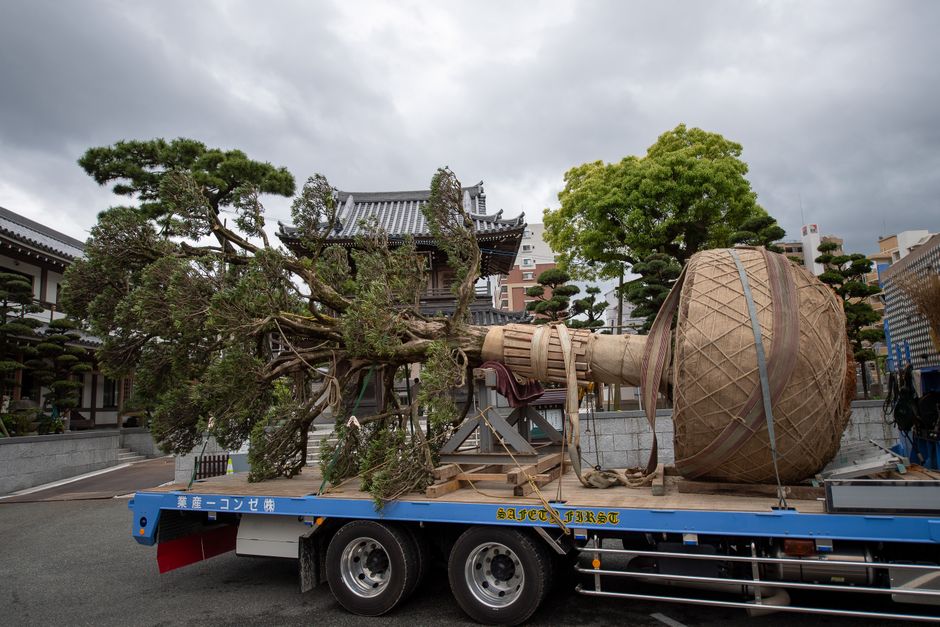
Moving a mature tree isn't like moving a couch. Your cousin and a borrowed pickup won't cut it — though I've had homeowners suggest it, and I do appreciate the optimism.
Tree relocation is real. We do it in Surrey and the Fraser Valley, and it works well in the right situations. But “works” is doing a lot of heavy lifting in that sentence. Before anything gets dug up, you need an honest read on three questions: Is your tree a good candidate? What will it actually cost? And — this is the one people skip — is relocation better than removal and replanting?
Quick answer:Tree relocation makes sense for healthy trees under 30 feet with intact root systems and a suitable destination site. In Surrey, plan for $1,200–$3,500 depending on size and complexity. Trees over 40 feet, or those with disturbed root zones, are poor transplant candidates regardless of technique. Nine times out of ten, the first call I get about relocation turns into a longer conversation about whether it's actually the right move. That conversation is free.
What tree relocation actually is
Tree relocation — sometimes called tree transplanting — means excavating a living tree, preserving its root ball, transporting it, and replanting it somewhere else with the intent of keeping it alive. The root ball is the key piece. It has to be large enough to support the tree's water uptake during establishment, and the soil around it has to stay intact through the move.
A 30-foot cedar has a root ball that can weigh 600–1,000 kg. (I mention this because it changes the equipment conversation considerably.)
The method scales with tree size. Small ornamentals under 15 feet can be hand-dug and moved on a flatbed. Trees in the 15–30 foot range typically need mechanical assistance — a crane truck or a tree spade. Anything over 40 feet becomes a serious engineering question, and the success rates start working against you regardless of how well the work is done.
There's also a timing element. Trees have a window — late fall through early spring in Surrey's climate — when they're dormant and handle transplant stress better. Moving a tree in the middle of summer is possible, but the aftercare requirements increase significantly and the odds shift. None of this is meant to scare you off. It's the actual picture, which you need before deciding whether to proceed.
When relocation makes financial sense
Tree relocation makes sense when you have something worth the cost of moving. A heritage tree — a 200-year-old Garry oak, a bigleaf maple that's been on the property for 60 years — is irreplaceable. If a building project is putting it in the footprint and the alternative is permanent removal, the math on relocation often works.
It makes sense for a well-established ornamental in the wrong spot. A 12-foot Japanese maple three metres from where it should be is a solid transplant candidate. The root system is manageable, the success rate is high, and the cost is reasonable.
It makes sense when you're planning a serious landscape redesign and the tree has genuine value in the new layout — with a specific, better destination already planned.
It doesn't make sense when the destination site has worse drainage, soil quality, or light conditions than where the tree currently grows. A stressed transplant in a poor location costs the same to move and usually declines over three to five years. That's not a tree relocation success — it's a delayed removal at twice the price.
One thing I'll say directly: most tree services default to recommending removal because it's the higher-value job. A proper arborist should tell you when relocation is viable — and should also tell you when neither removal nor relocation is the answer, and a crown reduction will fix the actual problem at half the cost. For a broader look at assessing what's worth saving versus removing, our tree health assessment guide covers that decision in detail.
Does your tree qualify?
Before booking anything, we look at five things.
Size.Under 30 feet is workable. 30–40 feet is complex and expensive — success depends heavily on species and root zone condition. Over 40 feet, the root ball size becomes too large for standard equipment and the cost-benefit math usually doesn't work unless it's a high-value heritage specimen.
Species. Ornamental maples, Japanese maples, oaks, cherries, and most deciduous trees under 30 feet transplant well. Large conifers — Douglas fir, western red cedar, Sitka spruce — have deep, spreading root systems that are difficult to excavate intact. Species is one of the first things we check before estimating anything.
Health.A stressed, diseased, or root-compromised tree won't survive the additional shock of relocation. Transplanting a struggling tree usually results in a slow decline at the new site, and it still costs the same to move. If your tree is already showing die-back or thinning crown, that conversation needs to happen before any discussion of moving it.
Root zone condition. Has anything disturbed the soil around the tree in the past few years? Construction equipment, trenching, compaction from vehicle traffic? Root zone disturbance changes the transplant success rate significantly, and the damage is often invisible from the surface.
Destination quality. Drainage, soil type, light exposure, proximity to structures. The new site needs to match or improve on the current one. This is non-negotiable — there is no technique that makes a poorly matched destination work.
If the tree doesn't check most of these boxes, removal and a well-chosen replacement planting is often the better financial and practical outcome. A new tree planted properly and matched to Surrey's climate establishes faster than a stressed transplant and outgrows it within a decade.
How tree relocation works
There's no single universal process, but for a medium tree in the 15–30 foot range, here's what actually happens.
Root pruning (if time allows).For trees that won't be moved immediately, root-pruning several months in advance — cutting a ring around the drip line — encourages the tree to develop a more compact, manageable root ball. This one step meaningfully improves survival odds. Think of it as the Shawshank principle of tree work: getting something very large through a difficult situation takes patience and preparation, not just a chainsaw and optimism.
Excavation.The root ball is dug carefully, with dimensions scaled to the tree's height and species. Cutting this corner — taking a smaller root ball to save time or equipment cost — is one of the most common reasons transplanted trees fail in the first year.
Crown reduction.Trimming 20–30% of the canopy at this stage reduces the water demand on a root system that's just been disrupted. This sounds counterintuitive if you want the tree to look full, but it's what gives the roots time to re-establish before the tree tries to support its original canopy load.
Wrapping and transport.The root ball is burlapped or placed in a wire basket to hold its structure during the move. The new hole needs to be dug and ready before the tree is lifted — you don't leave a tree sitting in the sun while the destination is being excavated.
Replanting. The hole depth matters: the root ball top should sit at or slightly above grade, not buried. Proper backfill soil, not compacted clay from the excavation pile. Staking to prevent wind rocking during establishment.
Establishment. Deep watering weekly for the first growing season. Mulch ring at least three inches deep to retain moisture and regulate soil temperature. Two to five years before the tree is properly settled. This phase determines whether the move succeeds — and it is consistently the part homeowners underestimate when budgeting for a relocation.
What tree relocation costs in Surrey, BC — honest numbers
Nobody lists prices. We think they should.
| Service | Approximate range (CAD) |
|---|---|
| Small tree relocation (under 15 ft) | $1,200–$1,800 |
| Medium tree relocation (15–30 ft) | $1,800–$3,500 |
| Large tree relocation (30–40 ft) | $3,500–$6,000+ |
| Root-pruning preparation (months in advance) | $300–$600 |
| Pre-relocation site assessment | $150 (credited toward work) |
These figures include excavation, transport within the Surrey and Fraser Valley service area, replanting, and staking. They don't include specialist crane equipment for very large specimens, or post-transplant care over the following growing season.
Rule of thumb: a quote under $1,000 for a tree over 10 feet usually means a smaller root ball than the tree needs, skipped backfill quality, or no post-plant support. All three affect whether the tree lives. A cheap move that fails isn't cheaper than a proper one — it's just a more expensive way to eventually remove the tree. For context on what removal costs if transplanting isn't the right call, our tree removal cost guide for Surrey has the same level of detail.
When not to relocate your tree
Most guides skip this section. I'd rather include it.
A few years back, a homeowner in Langley came to me wanting to relocate a 35-foot bigleaf maple that was sitting in the footprint of a planned addition. Budget was $2,800. I assessed it: the root zone had been compacted by construction equipment the summer before. Transplant success odds were poor. We redirected — crown reduction ($800) to move the canopy clear of the construction zone while the addition was built, then a reassessment once the work was done. That maple is still there. The homeowner is $2,000 ahead of where they'd be if we'd moved the tree on faith.
That's the conversation we'd rather have up front.
Skip relocation and talk to us about alternatives when:
- The tree is over 40 feet without months of root preparation work done in advance
- The tree is already showing stress, disease, or structural problems
- The root zone has had construction disturbance, trenching, or vehicle compaction in the past few years
- The species has a deep tap root that doesn't survive intact excavation — certain large conifers fall into this category
- The destination site has worse drainage, soil quality, or sun exposure than the current location
In those situations, removal and a well-chosen replacement native species — Garry oak, western red cedar, bigleaf maple — will outperform a stressed transplant by year eight and cost less to get there.
I'd also say this: before spending $2,000+ on a relocation, get a second opinion from an ISA Certified Arborist who will tell you the same thing. Our $150 assessment visit answers the viability question, and the fee is credited toward whatever we proceed with. Anyone can call themselves an arborist. ISA certification means training, a written exam, and continuing education requirements. That matters when someone is digging up a 30-foot tree on your property. See all of our tree care services for Surrey and the Fraser Valley.