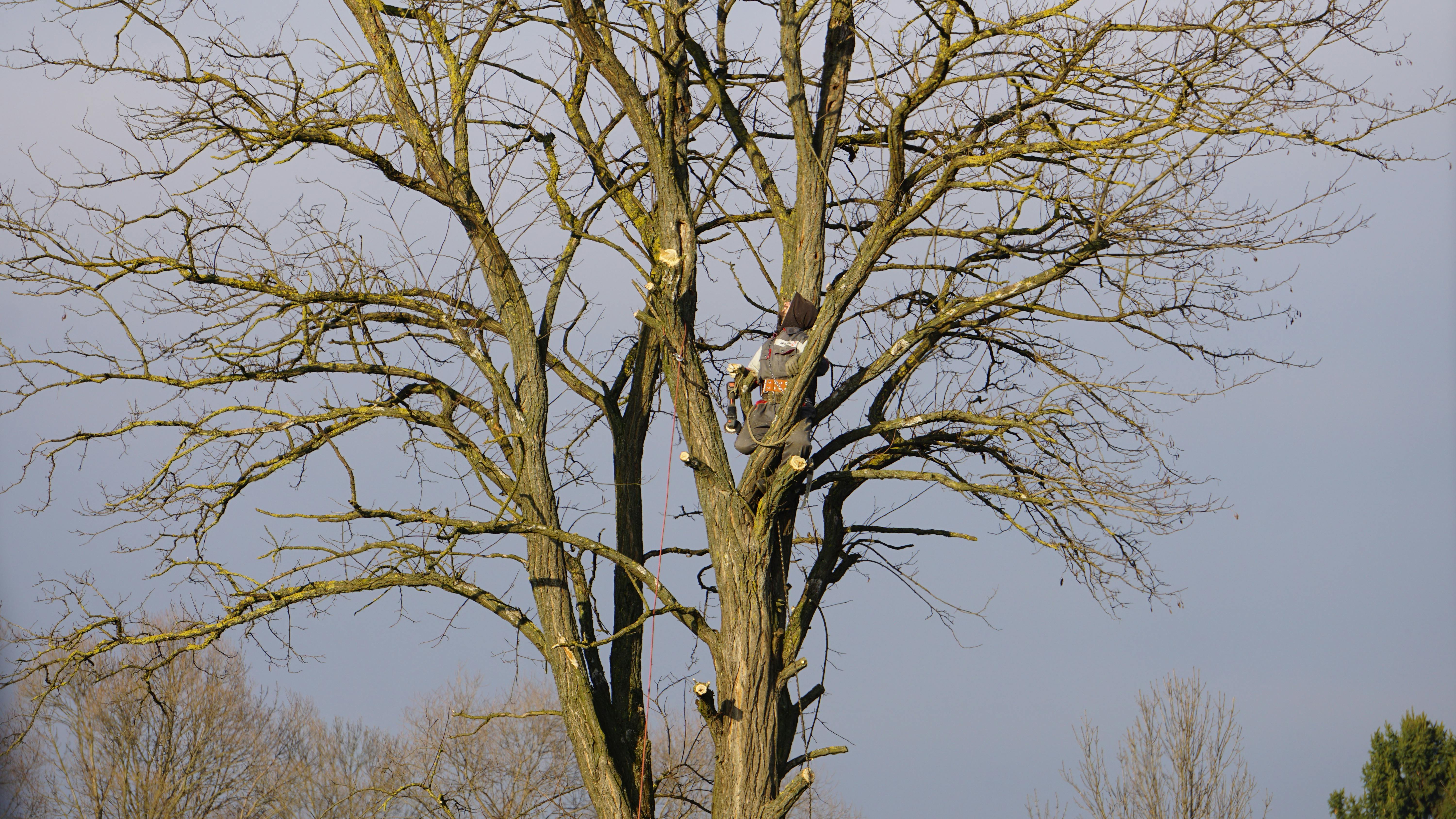
A tree’s way of telling you it’s not feeling great is to drop a major limb on something you care about. (By the time that happens, tree health assessment services were overdue by about two years.)
A tree health assessment is a structured examination by a certified arborist — checking the root zone, trunk, bark, and crown for signs of disease, pests, structural weakness, or decline. In Langley/Aldergrove, most assessments take 30 to 90 minutes. You leave with a written report and a clear next step.
Nine out of ten homeowners wait too long. The signs are usually there earlier. They’re just easy to miss if you don’t know what you’re looking at.
Quick answer:Book a tree health assessment when you notice unexplained die-back, fungal growth on the trunk, bark falling off, or a new lean that wasn’t there before. Any tree within fall distance of your home, vehicle, or a shared fence deserves a professional look every one to three years.
What a tree health assessment actually is
Not every arborist visit is an assessment. A quote visit looks at one specific job. A removal is a removal. An assessment is different — it’s a deliberate, systematic look at the whole tree, with no predetermined outcome.
What it covers:
- The root zone — soil, grade changes, visible root problems, proximity to structures and underground utilities
- The trunk and root collar — cracks, cavities, cankers, bark condition, signs of basal decay
- The scaffold branches — structure, dead wood, co-dominant stems, weight distribution
- The crown — foliage density, die-back patterns, pest evidence, live crown ratio
- Site factors — drainage, soil compaction, nearby construction, competing vegetation
At the end, you get a condition rating, a risk assessment where relevant, and a recommended next step. That might be nothing for two years. It might be a specific treatment. It might be a recommendation to remove.
An ISA Certified Arborist can also prepare a formal arborist report — required by the City of Langley/Aldergrove for applications to remove a protected tree under the Tree Protection Bylaw. If that’s what you need, it’s a more detailed document than a standard assessment. Give us a call and we’ll confirm what level of report applies to your situation.
Seven signs your tree needs professional attention
None of these are reasons to panic immediately. Each one is a reason to stop and look more carefully.
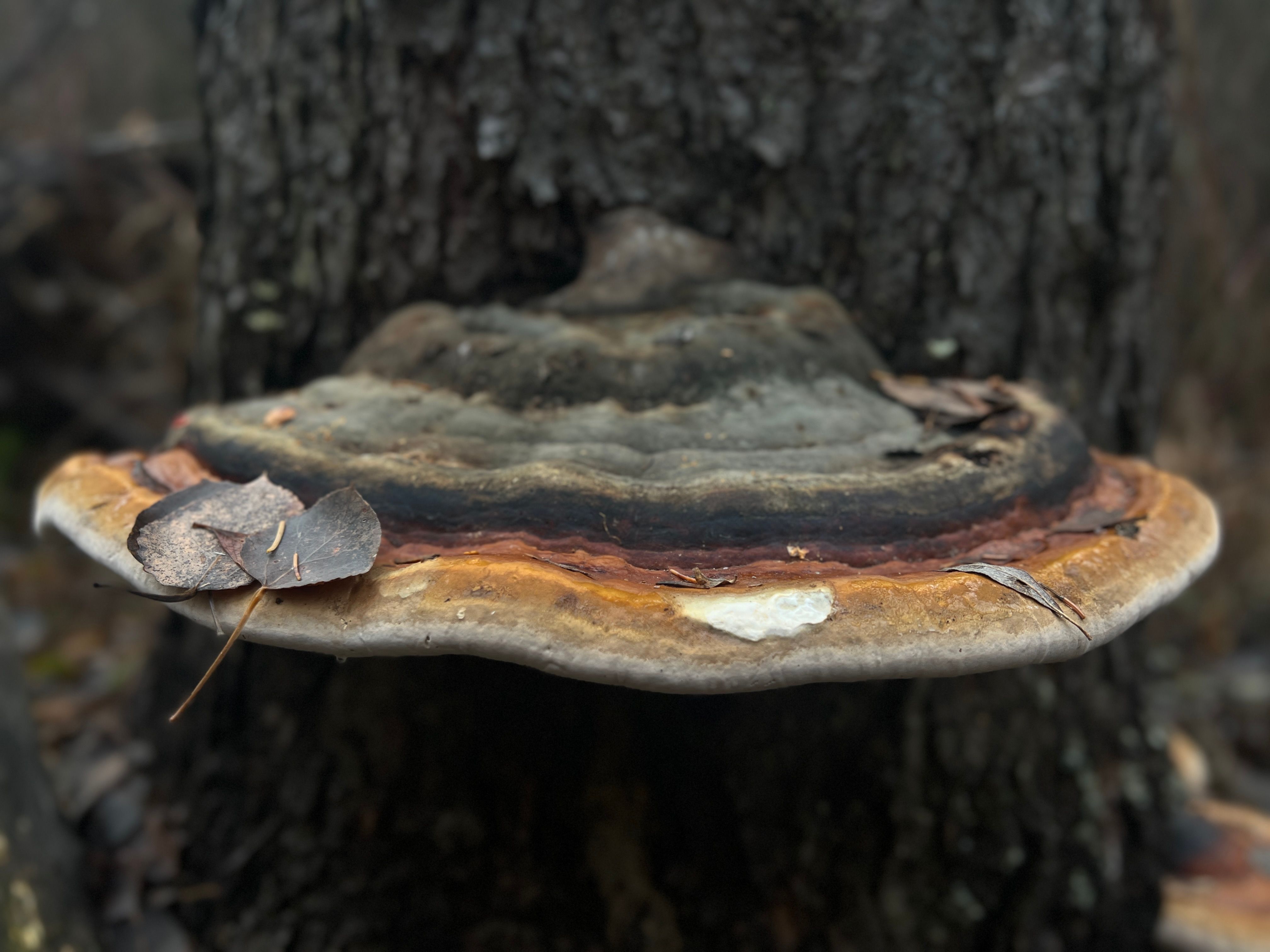
1. Bracket fungus or mushrooms on the trunk or at the base. Visible fungal fruiting bodies mean there is fungal decay in the wood underneath. How much decay is hard to assess from the outside. It might be contained to a small section. It might not. Get it looked at before the next wind event makes that decision for you.
2. Crown die-back of more than 15–20%. Some dead wood in the upper canopy is normal, particularly in older trees. When a quarter or more of your canopy has no leaves in July, something is wrong. The cause determines the fix — and the two are not always obvious from the ground.
3. Bark cankers or patches of dead bark. Sunken, discoloured sections of bark, or areas where bark is falling away from living wood, indicate something underneath. Cankers can spread slowly or aggressively depending on the pathogen involved.
4. A new lean in a tree that wasn’t leaning before. An old lean that has been stable for years is usually fine — the tree has adapted its structure. A new lean, especially one that appeared after a wet winter or a storm, can mean root plate movement. Take it seriously.
5. Visible cracks or splits in the trunk. A surface crack from bark expansion is different from a crack running through structural wood. An arborist can tell the difference in about two minutes. Most homeowners cannot.
6. Soil heaving around the root zone. If the ground is lifting near the trunk base, the root plate may be shifting. This is often the first visible sign of something that can become dangerous quickly.
7. Sparse or off-colour foliage outside of dormancy.If your tree isn’t leafing out properly in spring, or is dropping leaves in June, something is stressing the root system. It could be soil compaction, drought, construction disturbance nearby, or something underground. It needs diagnosis, not guessing.
For a companion guide on telling the difference between a dead tree and a dormant one, see our post on how to tell if a tree is dead.
What the arborist checks — section by section
A good assessment works systematically from the ground up. Here is the sequence.
Root zone and soil.The assessment starts here. Root heaving, grade changes around the base, signs of soil compaction, any girdling roots wrapping back around the trunk. For mature trees near older Langley/Aldergrove homes, the root zone also includes a look at the distance to underground drainage — we have found roots in drain lines during otherwise routine health assessments more than once. A customer in Newton came to us about two years back over a different concern entirely — surface roots lifting a section of his driveway. While we were there, we noticed the maple’s root system was pointing directly at his main drain line at the south side of the house. He had been having recurring blockages for a year. A camera inspection confirmed three major roots had entered a hairline crack in the pipe about four metres from the trunk. The tree was fine. The pipe was not. That $250 assessment saved him from figuring it out during a dinner party.
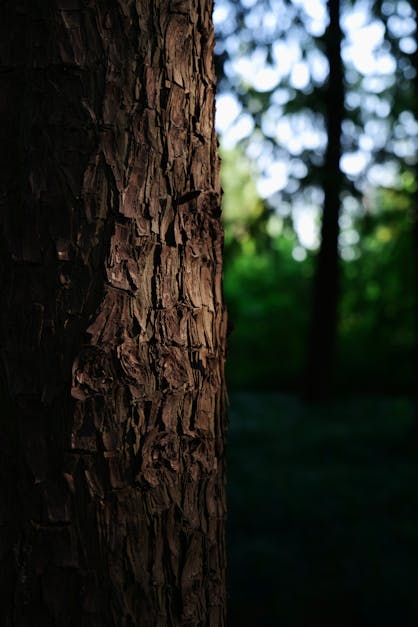
Trunk and root collar.The arborist checks for cracks, cavities, cankers, and bark condition. Hollow sections get tested with a rubber mallet — a dull thud versus a solid knock tells you a lot. For anything requiring more precision, a resistograph (a fine-drill instrument) can map internal density without significantly damaging the tree. Rule of thumb: any cavity affecting more than a third of the trunk’s cross-section at that point is a structural concern.
Scaffold branches and canopy. Crossing branches that create wounds, co-dominant stems competing for dominance, and sections of dead wood all show up here. Live crown ratio matters: a tree with less than 30% of its canopy alive has a poor long-term prognosis regardless of the trunk condition. The Canadian Food Inspection Agency’s plant health resources maintain a current list of invasive pests and diseases relevant to BC — things like emerald ash borer and sudden oak death that a qualified arborist should be checking for.
Site factors. How much usable root zone does the tree actually have — accounting for paving, adjacent structures, and utility corridors? Is there recent construction disturbance nearby? Soil grade changes that have buried the root collar? These factors change the assessment significantly, and they are easy to overlook if you are only looking at the tree.
What comes out of the assessment
A verbal summary onsite. A written report within a few days.
The report covers: condition rating (typically a numbered scale or A–E), identified risk factors, recommended actions with a suggested timeline, and any additional specialist referrals if warranted — soil treatment, cabling, pest management.
If you need a formal arborist report for Langley/Aldergrove’s tree protection permit process, that is a specific document type. It includes tree identification, condition assessment, site photographs, and the arborist’s professional certification and recommendation in a format the city’s planning department will accept. It costs more than a standard assessment and takes longer to prepare. Not every tree needs this level of documentation — but if you are applying to remove a protected tree, you do need it, and penalties for removing a protected tree without a permit can reach $100,000.
For the full scope of what we cover — from health checks through to removal and cleanup — see our hazardous tree assessment and removal.
What a tree health assessment costs — honest numbers
Nobody lists prices for this. We think they should.
| Type | What’s included | Typical cost (CAD) |
|---|---|---|
| Visual assessment — single tree | Onsite walkthrough, verbal summary, basic written notes | $150–$300 |
| Focused written report (1–3 trees) | Detailed inspection, condition rating, written recommendations | $250–$450 |
| Formal arborist report (permit-ready) | Full documentation, species ID, photos, professional certification | $400–$700 |
| Emergency assessment | Same-day priority response, onsite assessment | From $300 |
Assessment fees are typically credited against any work that follows. If we assess your tree and recommend removal, and you proceed with us, the assessment comes off the invoice.
Rule of thumb:if a quote for an “assessment” is under $100, it’s likely a free sales visit dressed up in an assessment jacket. That is not necessarily a bad thing — but it is not an independent professional opinion. You want the arborist’s honest answer, not their strongest case for doing work on your property.
I reckon nine out of ten tree removals we do in Langley/Aldergrove had clear warning signs six to twelve months earlier. A standard emergency removal runs $1,200–$3,500 for an average-sized tree. An annual assessment runs $150–$300. The maths is not complicated. For a detailed breakdown of what removal costs when it gets to that point, see our post on tree removal cost in Langley/Aldergrove.
When not to call us
This section costs us calls. We include it anyway.
Skip the assessment if:your tree has been leaning at the same angle for a decade and nothing has changed — that’s a stable lean; a few leaves are yellowing in late August — late-season leaf drop is normal for maples and birches in the Fraser Valley; you have just moved in and the tree looks “off” somehow but you can’t name exactly why — wait for one full growing season before drawing conclusions; or a windstorm knocked down some small branches from an otherwise sound tree.
Do call if:you are planning any construction within 15 metres of a mature tree; the municipality has flagged the tree as a potential concern; you are selling the property and the buyer’s inspector wants an arborist report; or the tree is within fall distance of your house, a neighbouring structure, or a shared fence — particularly if it has not been assessed in the last three years.
Here is a free first step. Stand 10 metres back from your tree. Scan the canopy for the seven signs above. Then walk up and look at the trunk. No fungal growth, no visible cracks, no loose bark, no unusual lean, foliage looks healthy for the season — you are probably fine. Come back and check again next spring.
If you see one or more of the warning signs, give us a call. The first conversation is free. (The tree jokes during the assessment are also free. You cannot opt out of those, but they are at least short.)