
Tree moss moves in the way a distant relative moves in — quietly, uninvited, and absolutely convinced it is not causing any harm. In most cases, it is right.
If your maples, cedars, or big-leaf maples are wearing a green coat of tree moss, here is the short answer: moss almost never causes the problem. It is an epiphyte — it uses the bark for physical support and pulls its water from the air. It does not feed off your tree.
Quick answer: Tree moss is not harmful to trees. It does not extract nutrients or water from the tree, and it does not cause decay on healthy bark. In Langley/Aldergrove and the Fraser Valley, it is essentially universal on mature trees by October — because our climate is, frankly, a moss resort. Where moss becomes worth a closer look is when it appears alongside other symptoms: dead upper branches, soft or discoloured bark, or a lean that has been getting worse.
The number of calls we get from homeowners convinced that moss is killing their otherwise-healthy tree is, I reckon, the single biggest source of our reassuring-people workload.

Why Langley/Aldergrove and the Fraser Valley grow so much tree moss
British Columbia has the richest diversity of mosses of any province in Canada — not because our trees are unhealthy, but because our winters are custom-built for moss. Cool temperatures, regular rainfall, overcast skies, and months of sustained damp. If moss could design a home from scratch, it would design Langley/Aldergrove in November.
I reckon nine out of ten mature trees in Langley/Aldergrove carry some moss by the time autumn arrives. The maple and cedar canopy does most of the work. North-facing trunks that do not dry out between rains, dense plantings with low air movement, older trees with rough textured bark — all of these create hospitable conditions.
A few things that make a tree particularly moss-friendly:
- A north- or east-facing aspect that stays shaded through most of the day
- Dense canopy overhead that keeps the bark moist longer after rain
- Older, rougher bark with more surface texture for moss to anchor to
- Limited airflow from close planting, fencing, or nearby structures
None of these are warning signs. They are just the local climate doing what it does.
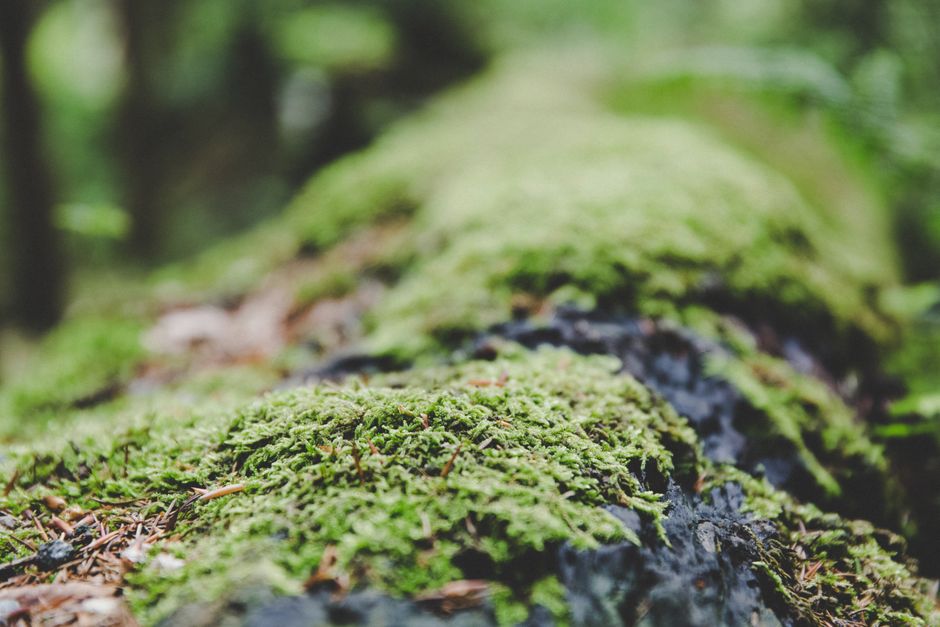
Is tree moss actually harmful?
Not directly, no. Moss is an epiphyte — it grows on the tree for physical support and draws its water and nutrients entirely from rain and air. It is not parasitic. Calling moss a parasite is roughly like calling a bird that lands on your roof a structural engineer. Not helping, but not drilling holes either.
It has rhizoids instead of roots — tiny hair-like anchors that attach to the bark surface without penetrating it. Which makes it, technically, the most well-established squatter in British Columbia that does not actually have roots. (I have been waiting to use that one since my first arborist course.)
The indirect concerns are real, but modest.
Weight. A heavy, saturated mat of moss on older limbs adds load. For a young, healthy tree this is negligible. For an older tree with structural weaknesses already present, it is worth considering alongside other factors.
Moisture retention. Moss holds water against bark. On healthy, intact bark, this is not a problem. On bark that already has wounds, cracks, or early rot beginning, extra sustained moisture can slow the drying process that contains decay.
Visibility. This is the one that matters most. A thick carpet of moss makes bark inspection harder. Cankers, wounds, early fungal lesions, or staining underneath the moss are more work to find. The moss did not cause those problems — but it can delay noticing them.
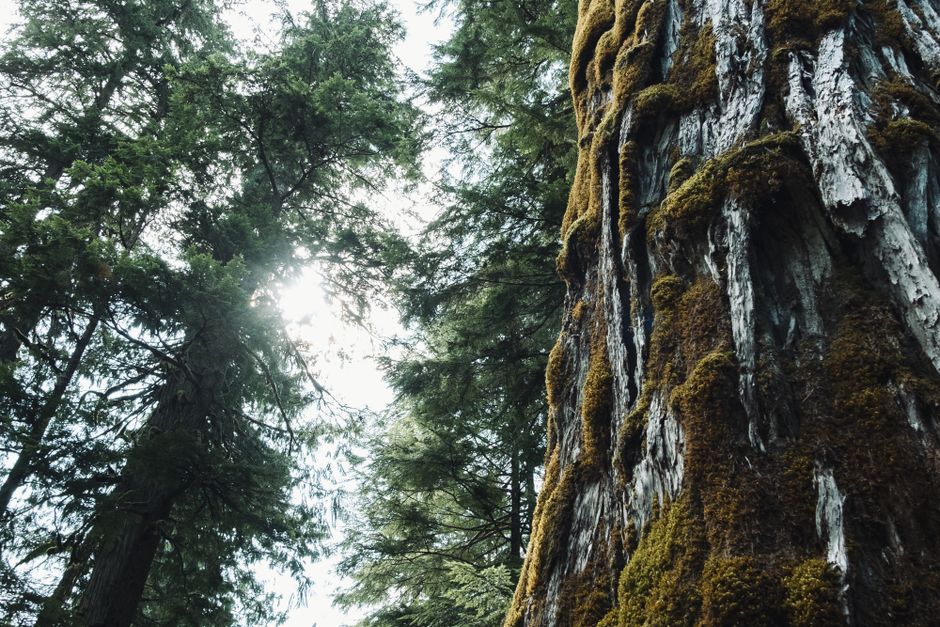
When moss is worth a second look
Moss on its own is not a reason to call anyone.
Moss combined with any of these is:
- Dead or dying branches in the upper canopy
- Bark that feels soft or spongy when you press it
- A visible lean that appeared or worsened over the past year
- Fungal fruiting bodies — shelf fungi on the trunk, or mushrooms appearing regularly at the base
- Dark staining, wet-looking patches, or bark that is peeling or cracking
Here is why the connection matters. A tree that is declining in health tends to develop heavier moss coverage — not because the moss is causing the decline, but because a thinning canopy allows more moisture to reach the bark. Dense moss alongside symptoms of decline is a pattern worth taking seriously.
Rule of thumb: if you can identify three or more of those signs on the same tree, a tree health assessment is worth the call. An ISA Certified Arborist can assess both the moss and the underlying structure in the same visit.
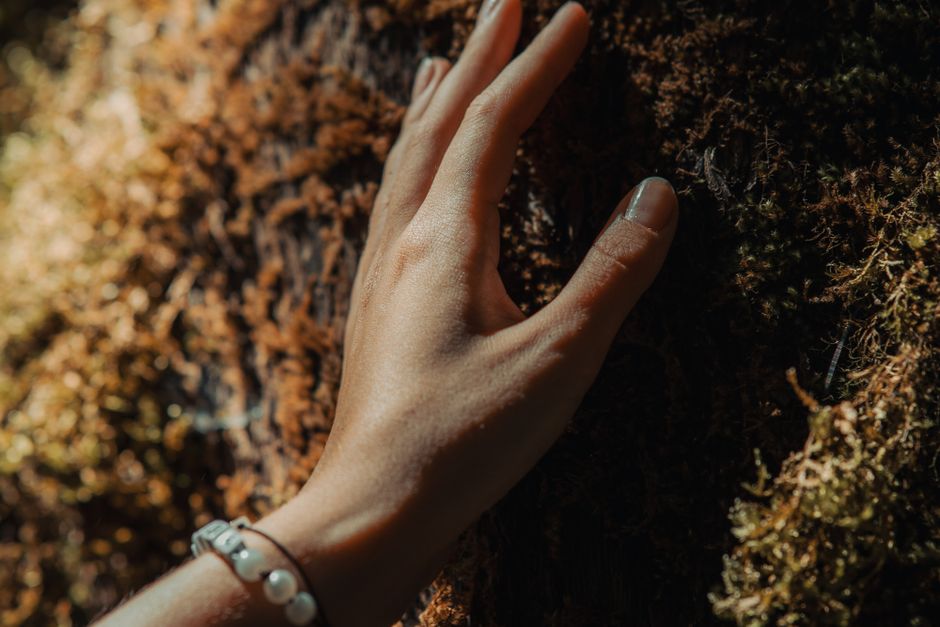
What you can do about tree moss yourself
For a healthy tree with light to moderate moss coverage, there is a fair bit you can do before calling anyone.
Prune the canopy for light and airflow. This is the most effective long-term approach — and it is not a moss removal job at all. When you open the canopy so that more sun reaches the bark, the conditions moss prefers become less hospitable. You are changing the environment rather than fighting the symptom. A targeted selective prune from a certified arborist tree pruning service achieves this better than you would get from trying to scrub moss off a ten-metre tree by hand.
Gentle scrubbing. During dry weather, a soft-bristled brush on bark removes light moss without damaging the bark layer underneath. Do not pressure wash at high settings. Bark damage from a pressure washer creates entry points that cause more problems than a bit of moss ever would.
Baking soda and water. One part baking soda to four parts water, sprayed onto moss-covered bark. It raises the pH and makes the surface less hospitable. Slow to work, but it does not harm the tree or the surrounding soil. Repeat every few weeks through spring.
One thing I would skip: copper sulphate or bleach-based products. They kill moss efficiently, but they are not gentle on soil biology or beneficial bark organisms. For what is, at the end of the day, a cosmetic concern — not worth the trade-off. (And a Langley/Aldergrove cedar wearing a bit of moss looks more authentically Pacific Northwest than one that has been scoured clean. An opinion I hold and refuse to be talked out of.)
When not to call us about tree moss
Nine out of ten tree moss calls we get end the same way: healthy tree, normal moss, nothing to do. The BC Forest Service classifies moss and lichen as cosmetic issues in otherwise-healthy trees — which is exactly right.
Do not call us if: your tree has moss and nothing else. No dead wood, no soft bark, no new lean, no mushrooms at the base. If moss is the only concern — your tree is fine. Prune for light next season, check again in spring.
Also skip the call for lichen. The flat, crusty, grey or grey-green patches that look like moss but are not — that is lichen, a combination of fungi and algae. Even less of a concern than moss. Genuinely not worth a phone call unless the tree has other symptoms.
Give us a call if: you are seeing moss alongside any of the warning signs above — dead wood, soft bark, a lean, or fungal growth. That is a tree health assessment, not a moss removal job. You can also describe what you are seeing and we will tell you honestly whether a visit makes sense — that conversation costs nothing.
If you are looking at a tree and not sure whether it is healthy overall — not just because of the moss — our post on how to tell if a tree is dead walks through the tests worth doing before picking up the phone.