
Silver maples are the golden retrievers of the tree world — enthusiastic, fast-growing, and absolutely not self-regulating. (If you have one hanging over your driveway, you know exactly what I mean.) Pruning silver maple trees is different from pruning a bigleaf maple or a Douglas fir. The wood is brittle, the growth is fast, and the structural problems compound if you leave them alone.
Quick answer: Prune in late winter before sap runs, or late summer after the growth flush. Never remove more than 25% of the canopy at once. Dead branches come out any time of year.
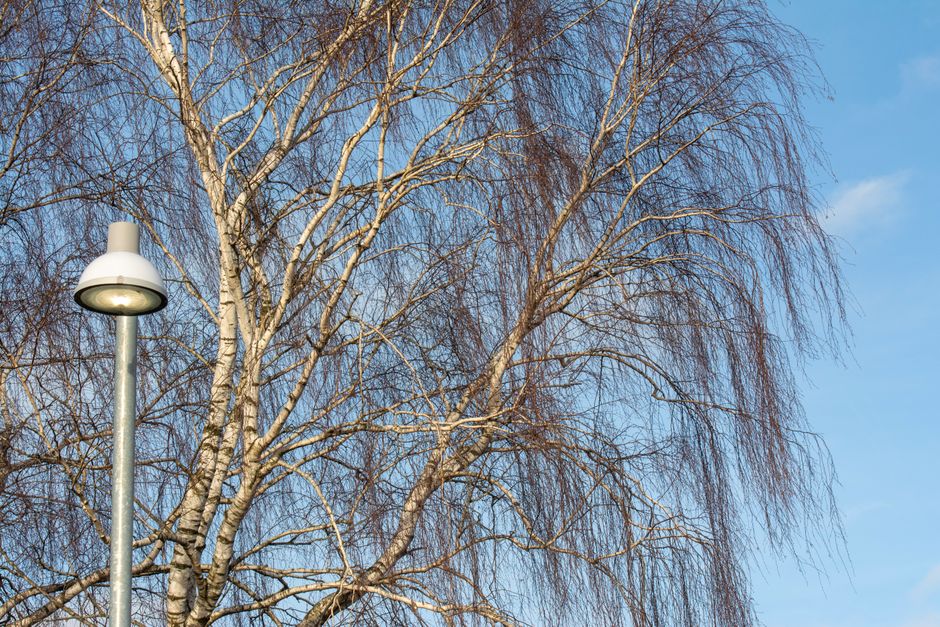
Nine out of ten calls I take for “my tree split in the storm” involve either a silver maple or a poorly maintained birch. I reckon at least half could have been avoided with structural pruning done earlier.
Why silver maples need regular pruning
Silver maple (Acer saccharinum) is one of the most common shade trees in Langley/Aldergrove and across the Fraser Valley. Fast growth is why people plant them. Fast growth is also why they become a problem.
These trees routinely put on 60 cm or more of new growth per year when young. That sounds excellent in your first spring. It sounds slightly less excellent when you are staring at branches overhanging your roof in November. The wood is brittle by nature — much more prone to breakage than bigleaf maple, Douglas fir, or almost anything else native to BC. In a windstorm, silver maple is often the first to fail.
The structural issue is co-dominant leaders: multiple main stems competing for dominance. Left unmanaged from a young age, they develop V-shaped crotches instead of proper branch unions. V-crotches are weak. They split. Sometimes on a windy Thursday in January when you are not watching; sometimes during a summer thunderstorm when you are.
The ISA best practices for pruning specifically call out co-dominant leaders as the most common structural defect in landscape trees. Silver maples are where that plays out most often in residential Langley/Aldergrove.
Best time to prune a silver maple
Late winter is the ideal window — late February to early March, before the sap starts running and before bud break. The tree is fully dormant. You can see the branch structure clearly without leaves in the way. Wounds close faster when growth resumes in spring.
Late summer (late July to August) works too, once the spring growth flush has slowed. The tree has enough growing season left to begin callusing over cuts before winter arrives.
Avoid April, May, and June. Maples bleed heavily during peak sap flow season. You will not kill the tree by pruning in May, but you will have sap running down the trunk for weeks, and the cuts are slower to callus. It is unnecessary stress at a time when the tree should be putting energy into new growth.
Dead branches come out any time.Dead wood is dead wood. There is no wrong season to remove a branch that is already dead and dropping. Waiting for the “right season” is reasonable for structural pruning. It is not a good reason to leave a failing limb over a garden shed for another six months.
How much you can safely remove
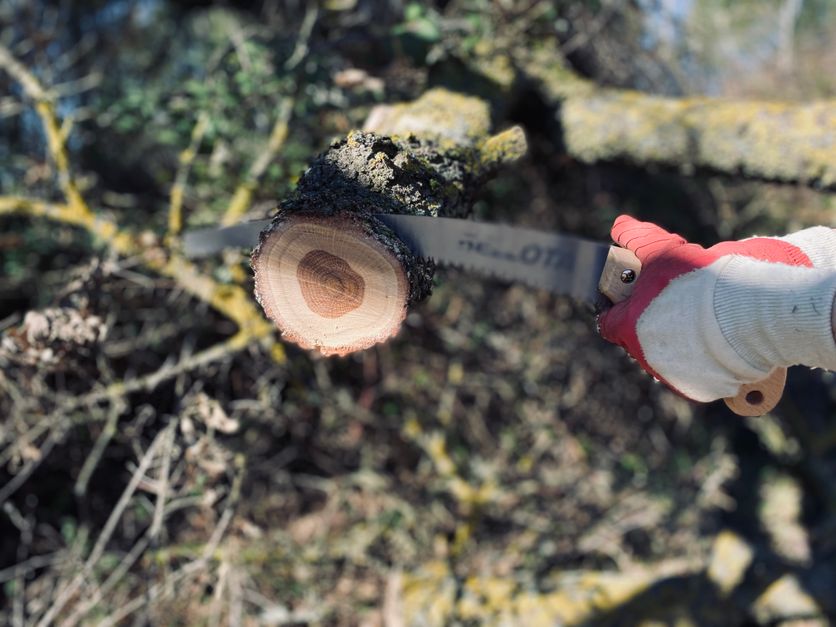
The rule of thumb most ISA-certified arborists follow: never remove more than 25% of the live canopy in a single growing season. This matters especially with silver maples because they respond to heavy pruning with aggressive regrowth — masses of thin, weakly attached shoots called epicormic growth. You can create more work for yourself by taking too much at once.
For crown reduction — bringing the tree down in size to reduce wind load or branch weight over a structure — aim for 20–30%. That is enough to meaningfully reduce risk, without causing the stress response that leads to a worse-looking, worse-structured tree two years later.
The comparison that makes this concrete: crown reduction at $500–$1,200 is usually a better option than removal at $800–$1,400, assuming the tree is otherwise healthy. But that only holds if the reduction is done properly — cut to a lateral branch, not a stub that the tree will rot around.
One other thing worth knowing: silver maples are poor healers. They close wounds slowly compared to most hardwoods. That is a reason to cut less, cut cleanly, and cut at the right time — not a reason to avoid pruning altogether. A tree you never prune just accumulates hazards invisibly.
The co-dominant leader problem
This is where silver maple pruning gets specific — and where getting it right early saves a significant amount of money later.
If your tree is young (under 15 years), structural pruning to establish a single dominant leader is the single most valuable investment you can make. Removing the weaker of two competing stems now is straightforward. Removing it in 20 years, when both are 30 cm in diameter with included bark at the union, is a major rigging operation.
For mature trees with existing V-crotches over structures, the options narrow: remove the weaker stem if it is not too large, cable them to redistribute the load, or accept that you have a structural hazard that needs monitoring every year.
Cabling costs $400–$800 for most applications. It does not make a V-crotch safe — it reduces the risk of catastrophic failure. For a mature silver maple over a deck, it buys time while you plan next steps. The ISA Canada arborist directory can help you find a qualified person to assess whether cabling or removal is the right call for a specific tree.
Deadwood and storm damage removal
Dead branches on a silver maple are not a cosmetic issue. A dead tree is a hazard within 1–3 years depending on species and weather — and dead branches fail faster than that. Silver maple wood begins to decay at cut points more quickly than most hardwoods. A dead branch over a driveway in February is a falling branch over a car in March.
Storm damage is the other scenario we see regularly in Langley/Aldergrove and across the Lower Mainland. BC coastal windstorms can remove 15–30% of mature trees in a single event. Silver maples, with their brittle wood and often-compromised V-crotches, account for a disproportionate share of those failures.
Deadwood removal ($250–$600 depending on size and access) is the one pruning task that has no wrong season. If you see significant dieback in the canopy, failing branches, or cracks in the bark over a major union — that is a job to deal with now, not when the window is “right.” See our guide to emergency tree service if you have something more urgent than deadwood to deal with.
When to stop doing it yourself
I will say this clearly, even though it is not optimal for our call volume: a lot of silver maple pruning is DIY-able if the tree is young, the branches are small, and nothing critical is underneath.
A few years back, a homeowner in Langley tried to prune his own silver maple. He cut it back heavily, left stubs rather than proper lateral cuts, and ended up with four competing leaders where two had been. He came back to me two years later because the tree looked worse — multiple new hazard points and epicormic growth all over the place. The crown reduction that fixed it ran $800. It would have been $400 the first time, done correctly.
Rule of thumb for DIY: branches you can reach from the ground or off a stable ladder, diameter under 10 cm, nothing critical underneath. Sharp, clean tools. Cut just outside the branch collar — not flush to the trunk, and not leaving a long stub.
Stop when:
- The branches are over your house, driveway, or any structure
- The tree is over 5–6 metres in height or canopy spread
- Branch diameter exceeds 10 cm — you need to be sure of where it falls
- The work requires climbing the tree or a ladder above the second rung
- Power lines are anywhere nearby
That last one is not optional. BC Hydro requires all work near live lines to go through qualified utility-line clearance arborists. It is a legal requirement, not a guideline. See BC Hydro’s guidance on trees and power lines for specifics.
Also: anyone who calls themselves an arborist is not necessarily a certified one. ISA certification requires written examinations, documented field experience, and continuing education. That matters when someone is cutting co-dominant leaders out of a large silver maple — because getting it wrong creates a hazard where there was not one before.
What silver maple pruning costs in Langley/Aldergrove BC
Nobody publishes pricing. I think they should.
| Service | Our rate (CAD, all-in) |
|---|---|
| Crown thinning / light pruning | $300–$800 |
| Crown reduction (20–30% size cut) | $500–$1,200 |
| Structural pruning — young tree | $400–$600 |
| Deadwood removal | $250–$600 |
| Tree cabling / support system | $400–$800 |
| Assessment / consultation | $150 (credited toward work) |
For a mature silver maple with significant structural work — co-dominant leaders, heavy crown reduction, partial cabling — expect closer to $800–$1,200 all-in. If you are getting a quote of $300 for a “full prune” on a large silver maple, I would ask exactly what that covers before anyone picks up a saw.
Preventive maintenance costs roughly half the price of reactive emergency removal. That is not a sales pitch — that is arithmetic. An assessment now at $150 is cheaper than a roof repair plus emergency removal at $3,000 after the next windstorm.