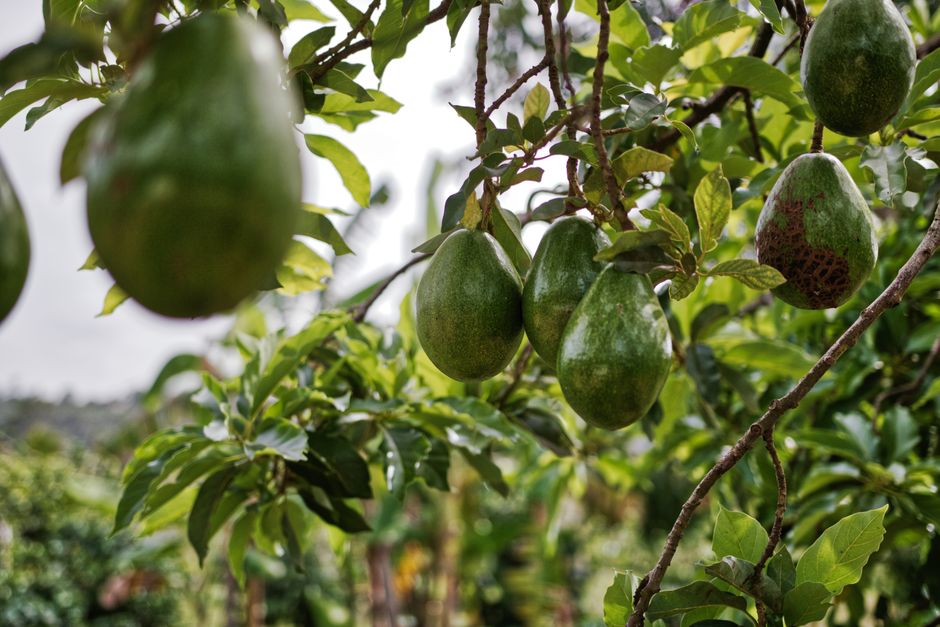
Avocados in Surrey occupy a special category: the houseplant everyone optimistically calls a tree. (To be fair, with a big enough pot and a south-facing window, you can get one to four feet in a few years. Not exactly harvesting guacamole on demand, but the effort is admirable.)
Whether yours lives in a pot by the kitchen window, spends summers on the deck, or you have a larger specimen in a sheltered spot — the pruning questions are the same.
Quick answer: Prune avocado trees in late winter to early spring, after frost risk has passed and before new growth begins. Make lateral cuts, not stub cuts. Remove no more than one-third of the canopy in a single season. Protect exposed wood with a 50/50 mix of white latex paint and water to prevent sunburn on exposed tissue.
That is the short version. Here is why each of those things matters.
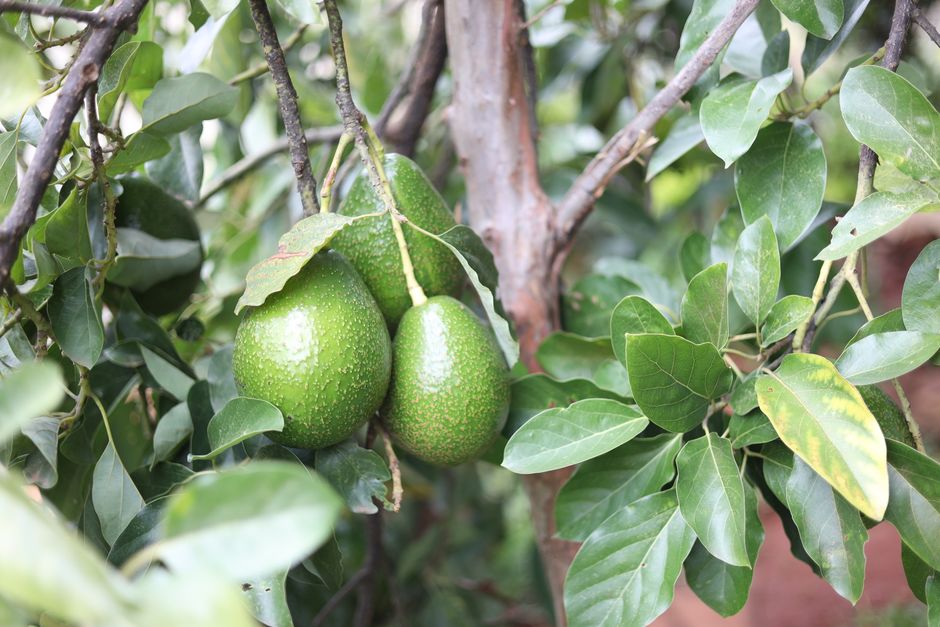
Why pruning your avocado tree matters
Three things send people to their shears.
Size. Pot-grown trees grow tall before wide, especially when they are reaching for the nearest window. Left alone, you get a leggy single trunk with leaves only at the top — not ideal for a living room, and not great for fruit production either. A well-pruned tree stays compact, with foliage distributed through the canopy rather than concentrated at the tips.
Shape. An avocado that forks early develops a balanced canopy. Light reaches the interior branches. More canopy surface area means more photosynthesis and more energy directed toward fruit. A tall, narrow tree is essentially a long stem with a tuft on top — impressive, but not productive.
Health. Dead and crossing branches are a problem on every tree species. Avocados are no different. Deadwood that stays on the tree creates an entry point for fungal disease and avocado sunblotch viroid, which spreads through the vascular system and has no cure. Remove it cleanly and early.
The same logic applies to landscape trees at any scale. See our guide to tree pruning and care services in Surrey if you are dealing with something larger.
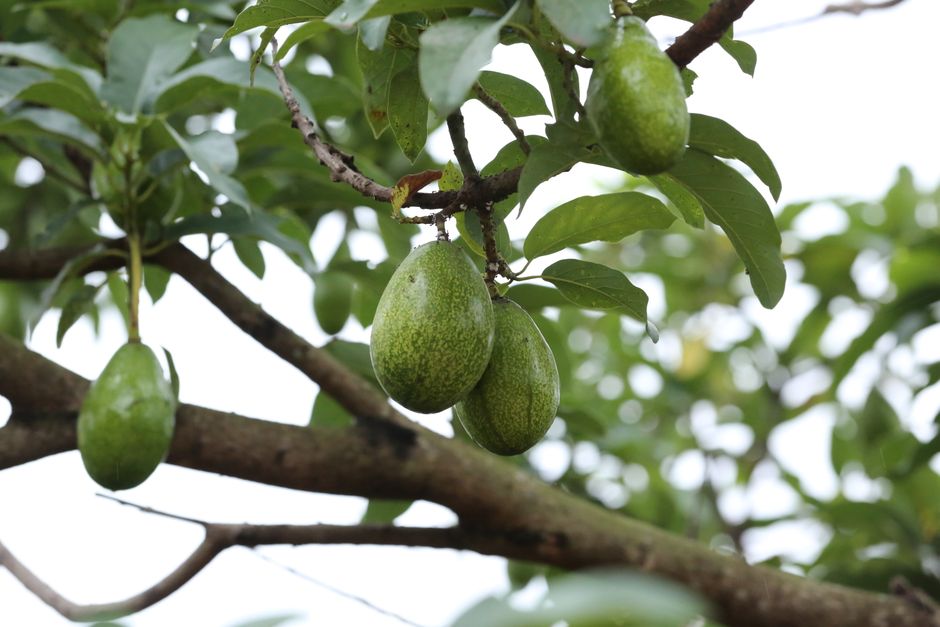
When to prune: timing matters more than you think
For any cut on a branch thicker than your finger, prune in late winter to early spring. In BC, that window is generally February through April. You are past the coldest nights, and the tree is just waking up — new growth will push through cuts faster than at any other point in the year.
Minor shaping is fine in summer. Rule of thumb: if the branch is no thicker than your index finger, timing is less critical. Nipping back a growing tip or removing a small crossing branch in July will not hurt a healthy tree.
What to avoid: late summer and fall pruning of anything substantial. Any soft new growth triggered by late-season cuts will not have time to harden before cold weather hits. For trees that go outside for summer and come back in before frost, this is especially relevant — you are essentially sending the tree into its dormant period with open wounds and tender new growth. That is not a position you want it in.
The UC IPM guide on avocado tree training is the clearest technical reference I have found on timing — worth bookmarking if you are managing a tree you actually care about.
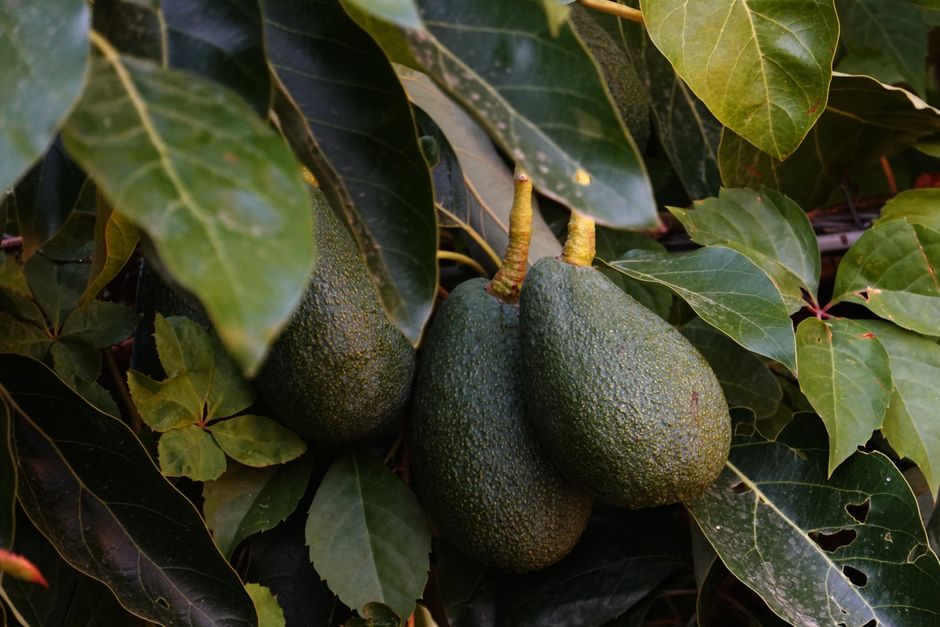
How to make the cut properly
Lateral cuts. Every time.
A lateral cut removes a branch back to a side branch or a lateral bud. The tree responds with growth from that point — fuller, more branched, better distributed. A heading cut chops a branch at a random point mid-stem and leaves a stub. The tree responds with dense, vigorous growth from the stub, but structurally weak attachment. (Think of it as the gardening equivalent of a haircut that looks fine for two weeks and then falls apart.)
Two other things that matter:
Sharp tools. A blunt saw or shears tears bark rather than cutting through it cleanly. Torn tissue heals slower and creates a better entry point for disease. Take the time to sharpen your blades before you start — it makes a measurable difference to how the tree heals.
Clean tools. Avocado sunblotch viroid spreads on contaminated cutting tools. If you are working on a tree with any mottled, discoloured, or streaked foliage, wipe the blades with rubbing alcohol between every cut. Once sunblotch is in a tree, it stays there. Spread it to a healthy tree and both trees carry it for life.
For placement: cut just outside the branch collar — the slight swelling where the branch meets the trunk or parent branch. The collar is where the tree's healing tissue concentrates. Cut through it and you remove the very cells that close the wound. Cut too far out and you leave a stub. The collar is the target.
How much to remove at once
One-third. That is the limit, and it is not an arbitrary number.
Remove more than that and the tree shifts its energy budget from roots and fruit into canopy recovery. The result is a tree that looks stressed, produces nothing for a season, and is more vulnerable to pests and disease while it rebuilds.
I have seen the same pattern with outdoor trees — a homeowner hard-pruned a maple in Surrey one spring, cut it severely, left stubs, removed most of the canopy in one go. Two years later it was worse: multiple competing leaders, dense weak growth from the stubs, four new structural hazard points where there had been one original problem. The proper crown reduction afterward cost nearly twice what a correct first prune would have. Avocados will not give you the structural hazard issue, but the stress response and lost productivity follow the same logic.
If you need a significant size reduction, spread it over two or three seasons. The tree handles gradual change better than sudden large losses.
For context on how the same principle applies to outdoor fruit and ornamental trees, our post on winter pruning timing and technique covers the commercial arboriculture standard in more depth.
Protecting your cuts from sunburn
After any significant pruning cut, the exposed wood is vulnerable to sunburn — particularly on container trees near south-facing windows, or trees that spend the summer outside.
The fix is simple: mix equal parts white latex paint and water, then brush it onto any freshly exposed wood. It reflects light, slows moisture loss from the cut surface, and does not interfere with healing. Commercial avocado orchards have used this method for decades because it works. California Avocado Growers recommend it as standard practice.
Do not use oil-based paint — it prevents gas exchange at the wound and slows healing. And do not skip this step on large cuts in a sunny spot. Sunburned avocado wood does not recover; the dead tissue spreads back from the wound edge, leaving you with a larger problem than the original cut.
For a broader look at wound care products and when they help or hurt, our post on tree pruning sealer: when to use it and when to skip it covers the research behind the recommendation.
Growing avocados in BC: what's actually different
BC is not avocado territory, and the Lower Mainland climate will remind you of that if you push it. Nine times out of ten the trees I see around Surrey and Langley are pit-grown houseplants or nursery specimens in large containers — brought in before frost, moved to the sunniest window available, and cared for by people who understand they are managing against the climate, not with it.
A few practical notes specific to BC growing:
Container roots need attention too. Every two to three years, check whether the root ball has started circling the pot. Circling roots that are not addressed eventually girdle the trunk and starve the tree of water and nutrients. When you repot, trim the circling roots back cleanly — same logic as pruning the canopy.
Watch the timing when moving outdoors. Bring the tree in when nighttime temperatures drop below 10°C. Avocados will not tolerate frost — even a light one damages the growing tips and forces you to remove dead growth the following spring. The Lower Mainland can get surprise cold nights well into April; do not rush the outdoor transition.
On fruiting expectations. If fruit production is actually the goal, a grafted dwarf variety — Wurtz is the most common — in a greenhouse or warm sunroom gives you the best chance. Pit-grown trees grown from the seed of a grocery store avocado rarely fruit reliably even in California. In BC, honest answer: grow it for the plant, and any fruit is a bonus. (The leaves smell faintly of anise if you crush them. That is not nothing.)
When not to prune — and when to call
Skip pruning when the tree is actively flowering. You will remove potential fruit before it sets. Wait until flowering is done and fruit has set before doing any structural work.
Skip pruning immediately after repotting. The root system has already been disturbed. Give the tree a full growing season to settle before you add canopy stress on top of root stress.
Skip pruning if there is visible disease you have not yet identified. Pruning without knowing what you are dealing with risks spreading it to every cut you make. Get a diagnosis first.
As for calling an arborist: you do not need one for a container avocado in the house. That is me being straight with you — a small houseplant is DIY territory and this post gives you what you need. Where we come in is if you have a large landscape tree with structural concerns, something near a structure or power line, or if you are genuinely unsure whether a tree on your property is healthy.
A lot of people call us for removal when pruning would have done the job. A good assessment catches that before anyone picks up a chainsaw. We charge $150 for an assessment, and if you proceed with work, it is credited toward the bill. If the tree is fine, we will tell you that too. We have talked people out of removals that were unnecessary — it is backwards economics for a tree service, but it is the honest answer.