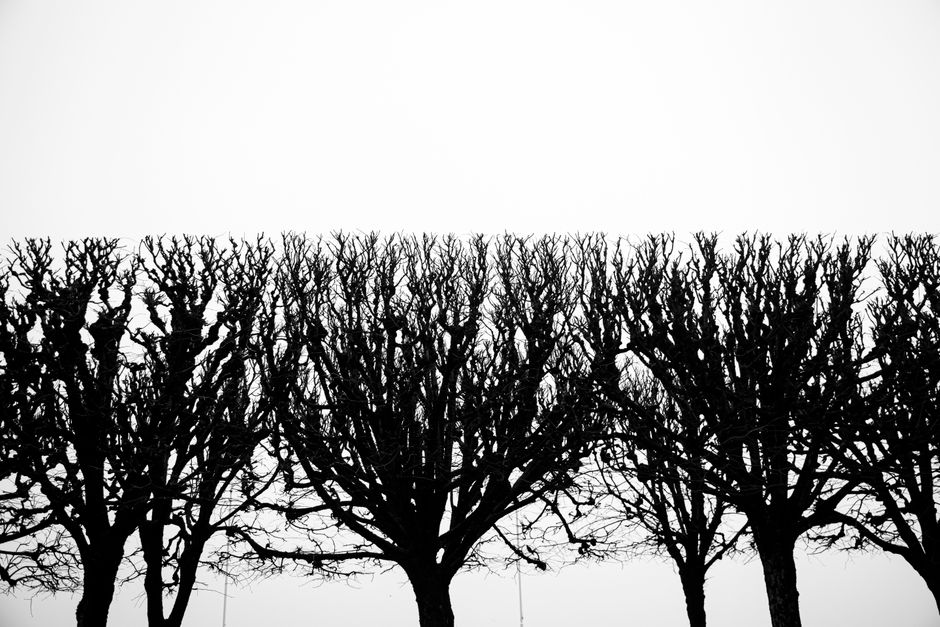
Winter is the right time for pruning trees in Surrey. The tree is dormant (which, in our experience, makes it the most cooperative it's going to get all year), the branch structure is fully visible without leaves in the way, and disease risk drops considerably. If you've been putting it off until spring — stop. You're working against yourself.
The timing question is the one we get every autumn: should I prune now or wait? For most species, the answer is now. November through February in BC. After leaves drop, before new growth starts. The exceptions are real, but they're the minority.
Direct answer:Most deciduous trees and conifers benefit from pruning during dormancy — roughly November to February in Surrey. Less sap flow means faster healing. No foliage means you can see what's dead, crossing, or structurally dangerous. Spring-flowering species are the main exception; prune those after they bloom. Deadwood can come out any time.
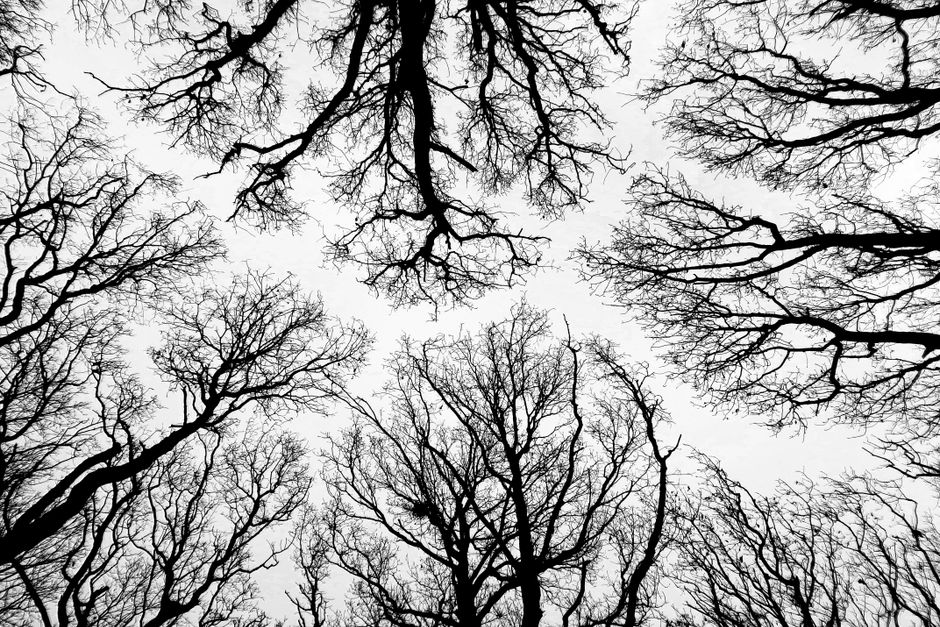
Why winter is the best time to prune most trees
There are four reasons that compound each other. You don't need all four to make winter the right answer — any one of them is enough. Together, they make the case.
Disease pressure drops. Fungal spores and bacterial pathogens are largely inactive in winter. The open wound from a pruning cut is a disease entry point year-round — but during the growing season, there are far more things in the air looking to exploit it. For species already prone to infection — cherry, elm, oak — timing the cut to low-pathogen conditions matters a lot. The Penn State Extension on dormant pruning covers this if you want the science.
Structure is visible.Nine times out of ten, the problem branches — the dead ones, the crossing ones, the co-dominant leaders competing for the same space — are easier to find in winter. What looks like a healthy full canopy in July can hide a structural mess that won't become obvious until a branch comes down in a windstorm. Leafless trees don't lie.
Healing is faster. Trees close pruning wounds during the spring growth flush. A cut made in February is at the front of the queue. A cut made in June has to wait a full year. Winter cuts are healed — or well on their way — before the tree has to do anything else demanding.
Wildlife disruption is minimal. Most birds finish nesting by autumn. Most insects are dormant. Winter pruning avoids the nesting and active wildlife season entirely — important for species like cavity-nesters that use old branches as habitat.
If you're in Surrey, Langley, or anywhere in the Fraser Valley and wondering when to schedule pruning — late autumn through early spring is the window. Not “eventually.”
What to look for before you pick up the pruners
Before anything gets cut, take a lap around the tree and look for these in order of priority:
Dead wood.Branches that didn't leaf out last summer, or that broke partially and are hanging. These come out regardless of season — dead wood doesn't improve with time. It's a disease vector, it adds dead load to the canopy, and it's a hazard when wind comes through. If you're only going to do one thing this winter, clear the deadwood.
Crossing branches.Two branches rubbing against each other wear away each other's bark, creating a wound that never closes. Pick the weaker or worse-positioned of the two and remove it. The tree won't miss it.
Co-dominant stems.Two stems growing at equal rate from the same point, both competing to be the leader. Left alone, they develop a narrow-angled union that'll eventually fail — usually at the worst possible time. Dealt with early, it's a $300 pruning cut. Left until they're thick enough to need rigging and removal, it's a $1,200 problem with a higher hazard profile.
Branches over structures or walkways.Any branch within fall distance of the house, over the roof, or directly above a path is a safety priority. Winter is the time to look at these clearly. They've grown all year with leaves blocking your view of them — now you can see exactly how far they've extended.
What you don't cut: healthy-looking branches you want removed because they block a view or a renovation is coming. Those need a proper tree assessment before anyone picks up a saw — removing the wrong branch changes the structure of the whole tree.
Which trees to prune in winter — and which to wait on
Good candidates for winter pruning in Surrey and the Fraser Valley:
Deciduous trees — bigleaf maple, oak, elm, ash, birch. All of these handle winter cuts well. Bigleaf maple in particular is the champion of Lower Mainland landscapes — large, long-lived, and perfectly suited to BC conditions. Prune it in early winter to avoid the late-winter sap flow that causes cosmetic bleeding.
Conifers— Douglas fir, western red cedar, Sitka spruce. These are the native species that actually belong here, and they respond well to late-winter pruning, just before new growth begins. Avoid heavy pruning in summer when they're actively growing; it stresses the tree and opens it up to bark beetles.
Fruit trees— apple, pear, quince. Standard horticultural practice is late winter, just before bud break. You want to see the branch structure while it's bare and time the cut so the tree can respond immediately with spring growth.
Trees to wait on:
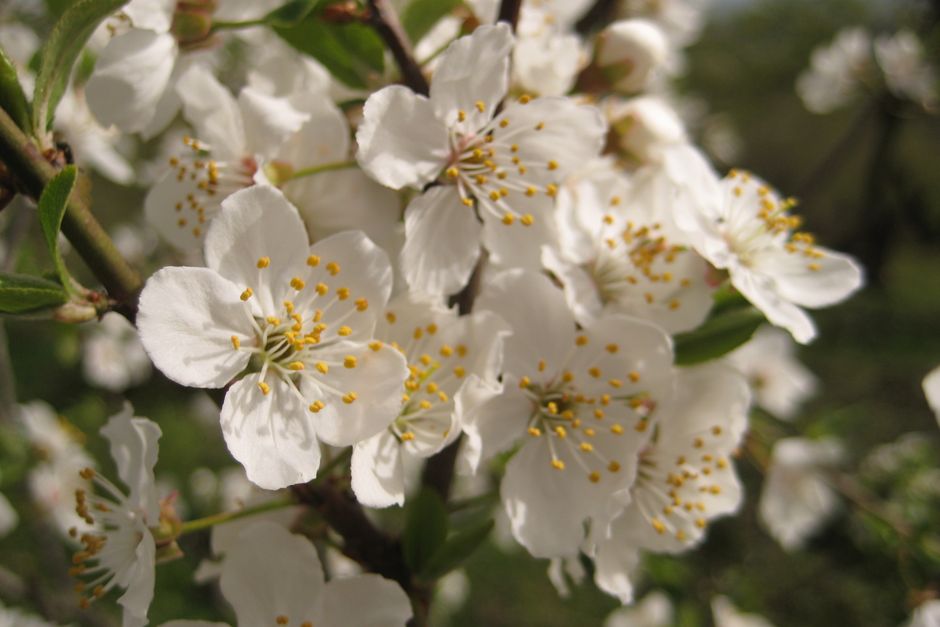
Spring-flowering species — cherry, plum, magnolia, forsythia, and anything else that blooms before the leaves appear. These species bloom on last year's wood. Prune in winter and you're cutting off the buds that would have flowered. Wait until the bloom has dropped. The test: if it flowers before May in Surrey, check what it flowers on. If it's old wood, you wait.
A note on Leyland cypress: this species doesn't belong in BC, doesn't handle our winters well, and doesn't respond reliably to hard pruning in any season. If you have a row of them struggling through disease and dieback, we should probably talk about replacing them. Western red cedar or Sitka spruce will outlast them by fifty years and cost you less maintenance in the meantime. The ISA Canada certified arborist directory is a good starting point if you want an independent assessment of whether replacement makes sense.
When not to prune yourself
A homeowner in White Rock called us in a few years back to sort out his bigleaf maple. He'd taken a crack at it himself — ladder, pruning saw, nine YouTube videos. Cut too hard, left stubs well out from the collar, removed the wrong branches. Two years later the tree looked worse: multiple competing leaders where one had been, several hazard points, and structural problems that cost $800 to properly address. Would have been $350 if he'd called first. The tree carries the scarring either way.
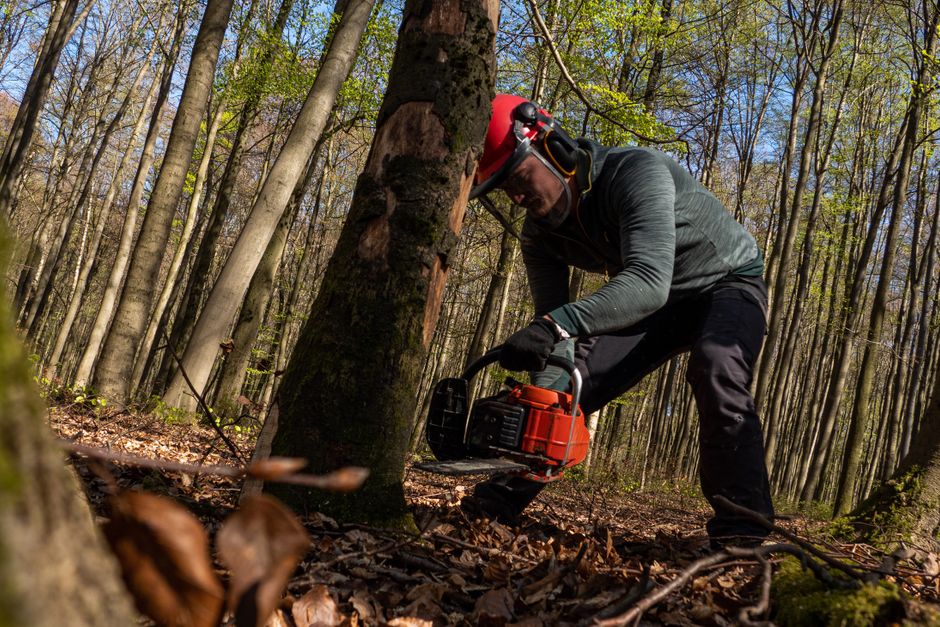
The rule is straightforward: if you have to climb to reach it, or the tree is over 20 feet, or it's within fall distance of the house — call a certified arborist. That's not a sales pitch; it's the single biggest piece of advice I give to homeowners who ask.
The cost of a wrong cut is measured in years, not dollars. A stub left six inches from the collar rots back into the trunk. An over-pruned tree responds with multiple weak shoots from the cut point — which is structurally worse than what you started with. These aren't hypotheticals; they're the calls we get two or three seasons after a DIY attempt.
What you can reasonably do yourself:
- Remove small dead branches (under 2 inches diameter) from the lower canopy
- Light hedging and shrub maintenance below shoulder height
- Removing suckers from the base of a tree
What to leave to a certified arborist:
- Any cut above shoulder height or requiring a ladder
- Anything near power lines
- Any tree over 20 feet or within fall distance of a structure
- Structural pruning — removing co-dominant stems, reducing crown size
ISA certification matters here. Anyone can call themselves an arborist. An ISA Certified Arborist has completed an exam, demonstrated field competency, and maintains continuing education. When someone is climbing a tree on your property and making cuts that affect the structure for the next decade — that credential is the difference.
What tree pruning costs in Surrey, BC
Nobody publishes pricing. Here's ours.
| Service | Typical range (CAD) |
|---|---|
| Deadwood removal — small tree | $250–$450 |
| Crown thinning | $300–$800 |
| Crown reduction | $500–$1,200 |
| Fruit tree pruning (apple, pear) | $200–$400 |
| Large-tree structural pruning | $800–$1,800 |
| Arborist assessment | $150 (credited to the job) |
The $150 assessment fee is credited back if you proceed with the work. Most people find it worthwhile — it's the difference between “I think something needs doing” and “here is specifically what needs doing, here is what it costs, and here is why.” That conversation has saved homeowners more than it's cost them.
Rule of thumb:a quote that skips the site visit is guessing. Tree pricing depends on access, canopy size, what's below the drop zone, and what equipment the job actually needs. Two trees of the same species can differ by several hundred dollars depending on where they're planted. Get the assessment, then get the quote.
One more thing: pruning now costs roughly half of what reactive work costs later. A dead limb assessed and removed in January is a $300 line item. The same limb, after a windstorm drops it through a deck in March, involves emergency call-out rates, damage assessment, possible structural repairs, and a considerably more stressed homeowner. I reckon the math is clear enough.
And if the honest answer is that your tree doesn't actually need pruning this season — we'll tell you that. It happens. Not every tree is overdue for work, and a good arborist would rather give you that answer than invent a reason to bill. If you're genuinely not sure, a $150 assessment costs less than finding out the hard way.