
Your oak tree is turning black. Good news first: it probably hasn’t given up on you. Nine times out of ten, black bark on an oak is sooty mold — which sounds alarming but is actually more cosmetic than crisis (the tree equivalent of a bad spray tan). Here’s how to tell what you’re actually looking at.
The short answer: oak bark turns black from sooty mold, fungal cankers, bacterial wetwood, Phytophthora root rot, or natural weathering. Each one looks different. Each one needs a different response — and some of them need no response at all.
The five causes of black oak bark
Knowing which category you’re in changes everything — from whether you need a spray bottle to whether you need a certified arborist.
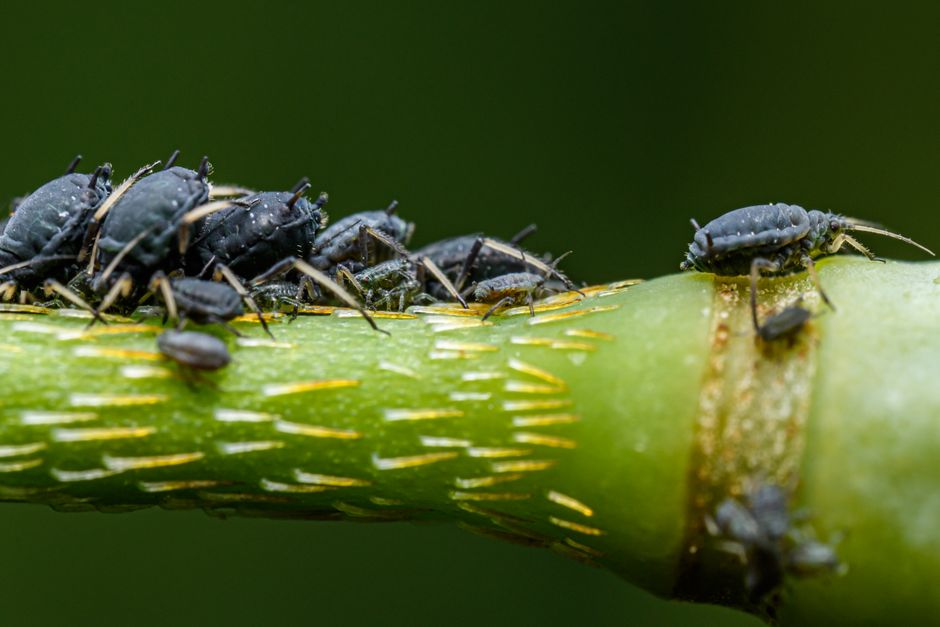
Sooty mold.A black fungal film that grows on sticky honeydew secreted by aphids, scale insects, or mealybugs. The mold doesn’t infect the tree. It lives off insect waste.
Fungal cankers.Dark, often sunken lesions in the bark. Usually an entry wound — a bad pruning cut, storm damage, or a drought-stressed tree that couldn’t defend itself.
Bacterial wetwood (slime flux). Internal bacterial infection that causes the tree to weep a dark, often foul-smelling liquid. It dries black on the outer bark.
Phytophthora root rot. A water mould that attacks the root collar and lower trunk. Shows as dark bleeding at the base of the tree, concentrated just above the soil line.
Natural weathering and lichen. Older bark darkens with age. Lichen — a dual organism of algae and fungus — colonises mature bark and reads as dark patches from a distance. Neither is a problem.
Sooty mold — the most common culprit
Look at the affected bark area. Does the black coating appear powdery or crusty — and does it flake or wipe off? That’s sooty mold. Now look at the undersides of leaves and small stems near the blackened area. If you find clusters of tiny insects, cotton-like deposits, or shell-like scale, you’ve found the source.
Sooty mold spreads as fast as the insect population feeding above it. A large aphid colony in spring can coat an oak in a single season. The treatment logic runs backwards from what most homeowners expect: address the insects first. The mold stops expanding on its own, and gradually weathers away.
For light infestations, horticultural oil spray applied to affected branches in late spring targets the insect population without harming the tree. Insecticidal soap is effective for aphids specifically. The mold itself can be washed down with water and mild soap once insect pressure drops. Rule of thumb: don’t pressure-wash the bark — that strips the bark’s natural surface protection faster than it regenerates.
For heavier infestations — where coverage is significant or the insects have reached the upper canopy — a tree health assessment from an ISA-certified arborist can determine whether systemic treatment is more efficient than surface sprays. Worth asking about rather than just doing.
Fungal cankers and bacterial wetwood
These two get confused, but they’re distinct problems with different management approaches.
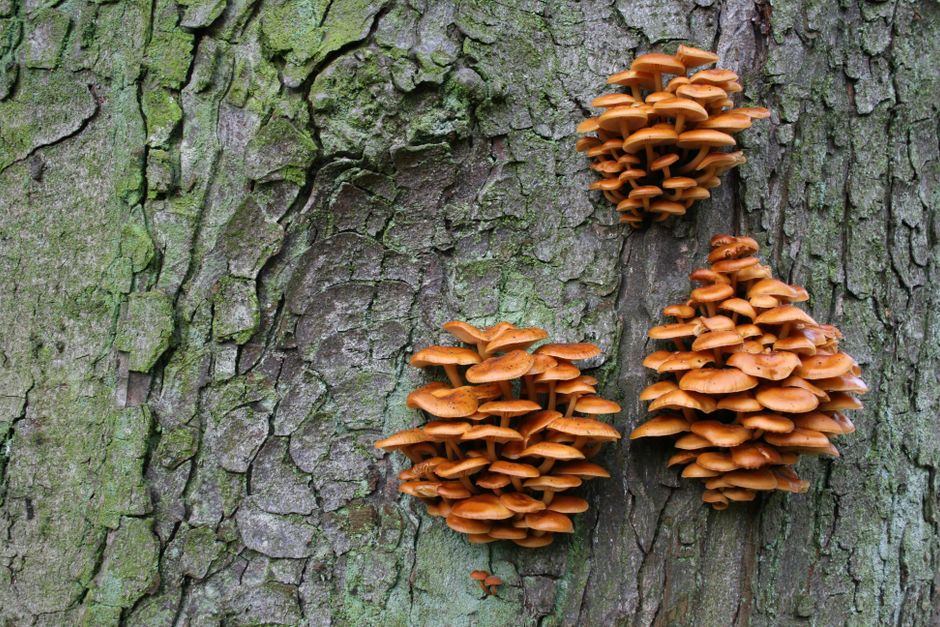
Cankersare localised dead zones in the bark — often sunken, sometimes with cracking or peeling edges. Hypoxylon canker, one of the more common oak cankers in BC, shows as a grey-brown powdery surface where the bark has separated and lifted. It’s opportunistic: it moves in after stress events — drought, storm damage, or a poorly healed pruning wound — when the tree’s defences are reduced.
Bacterial wetwoodannounces itself with smell before colour. Dark liquid seeps from the trunk or major branch unions, often fermented, drying black on the outer bark. It signals that bacteria are active internally. On a healthy, vigorous tree it’s usually manageable. On a tree already under stress, it’s worth monitoring closely.
Honest answer on cankers: we can’t cure them, but we can manage the conditions that let them spread. Good pruning hygiene, removing deadwood, and reducing stress — particularly drought stress — keeps most cankers contained. The ones that expand despite management are a different conversation.
That’s a situation I see regularly in Surrey. A homeowner called me about a 120-year-old Garry oak a previous company had quoted for removal — "canker activity," they said. The canker was real and visible. But it was contained, the crown was vigorous, and the structural integrity was sound. Crown thinning ($650) removed the dead material and reduced wind load. Deadwood removal ($300) addressed the active infection points. That tree is still standing — and the homeowner is $1,450 ahead of where the removal quote would have left them. The canker didn’t kill the tree. The wrong advice almost did.
If you have an old Garry oak in Surrey, get a second opinion before anyone starts talking removal. Those trees are irreplaceable — some are 200+ years old — and most of what gets called "too dangerous" is manageable.
Phytophthora root rot
This one shows differently from the rest. If the black discolouration is concentrated at the base of the trunk — just above the soil line — and the surrounding soil tends to stay wet, Phytophthora is the first thing to rule out. It’s a water mould (not a true fungus) that attacks the root collar and lower crown. You’ll often see dark weeping or bleeding rather than a dry, crusty surface.
In Surrey and the Fraser Valley, our wet winters create exactly the conditions Phytophthora needs. Poor drainage compounds it. Rule of thumb: if the black is concentrated at the base and the surrounding soil stays persistently wet, Phytophthora is the first thing to rule out. BC’s Ministry of Forests classifies Phytophthora as one of the primary disease threats to native tree species in the province.
Management before calling anyone:improve drainage around the root zone. Pull mulch back from the root flare — mulch piled against the trunk is one of the most common conditions I see contributing to Phytophthora spread. Reduce irrigation near the trunk. The mould doesn’t like airflow and dry soil conditions. Fungicide treatment exists but is rarely the right first move — fixing the drainage is.
For confirmed or suspected Phytophthora on a mature oak, a professional assessment tells you how far the infection has progressed and whether the root system is still structurally sound. That’s the decision that matters.
Natural weathering, lichen, and the non-problems
Not all black is disease. A few things that look alarming and aren’t:
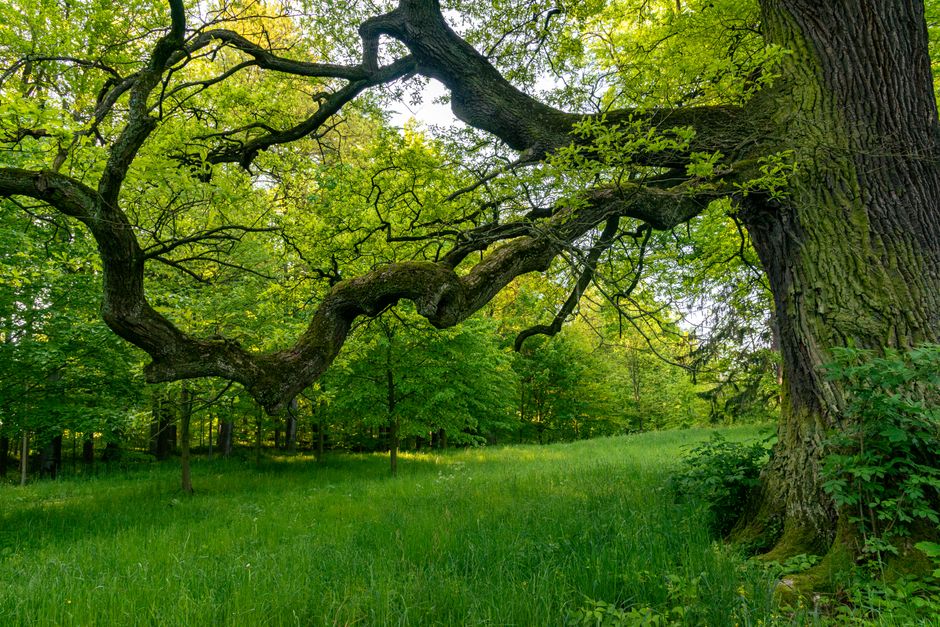
Natural bark darkening.Mature oak bark darkens with age. A 30-year-old Garry oak will have considerably darker, more furrowed bark than a 15-year-old one. That’s maturity, not malady. If it’s been that way for years and the tree is otherwise growing normally — it’s fine.
Lichen.Lichen appears as grey-green to dark patches on bark, sometimes reading as black in wet weather. Despite looking like disease, lichen is actually a positive environmental indicator — it’s sensitive to air pollution and won’t establish on trees in heavily polluted areas. It causes no harm to healthy bark. Removing it is cosmetic preference, not tree care.
Fire or heat damage. Charring from a nearby fire looks exactly like fungal disease from a distance. Check the history before diagnosing.
The International Society of Arboriculture has straightforward diagnostic guides for common bark discolourations — worth a look if you’re trying to narrow down the cause before calling anyone.
When not to call an arborist
I’ll say this even though it’s not optimal for my schedule.
If the black on your oak is in a single small patch, hasn’t visibly changed in months, and the tree is otherwise growing normally — don’t call anyone yet. Take a photo. Check back in 30 days. Trees have mechanisms for containing localised problems. A palm-sized dark patch on an otherwise vigorous oak isn’t worth a service call.
If you have aphids and the canopy is still full and healthy — manage the population yourself in spring with insecticidal soap spray. We’re not going to tell you to pay us $300 for something you can buy at any Surrey nursery.
If the discolouration is lichen or natural bark weathering — leave it alone entirely.
When to call: the black is spreading season over season, bark is weeping liquid (especially with a smell), the canopy looked thinner last year than the year before, or the blackening is concentrated at the base with wet soil around it. Those are the signals that a professional assessment is the right next step. A diagnosis now costs $150. Waiting until the tree is structurally compromised costs considerably more.
What treatment actually looks like
A proper assessment of a tree with black bark starts on the ground. What’s visible on the bark. The canopy — is it as dense as last year? The root zone — is the soil draining correctly? Then closer: checking for insect activity, testing bark integrity, looking at branch attachments.
What comes back from that assessment is either a clear cause with a clear fix, or a reason to monitor and test again in a season. Rarely is the answer "remove it."
Approximate costs for the most common scenarios:
| Cause | Typical management cost |
|---|---|
| Sooty mold / insect treatment | $200–$350 |
| Deadwood removal (canker management) | $250–$600 |
| Crown thinning (stress reduction) | $300–$800 |
| Drainage improvement consultation | $0–$150 |
| Full arborist assessment | $150 (credited toward work) |
I reckon the most common mistake homeowners make is treating the symptom — the black — rather than the cause. Pressure-washing mold off bark without addressing the aphid population underneath means the mold is back by next spring. The same logic applies to cankers: removing visible infected wood without addressing the stress condition that opened the door in the first place just delays the next outbreak.
For proper oak tree maintenance in Surrey, the sequence matters: assess, identify, address the underlying cause, then manage the visible symptoms. In that order.
One strong opinion I hold from fifteen years in this industry: the first company to tell you a black-barked oak needs removal — without a proper diagnosis — is the wrong company. Removal is expensive. Honest assessment is $150. If the assessment confirms the tree is structurally compromised and genuinely can’t be managed, I’ll tell you that. But that conclusion should come after the assessment, not before it.