No. And yet this is one of the more Googled tree questions in North America, so here we are. (The internet contains multitudes.)
Peanuts don't grow on trees. They grow on a low-growing annual plant, Arachis hypogaea, in the legume family — the same family as peas, lentils, and chickpeas. The pods develop underground after the flowers droop and push below the soil surface. The whole plant tops out at knee-height.
Quick answer:Peanuts grow underground on a small annual plant, not on a tree. If you're in Surrey and want edible nuts from a tree, hazelnut is your best starting point. Black walnut and chestnut both work here with the right conditions. This guide covers all three and what you'll need from an arborist to keep them healthy.
Why peanuts don't grow on trees
The confusion is understandable. We call peanuts "nuts," we sell them beside almonds and cashews, and they end up in the same aisle. But botanically, a peanut is a legume — a seed that develops in a pod, produced by a nitrogen-fixing plant that's closer to a garden pea than a walnut tree.
What sets peanuts apart from every other so-called nut: the seeds develop underground. The plant flowers above ground, the stem drills down into the soil after pollination (a process called geocarpy, which is exactly as strange as it sounds), and the peanut pod matures below the surface. No tree, no canopy, no bark. Just soil.
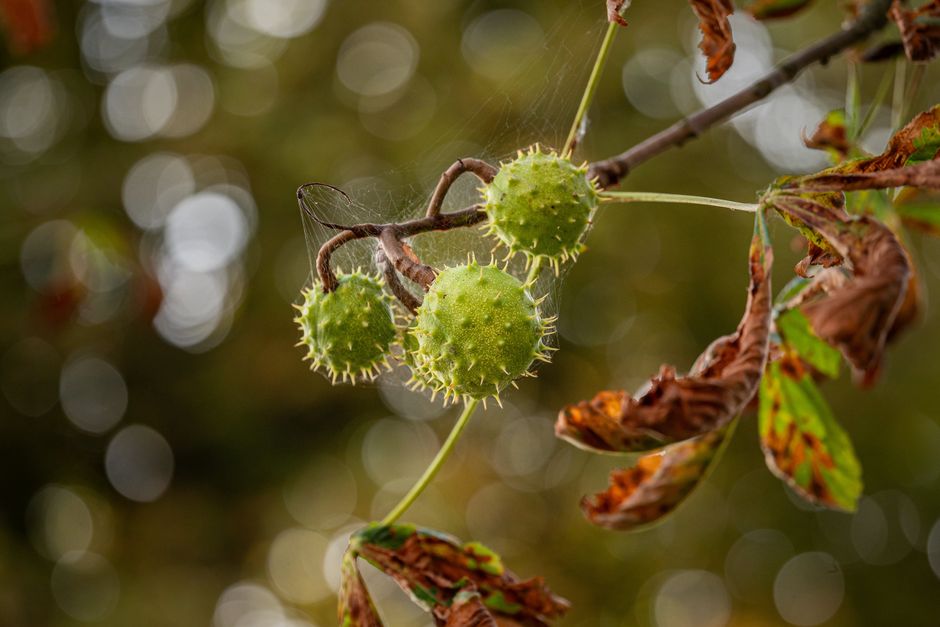
True tree nuts are a different story. Chestnuts, hazelnuts, and acorns are botanical true nuts — dry, hard-shelled fruits from trees where the shell doesn't split open naturally at maturity. Walnuts and almonds are technically the seeds of drupe fruits (the walnut shell is a seed inside a fruit that looks like a green golf ball when fresh). But they all grow on trees, they all need pruning, and several of them grow well in BC.
Nut trees that actually grow in BC
We get this question at the nursery-visit stage more often than you'd think: "I want a nut tree. What works here?" The honest answer depends on your space, your soil drainage, and how patient you are. But the short list for Surrey is manageable.
What works in Surrey:
- Hazelnut (Corylus avellana and Corylus cornuta). The easiest fit by a margin. The beaked hazelnut is native to BC. It handles clay soil, wet winters, and mild summers without complaint. Starts producing nuts in three to five years from a named cultivar. Plant two different varieties for good cross-pollination.
- Black walnut (Juglans nigra). Grows well in Surrey with the right drainage and space. Mature specimens reach 15–20 metres. The roots produce juglone, a chemical that inhibits growth of many nearby plants including tomatoes, apple trees, and several ornamentals. Site it carefully. Worth it for the right property.
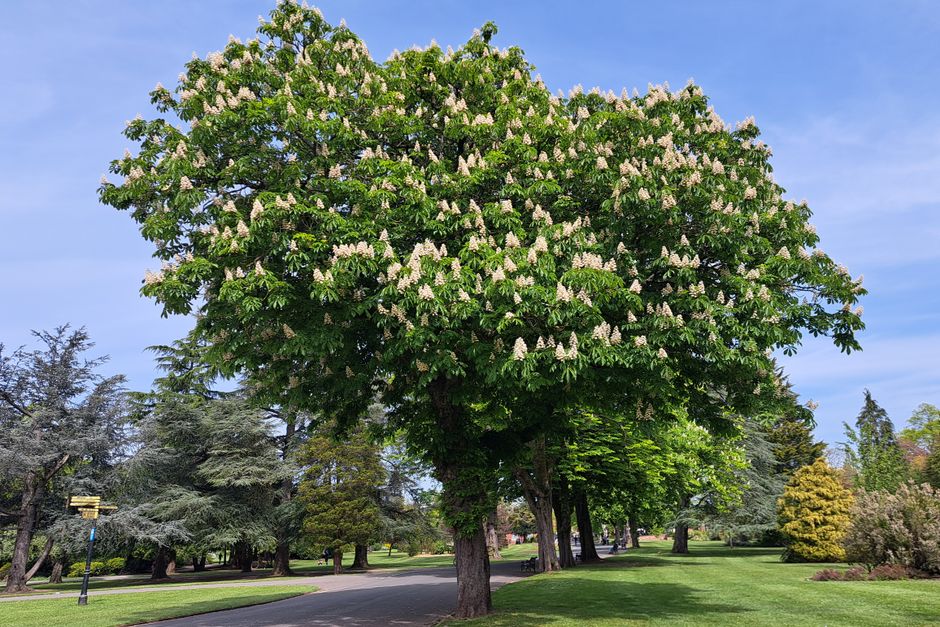
- European chestnut (Castanea sativa). Prefers a warmer microclimate — south-facing, good drainage. Zone 7 to 8, which Surrey qualifies for in many areas. Worth a look if you have the space and a sunny spot. See our chestnut tree guide for more on the species.
- What doesn't work here:Almonds (too cold-tender for most Surrey winters), pecans (need a longer, hotter summer to produce reliably), macadamia (only in protected coastal areas of far southern BC, and even then it's marginal).
Hazelnut trees in Surrey — why they're the right fit
I'd plant a hazelnut before most other nut trees for Surrey properties, full stop. The native beaked hazelnut (Corylus cornuta) has been part of BC's understory for a long time. The European hazelnut (Corylus avellana) — the one that produces larger, rounder nuts you'd recognise from a bag at the grocery store — is well-adapted here too.
They're multi-stemmed shrubs or small trees, typically 3–6 metres tall. No ladder required for most home harvests. They produce catkins in late winter that look better than most ornamentals. Nine times out of ten, the soil conditions in Surrey (heavy clay, good moisture retention) are closer to what hazelnuts prefer than to what almonds or pecans need.
The one consistent mistake I see: planting a single hazelnut and expecting a good crop. Hazelnuts are self-incompatible, meaning a single tree pollinates poorly. You need two different named cultivars — 'Barcelona' and 'Ennis' are common choices — planted within 10 metres of each other. The catkins flower before most insects are active, relying on wind. Distance matters.
Also: watch the suckers. Hazelnuts send up shoots from the base aggressively. Remove them annually or the tree turns into a thicket over three seasons. That's manageable work — it just needs to be part of the annual routine, not something you catch up on after five years of letting it go.
Black walnut and chestnut — bigger trees, bigger commitment
Black walnut is a beautiful and productive tree. A mature specimen can drop more kilograms of nuts than any family wants to process by hand, which is either great news or a cleanup problem depending on your household. But the juglone issue is real. If you're planting near a vegetable garden, an apple tree, or ornamentals sensitive to juglone, place it at least 15 metres from anything you value. That's a planning requirement, not a suggestion.
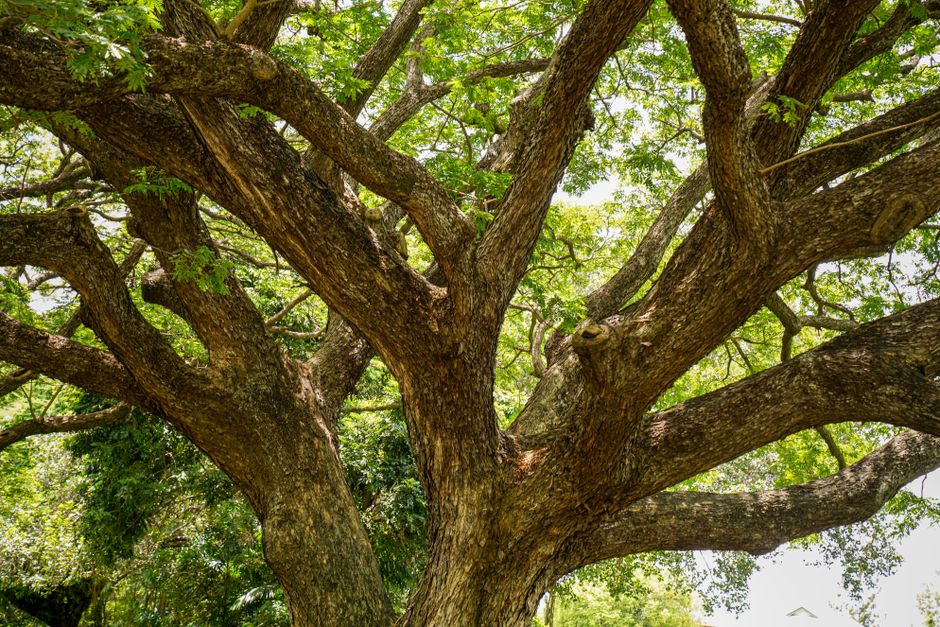
It's also a large-canopy tree. That means eventual crown management. By year 20 you're looking at a tree that may need professional pruning to remove deadwood, reduce crossing limbs, and check the structure. That's not a problem — it's a care relationship. Worth knowing before you plant it three metres from the fence line.
European chestnut suits warmer, sheltered spots and is worth considering if your property has south-facing exposure with good drainage. The US Forest Service silvics reference on Castanea sativa covers growth habits in useful detail if you want to research the species further. The International Society of Arboriculture also has tree selection guidance worth reading before you commit to a large-canopy specimen.

Caring for nut trees: pruning, timing, and what not to do
Timing for nut trees in Surrey is late winter to early spring — February to early March before the buds break. That's your window for structural pruning. The general rule: remove crossing branches, dead wood, and water sprouts (the fast-growing vertical shoots that look vigorous but contribute nothing useful to the structure). Keep the crown open enough that light reaches the inner branches.
What not to do: prune hard in summer, leave stubs, or top the tree. All three are more damaging than doing nothing. Stubs create entry points for fungal infection. Topping destroys the structure and leads to clusters of weakly attached new growth that become hazard limbs within a few seasons. Summer pruning on a stressed tree removes the leaf mass the tree needs to build reserves for the following year.
I had a client a few years back who decided to prune his young hazelnut himself. He'd watched one YouTube video and felt confident — which, I've learned, is the most dangerous state a homeowner can be in. He cut back the main leaders, removed the wrong structural branches, left stubs at almost every cut. The tree spent two full seasons trying to recover, throwing up competing leaders in every direction and looking considerably worse than before.
We did a proper restorative crown reduction ($400) to work through the worst of it and get the structure back on track. It would have been a standard annual prune if he'd called first. Rule of thumb: when you're unsure which branches to remove, ask before you cut. The consultation is $150 and credits toward the work if you proceed.
For tree health assessment and ongoing care, the work follows the ISA ANSI A300 pruning standard. It's dry reading but it sets the actual benchmark for what proper pruning looks like, which is useful to understand before hiring anyone.
When NOT to call us
We'll tell you this even when it costs us a booking.
Skip the arborist call for:
- A young hazelnut under 2 metres — annual light pruning with clean secateurs is well within DIY range. Remove suckers from the base, shorten any crossing stems. Source guidance from ISA or BC Ministry of Agriculture, not a 60-second video from someone in Texas.
- Routine sucker removal — this is annual tidying, not arborist work. A clean cut at the base, done annually, keeps a hazelnut tidy. No specialist required.
- Harvesting — this one doesn't require a call, but we mention it because we've received the call. We don't do nut harvest. That's on you.
Do call when:
- The tree has grown past what you can reach safely from the ground
- There's visible disease, canker, or dieback across more than 20% of the crown
- Branches are over your house, driveway, or a neighbour's property
- The structure looks crowded or confused and you're not sure what to remove first
Our full range of tree care services covers assessment, structural pruning, and anything that needs to come down. If the question is which nut tree to plant and where, give us a call. We'll match it to your site conditions and tell you honestly what will grow well and what won't. No charge for that conversation.