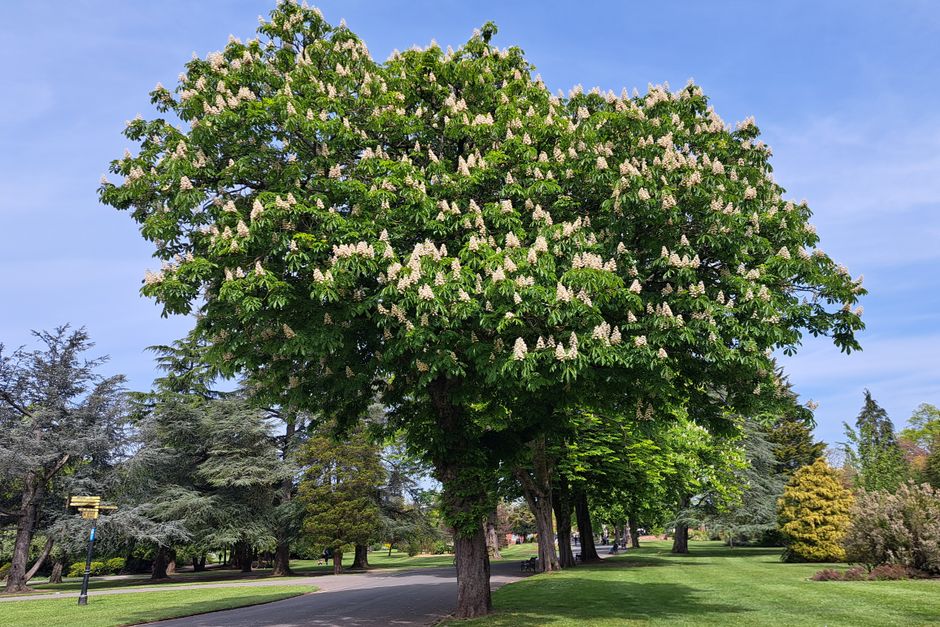
The chestnut tree in your yard is almost certainly a horse chestnut. (Sweet chestnuts are comparatively rare in Surrey, and the edible kind is not what most people here are looking at.) Horse chestnuts grow large, produce those impressive white flower candles every May, and spend September distributing conkers across your driveway with remarkable generosity. Here's what they need, what goes wrong, and when calling an arborist is actually worth the money.
Horse chestnut or sweet chestnut — what have you actually got
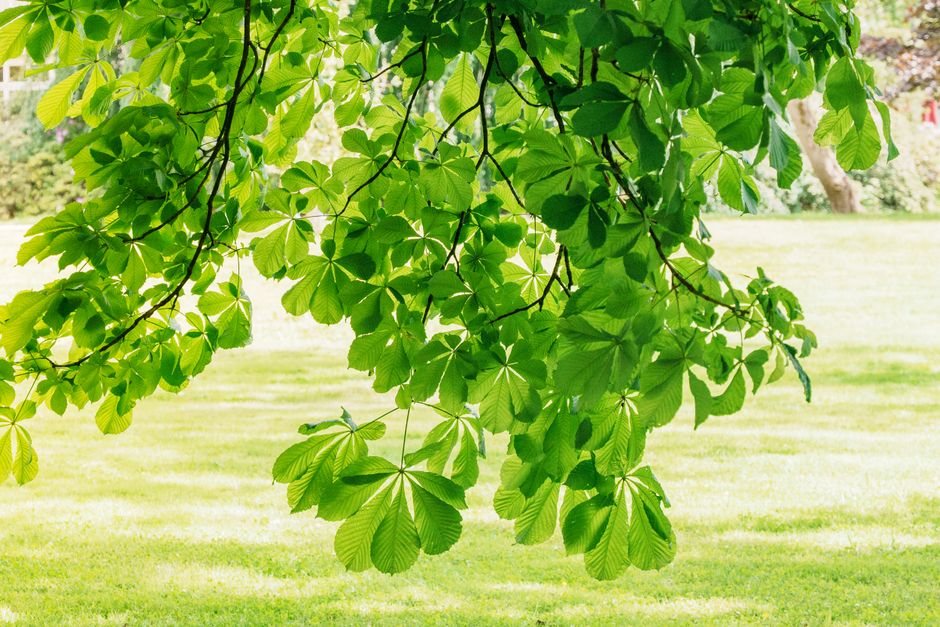
Quick way to tell them apart: horse chestnut leaves have five to seven leaflets fanning from a central point, like a large green hand. Sweet chestnut (Castanea sativa) has long, single, serrated leaves — more like a toothed strip than a fan.
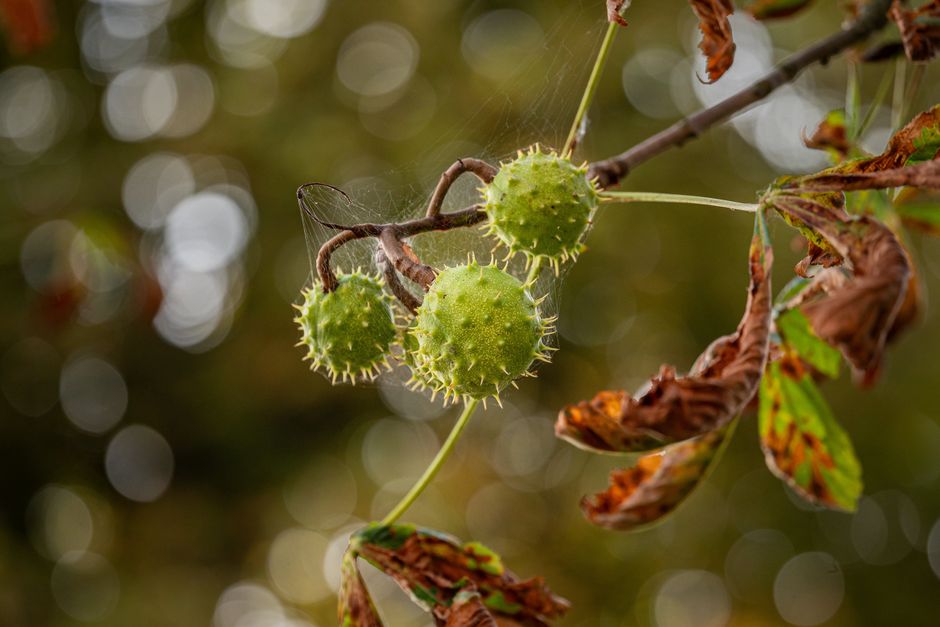
The fruit cases make it obvious. Horse chestnut conkers sit in a round, sparse-spiked case. Sweet chestnut nuts come in something that looks like a small angry hedgehog and taste like something you'd actually want to eat. Horse chestnuts are inedible and mildly toxic to dogs.
If you're looking at a big deciduous tree with palmate leaves and you're not sure what it is, the odds favour horse chestnut. They're everywhere in Surrey and Langley.
What chestnut trees look like through the seasons in Surrey BC
May is when horse chestnuts earn their keep. The upright white flower spikes — called "candles" — on a mature specimen are genuinely impressive. June through August the canopy fills in deep and dense, good for shade, less good if you're hoping to grow anything underneath.
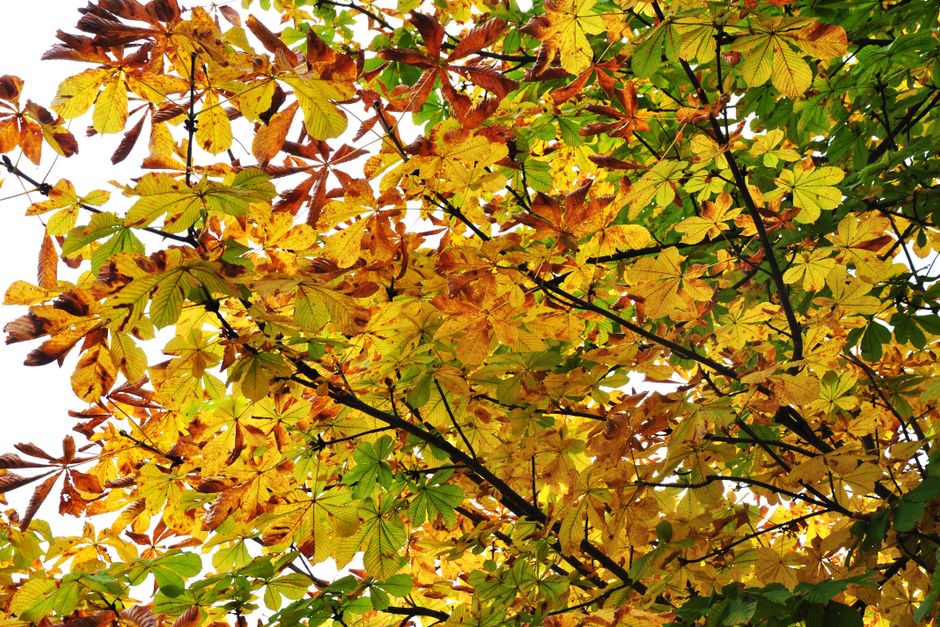
September is conker season. (Translation: "raking up spiky balls for a month" season.) October the leaves go yellow-brown and fall in large handfuls. By November the tree looks like a bare grey skeleton. That's normal. It's deciduous. It's just very dramatic about it.
When and how to prune a chestnut tree
The timing matters more than the technique with horse chestnuts. They bleed heavily if pruned in late winter or early spring — that sap loss won't kill a healthy tree, but it stresses it and creates entry points for the bacterial canker that's become widespread across BC. The right windows are:
- Mid-summer: July through mid-August, when sap flow has slowed
- Late autumn to mid-winter: after leaves have fully dropped, before sap starts moving again
What to remove: dead, diseased, or structurally crossing branches. Horse chestnuts grow naturally upright and rarely need shaping the way fruit trees do. A mature specimen in good health typically needs nothing more than deadwood removal every five to seven years.
Anything involving a branch over four inches in diameter, or work above 20 feet — that's the line where DIY becomes a poor decision. The bad cuts don't improve with time. They create multiple competing leaders and future failure points. I've seen it play out more times than I can count.
For a tree under 20 feet with clear ground access and nothing overhead, removing a dead limb or two with a proper handsaw is manageable. Anything bigger, give us a call.
Common chestnut tree problems in Surrey BC
Bleeding canker (Pseudomonas syringae pv. aesculi)
This bacterial infection shows up as dark, weeping streaks on the trunk — orange-brown sticky fluid seeping from the bark. It's become common in BC over the past decade and there's no reliable cure. The practical approach: prune out infected bark where the area is limited; monitor where it's larger; if the canker has girdled the trunk, removal becomes the conversation. Forest Research has a solid guide to identifying it.
Leaf miner moth (Cameraria ohridella)
Brown blotches spreading across the leaves from midsummer, giving the tree a singed look by August. The larvae are tunnelling inside the leaf, not attacking the wood. Nine times out of ten when I'm called about a "very sick-looking chestnut," this is what I'm looking at. The RHS confirms it's purely cosmetic — the tree leafs out normally the following year. Raking up and disposing of fallen leaves in autumn reduces the following year's population. That's about as effective as available intervention gets.
Leaf blotch (fungal)
Brown patches following the leaf veins, sometimes with a yellow halo. Distinct from leaf miner because the damage pattern follows veins rather than creating tunnels. Rarely fatal to a mature tree. Fungicide isn't usually worth the cost. Good leaf hygiene in autumn is the practical response.
A homeowner in South Surrey once called me about a horse chestnut that had been quoted $2,400 for removal because it "looked diseased." I assessed it: the leaf miner damage was cosmetic, the canopy was intact, the trunk was sound. Crown thinning ($650) and deadwood removal ($300) addressed the structural concerns. The tree's still there. Most tree services push removal because it's a bigger job and a bigger invoice — I started Little Tree Care because I got tired of watching that happen. See our tree services for a full picture of what we actually do.
How much does chestnut tree work cost in Surrey BC
Here's the honest version:
| Service | Rough range (CAD) |
|---|---|
| Tree assessment / consultation | $150 (credited toward work) |
| Deadwood removal (mature chestnut) | $250–$600 |
| Crown thinning | $300–$800 |
| Crown reduction (20–30% size) | $500–$1,200 |
| Medium chestnut removal (30–60 ft) | $800–$1,400 (stump included) |
| Large chestnut removal (60+ ft) | $1,500+ (site-dependent) |
If a quote seems low for the complexity, check what's missing. Stump grinding, full cleanup, and proper credentials are the usual omissions. Our quotes include all of them — no surprises at the end.
For more detail on what tree removal costs across different species and sizes, see our tree removal cost guide. And if you're wondering whether this could be handled with a trim rather than a full removal, that's exactly the kind of question a qualified ISA-certified arborist should be answering for you, not a door-to-door quote.
When not to call us
If your horse chestnut has leaf miner damage and looks rough in August — you don't need an arborist. Rake the leaves in autumn, wait for spring, and if it looks genuinely worse the following summer, then get an assessment.
If you have bleeding canker in a limited area and the tree is structurally sound, a $150 assessment is worth it to understand what you're monitoring. That's a reasonable call — but it doesn't automatically become a removal.
If you've had a removal quote and something didn't sit right — the tree didn't seem that bad, the price seemed low, the crew showed up and left within an hour — give us a call. A second opinion costs $150 and we'll tell you straight what the tree actually needs. We turn down removal work regularly. We're fine with that.