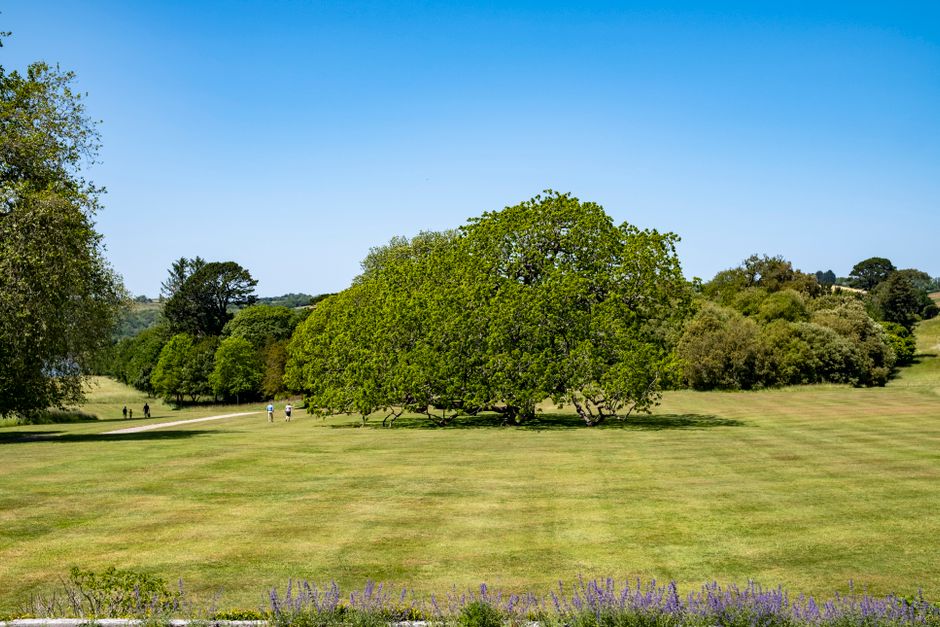
Catalpa trees are dramatic. Big leaves. Bigger flowers. Long seed pods that look like they were designed by someone who had never seen a tree but had very strong opinions about what trees should produce. If you're researching one — whether to plant it, how to prune it, or why it's looking rough — here's the honest answer.
Quick answer: A catalpa tree grows well in Surrey, BC. Both common species — Northern catalpa and Southern catalpa — handle our zone 8b climate. They're low-maintenance once established, but they do need pruning every 3–5 years, and they attract specific pests. Most problems I see with catalpas come down to spacing mistakes at planting or water sprouts left too long.
What is a catalpa tree
Two species are commonly planted in BC. Northern catalpa (Catalpa speciosa) is the larger — typically 40–60 feet at maturity. Southern catalpa (Catalpa bignonioides) is slightly smaller and blooms earlier. Both share the same basic profile: large heart-shaped leaves up to 12 inches across, white orchid-like flowers in late spring or early summer, and long thin seed pods that earned the tree its common nicknames — cigar tree, Indian bean tree, and fishbait tree.
The seed pods are the thing people ask about most. They're not dangerous. They're not invasive. They are, however, persistent on the ground once they start dropping, which is worth knowing before you plant one near a patio.
Catalpas are native to the central and southeastern United States. They've been widely planted as ornamentals across temperate North America for over a century. In Surrey yards they're uncommon enough to start conversations but established enough that we know exactly how they behave here.

Can a catalpa tree grow in Surrey, BC
Yes. Surrey's zone 8b is well within the catalpa's comfort zone. Both Northern and Southern catalpa are rated hardy to zone 4 or 5, so our mild winters pose no threat to an established tree.
Catalpas prefer full sun — six or more hours per day. They tolerate a range of soils, including the heavier clay common on many Surrey lots. Drainage matters more than soil type. Standing water at the roots is the one condition they handle poorly.
Our wet winters and drier summers suit catalpas reasonably well. They handle drought once established, which typically takes 3–4 years in the ground. During establishment, water deeply but infrequently — once a week during dry spells, not a daily splash. I reckon most new catalpa plantings I see in Surrey fail from overwatering in that first year, not drought.
One detail worth knowing: catalpas are late leafers. They're sometimes the last tree on the street to show leaves in spring, which leads to unnecessary removal quotes. If yours is still bare in early May, wait. By mid-May it should be leafing out. If it's June and nothing has happened, that's different — that's worth a look.

When and how to prune a catalpa tree
Prune catalpas in late winter dormancy — late January to mid-March in Surrey. Before bud swell. The tree is at its least stressed, wounds heal fastest as spring growth begins, and the branch structure is visible without the leaves in the way.
What to remove, in order:
- Dead, diseased, or damaged branches — these first, always, regardless of season.
- Water sprouts — the fast, vertical shoots growing from the main branches or trunk. Catalpas produce these heavily, especially after pruning. Cut them flush to the collar.
- Crossing or rubbing branches — remove the weaker of the two where they contact.
- Inward-growing branches — branches pointing back toward the centre of the canopy reduce airflow and increase disease pressure.
The rule of thumb: never remove more than 20–25% of the living canopy in one pruning session. More than that stresses the tree and triggers a water sprout response that will double next year's work.
Do not top a catalpa. Topping removes the dominant apical growth, triggers rapid sprouting from all the wound sites, and leaves large openings that struggle to close properly. A topped catalpa becomes a perpetual pruning problem. For more on what proper crown reduction looks like versus topping, our tree care services page covers the difference.
Common catalpa tree problems
Catalpa sphinx moth caterpillar (Ceratomia catalpae). This is the most common pest specific to catalpa. The caterpillars feed heavily on leaves in summer, sometimes defoliating the tree completely. It looks alarming. Nine out of ten times, the tree recovers on its own by mid-summer or the following spring. Severe repeated defoliation over multiple years weakens the tree — that's when to act. The caterpillars are, incidentally, famous as fishing bait, which accounts for the tree's third nickname.
Aphids. Spring aphid colonies are common on catalpa, especially on new growth. Most healthy trees manage this on their own once natural predators establish. A strong hose spray removes colonies quickly if you prefer not to wait.
Verticillium wilt. This is the one that warrants a call. It's a soilborne fungal disease with no cure once systemic. Signs: sudden wilting on one side of the tree, yellowing leaves that stay attached rather than dropping cleanly, branch dieback progressing over one or more seasons. If a cross-section of an affected branch shows brown or olive streaking in the sapwood, that's diagnostic. It doesn't always kill the tree quickly — sometimes it's manageable for years — but it needs a proper assessment. Our tree health assessment guide explains what that process looks like and what it costs.
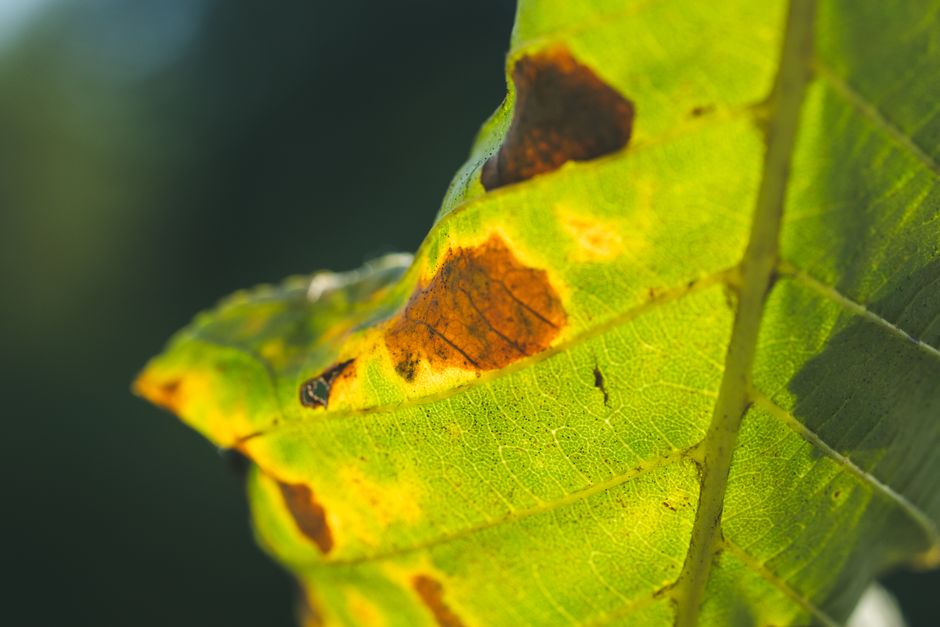
Leaf spot and powdery mildew. Both are common on catalpa in our climate and both are largely cosmetic in healthy trees. Powdery mildew shows as white powder on leaves, usually in late summer. Leaf spot produces brown patches on the foliage. Neither typically requires treatment in established trees — improve airflow through pruning and they tend to resolve on their own.
For reliable identification of any tree disease in BC, the ISA Canada arborist locator can connect you with a certified arborist in your area.
Where to plant and root considerations
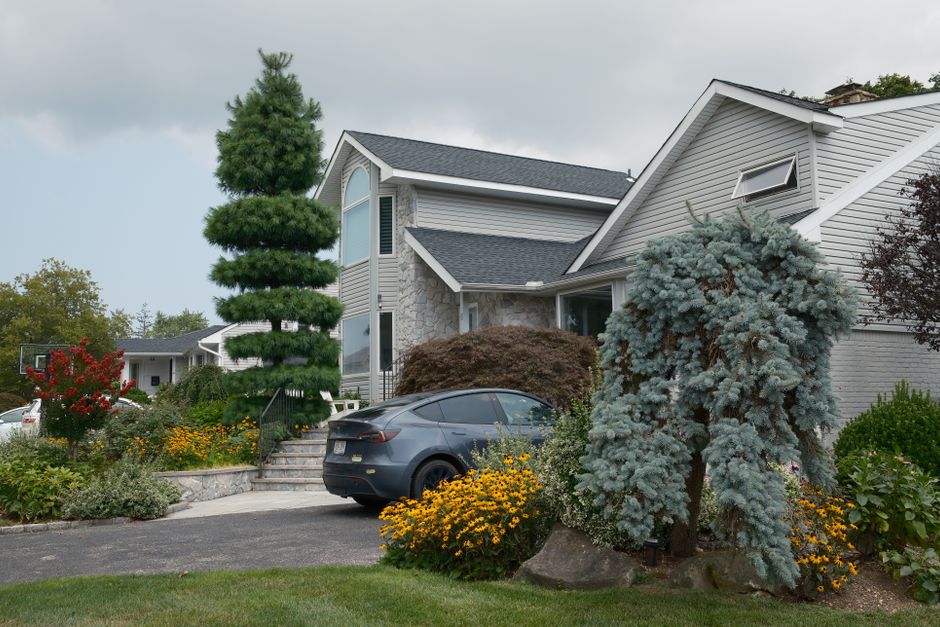
Give a catalpa real space. Northern catalpa reaches 40–60 feet tall and nearly as wide. The rule of thumb: at least 20 feet from your foundation, garage, or fence line. At least 10 feet from underground utility lines. Check before you dig — BC One Call at 1-800-474-6886 is the right first step, and it's free.
Catalpa root systems are moderately aggressive. Not as invasive as cottonwood or willow, but they will follow water sources. I've seen catalpa roots in drain tiles — it's not common, but it happens. Near a patio or walkway, surface root heave is a possibility over 20–30 years.
One thing most homeowners skip when planning: the mess. Catalpa trees drop flowers in early summer, leaves in autumn, and seed pods from late summer through winter. The pods take time to decompose. If you're planting near a driveway or patio, budget time for cleanup. If you're considering planting near power lines at all, BC Hydro's guidance on trees near power lines is worth reading before you commit to a location. (That's a permanent mistake if you get it wrong.)
When not to call an arborist
Most healthy catalpa trees in well-positioned Surrey yards don't need professional intervention very often. Here's what you can handle without us:
- Routine water sprout removal under 12 feet — hand pruners and a good eye, done in late winter. Staying ahead of water sprouts is the main thing.
- Sphinx moth caterpillar damage, unless defoliation is severe and happening year after year. The tree almost always recovers on its own.
- Leaf spot or powdery mildew on a healthy, established tree — rake and dispose of affected leaves, improve airflow, wait it out.
- A catalpa that leafs out late in spring — this is normal. It is not dead.
- Deadwood you can reach safely from the ground with a pole pruner, say under 10 feet. That's a DIY job.
Our assessment fee is $150, credited toward any work we proceed with. If you're genuinely unsure whether something is serious, that money is well spent. But if what you're dealing with is a pile of seed pods on the driveway — a rake is the right tool, not a certified arborist.
When to call an arborist — and what it costs
A few years back I assessed a catalpa in Cloverdale. The homeowner had been quoted $1,800 to remove it — "it's dying," they'd been told. The tree had some deadwood, was leaning slightly, and had been partially defoliated by sphinx moth caterpillars that summer. I looked at it: the lean was within normal structural range, the deadwood was manageable, and the defoliation was temporary stress, not structural decline. Crown thinning came in at $600. Targeted deadwood removal was $300. The tree was fine. The homeowner saved over $900 and still has the tree.
This is why a second opinion matters. Most tree services earn more from removal than from retention. An ISA Certified Arborist is professionally obligated to recommend what's appropriate, not what's most expensive. For what removal costs when it actually is necessary, see our tree removal cost guide for Surrey.
Call an arborist for:
- Suspected verticillium wilt — one-sided wilting, yellowing that doesn't drop cleanly, progressive branch dieback
- Any limb within fall distance of your roof, car, or power lines
- Pruning above 12–15 feet — not a ladder job, and definitely not a chainsaw-on-a-ladder job
- A tree you haven't looked at in five or more years — preventive maintenance costs a fraction of reactive removal
| Service | Rough range (CAD) |
|---|---|
| Tree assessment / consultation | $150 (credited if work proceeds) |
| Crown thinning / light pruning | $300–$800 |
| Crown reduction (20–30% size reduction) | $500–$1,200 |
| Deadwood removal | $250–$600 |
| Full removal — medium tree (30–60 ft) | $800–$1,400 |
The right time to assess your catalpa is every 2–3 years, before a problem is obvious. Preventive maintenance costs half the price of reactive emergency work. If it's been five or more years since anyone has looked at it properly, that's overdue.