
Yes, you can kill an oak tree by trimming it. (Congratulations, you have found the one piece of tree advice that sounds like a bad riddle.) The short version: it depends on how much you remove and when you do it. Get either of those wrong and the oak will not make a noise about it for months — then it simply stops recovering.
I have seen oaks that took two decades to die from a single bad pruning session. I have also seen trees bounce back from worse. The difference is almost always the same two variables.
How over-trimming kills an oak
An oak feeds itself through its leaves. Every leaf is converting sunlight into energy. Take too many away at once and the tree cannot close its wounds, push new growth, or fight off pathogens. Think of it as asking someone to run a marathon the week after surgery.
The second mechanism is disease entry. Fresh pruning cuts are open points for fungal spores and wood-boring insects. In parts of North America, oak wilt moves through this exact route — the fungus enters fresh cuts, spreads through the root system, and kills connected trees within a season. In BC, oak wilt is not currently established in Garry oak habitat, but local fungal pathogens and bark beetles use the same door. The timing of your cuts determines how wide open that door is.
Neither of these kills an oak overnight. That is what makes them dangerous — you do not see the damage for months, by which time it is much harder to reverse.

How much is too much to remove
Rule of thumb: never remove more than 15–20% of a mature oak's live canopy in a single session. For older Garry oaks — the heritage specimens you see throughout Surrey and Langley, many over 100 years old — I stay closer to 10–15%.
The one-third rule you may have read about elsewhere applies to vigorous shrubs and young trees. It is not appropriate for established oaks. A 60-year-old tree that loses a third of its canopy in one afternoon is in real trouble.
What "too much" looks like in practice:
- Removing all crossing branches in a single visit. Crown thinning is safer done in stages across two or three seasons.
- Topping — cutting the main trunk back to stubs. This is not pruning. It leaves large wounds the tree rarely closes, destroys the structural form that took decades to build, and triggers dense epicormic growth that is weakly attached and structurally unreliable. An oak that has been topped is more hazardous than before, not less.
- Removing major scaffold limbs to open a view. Those limbs took decades to grow. The tree will spend years trying to replace them with growth that never has the same strength.
Timing and why it matters
The best time to trim an oak in BC is late fall through late winter — October to February, when the tree is fully dormant. This matters for two reasons.
First, the tree's resources are at rest. It is not pushing growth, so the energy demand of healing a pruning cut is lower. Wounds made in dormancy close faster.
Second, insect and fungal activity peaks in spring and summer. Bark beetles are active, wood-decay fungi are producing spores, and a freshly cut oak branch in June is exactly what they are looking for. A freshly cut branch in December is considerably less interesting to them.
Nine out of ten calls I get about dead sections appearing after trimming involve work done between May and August. (The other one is usually someone who trimmed in March and told me they figured April was basically still winter.) For a full picture of timing across species and seasons, see our guide on when to trim trees in BC.
Signs your oak is stressed after trimming
You will not always know immediately. Oaks are slow — both to grow and to show decline. Watch for:
- Browning leaves outside normal autumn timing. A few leaves turning in fall is expected. A section of crown going brown in July is not.
- Crown dieback starting at the branch tips. Tip dieback on an oak after pruning usually means the root system is struggling to support what remains.
- Heavy epicormic sprouting from the trunk or major limbs. The tree is pushing emergency growth because it has lost too much canopy and is trying to replace it. These shoots are weakly attached and structurally unreliable.
- No new spring flush. If April arrives and the trimmed areas have pushed no new leaves, that wood is dead.
If you are seeing any of those, stop any additional work and get an assessment first. More cutting will not fix a stressed tree. Our tree health assessment guide covers what to look for before calling.
How to trim an oak properly
A few years back, a homeowner called me about a 120-year-old Garry oak that another company had quoted $2,400 to remove. "It's leaning," they said. "Too dangerous." What I found was a tree in its natural growth posture, with some deadwood in the crown and a few crossing branches — nothing structural. Crown thinning ran $650. Deadwood removal was another $300. The homeowner saved $1,450 and kept a tree that is probably worth more than their garage. Honestly, it is the kind of job I prefer over a removal every time.
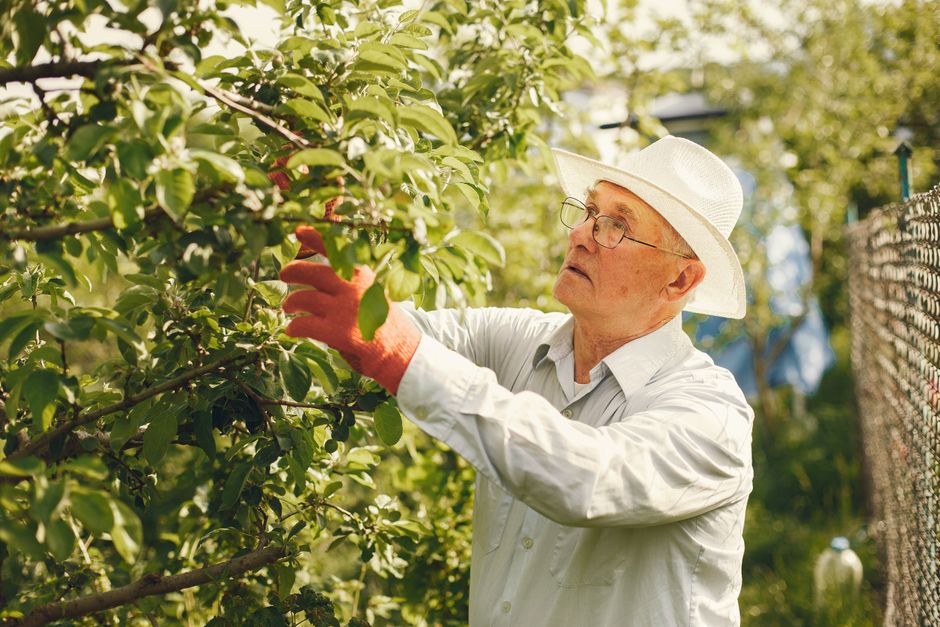
Proper technique makes cuts at the branch collar — the slight swelling where the branch meets the trunk. Not flush to the trunk. Not leaving a stub. Both of those heal poorly and leave the tree vulnerable. The cut surface should be as small as possible while still being clean and complete.
For more detail on technique and what oak-specific pruning looks like, see our oak tree trimming guide.
The International Society of Arboriculture publishes pruning standards that all ISA Certified Arborists train to — worth reading if you want to understand what proper technique looks like before you hire anyone.

What it costs to have an oak trimmed in Surrey
Honest numbers, all-in:
| Service | Range (CAD) |
|---|---|
| Consultation / assessment | $150 (credited toward work) |
| Crown thinning — light pruning | $300–$800 |
| Crown reduction (20–30% size reduction) | $500–$1,200 |
| Deadwood removal | $250–$600 |
Most residential oak trimming jobs in Surrey and Langley come in between $500 and $900 for a standard mature tree. Large heritage Garry oaks are generally $900 and up depending on scope and access.
I reckon most homeowners who have lost a heritage oak to preventable decline wish someone had told them the $700 pruning was the better trade. The Garry Oak Ecosystems Recovery Team puts it plainly: old-growth Garry oaks are irreplaceable on any human timescale. There is no planting that compensates for a 200-year tree.
When not to call us
If your oak has one small dead branch within your own reach and you have a sharp pair of loppers — handle it yourself. Cut at the branch collar, dispose of the material. Done.
If the tree is under 15 feet, well away from any structures, and you are removing no more than a couple of small branches — fine. DIY is reasonable if you know what you are doing and you are not on a ladder with a chainsaw.
Where to stop: anything that puts you on a ladder with a cutting tool near an oak of any significance. The risk of injury, the risk of a wrong cut, and the risk of cutting at the wrong time of year all increase together. The cost of getting it wrong on an established oak is — genuinely — the loss of a tree that took a century or more to grow.
Heritage Garry oaks specifically: do not DIY any meaningful pruning. Get a second opinion before any significant work. The value most owners do not realise until it is too late.