
Tree trimming is the removal of branches to control a tree's size, shape, and safety. (Trees don't file objections, which makes this easier.) Nine out of ten homeowners use "trimming" and "pruning" interchangeably. In practice they're related but not the same thing — and knowing the difference saves money.
Quick answer: Tree trimming focuses on shape and size. Pruning focuses on health. A properly trimmed tree looks right and stays in its space. A properly pruned tree stays structurally sound and lives longer. Most trees need both — done at the right time of year.

Tree trimming vs. tree pruning — what separates them
The industry uses these terms differently, even if homeowners don't.
Tree trimmingis about the tree's relationship to the space around it. Overgrown branch touching the fence? Trimming job. Crown spreading into the driveway? Trimming. Growth blocking the front window? Trimming. The goal is size, shape, and clearance.
Tree pruningis about what's happening inside the canopy. Removing dead, diseased, crossing, or structurally weak branches — regardless of how the tree looks from the street. A properly pruned tree has good airflow, no dead hangers, and a structure that holds in a windstorm.
In practice, a trim often includes some pruning. A pruning session often tidies up the shape. The distinction matters when you're booking a service and want to know what you're actually getting.
An ISA Certified Arborist will assess both during a site visit and tell you which the tree needs — or whether it needs both.
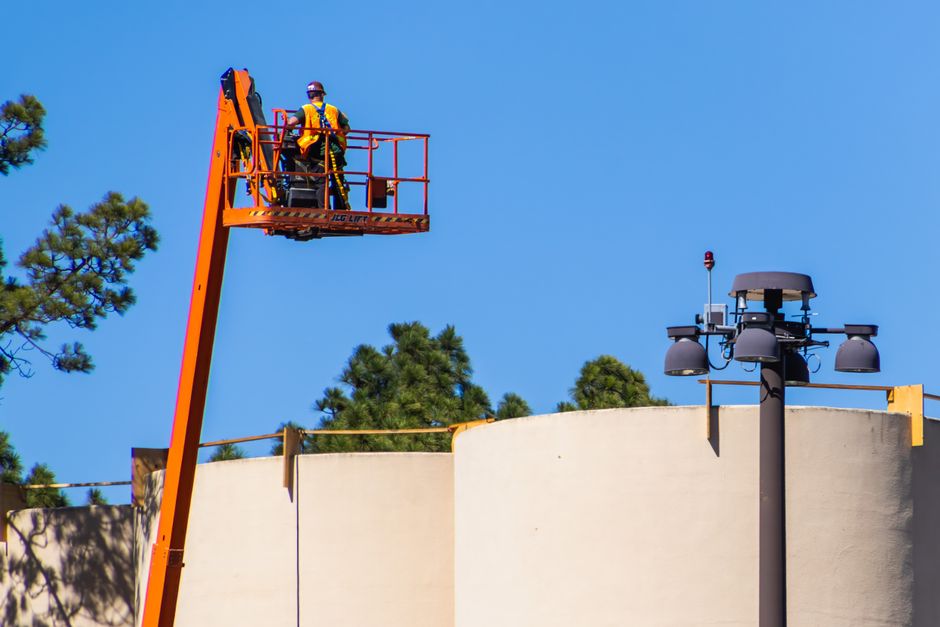
What tree trimming actually involves
Not just cutting off whatever's in the way. A good trim starts with reading the whole canopy.
Crown thinningremoves interior branches to improve light and air circulation without changing the tree's overall shape. Standard for most mature trees that have been left a few years too long.
Crown lifting removes lower branches to give clearance — usually for a driveway, fence, or sight line. One of the most common requests from Langley/Aldergrove homeowners, especially on established maples and cedars.
Crown reduction reduces the overall spread or height by shortening branches back to a lateral. This is different from topping. We cut to a fork; topping cuts to a stub. Stubs decay, invite disease, and push out fast-growing, weakly attached shoots. The Morton Arboretum covers the difference in detail if you want the technical reasoning.
Deadwood removaltakes out dead or dying branches throughout the canopy. These don't regrow. Removing them reduces risk and usually makes the tree look considerably better as a byproduct.
The right combination depends on the species, the tree's current condition, and what you need it to do. There's no one-size-fits-all answer — which is why a site visit matters before any work starts.

What tree trimming does for your property
Reduces storm damage risk.Dead or crossing branches are the ones that come down in windstorms. BC's storm season runs October through March. Removing problem branches before October means they're not landing on your fence in February.
Keeps the tree in its space. A tree growing into the driveway or crowding the house gets harder to manage every year. Regular trimming keeps the problem at the pruning-saw stage instead of the crane stage.
Improves the tree's structure. Crossing branches create contact points that become wounds, which become disease entry points. Removing crossers early is cheaper than dealing with rot later. A lot cheaper.
Extends the tree's life.A tree with good airflow and no competing leaders handles drought, pest pressure, and storm stress better than one that's been neglected for a decade.
Makes the rest of the property look better. Not the primary reason to trim, but not irrelevant. A well-shaped tree that stays in its lane is worth more to a property than one that fights with everything around it.

When to trim and how often
Rule of thumb: most mature trees in Langley/Aldergrove benefit from a trim every three to five years. Young trees every one to two years — early structure makes a bigger difference than most homeowners realise.
Timing by species:
- Deciduous trees (maples, oaks, cherries): late winter, while dormant. The structure is visible without leaves, and pests aren't active. January through early March is the window in Langley/Aldergrove's climate.
- Flowering ornamentals: after they flower, not before. Trimming before flowering removes the buds for that season. (Ask me how many calls I've taken from homeowners who trimmed their cherry trees in February and then wondered why they got no blossoms.)
- Conifers: late summer, once new growth has hardened off. August to September works for most BC species.
For a season-by-season breakdown by species, the full timing guide covers it in more detail.
One exception to seasonal rules: if a branch is crossing something it shouldn't, remove it when you spot it. Waiting for the right season only applies to routine maintenance — not to a branch that's actively headed for the gutters.
What tree trimming costs in Langley/Aldergrove, BC
Nobody publishes prices. I reckon they should, so here are real numbers:
| Job type | Typical range (CAD) |
|---|---|
| Crown thinning — small tree (under 30 ft) | $300–$600 |
| Crown thinning — medium tree (30–60 ft) | $600–$1,200 |
| Crown reduction | $500–$1,200 |
| Crown lifting / lower branch removal | $250–$600 |
| Deadwood removal | $250–$600 |
What moves the price: height, site access (can equipment reach it?), species (hardwoods take longer), how many trees, and how long since the last trim. A tree that's been ignored for eight years takes twice as long as one maintained regularly.
The cheapest quote is rarely the cheapest job. Nine out of ten times, something's missing — cleanup, a proper assessment, or a scope that's smaller than what the tree actually needs. For the full picture of what drives pricing, the tree trimming cost breakdown has the specifics.

When to call a certified arborist — and when not to
Call an arborist when the tree is over twenty feet, has dead wood near the house, needs elevated platform work, or is close to power lines. Any job where a bad cut means a branch lands somewhere you'd regret — that's a professional job. Near live power lines, the sequence is: call BC Hydro to isolate first, then we work safely.
A homeowner came to us a few years back with a bigleaf maple that had been "trimmed" by its previous owner. Cut severely, at the wrong points, left stubs, created four competing leaders. By the time we got there, the corrective work ran $800 — more than double what a proper initial trim would have cost. The savings from doing it yourself evaporate quickly when the follow-up work is harder than the original job.
Skip the call for:small ornamental trees under ten feet you can safely work on from the ground, minor deadwood removal on garden-scale plants, or cleanup of small branches after a storm (your green bin handles most of that). These aren't tree trimming jobs, and I'd rather you keep the money in your pocket than call us for something you don't need.
If you're not sure which side of the line you're on, describe what you're looking at when you call. We'll tell you straight whether it needs a professional or not.