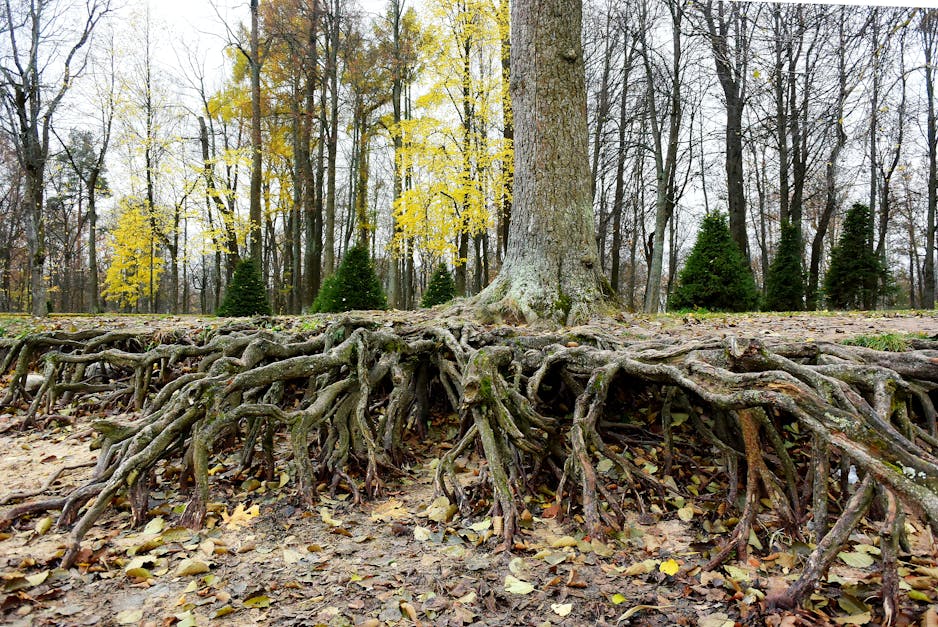
Tree roots have one job: hold the tree up. They do that job extremely well — including in your driveway, under your foundation, and along your sewer line. (The tree does not consider this a personal failure on its part.)
Tree root pruning means cutting specific roots to stop or prevent structural damage, without removing the tree. Done correctly — the right roots, the right season, the right distance from the trunk — it protects both your property and the tree. Done wrong, it can destabilise a tree that has been standing for forty years.
Quick answer:Root pruning works when you have a specific root causing a specific problem — cracking pavement, girdling the trunk, threatening a pipe. It is not a general fix for “the tree is too big” or “I don’t like where the roots are going.” Hire a certified arborist for anything beyond a small surface root well away from the trunk.
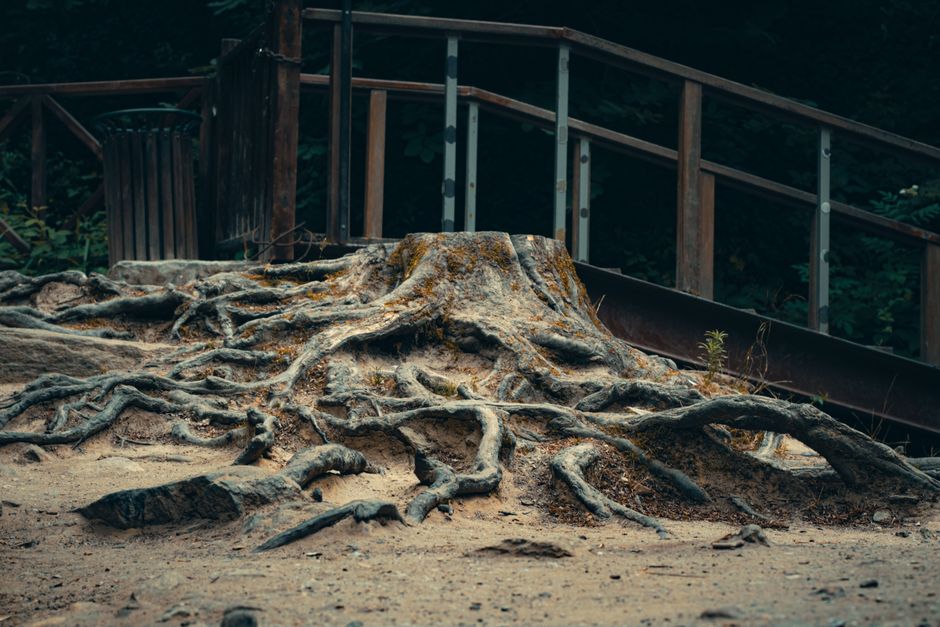
Why tree root pruning exists — and what it actually fixes
A mature tree’s root system typically extends two to three times the width of its canopy. Most of those roots sit in the top 30 to 45 centimetres of soil — not deep underground, where the movies put them.
Roots grow toward water and soft soil. Concrete is not a barrier; it is just a detour. Roots find the edge of a slab, follow the slightly softer soil underneath, and keep growing. Over time, they lift the concrete from below.
Two distinct problems bring homeowners to us for root pruning:
Structural root damage — heaved driveways, cracked patios, pushed-out retaining walls, roots encroaching on foundation footings. The root found a path and took it.
Girdling roots— roots that have grown back around the trunk base, gradually strangling the tree’s sap flow. These are easy to miss until the tree starts declining for no obvious reason. I reckon girdling roots cause more unexplained tree deaths in Langley/Aldergrove than most homeowners realise, because the problem is mostly underground.
Root pruning addresses both. It cuts the problem root cleanly, stops the damage, and — paired with a root barrier — redirects future growth away from the structure.
Five situations that actually need root pruning
Nine out of ten calls we get about “root problems” fall into one of these categories:
1. Roots lifting or cracking a driveway or patio.You can see the slabs moving. There’s a visible ridge where the root is pushing up. This is the most common one in Langley/Aldergrove — lots of homes from the 1970s and ’80s have mature maples and cedars whose root systems have had fifty years to work their way under the pavement.
2. Girdling roots wrapping around the trunk base.Look at the base of your tree at soil level. A healthy trunk flares outward at the base. If it looks like it’s going straight into the ground, or if there are visible roots circling the trunk like a belt, that’s a girdling root. It needs to come out.
3. Roots threatening underground pipes. Tree roots do not break pipes — they find existing cracks and exploit them. If you have recurring blocked drains on the same side of the house as a large tree, the roots are almost certainly in the pipe already. Root pruning at the surface won’t help; you need a camera inspection of the pipe first. For a full picture of what that involves, see our tree removal and root management in Langley/Aldergrove.
4. Pre-construction ground disturbance near a tree you want to keep.If you’re planning a new driveway, deck, or extension and the excavation will come within the root zone of a tree — root pruning the perimeter before digging is far less traumatic than severing roots mid-construction with a machine. It’s the difference between a clean cut that heals and a torn root that invites disease.
5. Roots cracking a fence or retaining wall. Less urgent than the others but still worth addressing before the wall needs replacing. Root barriers can stop the spread without removing the root at all, depending on size.
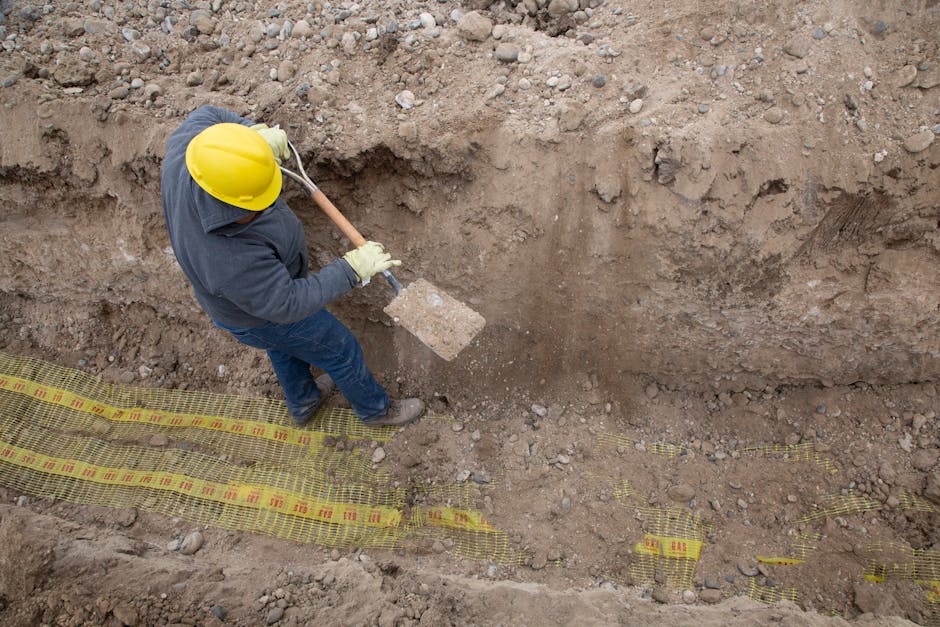
What professional root pruning actually involves
Step one is locating the root. For visible surface roots, that’s straightforward. For roots under a driveway or deep in the soil, an arborist may use a root probe or an air spade — a compressed-air tool that excavates soil without cutting roots — to map the root structure first. An ISA Certified Arborist will be familiar with both tools and will use the right one for the situation.
Step two is the cut. The safe zone is a minimum of three times the trunk diameter away from the trunk. For a mature tree with a 40 cm diameter trunk, that’s 120 cm out. Any closer and you’re cutting structural roots — the ones holding the tree vertical.
The cut has to be clean. A sharp pruning saw or purpose-built root pruner. Not a chainsaw — a chainsaw tears root tissue rather than cutting it, and torn tissue heals poorly and invites rot. A spade or mattock does not count as a root pruning tool.
Step three is aftercare. If the root ends will be exposed for more than a few hours, cover them with moist burlap. Mulch the root zone after the job — this conserves moisture while the tree regrows compensating roots. Water regularly through the first growing season.
Before any ground disturbance near trees, call BC One Call (1-800-474-6886) to locate underground utilities. Roots follow the same paths of least resistance that pipes and cables do. The two are often within centimetres of each other.
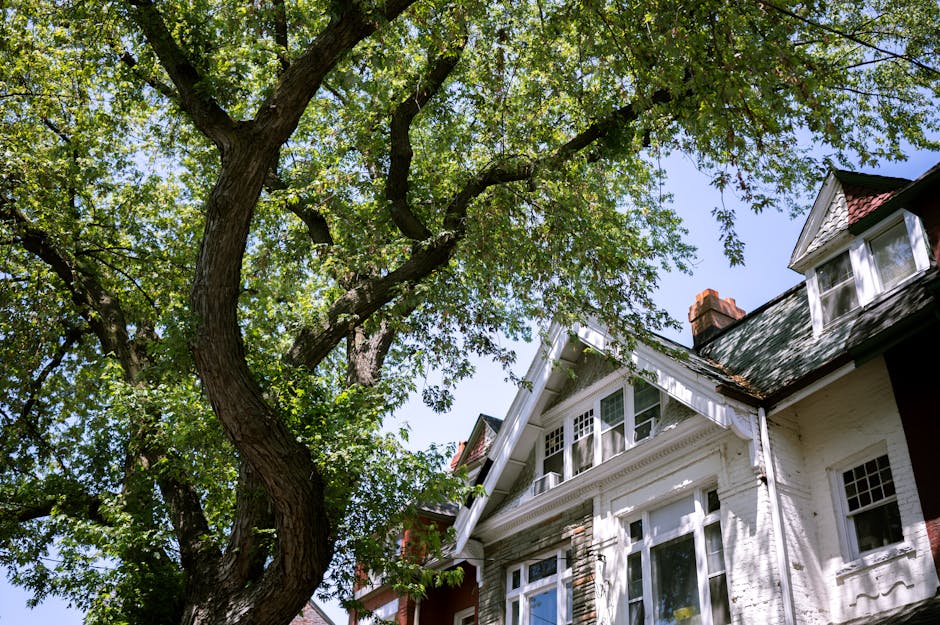
When to prune tree roots — timing matters more than people think
Late October to February. That’s the window. Dormant season — the tree is not actively drawing water through its root system, metabolic stress is low, and wounds close more efficiently over winter. In Langley/Aldergrove’s mild climate, the soil stays workable most winters, which makes late November and December particularly good.
Avoid late spring and summer. The worst time to cut roots is when the tree is breaking bud or in full leaf — that’s when demand on the root system peaks. Cutting roots in July is like pulling someone’s IV during surgery.
One exception: if roots have caused an acute problem — a foundation crack is actively spreading, a sewer line has just backed up — fix it when you find it. Don’t wait six months for the ideal season. A timely bad cut causes less damage than a delayed repair bill.
For girdling roots on otherwise healthy young trees, earlier is always better. Girdling roots under two inches in diameter, caught before they’ve compressed the bark, are a clean fix. Wait until they’re large structural roots and the surgery becomes genuinely risky.
What tree root pruning costs — honest numbers
Nobody lists prices for this. We think they should.
| Scope | Rough range (CAD) |
|---|---|
| Small surface root, single cut, no barrier | $200–$500 |
| Driveway edge root pruning + root barrier installed | $800–$1,500 |
| Full trench root pruning, larger root zone | $1,200–$2,500 |
| Air spade investigation + root pruning | add $400–$800 |
| Girdling root removal, mature tree | $600–$1,800 |
Compare those numbers against the alternative. Foundation crack repair in Langley/Aldergrove runs $3,000–$15,000 depending on severity. Driveway replacement runs $8,000–$20,000 for a typical residential pour. Root pruning is not cheap, but it is considerably cheaper than what you are trying to prevent.
We have had customers come to us after paying someone else $350 to “cut the root” — no assessment, no barrier, wrong distance from the trunk. One of those jobs took out a 25-year-old cedar two summers later when a windstorm hit the weakened side. The $350 ended up costing four figures to sort out. The price before the first cut is the only price that matters.
When not to prune roots — and when to call someone else entirely
We will tell you this even though it occasionally costs us a job.
Do not prune roots because you dislike where they are aesthetically. Surface roots running across a lawn or garden bed are not a tree health problem. They are a mowing inconvenience. Mulching over them is the right call — not cutting them.
Do not prune roots on a tree that is already stressed, diseased, or structurally compromised. If the tree already has significant dieback, a disease problem, or a previous root injury — adding more root loss can push it past the point of recovery. Have it assessed first. Our post on how to tell if a tree is dead or dying covers the signs worth checking before any intervention.
Do not prune roots if tree removal is the right answer anyway. Sometimes a tree has outgrown its location. The roots are close to the house, the canopy overhangs the roof, and the trunk is already showing decline. Root pruning a tree you should remove is postponing a necessary decision and spending money you do not need to spend.
Do not DIY root pruning on any root thicker than about two centimetres. Seriously. The structural importance of a root is not obvious from the surface. Small surface roots, well away from the trunk, are fair game with a sharp pruning saw. Anything else deserves an assessment before a saw goes near it.
If you are unsure whether root pruning is the right call — give us a call before booking anything. We do assessments, and sometimes the answer is “not yet” or “not this tree.” That conversation costs you nothing.