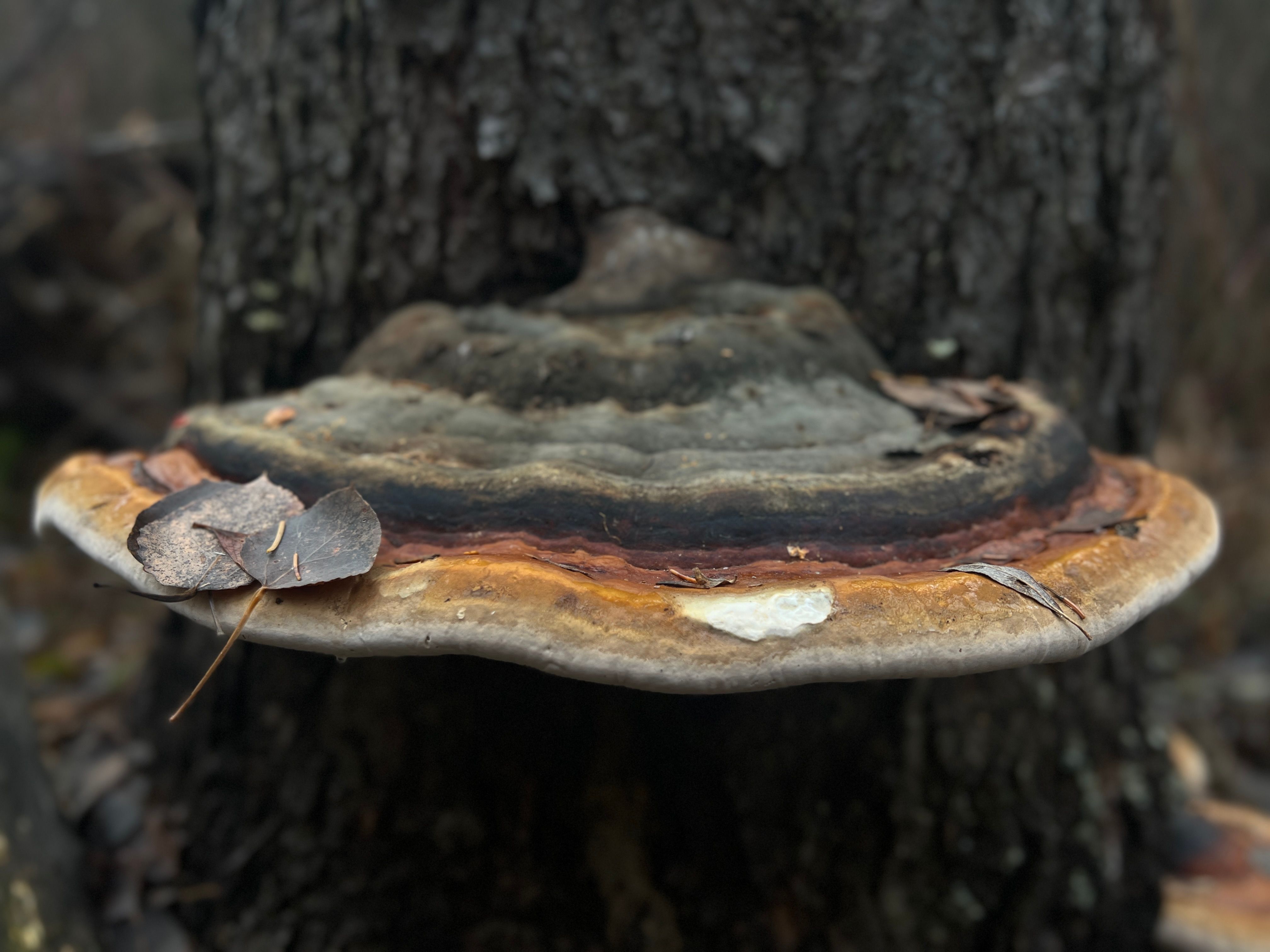
Your tree has developed a hobby: growing mushrooms. Charming. Unfortunately, in most cases, those mushrooms are the tree announcing it has been eaten from the inside for several years. (I promise that is the most optimistic version of that sentence.)
Quick answer: tree fungus is an umbrella term that covers everything from harmless surface moulds to Armillaria root rot — a soil-borne pathogen that can take down mature conifers and leave neighbouring trees at risk. The bracket fungi and conks you can actually see growing on bark are almost always a late-stage sign of something that started underground or inside the wood years ago.
What to do about it depends entirely on which type you have and where it is. This guide covers the most common types in the Pacific Northwest, how to tell the dangerous from the merely ugly, and what treatment — or removal — actually looks like.
What tree fungus actually is
Fungi are not plants. They do not photosynthesize. They consume organic material — including living and dead wood — by breaking down cellulose and lignin with enzymes. The visible mushroom, conk, or bracket is the fruiting body: the reproductive structure that appears once the fungal network has already established itself inside the wood or root system.
That timing matters. By the time you spot bracket fungus on a trunk, the mycelium — the actual fungal body — has been working through the wood for months or years. The visible part is more like a finished report than an early warning.
There are two broad categories worth understanding:
Surface fungi affect the bark, leaves, or outer layers of the tree. Powdery mildew, sooty mold, and leaf-spot diseases fall here. They can stress the tree and reduce photosynthesis, but they do not typically compromise structural integrity. A healthy tree can often tolerate them.
Wood-decay fungi work from the inside out. They break down the structural wood — heartwood and sapwood — leaving the tree hollow, brittle, or structurally compromised. Bracket fungi, conks, and shelf mushrooms are the fruiting bodies of wood-decay species. These are the ones that matter from a safety standpoint.
Common types of tree fungus in the Pacific Northwest
The Fraser Valley and Lower Mainland have specific fungal problems that come with the climate — wet winters, mild temperatures, dense tree canopies. These are the ones I see most often in Langley/Aldergrove.
Armillaria root rot is the most significant. It is caused by Armillaria ostoyae and related species — the same fungus responsible for most conifer mortality across BC's forests. It spreads through the soil via root-to-root contact and underground threads called rhizomorphs. Honey-coloured mushrooms clustered at the base of the tree are the tell. The BC Ministry of Forests classifies it as the most damaging root disease in the province.
Phytophthora root rot affects trees in poorly drained soils — common in Langley/Aldergrove's clay-heavy lower areas. It thrives where water pools. Species like P. cinnamomi attack root systems and cause canopy dieback that often gets misread as drought stress.
Ganoderma and bracket fungi produce the shelf-shaped conks you see on mature trees — typically on the lower trunk or at the root flare. They indicate advanced heartwood decay. The ISA's field key to wood-decay fungi identifies Ganoderma as one of the most structurally significant genera in urban trees.
Cytospora canker attacks stressed or injured trees — particularly fruit trees, poplars, and willows. It shows as sunken, discoloured patches on bark with reddish-brown ooze. Not a wood-decay fungus, but it can girdle a branch or trunk section if left unchecked.
Powdery mildew is the white powdery coating on leaves you see on big-leaf maples, oaks, and ornamental trees after wet springs. It looks alarming. It is generally not. Established trees tolerate it without major consequence — though young trees and those already under stress warrant treatment.
Is tree fungus dangerous? The honest answer.
Nine out of ten times I get called about tree fungus, the homeowner is worried about the wrong thing. They've found powdery mildew on their maple leaves and think the tree is dying. Meanwhile, there's a conk the size of a dinner plate on the cedar at the back fence they haven't mentioned.
The rule of thumb: if it's on the leaves, probably fine. If it's on the trunk or at the base, get it assessed.
Surface fungi are unsightly and can stress a tree, but they rarely create structural risk. Wood-decay fungi are a different story. A tree with significant heartwood decay can stand for years looking perfectly healthy from the outside — right canopy, green leaves, no visible lean — and still fail catastrophically in a wind event because the structural wood that holds it up has been compromised.
A homeowner in Cloverdale called us last autumn after noticing bracket fungus on a 40-year-old big-leaf maple at the edge of their property. The tree had been there since before they moved in. Looked solid from the outside. Our assessment found Ganoderma decay in the lower trunk — roughly 60% of the structural cross-section compromised. The canopy was still green because the sapwood was intact, but the heartwood carrying the load was not. The tree came down that week. The fence it was leaning toward stayed intact. That's the way that story is supposed to end.
How to tell if the fungus is a genuine structural threat
You cannot fully assess structural decay from the ground with your eyes. But you can do a reasonable first screen.
Location of the fruiting body. Bracket fungus or conks near the trunk base or root flare indicate root or butt rot — the most serious location because these areas carry the full load of the tree. Conks higher on the trunk indicate heartwood decay at that level. Conks only on dead limbs are less concerning structurally.
The mallet test. Tap the trunk with a rubber mallet. A solid thunk means intact wood. A hollow sound means decay has created a cavity. Not a definitive test, but useful orientation for where to focus assessment.
Bark and structural signs. Cracks running vertically down the trunk, visible lean that has increased over seasons, epicormic shoots clustered at the base (the tree's stress response), and bark falling off in plates — these amplify the concern.
What's underneath. A tree with Armillaria root rot loses structural anchor before it shows in the canopy. If you can peel back bark at the root flare and find white mycelial fans — flat, white, fan-shaped fungal growth under the bark — that is a confirmed diagnosis. You don't need to peel bark to suspect it; the mushroom cluster at the base is enough to warrant an assessment.
Treatment options that actually work
I reckon about half the tree fungus inquiries I get are treatable. The other half are trees where the fungus is a symptom of a problem that is already too far along to reverse.
Surface fungal infections (powdery mildew, leaf spot, Cytospora canker) respond to:
- Copper-based or sulphur-based fungicides applied early — before the infection cycle is established for that season
- Canopy thinning to improve air circulation and reduce the wet conditions fungi thrive in
- Removing infected branches with sterilised tools — critical for Cytospora and similar canker diseases, where the cut tool spreads the pathogen as readily as the wind
- Addressing the underlying stress: drought, compacted roots, waterlogged soil. A tree in good health fights off surface infection better than a stressed one.
Wood-decay fungi (Armillaria, Ganoderma, Phytophthora) cannot be cured once established. There is no fungicide that reverses structural decay. Treatment for these is:
- Annual monitoring of the extent and progression of decay
- Maintaining the tree's overall health — good soil conditions, appropriate water — to slow progression
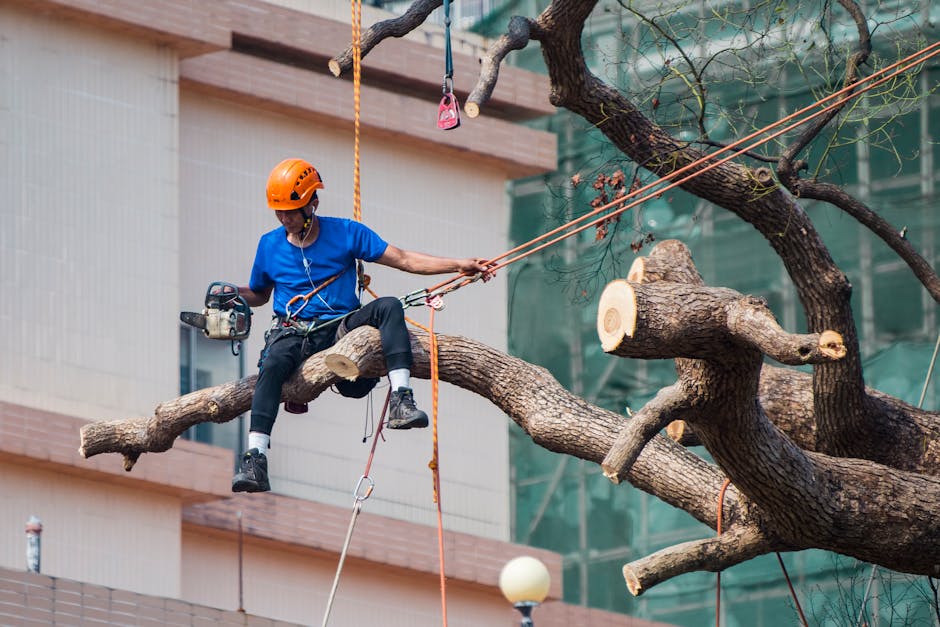
- Removing the tree when decay has reached a threshold that makes failure likely in a wind or snow-loading event
- Stump grinding after removal to reduce residual Armillaria in the soil, which can infect adjacent trees through root contact
For any decay species, a professional tree health assessment gives you a clear picture of where the decay currently sits and how fast it is progressing. That information is what makes the removal-vs-monitor decision rational rather than guesswork.
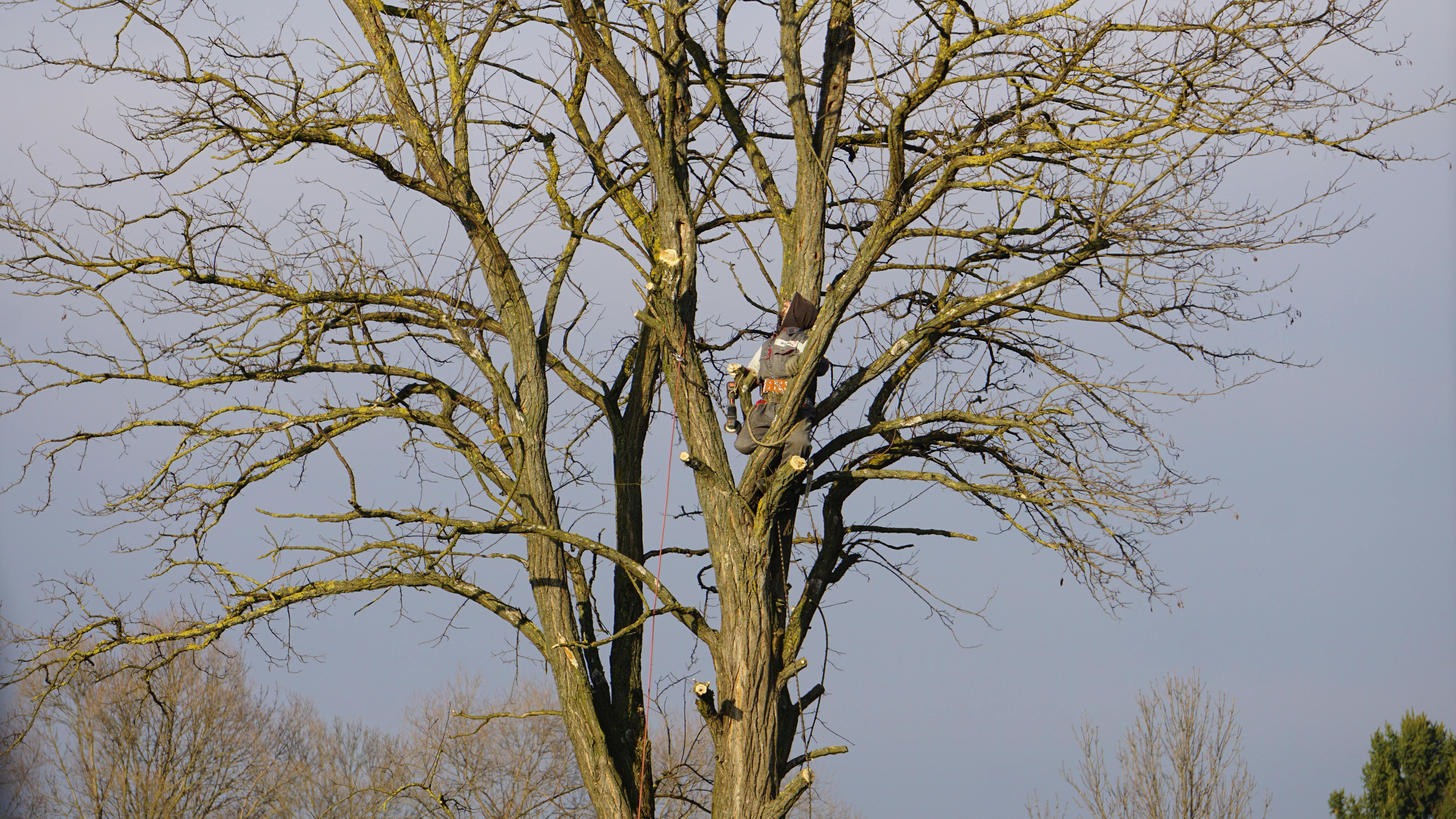
When to call an arborist about tree fungus
Call when you see any of the following:
- Bracket fungi, shelf mushrooms, or conks on the trunk or at the base of any tree within fall distance of a structure, path, or utility line
- Honey-coloured mushrooms clustered at the root flare — the Armillaria tell. These are small and look harmless. They are not.
- A tree that has been declining — thinning canopy, premature leaf drop, dead branches appearing over several seasons — where the cause is unclear. Fungal disease is often the explanation that has been there for years before the canopy starts to reflect it.
- Any fungal growth on a tree you've been monitoring that has changed in size or produced new fruiting bodies. Rate of change matters as much as extent.
The strong opinion, backed by the numbers: removing a structurally compromised tree on your schedule costs $600–$2,500. Removing it after it has fallen on something costs $2,500–$5,500+ — plus whatever it damaged. The assessment visit to know which category you're in costs $150–$250. That's not a difficult calculation. For more on what removal actually involves, see our tree services page.
When not to call us — save your money
We will tell you this ourselves when you call, so you might as well know it now.
Skip the call for:
- Lichen on bark. Grey, green, or orange crusty growths on older bark are lichen — a symbiotic organism made of algae and fungus. They do not harm trees. In fact, their presence indicates clean air. Leave them alone. (They also look interesting, which is free decoration.)
- Powdery mildew on leaves at the end of the season. If your maple or oak has white powder on its leaves in September, you are too late to treat it this year. Wait until next spring, treat preventatively if it was severe, and don't lose sleep about it now.
- Mushrooms in your lawn that are not connected to tree roots. Fairy rings and isolated lawn mushrooms are decomposing organic matter — old roots, buried wood debris. Not a tree health problem.
- Small bracket fungi on a dead limb that is already scheduled for removal. If the limb is clearly dead and not a structural concern, the fungus on it is a bonus rather than a crisis.
If you're genuinely unsure whether what you're looking at is a problem, take a photo and give us a call. We'd rather spend two minutes on the phone talking you out of a visit than send a crew for something that didn't need us. (Yes, that actually happens. We're not great at maximising billable hours. My accountant is aware.)