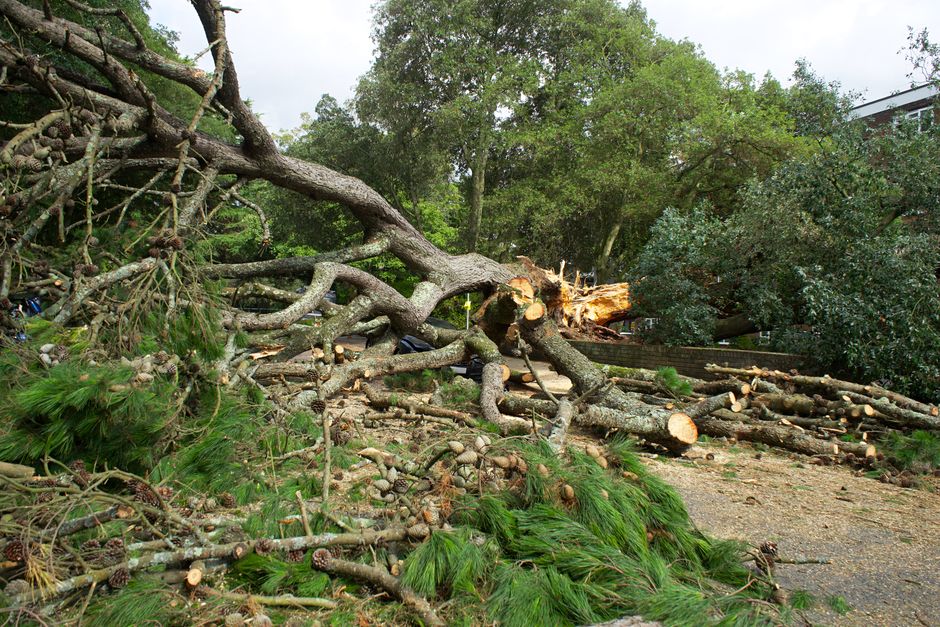
Storm-dropped branches are nature's way of rearranging your driveway — something of a branch-coupe. (I've been sitting on that pun for three years. My son says it's the worst thing I've ever said to him. He may be right.)
The straightforward answer: tree debris removal services handle the material left behind after storms, trimming work, or a full tree removal. Branches, logs, root masses, and whatever else the job produced. A standard Langley/Aldergrove residential cleanup runs $350–$600 for a half-day crew with a chipper. Larger volumes or awkward access push that higher.
Quick answer:Call a tree debris removal service for anything you cannot safely handle yourself — large volumes, heavy logs, debris tangled in fences or on structures. For a pile of twigs and small branches that fits in your green bin, handle it yourself. We'll tell you honestly which situation you're in.
Nine out of ten calls we get for “just some cleanup” after a storm turn out to be one of two things: a genuine crew job involving real volume, or something the homeowner could sort in an afternoon with a pruning saw and a green bin. The tricky part is knowing which one you're in before you book someone.
What tree debris removal actually covers
The scope varies by what created the debris. Most jobs fall into one of three categories.
After a storm.Fallen branches, downed limbs, and any material that landed somewhere it wasn't before last Tuesday. If a full tree came down, you also have a root mass and the main trunk to deal with. This is the most variable category — a single fallen branch versus an entire tree across the yard are technically the same “storm cleanup,” but the scope is very different.
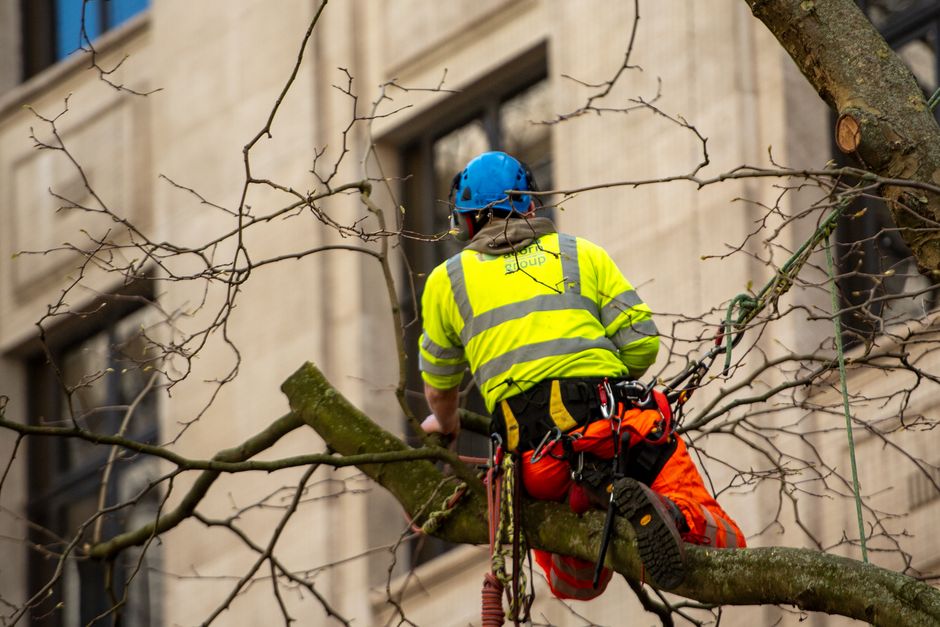
After pruning or trimming.A standard tree trim produces a significant pile. The crew that does the trimming usually cleans up as part of the job, but not always — confirm before anyone starts cutting. If you had another company do the trim and left the pile for later, that's a separate debris pickup, and yes, we do those.
After removal.A full tree removal leaves behind a stump, the root mass, and everything above ground. Most removal quotes include hauling the material; a few do not. If you got a cheap quote and then discovered the price did not include cleanup, you're now in the position of either handling it yourself or booking a separate crew. I reckon this situation accounts for a third of our debris-only calls.
What debris removal does not cover: stump grinding. That is a separate operation with a different machine. If the stump is still in the ground, you need to book that separately — see our full list of tree services for what stump work includes.
When to call a debris removal service — and when to handle it yourself
Rule of thumb: if you can load it into your green bin or haul it with a wheelbarrow in an afternoon, handle it yourself. If you cannot, call.
Call a service when:
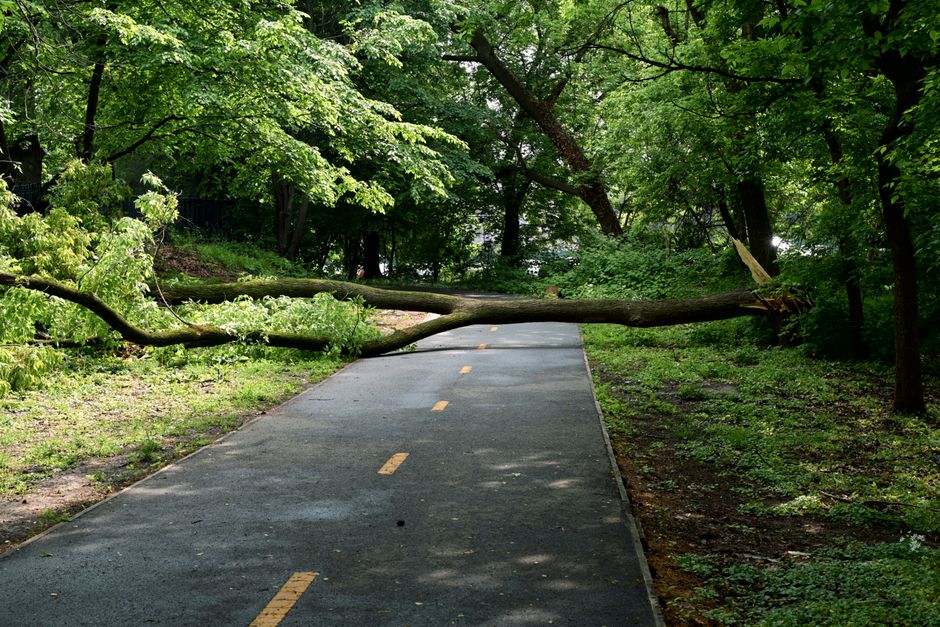
The volume is more than two wheelbarrow loads. There are logs too heavy to move safely without equipment. The debris is tangled in a fence, sitting on a structure, or touching power lines. You need it chipped on-site rather than just hauled. The material involves a tree that fell on something — if the tree is actively on a structure, that is an emergency call, not a standard debris pickup.
Handle it yourself when:
You have a pile of small branches under about 30cm diameter that can be cut to length and bundled. Metro Vancouver's organics collection accepts branches up to 30cm diameter and 1.2m long. Leaves and twigs go in the green bin without restriction. A small pruning pile from a weekend in the garden almost certainly does not need a crew.
The honest version of this advice: calling a service for something you could have handled in two hours costs you $400 and a Saturday morning booking. There is no version of that where you win. We would rather tell you this up front.
What actually happens to all the material
This part surprises more people than you'd expect. Most debris does not end up in a landfill.
Chipping. Branch material goes through the chipper on-site. The resulting wood chips can be left as mulch — excellent under garden beds and around tree bases — or loaded into the truck and hauled to a composting facility. Before we start, we ask which you want. That is not a decision you make at the end when the crew is standing there with a truck full of chips.
Firewood.Larger logs from suitable species can be cut to length and stacked wherever you want them. Douglas fir, maple, birch, and alder all burn well. Cedar splits easily but burns fast — better as kindling. If you want the wood, say so when you book; it adds some time but saves you the cost of buying firewood separately. In my experience, most Langley/Aldergrove homeowners who want firewood realize it about fifteen minutes after we've already loaded the truck. (Pre-emptive decision-making saves everyone a phone call.)
Hauling. Material too large or too contaminated to chip gets loaded and taken to an approved green waste facility. Metro Vancouver processes most tree debris into compost. Almost nothing from a typical residential job ends up in a general landfill.
A note on disposal fees: a job that involves hauling multiple loads costs more than a job where everything goes through the chipper on-site. This is not a hidden charge — it is just physics. Ask about the disposal approach when you get a quote so you know what you are agreeing to.
What tree debris removal costs in Langley/Aldergrove — honest numbers
Nobody posts prices. We do, because finding out at the end of the job is not a great way to spend a Wednesday.
| Scope | Typical range (CAD) |
|---|---|
| Small cleanup — one tree or light storm debris, half day | $350–$600 |
| Medium cleanup — multiple trees, full storm aftermath, full day | $700–$1,400 |
| Large volume or difficult access (slope, tight yard, structures) | $1,400–$2,500+ |
| Per-load hauling (material too large to chip) | $200–$400 per trip |
| After-hours or emergency debris removal | 1.5–2× standard rate |
I've had homeowners call after getting a $200 quote for a full storm cleanup and wondering why the crew left half the material behind. The answer is that $200 was the minimum call-out fee — it covered showing up. The actual job cost $900. That gap exists because the original quote was not a quote; it was a placeholder to get someone to say yes.
Rule of thumb: any quote for a genuine crew job under $300 in the Fraser Valley warrants a clarifying question about what exactly is included. Not because that price is always wrong — but because it often is.
For a rough sense of what the ISA Canada arborist locator can help with: if you want to compare quotes from multiple certified companies, that directory is a reasonable starting point for Langley/Aldergrove and the Fraser Valley.
When not to call us for debris removal
We will tell you this even though it reduces the number of jobs we book on slow Mondays.
Skip the call for:
A pile of twigs and small branches under about 30cm diameter — bundle them, put them in the green bin, done. One pruning weekend's worth of material from a small tree — same answer. Leaves. Just leaves. The green bin exists specifically for leaves. A single branch that came down in last night's wind but is not touching anything — cut it up yourself with a pruning saw or loppers; it genuinely does not need a professional.
Do call when you are unsure whether the debris situation is safe. A pile of branches can look manageable from twenty metres. Up close, with a large log pinning part of it against a fence, the physics are different. If you are not sure, a quick call costs nothing and we can tell you over the phone whether it warrants a crew.
The City of Langley/Aldergrove's urban forestry program also handles concerns about trees on city property — if the debris came from a boulevard tree or a city-owned tree on the road allowance, that may be their responsibility rather than yours.