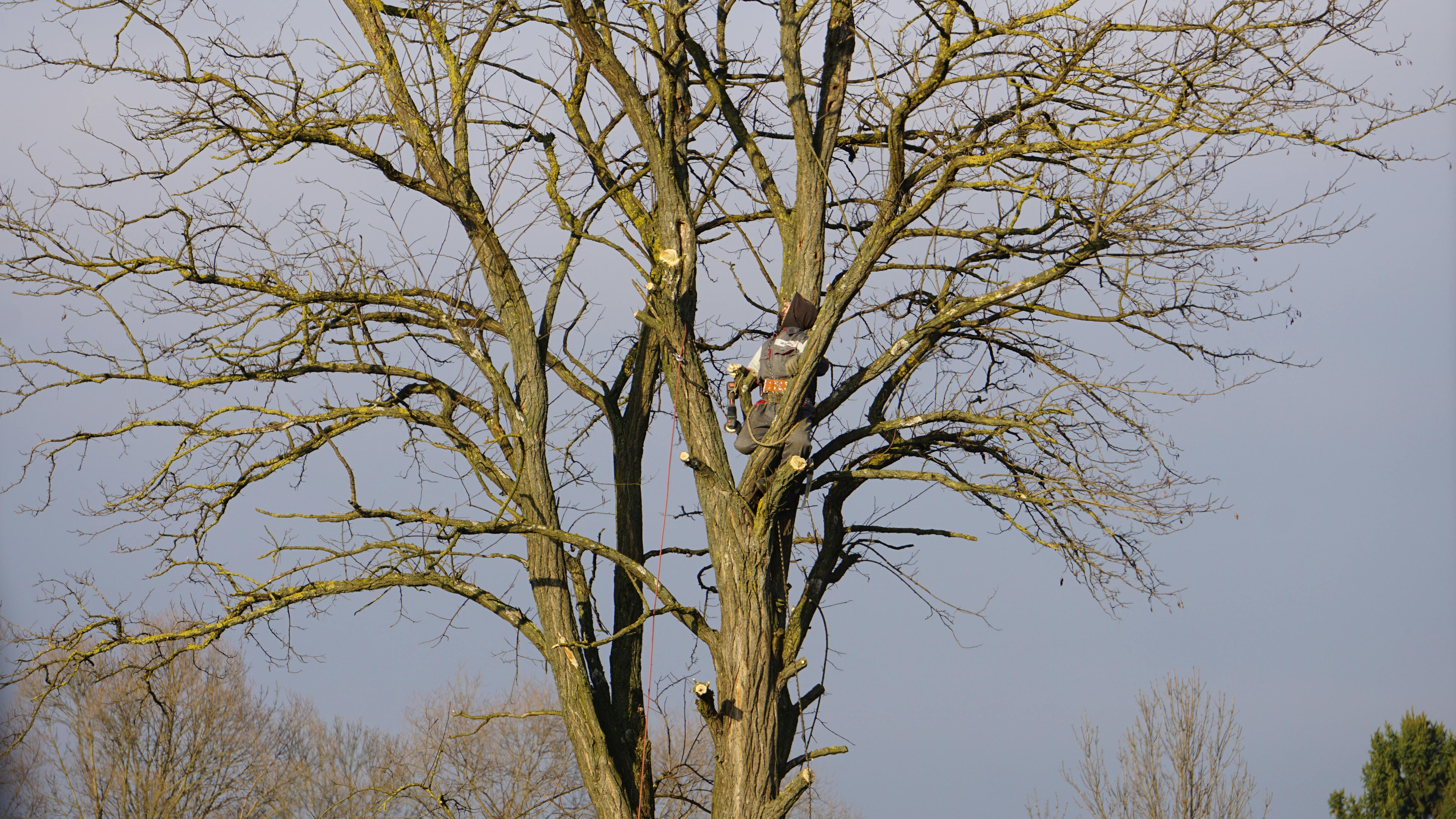
Tree cabling is a bit like a good support harness — it will not make the tree brave, but it will keep it from falling. (I have worked in tree canopies for fifteen years. The harness analogy was too easy to walk away from.)
The direct answer: tree cabling services install high-strength cables between major limbs or through a split trunk to redistribute load and limit dangerous movement during wind, heavy snow, and the general enthusiasm of a Pacific Northwest storm. Done correctly, it keeps a structurally compromised tree standing safely for another two or three decades.
Quick answer: Tree cabling is worth considering when a specific structural weakness — a co-dominant stem, a heavy limb at a poor angle, or an active split — threatens an otherwise healthy tree. It is not the right tool for a tree that is fundamentally failing, or one where the root system is the problem. We will tell you which one yours is before anyone starts drilling.
Nine out of ten trees we assess for cabling have one of the same three issues. The cables, it turns out, are the easy part. Knowing exactly where to put them is the job.
What is tree cabling — and what is bracing?
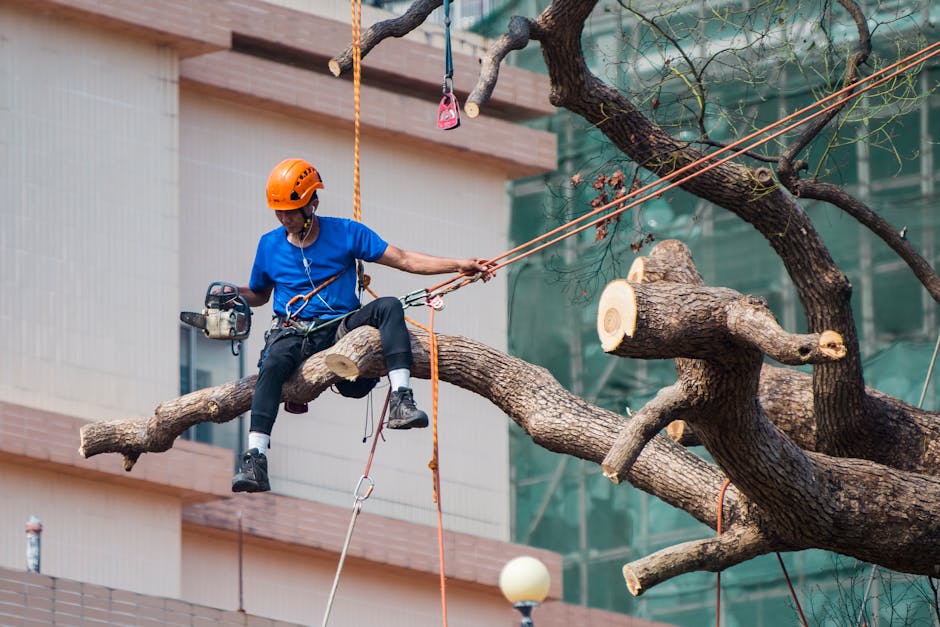
Tree cabling installs high-strength cables — braided steel or synthetic fibre — in the upper two-thirds of the canopy. The cables run between major scaffold branches, anchored with eye bolts drilled into the heartwood. When a heavy limb wants to peel away in a storm, the cable transfers part of that load to a stronger attachment point. The limb still moves — it just does not move as far.
Bracing is a different tool for a different problem. A brace rod is a threaded steel rod drilled horizontally through a split union — usually through co-dominant stems (two equally ambitious trunks growing from the same point and slowly pulling apart). The rod holds the split from widening. Many jobs need both: cables in the canopy to redistribute load, and a brace rod through the crack where the split is active.
Two cabling systems are in common use:
Static steel cabling uses braided galvanised or stainless steel wire. Strong, long-lasting — up to 30 years with inspections — and effective for most co-dominant stem situations. The steel does not stretch, which limits movement but keeps limbs in a fixed relationship to each other.
Dynamic cabling (COBRA) uses synthetic fibre rope that flexes. It lets the tree sway naturally during wind events, which preserves the tree's ability to build its own resistance over time. Dynamic systems last 10–15 years before the rope degrades, but they are kinder to the tree's natural movement and better suited to younger trees or those with smaller limb diameters.
Neither system eliminates risk. What good tree cabling does is reduce the probability of failure to a manageable level — and buys you time to make an informed decision about the tree's long-term future.

Signs your tree might need cabling
Not every structural defect needs cables. The ones that do tend to follow a recognisable pattern.
Co-dominant stems with included bark. Where two major stems grow together and the bark gets pinched between them, there is no real structural connection — just compressed tissue. That union can fail without warning. It is the single most common reason we install cables in the Fraser Valley, particularly in mature maples and birches.
Heavy limbs with a long horizontal reach. A limb that extends several metres outward with no upward anchoring is a lever arm. Every wind event puts shear stress at the base of that attachment. If the attachment angle is already shallow, that limb is working on borrowed time.
A previous failure from the same structure. If a large limb came off in the last storm and the remaining limbs show the same structural pattern, the one that fell told you something. Take the information seriously.
A split that has already started. A crack running vertically through a union, or visible movement between two stems when you push by hand — that is a brace rod situation, not a wait-and-see situation.
What cabling is not for: a tree that is structurally compromised throughout, or one where root instability is the underlying problem. Cables isolate and support specific canopy weaknesses in trees that are otherwise structurally sound. If your tree has three co-dominant stems all pulling in different directions and the canopy is half dead, that is a different conversation. We will tell you which one applies.
How tree cabling works
Assessment first. Every time, without exception.
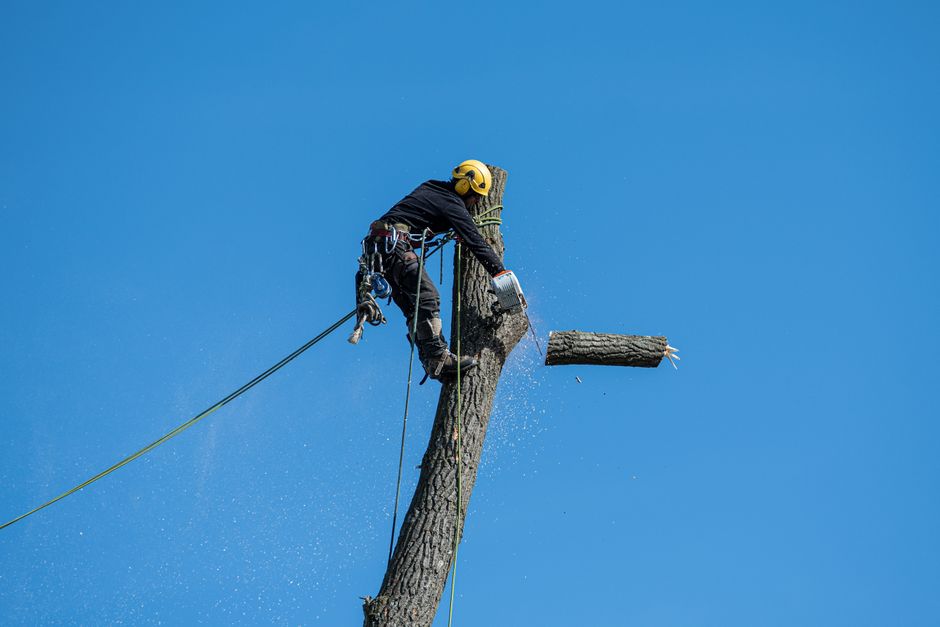
A certified arborist climbs or uses an aerial lift to assess the canopy up close. We look at attachment angles, the condition of the wood at the union, whether there is included bark, and how the limbs move relative to each other. You cannot properly assess a 10-metre co-dominant stem from the pavement with binoculars. Anyone quoting you a cabling job from the footpath has not done the assessment.
Once the weak points are identified, the install goes like this:
Anchor points are drilled into the heartwood of each limb — typically in the upper two-thirds of the canopy, above the union being supported, using appropriately sized eye bolts.
The cable is run between the bolts and tensioned correctly. Enough to share load; not so tight that the bolts girdle the limbs over time or prevent the natural movement that builds strength.
On bracing jobs, a threaded rod is drilled horizontally through the union with a washer and nut on each side. The rod holds the split from widening further.
After installation, you should receive documentation: what was installed, where, and what the inspection schedule is. If no diagram comes with the job, ask for one. It matters for the next arborist who comes to inspect — and they will need to know exactly where the bolts are as the tree grows. The industry standard is ANSI A300 Part 3, which covers anchor placement, cable type and tension, and inspection intervals. We follow it.
For a broader picture of what a professional assessment involves, our tree health assessment guide covers what certified arborists check and why the process matters for decisions like this one.
What tree cabling costs in Langley/Aldergrove — honest numbers
Nobody lists prices. We think they should.
| Scope | Rough range (CAD) |
|---|---|
| Single cable install, one limb | $350–$600 |
| Multiple cables, co-dominant stem | $600–$1,200 |
| Brace rod installation | $400–$700 |
| Cabling and bracing combined | $800–$1,800 |
| Annual inspection of existing system | $150–$250 |
These are installed prices, including the on-site assessment and documentation. The hardware itself is not the expensive part — it is the expertise to put it in the right place at the right tension.
I reckon cabling is underused in Langley/Aldergrove. Most homeowners do not know it exists as an option between “prune it” and “take it down.” That is partly the industry’s fault for not talking about it clearly. The math is usually obvious: cabling at $700–$1,200 versus removal at $1,500–$4,500 for a mature tree. The BC Urban Forest Strategy puts the ecosystem service value of a mature urban tree well above its removal cost in shade, stormwater absorption, and property value alone.
Rule of thumb:if a cabling quote comes without an on-site assessment, it is a guess. “We will put in two cables for $400” from someone who has not been up the tree is not a quote. The right system in the wrong location is not cabling — it is a bolt through the wrong part of the limb.
How long cabling lasts — and what maintenance it needs
Static steel cable systems: 20–30 years, with inspections every 1–3 years to confirm bolts have not become embedded in new wood and cable tension is still appropriate.
Dynamic synthetic systems:10–15 years, after which the rope degrades and needs replacement. Shorter lifespan, but kinder to the tree’s natural movement.
Brace rods: Indefinitely, provided the rod is sound. They need periodic inspection for corrosion and to confirm the union has not shifted enough to change what the rod is doing.
In the Fraser Valley, wet winters and coastal wind events make corrosion inspection more important than it is in drier climates. Good cabling hardware uses galvanised or stainless steel components, which handle our conditions reliably. If an installer quotes you zinc-plated hardware and nothing else, ask specifically about the corrosion rating.
The ISA Canada recommends cables be inspected from the ground annually and assessed up close — by climbing or aerial lift — every three years. That interval keeps small problems from becoming large ones, and it is the inspection cycle we set for every system we install.
When not to cable a tree — and when not to call us
This section costs us some calls. We include it anyway.
Skip cabling if:
- The tree is failing throughout, not just at one structural point — cables isolate specific defects, they do not prop up a fundamentally compromised tree
- The trunk is visibly cracking and moving rapidly downward — a tree in active, accelerating failure needs to come down, not be cabled
- Root instability is the problem — cables address canopy and stem failure, not soil movement or root decay
- The structural defect is in the lower third of the trunk — cables in the canopy cannot address load redistribution that close to the ground
Skip calling us if:
- Your tree has been leaning at the same angle for a decade without changing — a stable lean is not structural failure
- A single small branch came off in the last storm and the canopy otherwise looks healthy — that is a pruning assessment, not a cabling assessment
- You are worried in general but cannot name a specific concern — start with a basic visual check; call us if something specific comes up
If you are genuinely unsure whether your tree is in the cabling category, call and describe what you are seeing. That conversation costs nothing. Guessing wrong — either by cabling a tree that needed removal, or removing one that could have been saved — costs considerably more. For trees that have already crossed the line into structural failure, our tree services page covers what happens next.