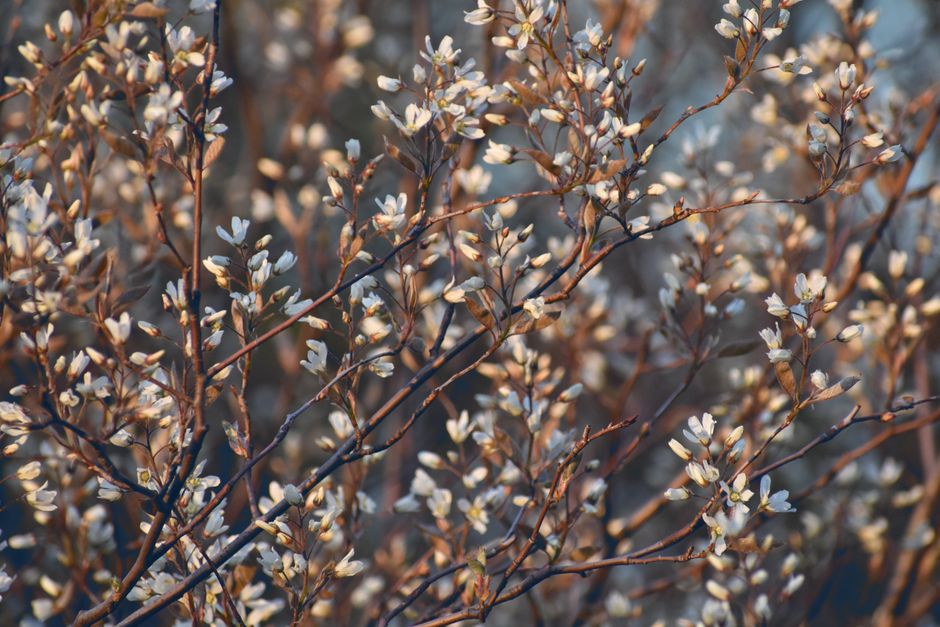
Service berry trees are one of those plants that does everything you want and asks for nothing in return — which, frankly, puts them ahead of most trees I deal with professionally. They're also one of the few that you can eat. (Don't worry, that's not a service we offer.)
You'll see them listed under several names: serviceberry, saskatoon, Juneberry, shadbush, or by the genus Amelanchier. Same tree, different postcodes. In Surrey and across the Lower Mainland, they've become a reliable choice for homeowners who want four-season interest without a lot of intervention.
Here's a straight guide to service berry trees — what they are, how to grow them, when to prune, what goes wrong, and whether any of it actually requires an arborist.
What are service berry trees
Amelanchieris a genus of roughly 20 species of shrubs and small trees native to North America, Europe, and Asia. In British Columbia, the most common species you'll encounter are:
- Amelanchier alnifolia — saskatoon serviceberry. Native to BC. Shrub-form, typically 2–4 m. The source of the saskatoon berry you'll find at farmers' markets.
- Amelanchier lamarckii — Juneberry. Introduced from Europe, widely planted in ornamental gardens. Can reach 6–8 m. The one most commonly sold at garden centres in Surrey.
- Amelanchier canadensis — shadblow serviceberry. Multi-stemmed, 4–8 m. Excellent fall colour. Tolerates wet soil better than other species.
All three produce white flowers in early spring — typically March in Surrey, before most other ornamental trees have leafed out. The show lasts two to three weeks. Then come the berries in June or July, depending on the species and the year. Then the fall colour, often a mix of orange, red, and burgundy.
The name "serviceberry" has a few folk etymologies. One holds that they bloom when the ground thaws enough to hold a funeral service for those who died over winter. I reckon that's a bit dark for a garden guide, but it's not inaccurate — early spring, reliable blooms, useful plant.

Why service berry trees work in Surrey, BC
Surrey sits in USDA hardiness zone 8a — mild winters, wet springs, dry summers. Amelanchier alnifolia is native to the Pacific Northwest. Amelanchier lamarckii has been naturalised here for decades. Both handle the climate without much fussing.
Nine out of ten tree failures I see in Surrey come from the wrong tree in the wrong spot. Serviceberry is an exception to that pattern. It tolerates a range of soil conditions, is relatively drought-tolerant once established, and adapts to full sun or partial shade — the last point matters in Surrey lots where afternoon shade from fences or neighbouring structures is common.
Wildlife value. Cedar waxwings, robins, thrushes, and starlings all target serviceberry fruit heavily. If you want birds in your yard through June and July, plant one. If you want the berries for yourself, plant two and get out there before the cedar waxwings do.
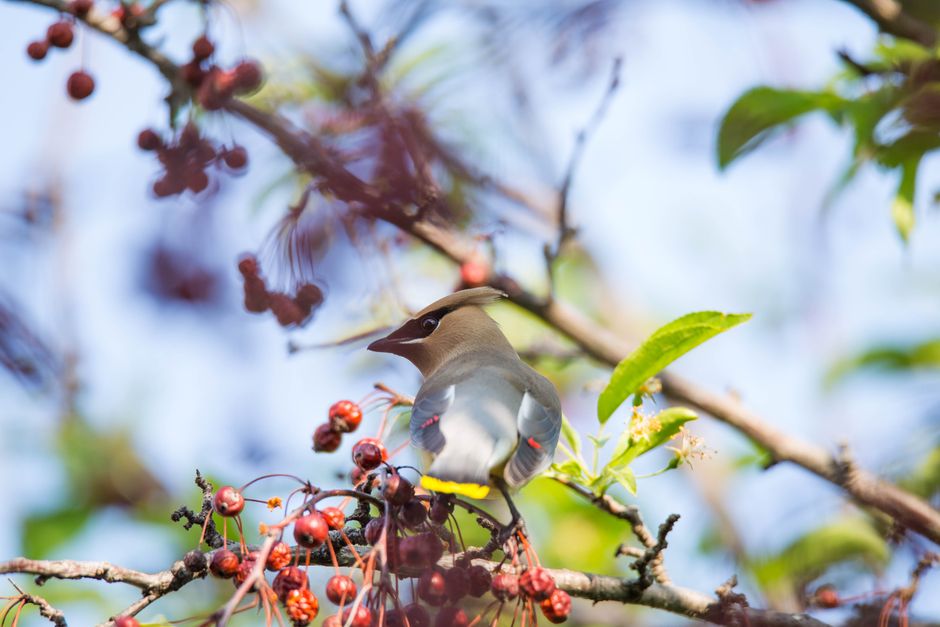
Native species support. Amelanchier alnifolia is listed as a native plant of BC and provides food and habitat for pollinators, birds, and small mammals. If you're building habitat in your yard or participating in any local native plant programmes, it's a solid choice. The BC government's native plants programme covers this in more depth if you want to go further into the ecology of it.
Low utility conflict. At mature heights of 3–8 m depending on species, serviceberry trees generally stay clear of overhead lines. That alone makes them a practical choice for Surrey lots where hydro clearance is a recurring headache with larger trees.
How to plant and care for Amelanchier
Planting time:Early spring or fall. Either works in Surrey's mild climate. Avoid planting mid-summer when soil moisture is lowest — serviceberry establishes best when it doesn't have to fight a dry August.
Location:Full sun to partial shade. Full sun produces the best berry crop and most vivid fall colour. Partial shade is fine if that's what you have — the tree handles it, though fruiting will be lighter.
Soil:Well-drained, slightly acidic to neutral (pH 6.0–7.0). Serviceberry is reasonably tolerant of Surrey's clay-heavy soils but does better if you amend the planting hole with compost. Avoid planting in standing water — while Amelanchier canadensis tolerates wet conditions better than other species, none of them like permanently waterlogged roots.
Watering:Regular watering for the first two growing seasons while the root system establishes. Once established, serviceberry is fairly drought-tolerant — Surrey's dry summers rarely trouble a mature tree. Rule of thumb: water deeply once a week during the first summer. If you can stick your finger 5 cm into the soil and it comes out dry, water it.
Mulch:A 5–8 cm layer of wood chip mulch around the base (kept away from the trunk) retains moisture, moderates soil temperature, and suppresses competing weeds. It's the single best thing you can do for a newly planted tree besides watering.
Fertilising:Not usually necessary in Surrey's fertile soil. If the tree is showing pale leaves and slow growth after the first couple of years, a slow-release balanced fertiliser in early spring won't hurt. But don't feed it just because the bag is in the garage.
When and how to prune serviceberry trees
Most serviceberry trees need very little pruning. That is genuinely good news. It's also the part of this guide I'd prefer you actually retain, because the homeowners who cause the most damage to their Amelanchier are the ones who prune it too hard or at the wrong time.
When to prune: Late winter to early spring, before buds break — typically February in Surrey. This is the window when the tree is dormant, you can clearly see the branch structure, and any wounds have the whole growing season ahead of them to compartmentalise.
Avoid pruning in fall. Serviceberry is susceptible to fire blight, and fall cuts provide entry points just as the disease is active. Similarly, avoid pruning in wet spring weather if fire blight is already in your area.
What to remove:The usual suspects. Dead wood first — always. Then crossing branches that rub against each other and create wound points. Then any branch growing toward the centre of the canopy rather than outward. Suckers from the base, if you're growing it as a standard tree rather than a multi-stem.
How much to remove:No more than 25% of the canopy in a single year. I've seen homeowners take half a serviceberry back because it was "getting big" and end up with a tree that spent three years recovering instead of fruiting. The tree doesn't forget that kind of thing.
Tools: Clean, sharp secateurs for branches under 2 cm. Loppers up to about 4 cm. A pruning saw for anything larger. Sterilise between cuts with a 10% bleach solution or isopropyl alcohol — especially if fire blight is a concern. Dull, dirty tools cause more damage than no pruning at all.
For more on pruning timing for other BC trees, the guide on when to prune trees in BC covers the general rules in detail.

Common serviceberry diseases and problems
Serviceberry is more disease-resistant than many ornamentals, but it's not immune. The three problems you're most likely to encounter in Surrey are fire blight, cedar-quince rust, and powdery mildew.
Fire blight (Erwinia amylovora).The most serious. Bacterial disease that moves fast in warm, wet spring weather — the exact conditions Surrey reliably provides. Symptoms: branch tips suddenly brown and curl into a shepherd's crook shape. The affected wood looks as though it's been scorched. If you see this, act immediately.
Remove infected branches at least 30 cm below the lowest visible symptom. Sterilise your tools between every cut — bleach solution, not a quick wipe on the jeans. Bag and bin the removed material; don't compost it. In severe cases, the whole tree can be lost within a season.
The Canadian Food Inspection Agency's fire blight fact sheet is a useful reference for identifying the progression.
Cedar-quince rust (Gymnosporangium clavipes).A fungal disease that requires both a cedar host (Juniperus or Thuja) and a rosaceous host (Amelanchier, among others) to complete its life cycle. Orange, gelatinous spore masses on branches in spring are the tell-tale sign. Not fatal to a healthy tree, but worth managing. Remove affected material and, if possible, increase air circulation in the canopy. Reducing the number of cedars immediately adjacent is the most effective long-term solution — not always practical in Surrey's densely planted yards.
Powdery mildew.The chalky white coating you'll see on leaves in summer. More cosmetic than dangerous on a mature serviceberry. Improves air circulation by pruning crowded interior branches. Avoid overhead watering. Not usually worth treating with fungicides unless the tree is young and heavily affected.
The edible side of it
Most people don't know serviceberries are edible. The berries ripen in June or early July — sweet, slightly almond-like, with a blueberry texture. They're high in antioxidants and have been used by Indigenous peoples across North America for centuries, eaten fresh, dried, or cooked into pemmican.
In practice, in a Surrey yard, you'll be competing with cedar waxwings. They find the berries before most homeowners remember to check. The strategy is to pick just as the berries start turning dark purple — don't wait for full ripeness, or you'll be watching the birds instead of harvesting.
The berries hold well in the fridge for a week and freeze excellently. They're good in muffins, jams, and pies — any recipe that works with blueberries will work with saskatoons. The almond note comes through more when they're cooked.
If you planted the tree for the berries, Amelanchier alnifolia (saskatoon) produces the most consistently. Cultivars like 'Smoky,' 'Thiessen,' and 'Northline' have been developed specifically for fruit quality and yield.
When not to call an arborist
I'd rather be straightforward about this: most serviceberry tree work doesn't need us.
A healthy Amelanchier under 4 m can be pruned by any homeowner with clean, sharp tools and a reasonable understanding of where not to cut. The tree is forgiving of minor mistakes. The pruning approach is simple — dead wood, crossing branches, interior growth — and most of it is reachable from the ground or a stable step ladder.
You also don't need a certified arborist for mulching, watering, or fertilising. That's basic tree care, and the internet will serve you well enough on the specifics.
Where we actually add value:
Height and access.Once a serviceberry gets above 4–5 m, proper pruning requires getting up into it safely. Not just a ladder situation. That's the point where DIY stops being worth the risk.
Disease diagnosis.If you think you have fire blight but you're not certain — and if removing the wrong branches could make things worse — an assessment is worth it. Misidentifying fire blight and pruning incorrectly can spread the pathogen further.
Structural problems.Multiple competing leaders, heavy lean, root concerns near structures or utilities — these deserve a trained eye before anyone picks up a saw. I've seen a homeowner try to "balance" a leaning Amelanchier by removing the weight on the uphill side. The lean accelerated. It took us an hour to fix what would have been a 15-minute proper pruning job.
Removal decisions. If you're thinking about removing a serviceberry entirely, it's worth having someone look at it first. Nine times out of ten, a good prune and a disease management plan gets the tree back. Removal is almost always a last resort on a tree this manageable. Our tree assessment service covers this — we'll tell you honestly if it needs to come down.
What it costs when you do call us
We list our prices because homeowners deserve to know what they're looking at before a crew shows up.
| Service | Rough range (CAD) |
|---|---|
| Light pruning — shrub-form Amelanchier under 3 m | $150–$300 |
| Standard pruning — tree-form, 3–6 m | $300–$600 |
| Disease assessment + treatment recommendation | $150–$250 |
| Full removal — multi-stem Amelanchier under 5 m | $400–$800 |
| Stump grinding (after removal) | $150–$250 |
Prices vary based on access, canopy complexity, and what we find when we get up there. The numbers above are honest starting points. If the scope changes during the job, we stop and tell you before we continue.
Honestly, most serviceberry pruning jobs fall in the $300–$600 range. It's not a complex tree. The work goes quickly when it's done right the first time, and a properly pruned Amelanchier should look good for three to four years before it needs attention again.