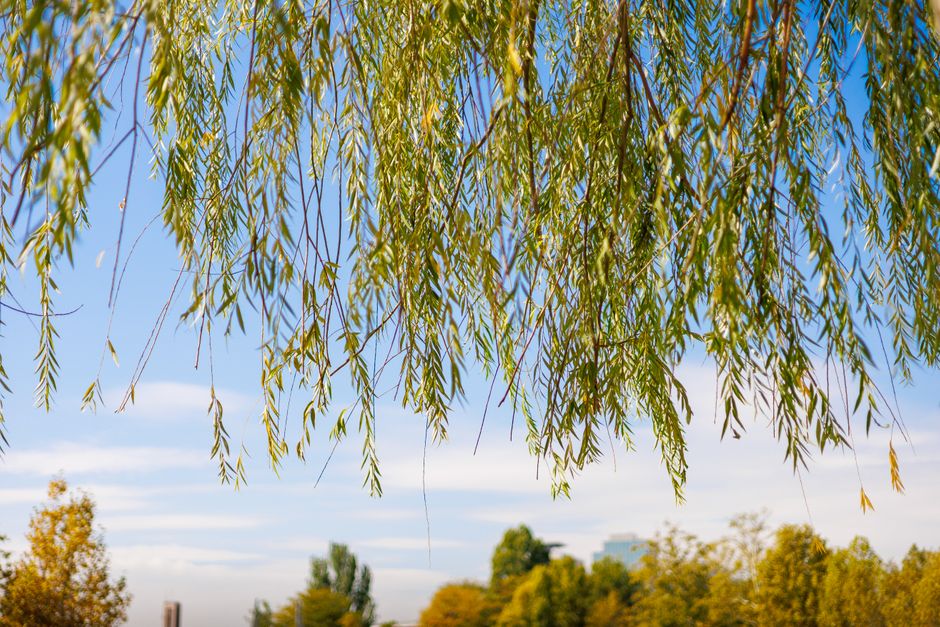
People ask me if willows are hard to prune. They’re not — they’re just constantly weeping about it. (The trees, mostly. A few homeowners too, after they see someone else’s willow that got topped.)
Most willows are resilient, fast-growing, and pretty forgiving of light maintenance. The problems start when people prune at the wrong time, use the wrong technique, or hand the job to someone who’s going to top the thing and call it done. This guide covers what actually works.
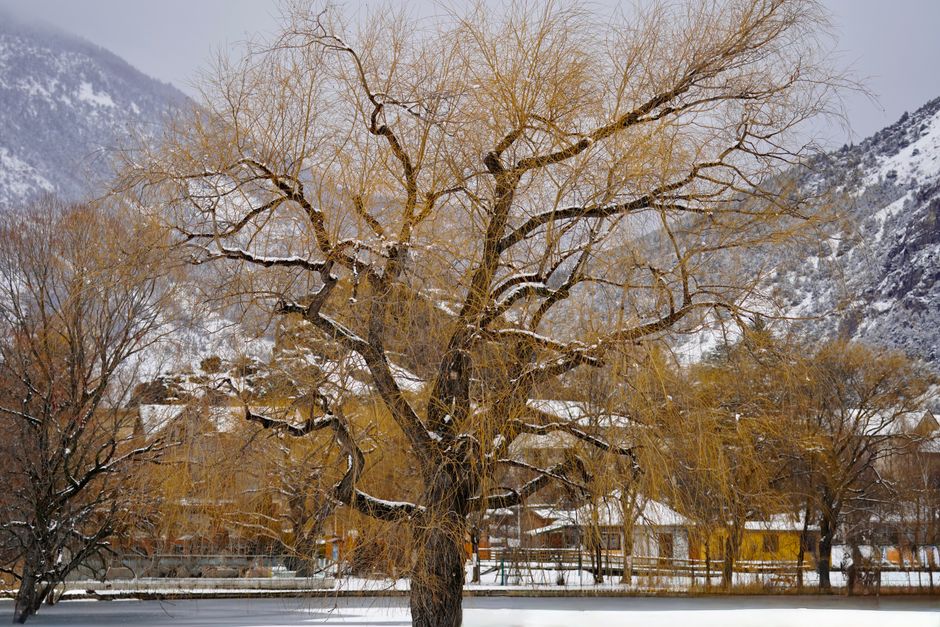
When should you prune willow trees?
Late winter. In Surrey and the Fraser Valley, that means January through February — once the worst of the cold has passed but before new growth starts pushing in March.
Two reasons this window matters. First, the tree is dormant and sap flow is minimal. Cut a willow in April while it’s actively growing and you’ll trigger significant bleeding from the cut sites — the tree weeping in the non-metaphorical sense. It won’t kill it, but it stresses the tree and slows recovery. Second, without leaves you can actually see the branch structure. Nine times out of ten, what looks tidy from the street in July has a tangle of crossing limbs hidden inside the canopy.
The one exception: dead or broken branches can be removed any time of year. I reckon if you’re walking past in August and there’s a dead limb hanging over the driveway, don’t pencil it in for February. That one goes now.
The ISA guidelines on pruning mature trees confirm winter dormancy as the preferred window for most deciduous species, willows included.
The tools you need (and why disinfecting matters)
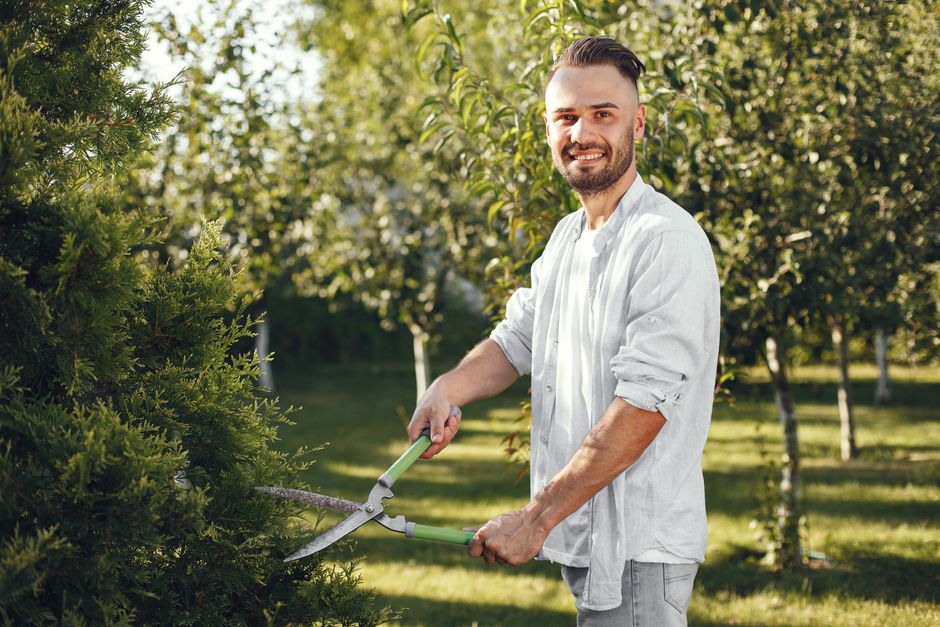
For most willow pruning, you need three things: hand pruners for stems under 3/4 inch, loppers for anything from 3/4 to 2.5 inches, and a pruning saw for larger structural branches. That’s the kit.
The thing most people skip: disinfect between cuts. Wipe the blades with diluted bleach or isopropyl alcohol as you move around the tree. Willows are susceptible to willow scab and crown gall — both of which can spread from infected wood on dirty blades. It takes thirty seconds and it keeps disease from following your pruning route.
Also: make cuts just outside the branch collar — that raised ring of tissue where the branch meets the trunk. Don’t cut flush against the trunk (you’re removing the tree’s ability to seal the wound) and don’t leave a long stub (dead stubs rot back into the trunk). The collar is where it should end.
You don’t need pruning sealant. The BC Ministry of Forests and ISA both recommend against it for most cuts — it can trap moisture and slow compartmentalisation.
How to prune a young willow tree
Young willows need more hands-on work than mature ones. The first three to five years is when you set the branch structure that’ll define the tree for decades. Get it right early and the tree largely takes care of itself. Get it wrong and you’re paying for remediation later.
Rule of thumb: choose one central leader early and protect it. Remove competing stems that want to take over the top of the tree. Any branch with a narrow V-shaped crotch angle — under about 30 degrees from the trunk — is a structural problem waiting to happen. The wood can’t form a proper union at that angle. Remove those while they’re still small.
I had a similar situation with a maple a few years back. Homeowner had tried to prune it themselves — left stubs, created four competing leaders, and produced a whole collection of weak V-crotches. By the time they called us, what would’ve been a $300 clean-up on a young tree was $800 of structural work on a fully grown one. The bone structure of the tree is set in the early years. Worth getting right.
For young willows specifically: keep them to a single main stem, remove branches that angle sharply upward rather than outward, and thin any overcrowded sections once a year in winter.
Pruning a mature willow in Surrey, BC
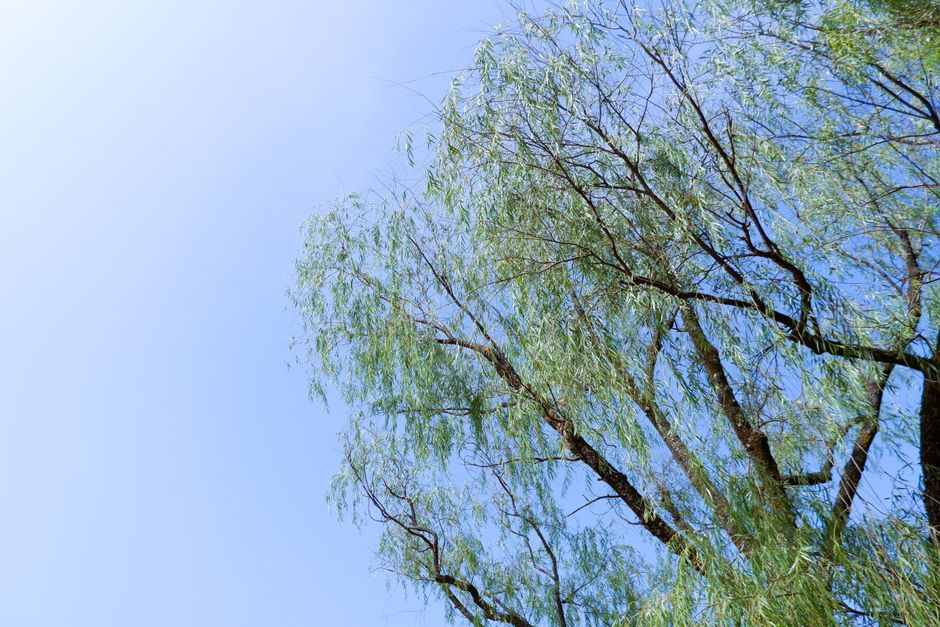
Mature willows don’t need annual pruning — every two to three years for maintenance is usually enough. The goal shifts from shaping to managing.
Focus on four things, in this order: dead branches first. Then diseased wood — look for black sunken bark, white fungal growth at the collar, or cankers. Then crossing branches inside the canopy. Finally, any limb that’s grown out of proportion and is putting mechanical stress on the trunk.
One thing specific to the Lower Mainland: willows load up with water. Our autumns are wet, and a mature willow in Surrey or Langley can accumulate significant weight in wet foliage before a windstorm. Crown thinning — reducing branch density without removing whole limbs — opens the canopy and reduces wind load. It’s also cheaper than having the tree come down on your fence. Crown thinning on a medium willow runs $300–$500. A full crown reduction — taking the whole canopy back 20–30% — runs $500–$1,200 depending on size and access.
Don’t take more than 25% of the live canopy in one season. More than that stresses the tree and triggers the kind of rapid compensatory growth that undoes the pruning work inside two years.
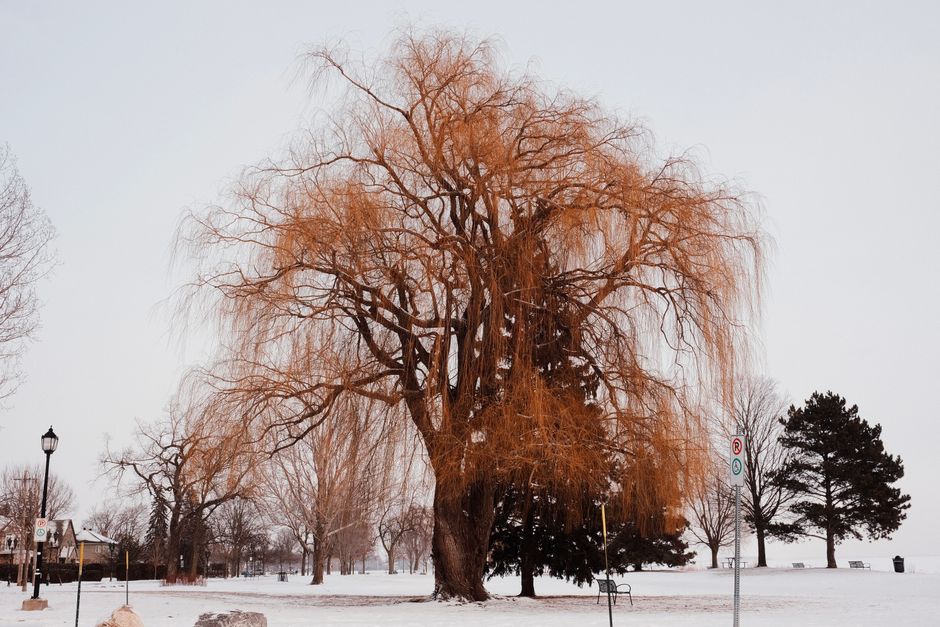
What not to do to your willow tree
A few things I see regularly that create more work than they solve:
Topping.This is the one. Cutting the main trunk back to a horizontal stub doesn’t control a willow — it triggers rapid, structurally weak regrowth from dormant buds all around the cut. Within two seasons you’ve got twice the branch density and half the structural integrity. I’ve been called in to fix topped willows that cost $400 to thin properly and $1,200 to remediate after topping. It’s not a shortcut — it’s a deferral of a bigger problem. I’d rather talk someone out of a $400 topping job than be called back for the $1,200 fix two years later.
Climbing spikes on a willow. Some contractors still do this. Spikes create deep puncture wounds in the cambium that take years to close and act as entry points for disease. If someone is bidding your willow work and proposing spike climbing, ask them to use a bucket lift or aerial rope technique instead.
Recommending removal before pruning.Nine times out of ten, when I hear a homeowner got quoted for willow removal because the tree is “too large” or “out of control,” that tree could have been crown-reduced and maintained for a third of the removal cost. Willows are removed because removal is more profitable, not because removal is the right answer. Get a second opinion before agreeing to take one down.
When to call a professional arborist — and when not to
Don’t call us if your willow is under 15 feet and you can reach the branches safely from the ground. A light clean-up — removing dead twigs, thinning a few crossing stems — is a reasonable weekend job for most homeowners with decent loppers and a bit of patience.
Do call if:
The tree is over 20 feet. At that height, the work involves either ladder climbing or rope access, and both require training and equipment that isn’t in most sheds. The risk of a bad fall or a misread branch load is real.
Any branch hangs over a structure, power line, or within fall distance of the house. The assessment before any work starts matters as much as the pruning itself.
You’re dealing with storm damage — a partially broken limb under tension behaves unpredictably in ways that aren’t obvious from the ground.
The root plate looks different than it did last year — heaving soil, a visible lean that developed recently, or standing water pooling around the base. These can signal root issues that change how the tree should be handled.
We cover Surrey, Langley, White Rock, Delta, and parts of Burnaby. ISA certified, 3,200+ jobs completed since 2009. Give us a call at (437) 771-4741 for a pruning assessment.
Common questions about pruning willow trees
- What is the best time of year to prune willow trees?
- Late winter — January through February in Surrey, BC. The tree is dormant, sap flow is minimal, and without leaves you can see the branch structure clearly. Avoid spring when the tree is pushing new growth, as you'll trigger excessive sap bleed and slow recovery.
- How do you prune an overgrown willow tree?
- Start with dead and diseased wood, then remove branches crossing through the centre of the canopy. For serious overgrowth, crown reduction — taking the whole canopy back 20–30% — is more effective than topping, which triggers dense, structurally weak regrowth. On a mature tree, spread heavy work over two seasons if more than 25% needs to come off.
- Can you cut a willow tree right back?
- You can hard prune or pollard a willow, but topping — cutting the main trunk back to a flat stub — causes more problems than it solves. It triggers rapid, weak regrowth and leaves large wounds that close slowly. Proper crown reduction or pollarding by a certified arborist achieves size control without the structural damage.
- Can I prune a willow tree in summer?
- You can remove dead branches any time of year. For live wood, summer is not ideal — willows are actively growing and pushing sap, so cuts bleed heavily and recovery is slower. Late winter is the window for any structural or maintenance pruning.
- What happens if you don't prune willow trees?
- Most willows won't collapse from neglect alone, but unmanaged trees develop crossing branches, poor weight distribution, and build up dead wood over time. In the Lower Mainland, a dense unpruned willow also carries more load in autumn storms — wet foliage adds significant weight. Crown thinning every two to three years reduces that risk without removing the tree.
- How do you prune a weeping willow tree?
- Same timing as other willows — winter, while dormant, focusing on dead wood and crossing branches. The drooping form means you'll also want to remove lower limbs that sweep the ground or reduce clearance. We have a separate guide on weeping willow care at littletreecare.com/blog/how-to-trim-a-weeping-willow-tree.
- How often should you prune a willow tree?
- Every two to three years for mature trees in good health. Young willows benefit from annual light shaping in the first three to five years to establish the branch structure. Trees near structures or in exposed locations warrant assessment more often — annually is reasonable if there's anything overhead worth protecting.
- Do willows bleed sap when pruned?
- Yes, particularly in spring when the tree is actively growing. Late-winter pruning minimises this — the tree is dormant and sap flow is slow. You'll still see some weeping at cut sites after winter pruning, which is normal and not harmful. It closes on its own.