Fall is when trees drop their leaves. Sometimes they drop a branch too — usually at 2 a.m. during the first real windstorm, directly onto your shed. One of those is on a schedule. The other one, I can help you prevent.
Every October I get the same question: should I prune my trees in fall? The answer depends on the tree and what work you're actually trying to do. For dead, dying, or hazardous wood, fall is fine — and in some cases overdue. For reshaping healthy deciduous trees, late fall or winter is better. And for a few specific trees, fall is the one time to leave them alone.
Here's the version that actually applies to trees in Surrey and the Fraser Valley — not the generic advice written for homeowners in Ohio.
The honest answer on fall pruning
Most of the advice you'll find online says "don't prune in fall." The concern is that fresh cuts stimulate new growth, and that new growth gets damaged by the first frost.
There's some truth to that. Aggressive structural pruning — taking off a third of a tree's canopy in October — can push growth that isn't ready to harden before cold weather. But this applies to healthy deciduous trees, and the risk is more of a guideline than a hard rule in BC's Lower Mainland, where hard frosts arrive later than most of Canada.
The advice breaks down entirely when you're dealing with dead wood, crossing branches, or a limb that's hanging over your roof. Those need to come out regardless of the calendar. Leaving a dead branch because "it's not the right season" isn't caution — it's procrastination with a risk attached.
My rule of thumb: assess the tree first. If the work is about managing a hazard, the season doesn't matter. If it's about reshaping a healthy tree, wait until the leaves drop so you can see the structure properly before you start cutting.
Trees to avoid pruning in fall
Some trees are not the problem — the timing is. A few common species will give you trouble if you prune them while the sap is still moving in early fall.
Bigleaf maple bleeds heavily when pruned while the vascular system is still active. It looks alarming, attracts insects, and is entirely avoidable by waiting until late winter — just before the sap starts moving again. Same issue with silver maple and other maple varieties common in Surrey neighbourhoods.
Birch and cherry are the same story. Both are prone to heavy sap flow from fall cuts, and birch in particular is susceptible to bronze birch borer — a pest drawn to fresh wound sites in warm weather.
Garry oakdeserves extra patience. In parts of North America, oak wilt is a real concern — a fungal disease spread by beetles through fresh pruning cuts in summer and early fall. The good news: oak wilt doesn't occur in BC. The precaution still makes sense. I recommend leaving Garry oaks until November or later, when beetle activity drops and any transmission risk is minimal. (A 200-year-old Garry oak deserves the extra few weeks. You're not losing anything by waiting.)
For all three species, the answer is the same: wait a few weeks. It costs nothing and avoids a mess.
What you can actually do in fall
Fall isn't a closed season. There's plenty of useful work to do before winter.
Deadwood removal is the most important. Dead branches are a hazard every month of the year. In fall, before the first real windstorm, they become active problems. I see it every year without exception — branches that looked stable through August come down in the first November gale. If you have visible dead wood over a walking path, a vehicle, or a structure, September is the time to address it. Not December.
Crossing and rubbing branchesshould go whenever they're identified. These create wound points where they contact each other, and those wounds become infection sites. This applies year-round and fall is as good a time as any.
Crown reduction on conifers — Douglas fir, western red cedar, western hemlock — is fine in fall. Conifers are evergreens; they don't go dormant the same way deciduous trees do. If a fir is overhanging a roof or outbuilding, a 20–30% crown reduction in October removes significant wind resistance before storm season hits. See our tree pruning services in Surrey for a full breakdown of what's involved.
Post-storm damage cleanupshould happen promptly. If a branch partially failed in an August windstorm, it needs to come out before the next one. Nine times out of ten, a branch that "mostly stayed up" after one storm is the one that lands on the fence in the next.
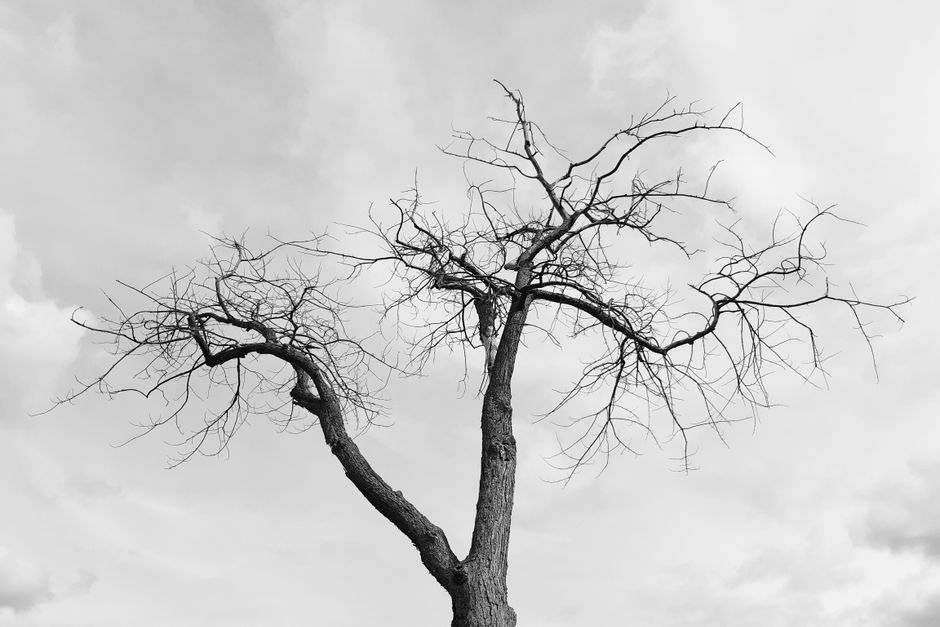
Storm season in BC — why fall timing matters
Here's the part most pruning guides skip, because they're written for a different climate.
In Surrey and the Fraser Valley, storm season runs roughly October through March. That's when the big windstorms come in off the Pacific. If you have a tree with structural issues — included bark, multiple competing leaders, significant deadwood, a lean toward the house — you have until September to address it before the risk window opens.
I reckon 80% of the emergency calls I get in November and December involve trees that had visible problems in September. Not always — sometimes trees fail without warning. But often, there was something there. Something that a proper autumn assessment would have caught and a proper crew would have fixed before the first storm.
The practical implication: fall isn't the wrong time to prune. It's the right time to finish the work that protects your property through winter. The "wait until spring" approach works for roses. For a 60-foot Douglas fir over a carport, spring is too late if the tree came down in February.
The ISA Certified Arborist network has a locator if you want a second opinion before committing to work. An assessment runs $150 and takes less than an hour. If the tree has issues, you'll know before storm season does.
Signs your tree needs attention before winter
A few things worth looking for before November, preferably from a safe distance on the ground:
- Dead branches visible from the ground — any that have lost bark, show no buds, or have visible cracks along the wood
- Crowded leaders or V-shaped unions — two co-dominant stems growing in a V rather than a healthy Y are the first to fail under ice or wind load
- Old storm damage not cleaned up — stubs from previous breaks don't heal the way a proper cut does; they stay as decay entry points
- A lean toward a structure — a natural lean away from a building is one thing; toward it is a different conversation
- Fungal growth at the base — shelf fungi or mushrooms around the root collar often indicate heart rot inside the trunk
If any of these apply, fall is the right time to call. Not spring. Not "after the holidays." Before storm season.
For a proper read on what to watch for year-round, the ISA's tree risk assessment framework is worth bookmarking. It's the same methodology certified arborists use.
What fall pruning costs in Surrey
Here's what typical fall work runs:
| Service | Rate (all-in) |
|---|---|
| Deadwood removal | $250–$600 |
| Crown thinning / light structural pruning | $300–$800 |
| Crown reduction (conifers, 20–30%) | $500–$1,200 |
| Tree assessment / consultation | $150 (credited toward work) |
All pricing is flat rate, all-in, quoted before anyone picks up a saw. Stump grinding is included in removal quotes. If scope changes on-site — a second dead limb becomes visible once we're up in the canopy — work stops, you get a revised number, and you decide. No surprises after the fact.
A note on cheap quotes: nine times out of ten, a low bid on fall pruning has something missing. No cleanup included, a non-certified crew, or a scope that's smaller than the actual job. The full breakdown of tree trimming costs in Surrey explains what to look for in a quote.
When to stop doing it yourself
I'll be straight with you: there are times not to call us, and there are times not to call anyone except an arborist.
Don't call usif you're dealing with a small shrub that needs a tidy up, a sapling under 15 feet that has a clean fall zone, or a few branches you can reach safely from the ground with a proper pruning saw. That's DIY territory and I have no interest in charging you for something you can handle yourself.
Do call an arborist if:
- The tree is over 20 feet tall
- Any part of the work is near power lines
- The branch you're removing is over a structure, vehicle, or the neighbour's property
- You need climbing equipment of any kind to reach the work
The cost of getting it wrong is higher than the cost of calling first. I fixed a DIY pruning job last season where a homeowner had cut his maple years back and left four competing leaders headed toward failure. The proper fix ran $800. Done right the first time, it would have been $400. The tree looked worse for the wait, too. (Dead giveaway on improper cuts: they leave stubs. Stubs don't heal — they rot. That rot spreads inward over years, quietly.)