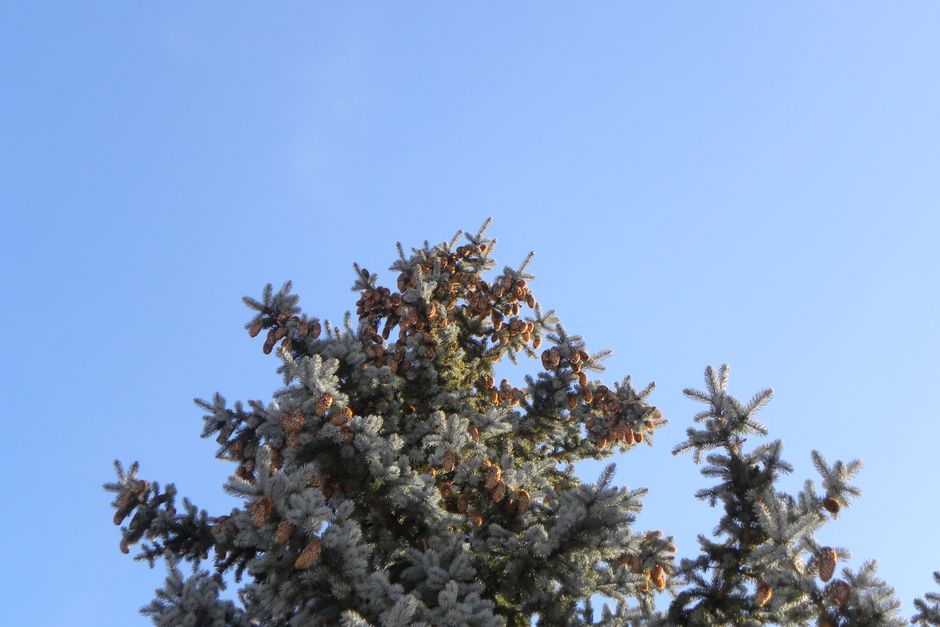
If you thought pruning was the most direct way to spruce things up, I have some news: the most direct way is usually nothing at all. Spruce trees, given decent space and reasonable soil, are among the least needy trees in the Fraser Valley — and they communicate displeasure by dying slowly in whatever section you overworked. (Spruce communication is not subtle.)
Direct answer:Most healthy spruce trees need pruning once every few years, if that. Dead branches come off. Crossing branches come off. Everything else stays. Pruning spruce trees is more about what you don't cut than what you do.
That said, there are right and wrong ways to do it. Get it wrong and the damage is permanent — spruce does not forgive poorly placed cuts the way a maple or a fruit tree might.
Why spruce trees need pruning — and often don't
Spruce trees grow naturally in a pyramidal form, broad at the base and narrowing to a single central leader at the top. That shape isn't just aesthetic. The lower branches carry photosynthetic load. The upper canopy drives vertical growth. The whole thing is a functioning system, and the system works best when left more or less intact.
Most pruning is corrective. You're removing what's dead, damaged, or crossing another branch — not sculpting a new shape from scratch. The rule of thumb I give people: if you can see a clear reason to make a cut, there probably is one. If you can't, put the saw down.
Reasons pruning genuinely helps:
- Removing dead wood reduces disease entry points and drops a hazard
- Thinning a crowded canopy improves airflow and reduces fungal pressure
- Correcting crossing branches prevents bark damage where they rub
- Selective reduction can manage a tree that's encroaching on a structure or sightline
Reasons to leave it alone: the tree is healthy, growing well, and isn't causing a problem. That accounts for a good number of the spruce in Surrey yards. For a full picture of what's involved in professional tree pruning services in Surrey — including assessment and pricing — see our services page.
When to prune spruce trees in Surrey and the Fraser Valley
Timing depends on what you're doing.
Dead or diseased branches:Any time of year, but late winter is preferred. The structure is easier to read before the new growth flush, and anything dead is already gone — the tree isn't losing anything alive.
Corrective pruning:Late winter to early spring works well, before the buds push. Early summer is also fine, once the new canopy has just flushed and hardened. Avoid late summer and early autumn — cuts in that window stimulate new growth that won't harden before the first frost.
Shape work or size reduction: Same windows. Late winter or early summer, avoiding the late-season period.
A note specific to Surrey and the Lower Mainland: our winters are mild and wet compared to the BC interior. The advice in American gardening guides about waiting for a hard freeze doesn't apply the same way here. Late February is often perfectly fine for corrective work. What matters more than temperature is avoiding that autumn growth-stimulation window.
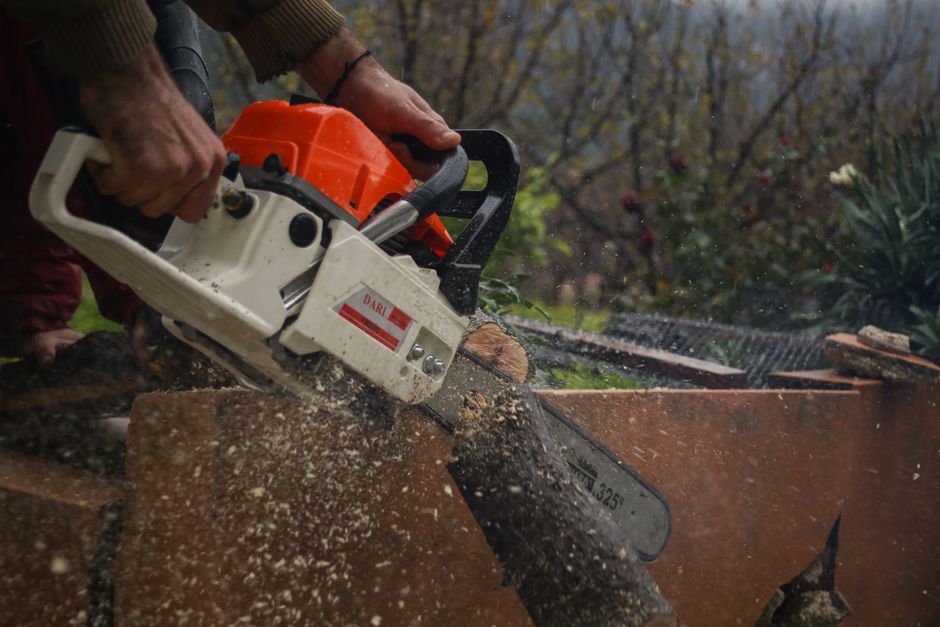
How to prune a spruce tree without killing it
Three things to know before you pick up a saw.
Spruce won't grow back from old wood. This is the single most important rule about pruning spruce trees. Pine trees can be cut back hard into old growth and often recover. Spruce cannot. If you cut a branch back past all the living needles into bare wood, you will have a permanent bare branch. It does not regenerate. Any cut you make should leave living needles on whatever remains.
Cut to a lateral branch or back to the trunk — not to a stub.Stubs don't seal over cleanly. They're open wounds that invite fungal disease and boring insects over time. Make the cut flush to the branch collar (the slight swelling where the branch meets the trunk), or back to a live lateral that can take over the growth.
Don't remove more than 25% of the live canopy in a season.Nine out of ten spruce pruning disasters I've seen started with someone getting enthusiastic with a pole saw. Taking too much too fast stresses the tree and can trigger dieback in sections that were previously healthy. If significant work is needed, spread it across two or three seasons.
For tools: hand pruners for anything up to 12mm, loppers for 12–25mm, a pruning saw for larger branches. Sharp blades matter — rough cuts are slower to seal. If you're working near a tree with confirmed disease, sterilise your tools between trees with diluted bleach or rubbing alcohol.
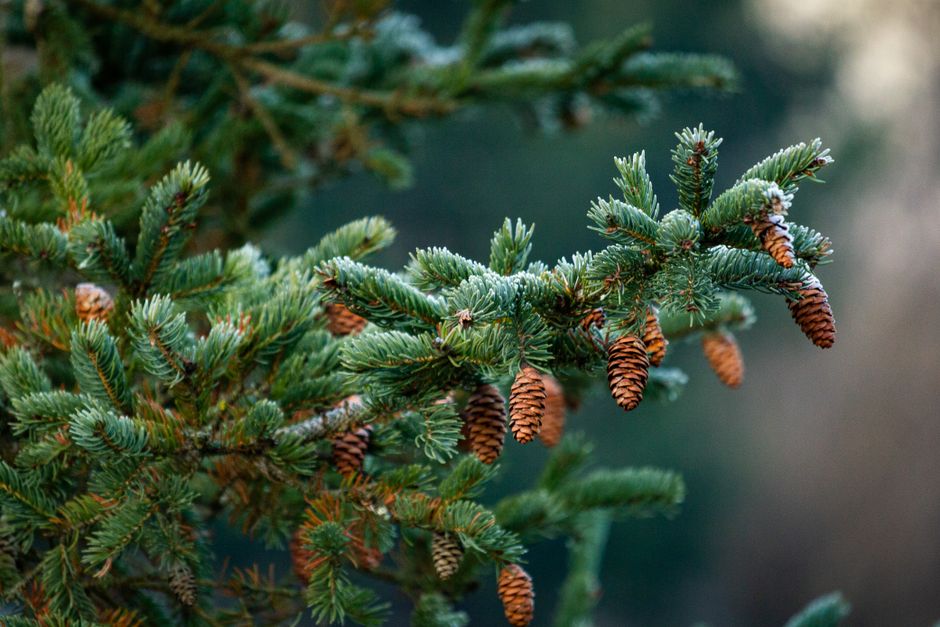
Mistakes that damage spruce trees
Two come up more often than anything else.
Removing the lower branches.This is the most common request we decline to fill without a conversation first. “The tree looks heavy at the bottom — can we just take those off?” Sometimes the answer is yes. More often it isn't, and nobody explained the consequences before the chainsaw came out.
Lower branches don't grow back. They carry photosynthetic load. Removing them permanently changes the tree's shape — you'll have a bare-legged spruce with a tuft of foliage at the top, which is both structurally and visually worse than what you started with. If there's a specific reason (a dead branch near the ground, a branch contacting a structure), that's a different conversation. Wholesale removal for aesthetics is one of the most regrettable calls homeowners make.
Topping the tree.Cutting the central leader to reduce height. It works in the narrow sense that the tree gets shorter. It doesn't work in any meaningful sense — the tree loses its structural apex and responds by sending up multiple competing leaders, all weaker than the original. Ten years later you have a flat-topped spruce with a cluster of structural vulnerabilities where one clean top used to be. Crown reduction — taking a proportional percentage off the whole canopy — is a far better option when height is the real issue.
The opinion I hold here, and I reckon most ISA certified arborists would agree: nine out of ten “topping” requests I receive come from homeowners who weren't given other options. Crown reduction costs roughly the same. It preserves the tree. There's almost never a good reason to top a spruce instead.
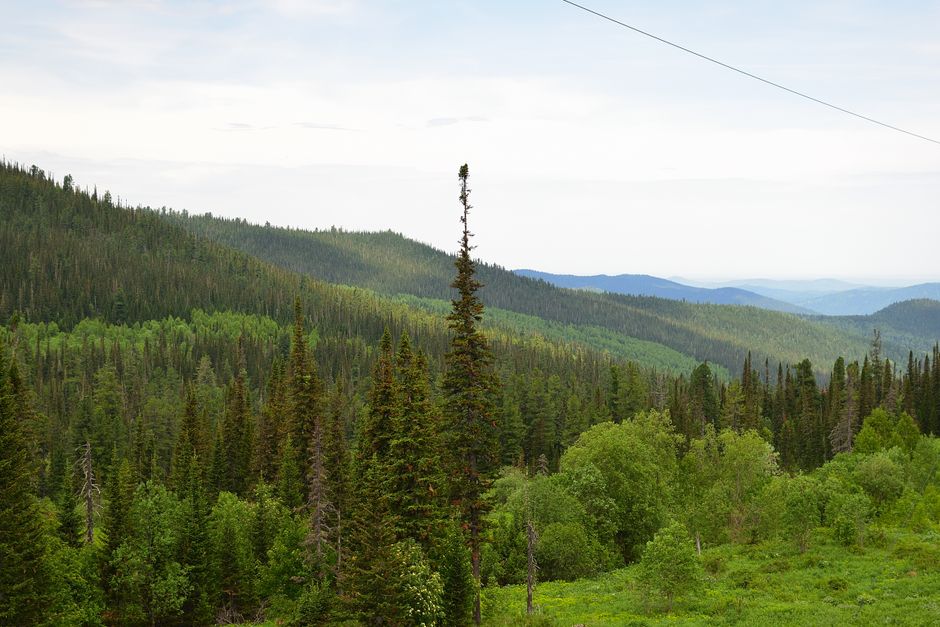
Sitka spruce and other BC native conifers
Surrey and the Fraser Valley are home to both native and introduced spruce species. The pruning techniques are the same, but the long-term picture is different.
Sitka spruceis native to BC's coast. It's adapted to wet winters, local pest pressure, and our soil chemistry. A Sitka on your property, given basic maintenance, will outlast most of what's built around it. The pruning approach is the same as any spruce — minimal intervention, preserve the form — but you can expect better long-term resilience than from introduced species.
Norway spruceis the one most people bring home from a nursery. It's fine, widely planted, and handles our climate well enough. It's slightly more susceptible to local fungal issues than a Sitka, but with reasonable maintenance it's not a problem tree.
Blue spruce is everywhere in Surrey front yards. Striking, popular, and unfortunately not especially well-matched to our climate. It survives. Watch for Rhizosphaera needle cast — a fungal disease causing needle browning from the inside out, starting with the lower canopy. It's manageable with proper treatment and improved airflow, but left alone it progresses. If you're seeing brown needles spreading inward on a blue spruce, that's a disease question more than a pruning question.
The general principle I apply: native species live longer and need less intervention over time. If you have a healthy introduced spruce, maintain it well. If you're choosing a new tree for a Surrey yard, the ISA Canada list of certified arborists can help you find someone who'll give you an honest species recommendation for your specific site.
When to call an arborist for spruce pruning
Call when the tree is over 20 feet tall and you can't safely reach what needs to come off. Call when there's dead wood in the upper canopy. Call when the problem isn't obvious — needle browning from an uncertain cause, structural cracks, a lean that didn't used to be there, or any branch within fall distance of a structure or power line.
Don't call us to maintain a healthy spruce that just needs its shape respected and a bit of deadwood pulled from the lower branches. That's a clean-afternoon job for someone reasonably handy with a pruning saw. We'd rather you spend the money on something that actually needs professional attention — like a proper hazard assessment if you're concerned about structural risk.
One place to draw the line clearly: any spruce near a structure, power line, or property boundary. Once there's risk involved, the calculation changes. An arborist assessment runs $150–$250 around Surrey and the Fraser Valley. A dropped branch on your neighbour's fence, or into your garage roof, runs considerably more.
If you're not sure which category you're in, give us a call. We'll ask a few questions and tell you honestly whether it's a DIY job or a professional one. No charge for that conversation.