
Ornamental cherry trees are forgiving — the tree, not the homeowner who pruned theirs in August. Get the timing wrong once and you'll spend the following bloom season staring at a very healthy, very flowerless tree, wondering where it all went wrong.
Here's the short version: prune ornamental cherry trees immediately after they finish blooming. In Surrey and the Fraser Valley, that means late April to late May, depending on the variety. That's it. That's the rule most advice buries under three paragraphs of general guidance.
Quick answer: Ornamental cherry trees bloom on wood from the previous summer. Prune after flowering finishes — while the tree is actively growing — and you remove spent wood without touching next year's buds. Prune in summer, autumn, or winter, and you either cut off those buds or open fresh wounds to silverleaf disease at exactly the wrong time.

Do ornamental cherry trees actually need pruning?
Most healthy ornamental cherries need very little regular pruning. A light tidy every two to three years — remove dead wood, deal with crossing branches, thin for light penetration — is enough to keep them healthy and well-shaped.
Where people go wrong is treating maintenance as an excuse for hard pruning. These are not silver maples. They don't have the vigour to bounce back from aggressive cuts. A large wound on an ornamental cherry is a problem, not a feature. The tree will close it eventually — slowly, over several seasons — while remaining vulnerable to disease the entire time.
I reckon nine out of ten calls we get about ornamental cherries come from people whose trees haven't been touched in years. A light corrective session after bloom deals with most of what's accumulated. Then the tree mostly looks after itself.
When to prune ornamental cherry trees
The rule is post-bloom. As soon as the petals drop and before the summer growth flush begins. In Surrey and the Lower Mainland, flowering varieties typically bloom late March to mid-April. Your pruning window opens the moment that show ends — usually late April — and stays open until mid-June before you're into next year's bud development territory.
This matters more in BC than most pruning guides acknowledge. Our mild, wet winters mean the disease risk from open wounds in autumn and winter is higher than in drier climates. Silverleaf disease — a serious fungal pathogen that can kill individual limbs or the whole tree — enters through fresh cuts in autumn and winter when spores are most active. Pruning after bloom, in spring, when the tree is actively growing and wound closure is fastest, gives you a meaningful edge against it.
Times to avoid: late summer (buds for next spring are already forming), autumn (silverleaf spore peak), and winter (no active growth to close wounds, maximum disease exposure). The common advice to prune cherry trees "in winter when dormant" applies to fruiting cherries, not ornamental varieties. They're managed differently. For a broader look at seasonal timing across species, our guide to seasonal tree trimming covers the full picture.

How to prune ornamental cherry trees: three steps
Step 1 — remove the obvious problems first. Dead branches, anything crossing through the centre of the canopy, and branches rubbing against each other. These are the priority cuts. A dead branch is a dead branch regardless of timing, and crossing branches create wounds every time the wind moves.
Step 2 — thin for light and airflow. Overly dense canopies hold moisture and restrict the light that drives bud development. Selectively remove some inner branches to let air move through. The goal is an open, airy structure — not a stripped one. You should still see plenty of growth after finishing.
Step 3 — respect the 15–20% limit. No more than a fifth of the canopy should come off in a single season. If the tree is badly overgrown, plan two or three annual sessions rather than one aggressive attack. Gradual reduction is what these trees handle well.
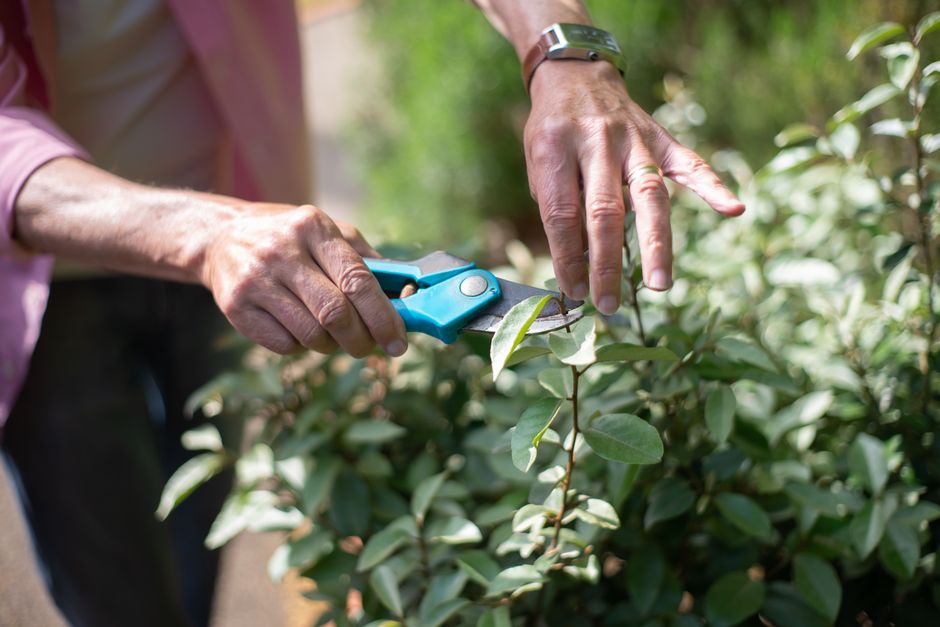
Tools: sharp bypass secateurs for branches under 1.5cm, loppers for 1.5–4cm, a clean pruning saw for anything larger. Clean tools between cuts with rubbing alcohol — dirty blades carry silverleaf spores from one wound to the next. This is not optional.
For a side-by-side comparison of ornamental and fruiting varieties, our cherry tree pruning guide covers both in detail.
Common pruning mistakes that cost you blooms
A homeowner in Cloverdale called a few years back asking why her ornamental cherry hadn't bloomed in two springs running. She'd been pruning it herself — tidying up in late summer, taking off anything that looked untidy. That was exactly the problem. Ornamental cherries set their flower buds in late summer. She'd been removing them before they ever had a chance to open.
Crown thinning at the right time the following spring solved it. The tree bloomed the next April. She spent $350 instead of the $1,200 removal quote she'd received elsewhere — and kept a tree she'd planted herself twenty years earlier.
Other common errors:
- Topping the tree — cutting back to large stubs destroys natural form, creates wounds that rarely close properly, and generates dense clusters of weak water sprouts that bloom poorly
- Flush cuts — cutting hard against the trunk removes the branch collar, which is where healing originates; cut just outside the collar
- Leaving stubs — the opposite of a flush cut, but equally damaging; stubs die back and decay toward the trunk over time
- Dirty tools — silverleaf disease spreads on blades; clean between cuts and between trees without exception
- Pruning every year by habit — unless the tree genuinely needs it, you're generating unnecessary wounds; check the tree first, and if it looks good, leave it

When not to call us for this
A small ornamental cherry under four or five metres, all branches reachable from the ground or a stable stepladder, needing only deadwood removal and a couple of crossing branches dealt with — that's a DIY job. Bypass secateurs, a pruning saw, clean blades, the right timing. You don't need us.
If the tree is over five metres, if any branches are near power lines or over a structure, or if the job involves climbing with a saw — give us a call. That's where the risk profile changes into something that needs proper equipment and a certified arborist. Our tree pruning services cover the full range, and we'll tell you honestly if your tree needs professional work or if you can handle it yourself.
An ISA certified arborist will assess the tree and give you a straight answer. If there's nothing that needs doing, you'll hear that. Not every call ends in a booked job — and that's the way it should be.