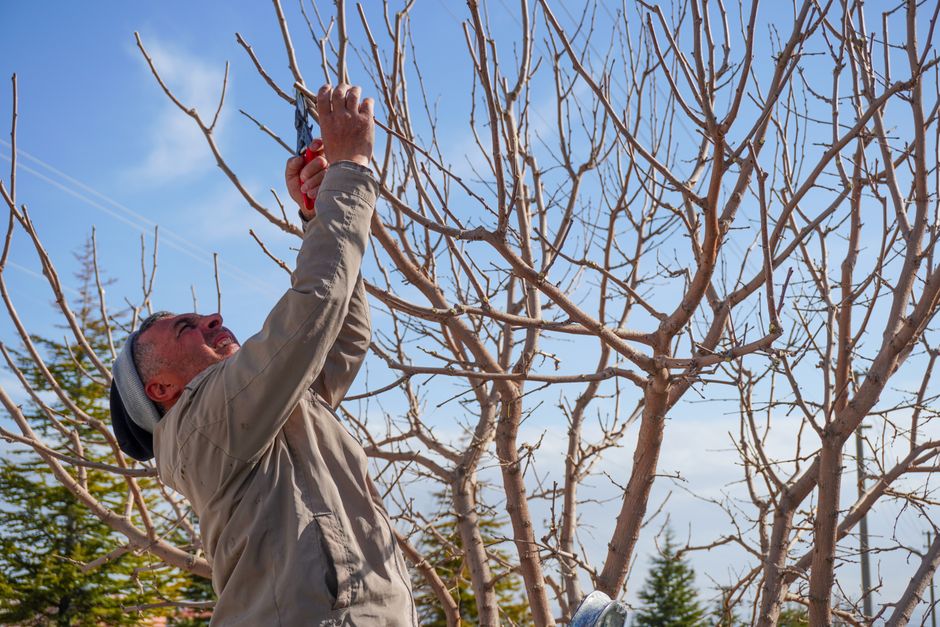
Nectarines are picky about timing. Not impossible, just opinionated. (Like my mother-in-law, but more rewarding if you listen.)
The short answer: prune in late winter — February through March in Langley and Aldergrove. Shape the tree into an open centre so sunlight reaches every fruit. Take no more than a quarter of the canopy per season. And if you're not sure whether a branch should come out, it can probably wait for next season.
The rest explains why this rhythm matters more for nectarines than it does for many other trees.

The timing window — late winter is non-negotiable
Nectarines have a narrow window where pruning doesn’t set them back. Late February through March. That’s it.
Why? The tree is breaking dormancy. New growth is about to push. Wounds you make now close fast — the tree’s healing response kicks in as temperatures climb and water moves back into the branches. A clean cut in March closes in weeks. The same cut in July sits open through a wet August and September, inviting fungal infection.
Fall pruning is the other mistake I see often. Someone decides October is a good time to tidy up the tree. They don’t realize that nectarines are hardening off for dormancy — a late cut signals the tree to stay active when it should be settling. Wounds don’t have time to compartmentalize before winter wet, and by spring you’ve got brown rot or silver leaf starting in those cuts.
Rule of thumb: if the grass is still actively growing in your yard, it’s already too late for serious nectarine pruning. Do your walk-around in January or early February, note what needs removing, and schedule it for late February or early March.
One thing I’ll note — if you spot a dead branch or one that’s actively diseased, you don’t wait for the window. Dead wood is a liability and a disease vector. Remove it when you see it, season be damned.
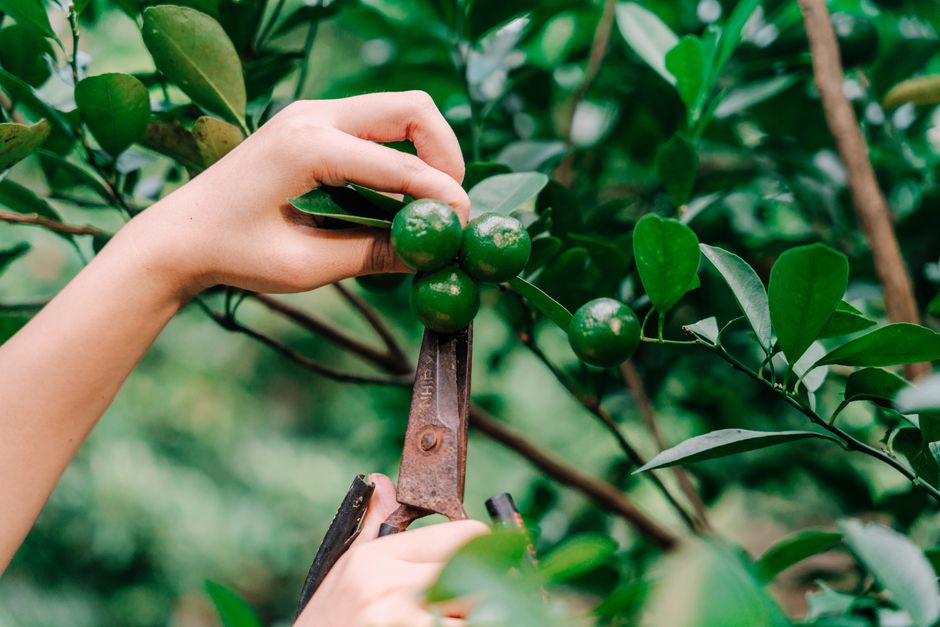
Open-centre shape — why nectarines need light
The goal for nectarine pruning is different from ornamental trees. You’re not trying to make a perfect pyramid. You’re trying to make a bowl.
An open-centre shape means removing the central leader (the main vertical trunk) and shaping the tree into a wide, open middle. Imagine an upside-down umbrella. Sunlight pours into the centre, air moves through, and every fruit gets light — not just the outer fringes.
This matters because nectarines need that light for even ripening and colour development. A tree with a closed centre produces fruit on the outside that ripens to full sweetness while interior fruit stays green and tart. You also get shadowy, humid spots where brown rot loves to hide.
It takes three to four seasons to establish a good open-centre structure. Year one, you remove the leader and select three to four strong lateral branches to become the main scaffold. Years two through four, you refine those branches and remove anything growing inward. By year five, you’ve got a tree that’s productive, easy to harvest, and a lot less disease-prone than it would have been otherwise.
The RHS guide on growing nectarines has diagrams that show this better than I can describe it.
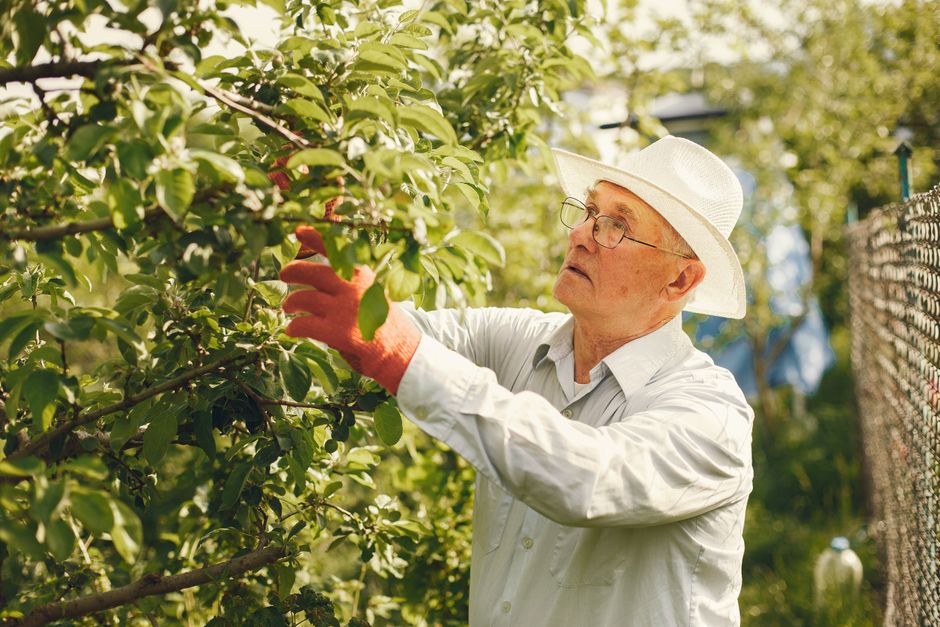
The pruning technique: step by step
For a young nectarine starting its first structural pruning (year two to three), this is how it works:
Look before you cut.Walk around the tree. Identify the strongest branches — the ones that are growing outward at a wide angle, not competing for the same space. Note anything dead, diseased, or crossing another branch. That’s your removal list.
Remove the leader first. Find the main vertical trunk and follow it to a height of about 60 to 75 centimetres. Make a cut just above the first strong lateral branch. This forces the tree to branch sideways instead of reaching straight up.
Keep three to four scaffold branches.These become the tree’s main framework. They should be evenly spaced around the trunk, growing out at 45-degree angles, and not shaded by other growth. Remove competing branches and anything that wants to grow back toward the centre.
Clean up dead and crossing wood. Anything dead comes out entirely. Crossing branches — the ones rubbing or touching — you remove the weaker of the two.
Don’t seal the cut. Modern research is consistent: wound sealants trap moisture and invite decay. A sharp cut just outside the branch collar is the whole intervention.
The 25% rule.No more than a quarter of the living canopy in one year. Nectarines don’t recover fast from heavy pruning like some trees do. If you need more removed, come back next season.
Once the tree is established (year five onwards), maintenance pruning is simpler: remove dead and crossing wood, thin any branches that are shading the interior, and keep the open centre clear. Fifteen to twenty minutes with bypass pruners each season, done.
Crossing branches and why they matter
Crossing branches — the ones rubbing or touching each other — are the second-most-common tree problem I see in residential yards. (Topped trees are first. That’s a different rant.)
When two branches rub long enough, bark wears through. You’ve got an open wound that’s exposed to weather and disease. For nectarines especially, that’s how brown rot and fungal infections get their toehold.
During your February-March pruning window, remove the weaker of the two rubbing branches entirely. If they’re equally important, keep the one with the better angle and remove the other.
What’s a better angle? Outward and upward, not competing with its neighbour. A branch growing at a narrow crotch (acute angle to the trunk) is weaker structurally than one growing at 45 degrees. When you’re choosing which branch lives, the stronger angle often makes the decision.

Disease prevention through structure
I’ll be straight about this: pruning alone won’t prevent or cure brown rot or peach leaf curl if the conditions are right for the disease. Humidity, temperature, moisture on the leaves — those environmental factors are the real drivers.
What pruning does is reduce the likelihood. A tree with good air circulation through an open centre stays drier after rain than a dense tree. Fewer crossing branches mean fewer entry wounds. Dead wood removed means one fewer place disease can overwinter.
If you’ve already got fungal issues in your nectarines, chemical treatment (sulfur sprays or copper fungicide, depending on the disease) is what works. Pruning is the supporting player, not the star. But maintaining good structure year to year is the difference between a problem that needs managing and one that takes over.
See our tree health assessment guide for what to watch for beyond just pruning.
When to stop doing it yourself
This is the part I’ll be honest about, even though it costs me work.
For the first two years of a young nectarine, while it’s small and the branches are thin enough to manage with bypass pruners from the ground: do it yourself. Light removal of crossing or dead wood, nothing heavy.
Call an arborist when you’re on a ladder at height, when branches are thicker than a wrist, when you’re uncertain about structure, or when the tree hasn’t been pruned in three or more years. A neglected nectarine that’s grown wild needs assessment before serious work starts — you want someone who understands the tree’s age and history and can design the recovery over multiple seasons.
I reckon half the nectarines I see that are struggling with disease or poor harvests spent their first five years over-pruned or mis-pruned by well-meaning homeowners. A young tree is forgiving of light mistakes. It’s not forgiving of the structural cuts that remove too much too fast or cut the wrong branch.
For significant structural work, an ISA certified arborist is worth the consultation. It costs less to get it right the first time than to rehabilitate a tree for the next five years.
What nectarine pruning costs
Structural pruning on a young nectarine (establishing open-centre shape over 3–4 years) runs $200–$400 per season at Little Tree Care.
Maintenance pruning on an established tree — removing crossing, dead, or inward growth to keep the shape — runs $150–$300.
Crown reduction or heavy remedial work on a neglected tree: $400–$800 over the first season, likely more if it needs follow-up over two years.
If you want a consultation before committing, a tree assessment runs $150 — credited toward the work if you proceed.
Honestly, the math on starting a young nectarine with proper structure from year two is a lot cleaner than trying to fix an older tree. It’s also more enjoyable — a well-pruned nectarine produces more fruit, ripens it more evenly, and gives you a better harvest than one that’s been left to figure things out on its own.