A dogwood tree that's left alone for a decade is usually more beautiful than one that's been “maintained” annually by someone charging by the hour. I find this professionally inconvenient. It's still true.
Pruning dogwood trees properly comes down to one principle: less is almost always more. The right window in Langley/Aldergrove is late winter — January through early March — while the tree is fully dormant. Most dogwoods only need attention every two to three years, and the work is usually quick.
Direct answer: Prune in late dormancy (late January to early March in the Fraser Valley), remove dead, diseased, and crossing branches, stay under 15–20% of the canopy in any one season, and avoid cutting in late spring or summer when wounds bleed and attract pests. If your tree is healthy and well-shaped, you may not need to prune at all this year.
Nine out of ten calls I get about dogwoods in Langley/Aldergrove are people worried their tree looks “a bit wild.” Nine out of ten of those trees are fine. The shape of a dogwood is part of its character — the layered, horizontal branching is what makes it stand out in a Langley/Aldergrove garden.
The best time to prune dogwood trees
Late winter is the window. Specifically: late January through early March in Langley/Aldergrove and the Fraser Valley, before bud swell begins.
Dogwoods are what arborists call “bleeders” — cut one in active growth and it will weep sap from the wound site for weeks. That sap is not dangerous to the tree in small amounts, but the scent attracts the dogwood borer — a moth larva that tunnels into the wood and, in serious infestations, can structurally compromise the tree over several years. Pruning during dormancy closes the window on that pest before it opens.
There is a second acceptable window: immediately after flowering in late spring, before the tree sets next year's flower buds. If you missed the dormancy window and need to remove a broken limb, this is your fallback. It is not ideal, but it is better than waiting another eight months.
Avoid these months: June, July, August. Hot weather, active growth, and borer flight season overlap to make summer cuts the worst possible timing.
Flowering dogwoods (Cornus florida and Cornus kousa) and Pacific Dogwood (Cornus nuttallii) follow the same timing rule. The ISA Certified Arborist network in Canada follows this consensus: dormancy pruning, minimal cuts, no summer work on susceptible species.
What to remove — and what to leave alone
Rule of thumb: work in order of urgency. The three categories below cover most legitimate pruning needs. Anything not in these categories is optional, and optional should usually mean left alone.
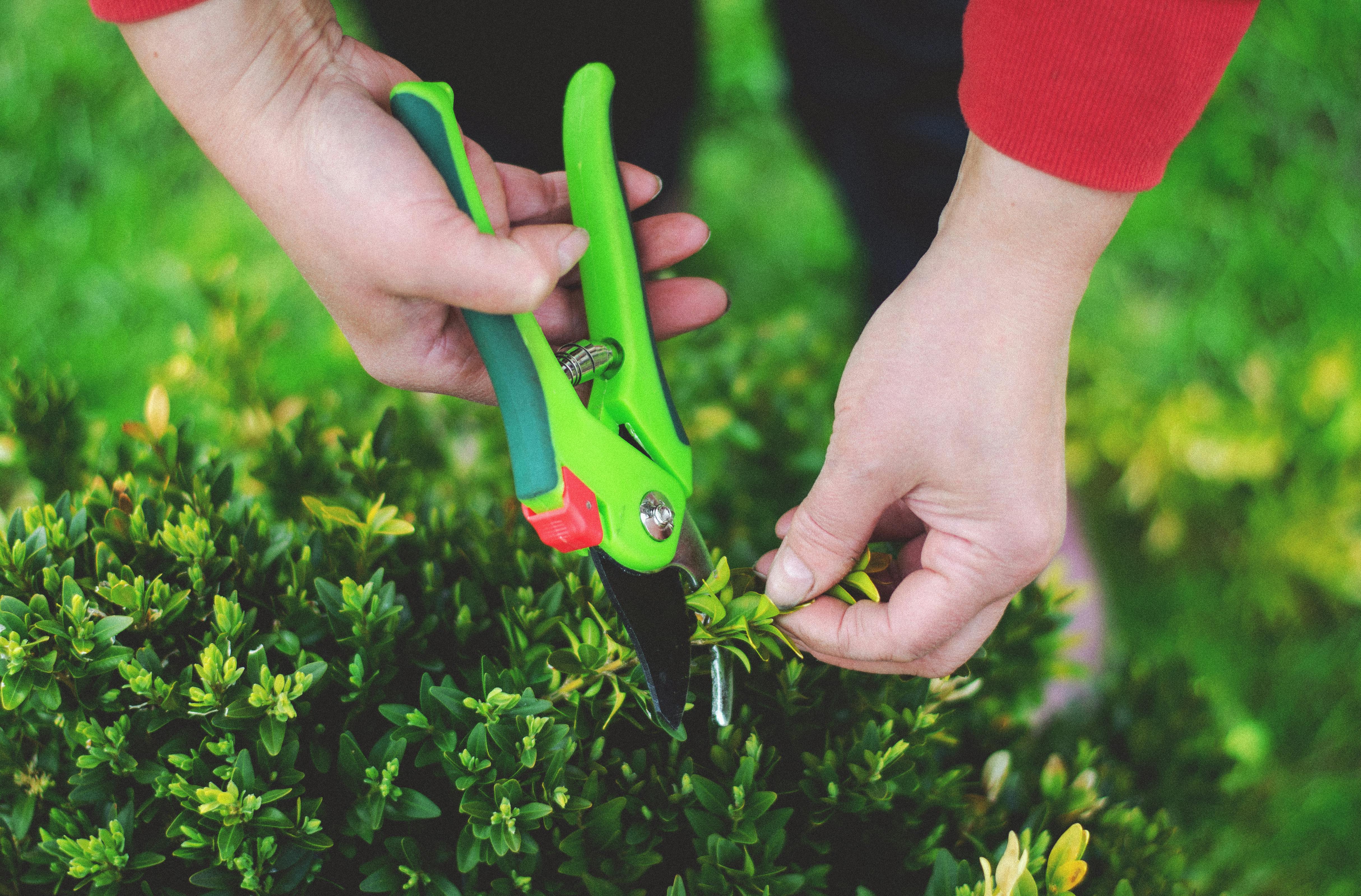
Dead, damaged, or diseased wood.Start here, every time. Dead branches are easy to spot in dormancy: scratch the bark with your thumbnail. Green underneath means alive. Brown or dry means dead. Remove these first, cutting back to a healthy lateral branch or to the trunk just outside the branch collar — the slight ridge where the branch meets the trunk. Don't cut flush against the trunk. Don't leave a long stub.
Crossing and rubbing branches. Where two branches rub against each other, both create wounds. Over time, those wounds become entry points for fungal disease. Remove the smaller or more awkwardly positioned of the two. If both are similar in size, remove the one growing inward toward the centre of the tree.
Interior congestion that blocks airflow.Dogwoods are susceptible to powdery mildew in Langley/Aldergrove's wet winters. A dense canopy holds moisture. Light thinning of the interior — removing a few small crossing or inward-growing branches — improves airflow and keeps the foliage drier. Don't go further than necessary.
What to leave alone: the main leader (central trunk), large scaffold branches, and any healthy branch that isn't causing a problem. Dogwoods don't need heading cuts — cutting a branch back to a stub. That kind of cut promotes weak, brushy regrowth and reduces flowering. If you find yourself cutting healthy wood just to “shape” the tree, you have done enough.
The BC Ministry of Forests research on Pacific Dogwood care recommends minimal intervention on established trees and notes that heavy pruning creates stress conditions that predispose the tree to Discula anthracnose, the fungal disease responsible for significant dogwood decline across the province.
How to prune a dogwood tree: step by step
This is the sequence that works. Don't skip steps or reorder them.
1. Walk the tree first.Before touching anything, circle the tree twice. First pass: identify all deadwood. Second pass: identify crossers, rubbers, and any branches with signs of disease (discolouration, cankers, unusual bark texture). Mark what you're removing before you start cutting. A branch looks different once everything around it is gone.
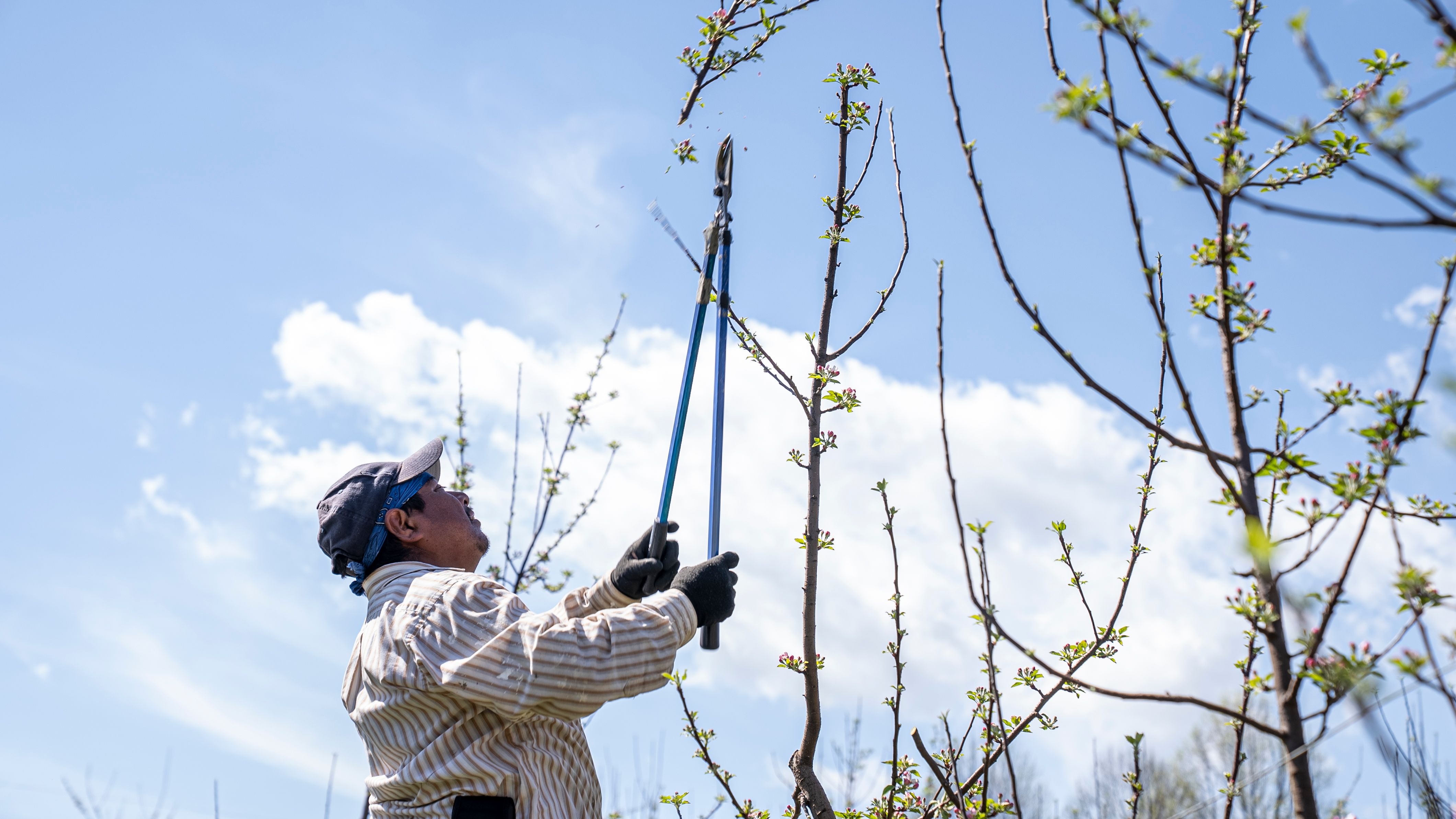
2. Remove deadwood. Deadwood first, always. Work from the ground up. For branches under 3 cm, a sharp pair of bypass secateurs is fine. For anything thicker, use a pruning saw. Long-handled loppers can squash the cut end on woody dogwood stems — not ideal for a tree that heals slowly.
3. Address crossers and rubbers. Remove the smaller or more awkwardly placed branch of each pair. Cut to the branch collar or a lateral, not to a stub.
4. Thin the interior if needed. Step back and assess. If the canopy still looks congested after removing deadwood and crossers, selectively thin the interior. Remove no more than 15–20% of the total canopy across all cuts combined this season.
5. Clean your tools between trees. Dogwood anthracnose and powdery mildew spread on dirty blades. Wipe secateurs and saws with a 10% bleach solution or isopropyl alcohol between trees — especially important if you spot any leaf spots or dieback on the tree you just worked on. (Yes, this step is boring. So is watching a disease spread across three trees in your garden.)
6. Do not seal cuts with wound paint.Research has consistently shown that pruning sealants don't help and sometimes hinder the tree's own compartmentalisation process. Leave clean cuts open to air.
For larger dogwoods — anything over 5 metres — consider a professional tree pruning visit. Getting the branch angles right on a mature dogwood from the ground is genuinely difficult, and the cost of a licensed arborist is less than the cost of replacing a badly pruned tree.
Pacific Dogwood and Langley/Aldergrove's tree protection rules
This is the section most pruning guides skip. It matters in BC.
Cornus nuttallii— the Pacific Dogwood, BC's official provincial flower since 1956 — is protected under the BC Wildlife Act. Cutting, injuring, or removing a Pacific Dogwood without authorisation is an offence. The protection applies to naturally occurring Pacific Dogwoods; ornamental cultivars planted in gardens are not covered by the provincial act, but may still be subject to Langley/Aldergrove's tree protection bylaw depending on trunk diameter.
The practical question is species identification. Pacific Dogwood has four to six large white bracts (the “petals” are actually modified leaves) and grows as a small tree or large shrub in BC's coastal forests. Cornus florida (Eastern Flowering Dogwood) and Cornus kousa (Korean Dogwood) are the most common ornamental dogwoods in Langley/Aldergrove gardens. If you are not certain which you have, call us before touching it — a five-minute phone conversation is free. Getting it wrong is not.
Langley/Aldergrove's tree protection bylaw also applies to “significant trees” based on trunk diameter. A dogwood that has grown for 30 years in a Langley/Aldergrove yard may qualify. Significant tree removal or significant pruning work requires a permit. Standard maintenance pruning on a non-significant tree does not — but if you are uncertain, it is worth a quick check with Langley/Aldergrove's Urban Forestry team before you start.
Common dogwood pruning mistakes Langley/Aldergrove arborists see
I reckon I see the same three mistakes at least once a month. They are avoidable.
Topping. Cutting the main branches back to flat stubs — whether done deliberately or because the homeowner wanted a smaller tree — is the single most damaging thing you can do to a dogwood. It destroys the natural form, promotes clusters of weak epicormic shoots, and creates large wound sites the tree cannot properly compartmentalise. A topped dogwood is structurally compromised for the rest of its life.
We were called to a job in South Langley/Aldergrove last spring to assess a flowering dogwood that had been “reduced” by another company the year before — every main branch cut back to a stub, about 60% of the canopy removed in one visit. The tree pushed out a mass of water sprouts from each cut site, the bark at two of the stubs had already begun to crack, and the owner was now being told it needed to come down. It did not have to end that way.
Pruning in the wrong season. Summer cuts on a dogwood in Langley/Aldergrove are a gift to the dogwood borer. This is not a theoretical risk — borer populations are established here, and they are specifically attracted to the volatiles released by fresh cuts on susceptible species. I have seen healthy dogwoods in Cloverdale and Morgan Creek develop significant borer infestations after summer pruning by well-meaning homeowners. If you missed the winter window, wait or call us.
Skipping tool disinfection.Dogwood anthracnose spreads on dirty tools. A blade that touched an infected branch can introduce the fungus to a clean tree. This sounds like overkill until you've watched an anthracnose infection spread from one tree to the next across a garden. Disinfect between trees. The bleach solution takes thirty seconds.
When not to call us
This is the section I actually mean.
Your dogwood is healthy, well-shaped, and under 3 metres. Do it yourself. A pair of sharp bypass secateurs and the three-step process above — deadwood, crossers, light thinning — is well within what an attentive homeowner can manage on a small tree. You do not need us for this.
You just want a smaller dogwood.This is not achievable without damaging the tree. Dogwoods don't respond well to size reduction. If the tree has outgrown its space, the honest answer is that it needs to be removed and replaced with a more appropriate species, or left to grow into the space it has decided it wants. Neither of those answers costs you a pruning visit.
The tree needs nothing.A flowering dogwood that bloomed well this spring, has no visible deadwood, no crossing branches, and good airflow through the canopy is a dogwood that doesn't need touching this year. Come back next spring, look at it again, and decide then. Trees are patient. We can afford to be too.
Do call if: the tree is over 4 metres and requires ladder work, you have spotted branch dieback you can't attribute to frost damage, you think you might have Pacific Dogwood and you're not certain, or the tree is close to a structure and you're unsure about the risk. The assessment call is free. No obligation to book anything.