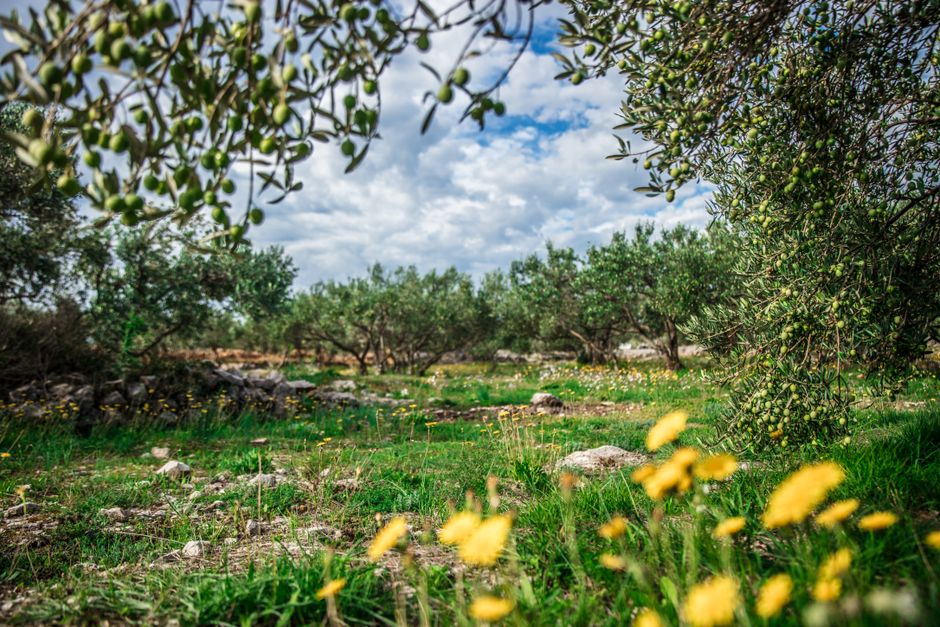
Knowing how to trim an olive tree well comes down to one thing: restraint. These trees have patience that would embarrass most tradespeople, including me. You can go two, even three years without touching one and it will survive fine. Past that, the branches start making their own decisions about your garden.
Trim once a year in late spring, after the last frost risk clears but before the flowers fully open. In Langley/Aldergrove and the Fraser Valley, that window is typically mid-April through mid-May. Remove dead wood, crossing branches, and any upright water shoots. Keep the centre open so light reaches the middle. That is most of what there is to know.
Quick answer:Prune once a year in late spring using thinning cuts (not heading cuts), remove dead wood and water shoots, and keep the canopy open. If the tree is under 2m and healthy, this is a sensible DIY job. If it's taller, overgrown, or showing signs of disease — that's worth a professional assessment before you start cutting.
If the tree is under two metres and you own a decent pair of loppers, there is a real chance you can do this yourself. I will tell you exactly where that line is.
When to trim an olive tree in Langley/Aldergrove
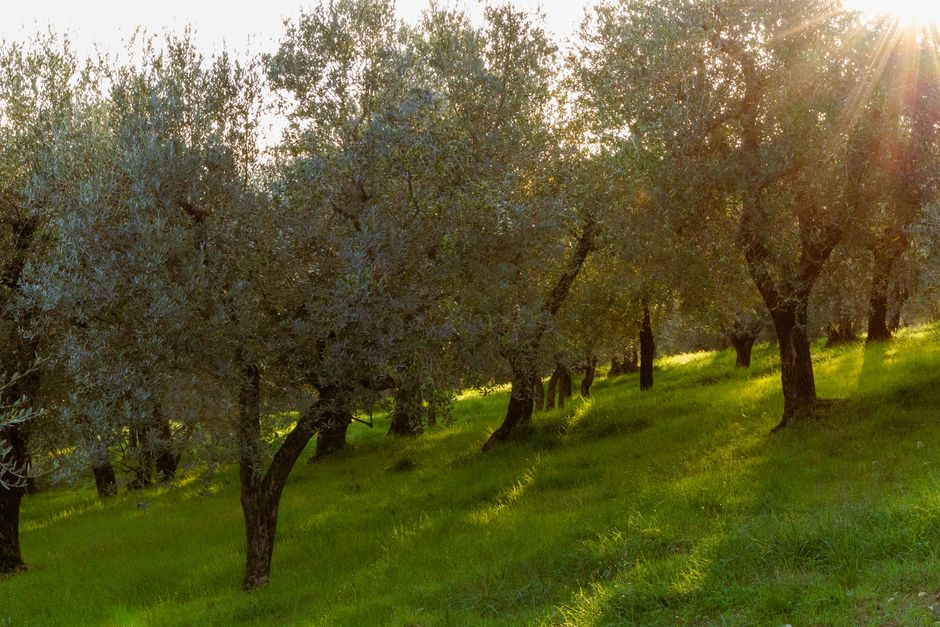
The window is late spring: after the last frost risk has passed and before the tree sets flowers in earnest. In the Lower Mainland, that is generally mid-April to mid-May. You want overnight lows consistently above 5°C and the heavy winter rains tapering off.
The reason timing matters: pruning opens fresh cut surfaces on the bark. Cold, wet weather creates entry points for fungal disease. Langley/Aldergrove winters are reliably wet — often 1,300mm of rain annually — and the last thing you want is a freshly pruned tree sitting in February drizzle. Wait until late March at the earliest.
Do not prune in autumn. Removing wood in September or October stimulates new growth that will not harden before the cold arrives. That growth is vulnerable to frost damage. I see the results every spring: soft, blackened tips and a tree that spent the winter stressed instead of resting.
Rule of thumb: if you can wear a light jacket in the garden without thinking about it, the timing is probably right. If you are still in a heavy coat, the tree is still in winter mode — leave it.
For a comparison with how spring timing affects other fruit trees in the Valley, the peach tree pruning guide covers similar considerations — though peaches want an earlier window than olives.
Why olive trees need trimming — and what happens if you skip it
Olive trees do not need heavy pruning. They need light pruning, and the goals are specific:
Sunlight penetration.Olive fruit sets on the previous year's wood, in parts of the tree that actually see sun. A dense, unpruned canopy shades out its own productive wood. Nine times out of ten, when an olive tree stops fruiting in a Langley/Aldergrove garden, the cause is a canopy that has crowded itself. Opening the tree is the fix.
Airflow. A tight canopy traps moisture. In our climate, that moisture sits on leaves and branches and invites fungal problems. Opening the tree is the simplest prevention available, and it costs nothing.
Shape. An untouched olive tree for ten years develops the structural density of a large hawthorn — fine if you want a privacy hedge, less ideal if you want something that looks intentional. The classic form is called the open vase: three or four main branches spreading outward from the trunk, centre kept clear. It is both functional and, honestly, handsome.
Skip annual pruning for five years and the canopy becomes dense enough to shade out its own fruiting wood. At that point you need renovation pruning rather than maintenance — a slower, more involved process covered below.
How to trim an olive tree — the technique
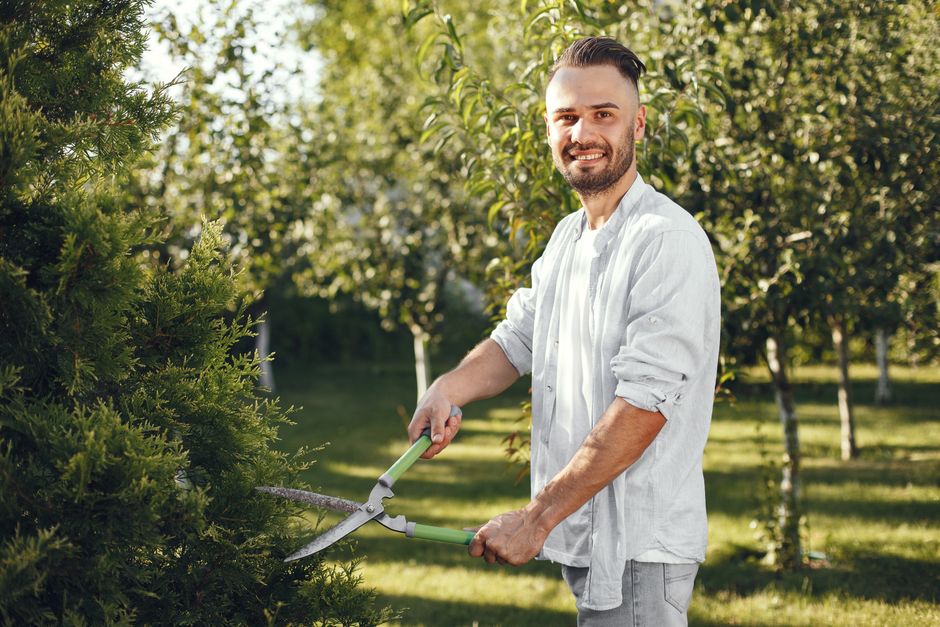
Remove first, then step back. The most common mistake in olive tree pruning is doing too much in one pass. Remove what is clearly wrong — dead wood, crossing branches, anything growing inward toward the centre — then stop. Walk around the tree. Decide if it needs more. Usually it does not.
What to remove, in order:
- Dead or dying wood — anything that snaps cleanly rather than bends, or has peeling, discoloured bark
- Water shoots — the fast-growing, vertical stems that sprout from main branches, usually with lighter bark than the surrounding wood
- Branches crossing others and creating rubbing contact at the junction
- Anything growing directly downward or inward toward the trunk
What to leave alone:
- Last year's growth with small buds forming — that is next season's fruit wood
- The main scaffold branches, unless there is a structural problem
Use thinning cuts, not heading cuts. A thinning cut removes a branch back to its parent branch — gone, back to source. A heading cut removes the tip of a branch partway, leaving a stub. Heading cuts trigger water shoots in exactly the wrong direction: the tree responds to the insult by sending out fast, upright regrowth from every cut point. This is why so many olive trees in Langley/Aldergrove look like a tangle of vertical sticks — years of heading cuts, not negligence.
Cut angle: angled slightly away from the branch collar, which is the wrinkled tissue where the branch meets the parent. Not flush — that damages the collar tissue that does the healing. Not at a steep angle — that leaves an exposed surface bigger than necessary.
Clean your blades with rubbing alcohol before you start. Olive trees are not particularly disease-prone, but there is no good reason to transfer anything from a nearby plant that might be.
Tools you actually need
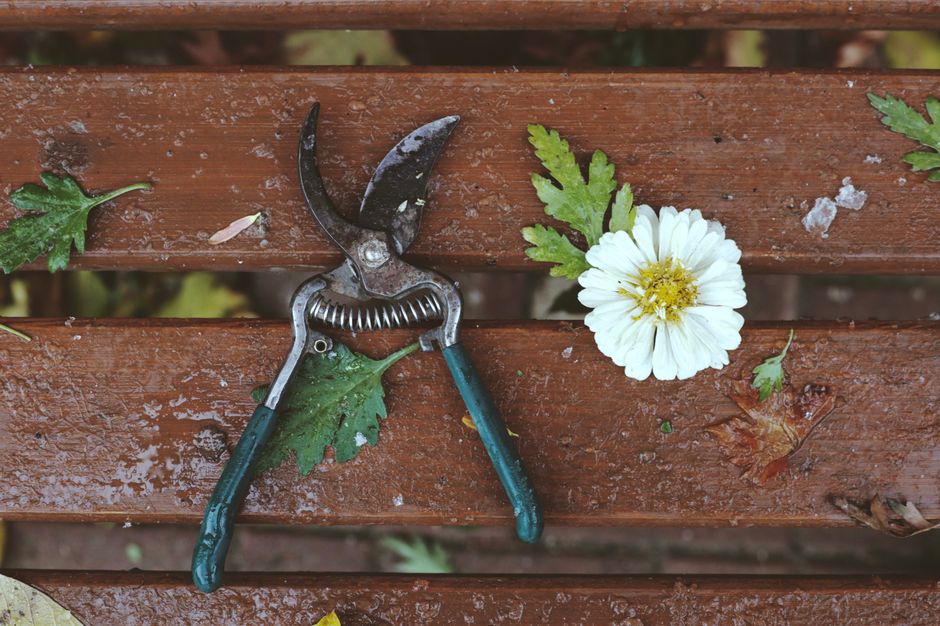
A good pair of loppers handles anything up to about 4cm diameter. For branches larger than that, a pruning saw makes a cleaner cut than loppers struggling to close. Hand pruners (secateurs) are useful for smaller work: water shoots, twig-scale crossing growth.
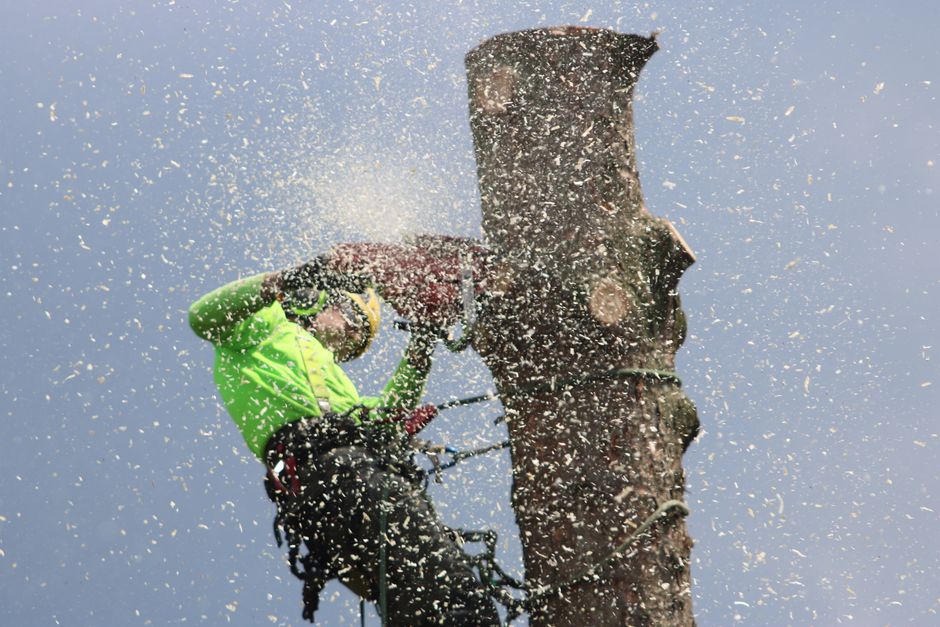
No chainsaw. Olive trees are compact enough that a chainsaw is overkill, and the risk of over-cutting jumps considerably when the tool is faster than your judgement. I once drove out to correct the aftermath of a DIY olive tree job in Cloverdale where someone had essentially limbed a 3-metre tree to a skeleton in about twenty minutes. It recovered. It did not fruit for three years. The chainsaw is fine for felling — not for this.
If the tree is tall enough that you need to reach above your head, use a proper orchard ladder or a step stool designed for outdoor use — not a patio chair. The tree does not need you to fall on it.
For the ISA Certified Arborist finder — if you get to the point where you want a professional assessment before starting on a larger tree — ISA Canada keeps a current directory by region.
Old and overgrown olive trees — the three-year plan
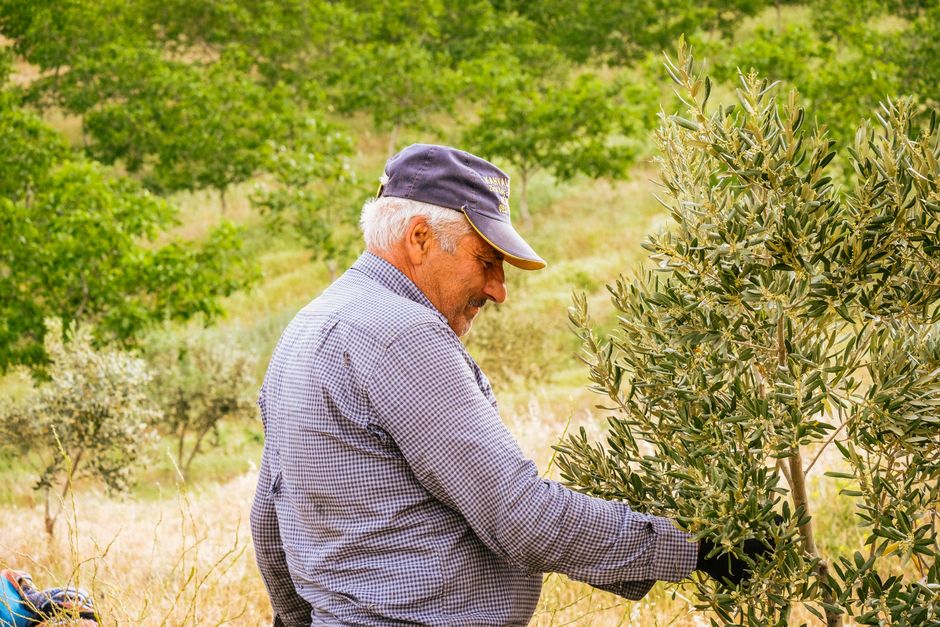
If an olive tree has not been touched in a decade, or has been repeatedly headed into a dense blob, the fix is a renovation prune. This is different from annual maintenance.
A renovation prune removes up to a third of the canopy in year one. No more than that. The tree needs its remaining foliage to produce enough energy to recover from the shock. Over three seasons you gradually open the canopy back to a functional vase shape.
The mistake I see: someone looks at an overgrown tree and removes two-thirds of the canopy in an afternoon. The following spring, the tree responds with a dense thicket of water shoots from every remaining stub. At that point the recovery takes longer than if they had gone slowly.
For a tree that is essentially a large, multi-stemmed shrub: decide which three or four stems to keep as the scaffold, then remove everything else — but stretched over a three-year period, no more than a third per season. Train the chosen stems upward and outward as you go.
Honestly, renovation pruning on a mature tree is the situation where having an arborist involved pays for itself. Not because the technique is complicated, but because getting the scaffold selection wrong in year one costs you several years of corrective work afterward. Our tree pruning service in Langley/Aldergrove covers exactly this kind of multi-year structural work.
Olive trees in pots — what changes
Langley/Aldergrove has a growing number of container olive trees. Zone 7b occasionally drops low enough to damage olives in open ground, and many people prefer the option of moving them under cover in a cold snap. Container trees need the same pruning technique, with two differences.
Scale.A containerised olive should stay smaller. Remove a third to half of new season's growth each spring — more actively than you would a garden tree. This is not the light annual tidy of an in-ground tree; it is ongoing management to keep the canopy proportional to the pot.
Root pruning. Every two to three years, take the tree out of the pot, remove up to a third of the root mass from the outside of the rootball, and repot into fresh soil. Without this, the tree becomes rootbound: roots circle the pot, the tree stresses, and the canopy suffers. This is separate from canopy pruning — do not do both in the same week, as it is a significant shock to the tree.
The Climate Atlas of Canada has a useful tool for checking projected first frost dates in the Fraser Valley — worth a look if you are deciding whether a container tree can safely overwinter outside.
When not to call us
This part, most tree companies skip. I reckon you deserve to hear it.
If your olive tree is under two metres, in good health, and has not been badly pruned in the past — this is a sensible DIY job. Clean loppers, a clear eye for dead wood and water shoots, restraint with the cuts, and you are probably done in under an hour. You do not need to spend money on a call-out for this.
The Royal Horticultural Society's olive care guidance is worth reading before you start — clear, reliable, and free.
Call us for olive trees when:
- The tree is over 4 metres and needs structural work that requires reaching into the canopy safely
- It has not been pruned in more than five years and the renovation approach is required
- You can see cankers, unusual growths, or signs of disease on the branches — these need assessment before pruning, not after
- The tree is near a fence, structure, or power line and any significant branch removal requires rigging
If you are not sure which category your tree is in, give us a call before you start cutting. That conversation costs nothing. Cutting first and then calling costs considerably more, particularly on a renovation case where the scaffold decision matters.