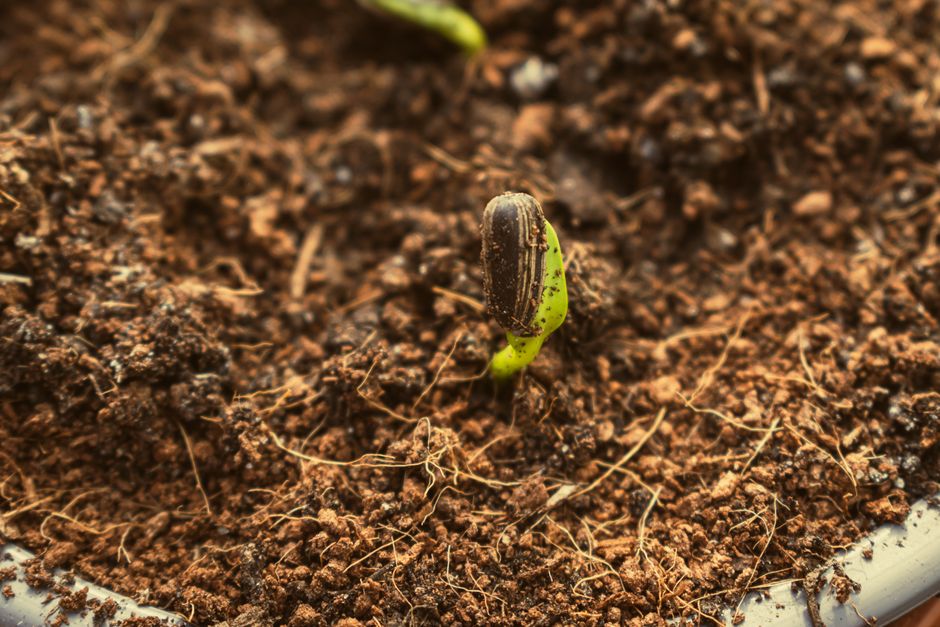
Growing an apple tree from seed is a legitimate project. (If you were expecting apples by next August, I have some news, and it is not the news you wanted.)
The short answer is yes — you can start an apple tree from seed, grow it on, and eventually harvest fruit from it. The longer answer involves cold refrigerators, a multi-year wait, and a tree that will definitely not be the Honeycrisp you started with.
I get asked about this regularly in Surrey and Langley, usually by homeowners who found an apple tree they liked and want more of it, or by someone who just likes growing things from scratch. Both are good reasons. Here is what actually works.
Seed-grown vs. grafted: the honest comparison
Apple trees do not grow true from seed. Every seed in every apple is genetically unique — a cross between the variety you're eating and whatever pollinated it. Plant a Honeycrisp seed and you will get an unnamed seedling that might be sweet, might be bitter, and will almost certainly not resemble Honeycrisp in any meaningful way.
Grafted trees solve this. A grafted tree is a known variety budded onto a rootstock that controls size and fruiting speed. Most nursery grafted trees start fruiting in two to four years. Seed-grown trees take six to ten.
Rule of thumb: if you want reliable fruit from a named variety in a reasonable timeframe, buy a grafted tree. If you want the project — the germination experiment, the years of growing something from nothing, the possibility of discovering a genuinely good unknown variety — seed is the right way to go. Both outcomes are valid.
If you do go the grafted route and need advice on variety selection for Surrey's climate, our fruit tree pruning service includes a planting consultation.
Extracting and preparing the seeds
Start with a mature apple — fully ripe, not store-bought if you can help it (commercial apples are often treated with inhibitors that affect germination). Cut the apple open and remove the seeds from the core.
Wash any fruit residue off under cold water. Lay the seeds on a piece of paper towel and let them air-dry at room temperature for two to three days. Do not use heat. You are not dehydrating them — you are just drying the surface so they don't rot in storage.
Start more seeds than you think you need. Germination rates for apple seeds run around 30–50 percent even under good conditions. If you want three seedlings to grow on, start ten seeds.
Cold stratification — the step most people skip
Apple seeds have a built-in dormancy mechanism. In nature, the seed spends winter in cold ground before spring triggers germination. Without that cold period, the seed won't germinate — or will germinate so poorly it's barely worth attempting.
The fix is cold stratification in your refrigerator. Here is the method that actually works:
Dampen a paper towel — moist, not soaking. Lay your dried seeds on one half, fold the other half over them. Place the whole thing in a zip-lock bag with a small amount of air left in it. Label the bag with the date. Put it in the back of your refrigerator at 1–4°C (not the freezer).
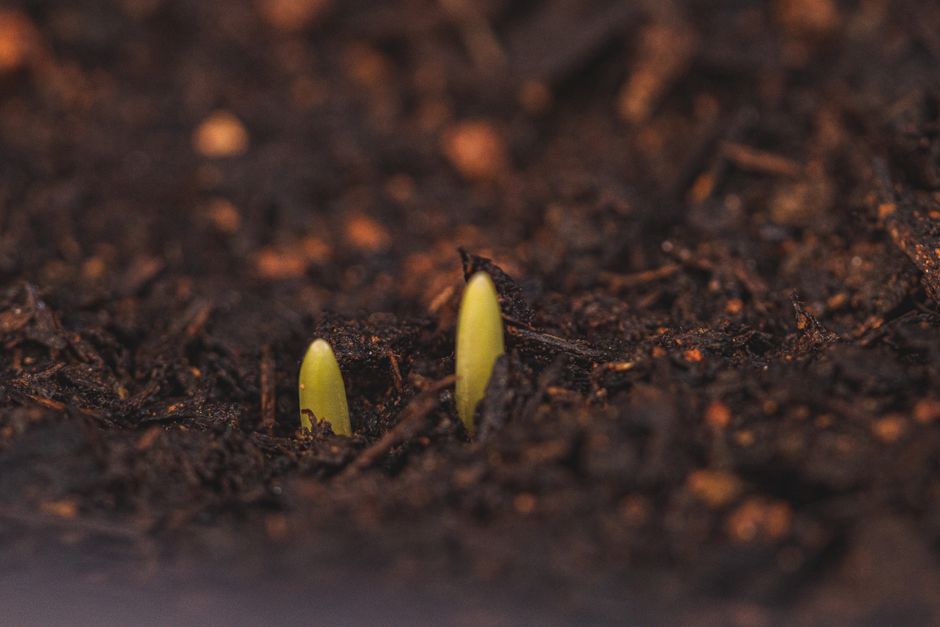
Leave it for six to twelve weeks. Check weekly. You are looking for a small white root tip — a radicle — just beginning to emerge from the seed coat. Once that root tip appears, the seed is ready to plant. If nothing happens after twelve weeks, the seed is likely not viable.
A note for Surrey: if you are starting seeds in October or November, you can use the natural winter as your cold stratification period — plant seeds in small pots and leave them in an unheated garage or cold frame through winter. The fridge method gives you more control, particularly over moisture levels.
The North American Fruit Explorers have thorough guides on cold stratification for multiple apple varieties if you want the specific temperature requirements for seeds you know the parentage of.
Germinating and growing on indoors
Once the radicle is showing, move quickly. Plant the seed root-tip-down in a small pot — a four-inch container works well — filled with a well-draining seed-starting mix. Plant at a depth of roughly twice the seed diameter. Water gently and place in a warm, bright spot: a south-facing windowsill or under a grow light.
Germination to first true leaves typically takes two to four weeks. The first leaves you see are seed leaves (cotyledons) — the true leaves come after. Once you have two to three sets of true leaves, the seedling is ready to think about the world outside.
Keep the soil consistently moist but not waterlogged. Apple seedlings are surprisingly drought-tolerant once established, but they do not recover well from sitting in soggy soil at this stage. Root rot at week three undoes months of stratification work. (I reckon half of all failed seed starts come down to overwatering, not underwatering.)
Transplanting your seedling outside
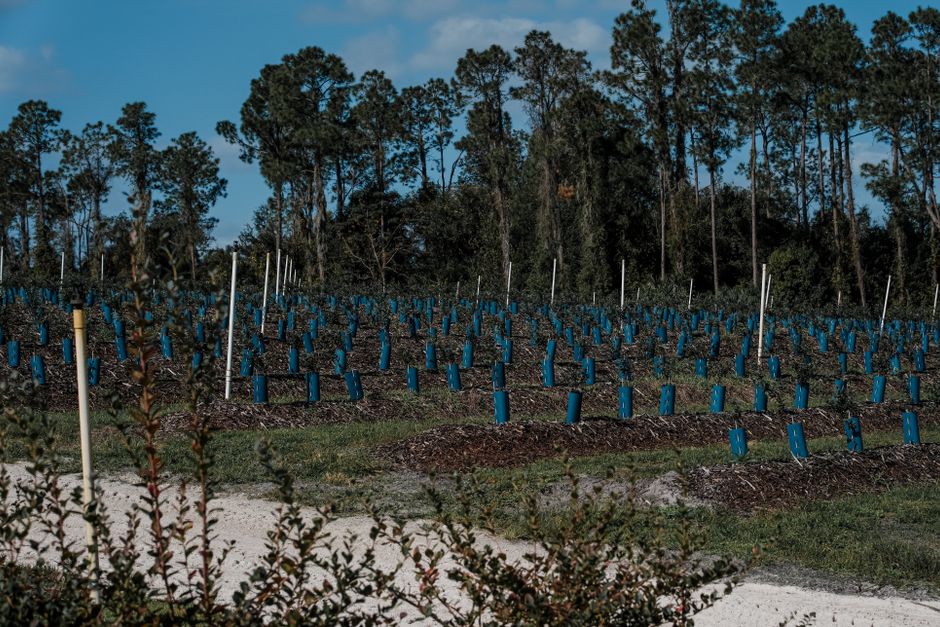
In Surrey, the safe transplant window is late April to mid-May, once night temperatures are consistently above 4°C. Before moving the seedling outside permanently, harden it off: set the pot outside in a sheltered, shaded spot for a few hours each day over one to two weeks, gradually increasing the exposure. This prevents transplant shock from sudden wind and temperature swings.
Choose the planting site carefully. Apple trees need full sun — six or more hours of direct sunlight daily. Well-draining soil is essential. Our Lower Mainland clay soils hold water, so amend the planting hole with compost and consider raised planting if your yard has drainage issues.
Leave room. A seed-grown apple on its own roots can reach eight to twelve metres over twenty years. Space accordingly. If you plant too close to a structure, you will be calling someone like me in ten years to manage the situation — and it will be more complicated than starting in the right spot.
The Canadian Food Inspection Agency publishes growing zone guidance relevant to BC apple culture if you want to cross-reference variety hardiness.
When to bring in an arborist — and when you don't need one
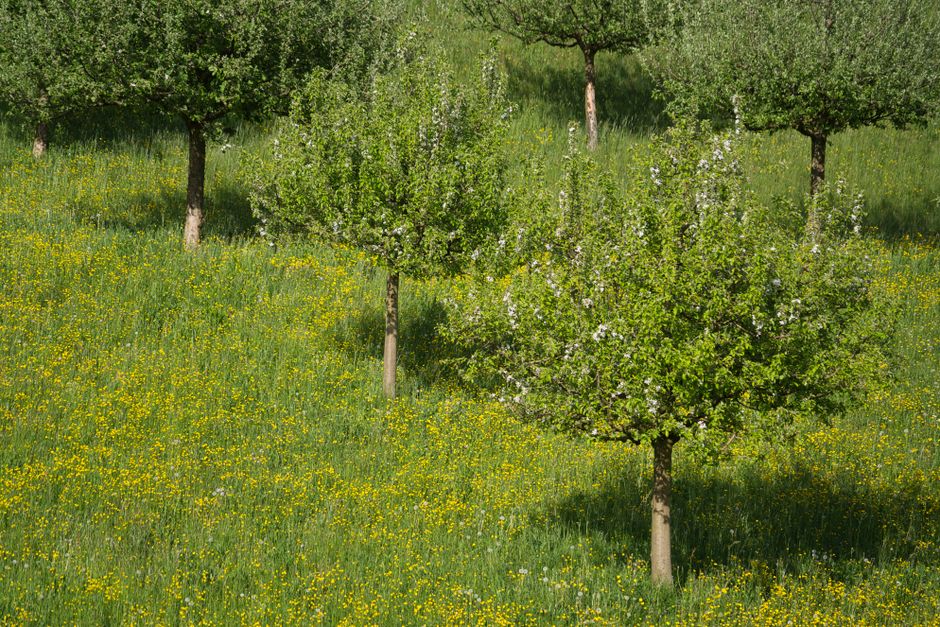
You do not need an arborist to germinate apple seeds or transplant a seedling. That is well within what any patient gardener can manage. But there is a window — typically years three to five — where getting professional advice makes a significant difference to the tree's long-term health and structure.
Around year three, a seed-grown apple starts to develop some size and starts producing competing leaders. Left unmanaged, these create weak branch attachments and a tree that will need corrective work later. Nine times out of ten, the homeowners who come to us with structurally problematic fruit trees had a period between years two and five where the right formative pruning would have changed everything.
A single formative pruning visit for a young apple tree runs $300–$600 depending on access. That visit sets the scaffold branches, removes competing leaders, and gives the tree a structure it can grow into without creating hazards. Compare that to the corrective work needed once the tree is eight metres tall and has four poorly attached leaders — and the early visit looks like a very sensible investment.
The visits you don't need from us: seed extraction, cold stratification, potting up seedlings, hardening off, or transplanting. These are all straightforward with a bit of care. Call us when the tree is tall enough to require a ladder and old enough that pruning decisions have real consequences.
How long until fruit — the honest answer
Six to ten years from seed, assuming reasonable growing conditions, formative pruning at the right stages, and a bit of luck with the genetics. Some seed-grown trees fruit earlier — four to five years on vigorous rootstock in good soil. Some take twelve.
For comparison: a grafted two-year-old nursery tree planted in spring will often produce its first small crop by year two or three after planting. That is a meaningful difference if you actually want apples.
What seed-grown trees do give you, beyond the project itself: deeper root systems that develop over years on their own roots. Better adaptation to your specific soil and microclimate than a grafted tree on standard rootstock. And occasionally — not often, but occasionally — something genuinely interesting in terms of fruit character. There is a reason plant breeders still grow apples from seed. It is the only way to get new varieties.
If you do end up with a tree that produces something you like, an ISA-certified arborist (or a nursery with grafting expertise) can help you propagate it properly — through budding or bench grafting — so you can grow more of that specific variety. At that point you have gone from growing an apple from a seed to creating a new named variety. That is not a bad place to end up.