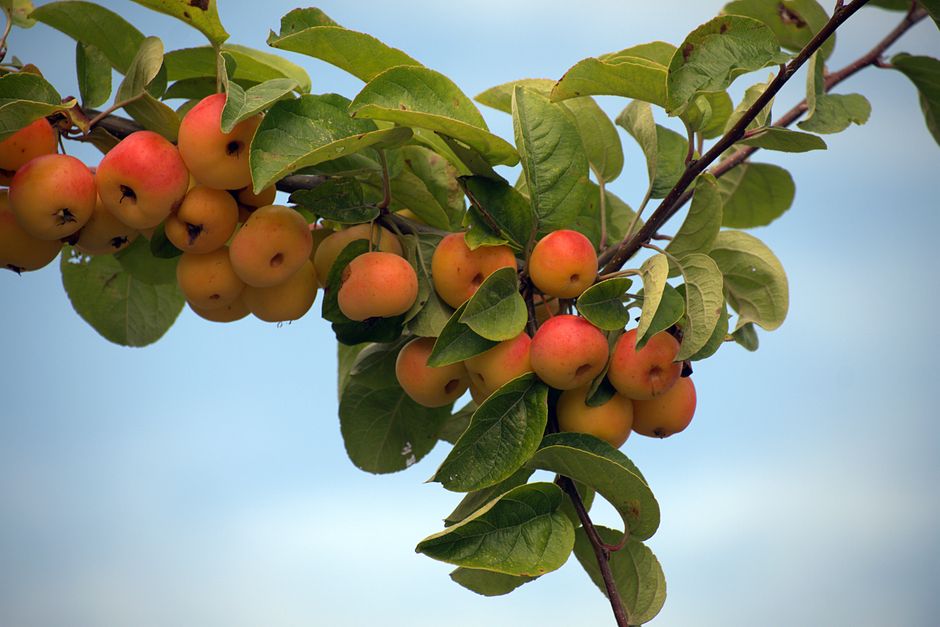
Growing an apple tree takes patience — which is probably why the expression is "the apple doesn't fall far from the tree" and not "the apple falls immediately and in abundance starting year one." The honest answer: 3 to 5 years from a grafted sapling, or 7 to 10 years grown from seed. Which category you're in changes everything about expectations, care, and whether the tree is worth planting in the first place.
I get this question a lot in spring, usually from homeowners who just planted something from a nursery and are already mentally designing the jam jars. The answer they want is "next summer." The answer I give them is more useful.
The honest timeline
The question "how long does an apple tree take to grow" has two separate answers depending on what you mean by "grow."
If you mean when the tree physically looks like an apple tree — that's 2 to 3 years from a decent sapling.
If you mean when it actually produces apples you can eat — that's 3 to 5 years for a grafted dwarf or semi-dwarf, and 5 to 9 years for a standard tree. The confusion often comes from mixing these two things up.
A tree can look healthy and established for years before it decides to start fruiting. This isn't a malfunction. The tree is spending its energy on root and framework development. Once that foundation is solid, fruit follows.
Quick reference by type:Dwarf rootstock — first fruit in 2–3 years. Semi-dwarf — 3–5 years. Standard — 5–9 years. Grown from seed — 7–10 years, and the fruit won't be the variety you started with.
Grafted trees bought from nurseries are already 1 to 2 years old when you get them. That head start is built into the 3–5 year estimate. A tree planted as bare root in February in Langley has usually already gone through a winter cycle at the nursery. You're not starting from zero.
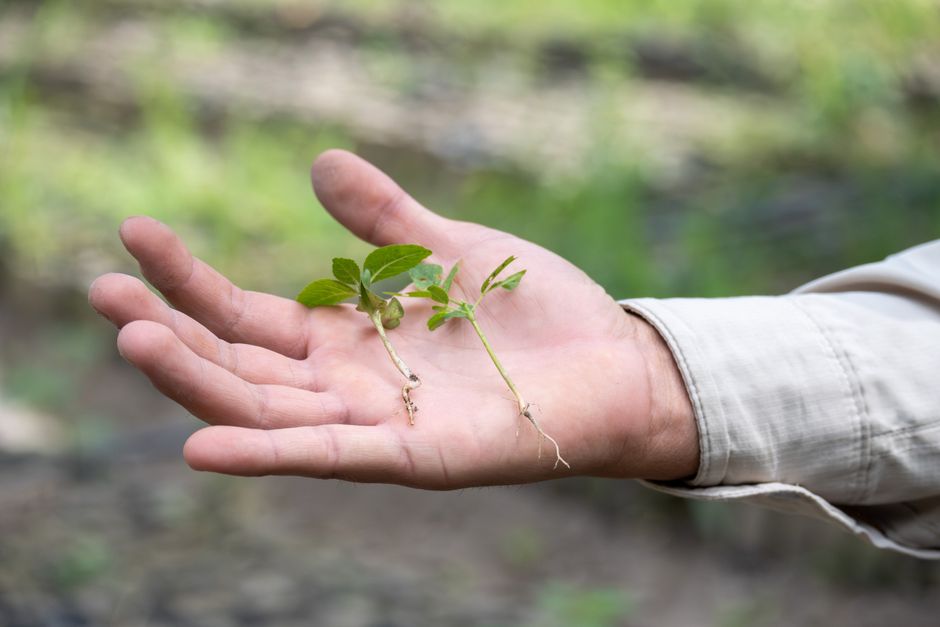
Seed vs. grafted — the most important decision
Most homeowners in Surrey or Langley who want apples in a reasonable timeframe should buy a grafted tree from a nursery. That's the whole paragraph.
Growing from seed takes 7 to 10 years to first fruit — and the bigger problem is that the resulting tree almost certainly won't produce the apple you started with. Apples don't grow true to type from seed. Plant a Honeycrisp seed and you'll get a tree, but the apple will be something else entirely. Probably edible. Maybe interesting. Almost certainly not Honeycrisp.
This matters because the varieties worth eating — Gala, Honeycrisp, Fuji, Spartan — exist because someone grafted them onto reliable rootstock and propagated them deliberately. The flavour, size, and disease resistance you're paying for at a nursery is guaranteed by that process. A seed carries none of that guarantee.
I'm not saying never grow from seed. Some people enjoy the experiment, and a small percentage produce something worth keeping. But if your goal is a specific variety of apple in a predictable timeframe, buy the grafted tree. The difference is 4 to 7 years, which is a long time to wait for a fruit you can't name.
Rootstock types and what they mean
The rootstock your tree is grafted onto determines more about its growth speed and timeline than any other single choice. Nurseries typically sell three categories:
Dwarf rootstock (M9, M27) — Trees reaching 6 to 10 feet. First fruit in 2 to 3 years. Shorter lifespan of 15 to 20 years. Needs staking and consistent irrigation. Good for small urban lots.
Semi-dwarf rootstock (M7, MM106) — 12 to 16 feet. First fruit in 3 to 5 years. The most common choice for Surrey and Langley residential properties. Better root stability than dwarf, still manageable for annual pruning without equipment.
Standard rootstock (seedling rootstock) — 20 feet or more. Takes 5 to 9 years to first fruit. Lives 50 to 100 years. Harder to manage and harvest without a ladder. Better suited to larger properties where longevity matters more than convenience.
Rule of thumb: if you have a standard urban lot in Surrey and want fruit without a ladder rental every September, semi-dwarf is the right call. Most of the nurseries in the Lower Mainland stock it as their default.
Year by year after planting
Here's what to actually expect from a grafted semi-dwarf sapling planted in spring in the Lower Mainland:
Year 1:Establishment. The tree is focused entirely on root growth. Don't expect much above ground. Water consistently through the dry BC summer — the first year is when trees fail, and they fail from drought. Don't fertilize heavily. You're letting the root system settle, not forcing growth.
Year 2:Visible growth. New branches forming the basic scaffold. This is the right time to start training the tree's shape — which branches become the main framework matters a lot for fruit production later. Remove anything crossing back toward the centre and any competing leaders.
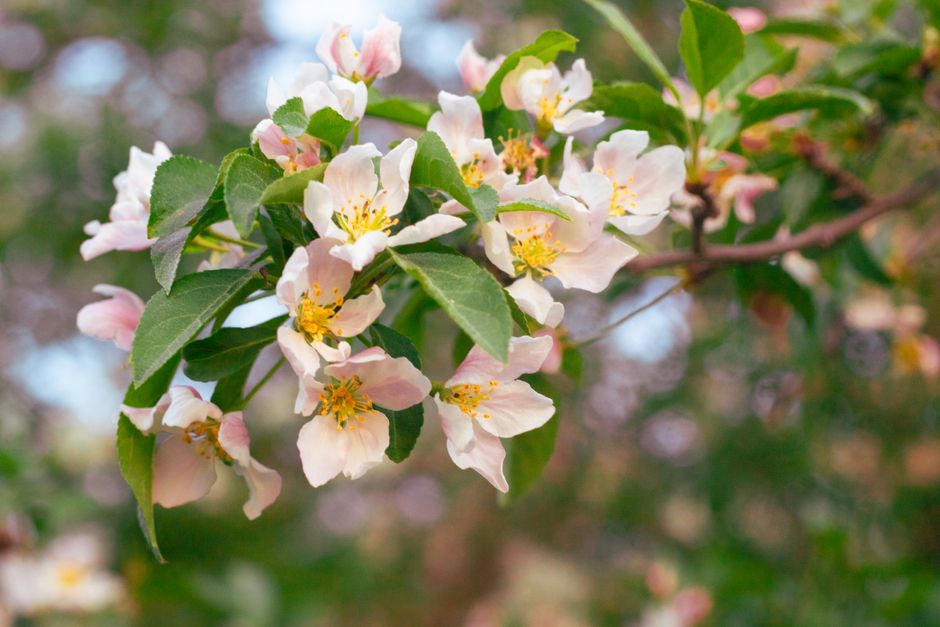
Year 3:Possibly some blossoms. Don't get attached. Many arborists recommend pinching off blossoms in years 3 and 4 to redirect energy into the framework. It feels wrong every time. It's still the right call — a tree that fruits too early often struggles to establish a strong scaffold.
Years 4–5: First real fruit. Not a full harvest — maybe a dozen apples, depending on the tree and the season. But the tree is now capable, and what follows is consistent management rather than establishment.
Year 7 and beyond:Peak production. A well-managed semi-dwarf in good soil will produce 100 to 200 pounds of fruit per year. More than enough to justify the wait, and enough to make you wish you'd planted two.
A homeowner in White Rock came to me a few years back with an apple tree she'd been "helping" by pruning it hard every summer to keep it small. Beautiful shape, healthy bark, and zero fruit for three years running. Hard summer pruning pushes vegetative growth — the tree was putting everything into leaves because we kept removing the fruiting wood. Proper dormant-season pruning (late February in BC) corrected it. She had a solid harvest the following year.
What slows an apple tree down
The question isn't just how long it takes — it's why it sometimes takes longer than it should. A few common culprits in the Lower Mainland:
No cross-pollination partner.Most apple trees need a second variety nearby to set fruit. Self-fertile varieties exist — Spartan is one of the better ones for BC — but even these do better with a pollination partner. If your tree is flowering abundantly but not setting fruit, this is the first thing to investigate. Your neighbour's apple tree can do the job if it's within 30 metres and flowers at roughly the same time.
Wrong site. Apple trees want full sun — six hours minimum. In a yard where a large cedar or Douglas fir is shading the afternoon, the apple tree will grow but fruit production will be poor. This is manageable with proper tree management of the competing canopy, but better avoided at the planting stage.
Heavy pruning done wrong. Pruning too hard in the wrong season redirects energy to vegetative growth rather than fruiting. Late winter in BC — February to early March, before bud break — is the right window for apple trees. Pruning hard in late summer or early fall is when things go wrong.
Nitrogen overload. Fertilize too generously and the tree produces beautiful leaves and almost no fruit. Apple trees in decent Lower Mainland soil often need no fertilizer at all. Have your soil tested before adding anything. The BC Ministry of Agriculture's soil management resources have solid guidance on this.
Biennial bearing. Some apple varieties (Cox, Bramley) naturally produce heavy crops every other year and almost nothing in between. If you had a banner crop last year and nothing this year, this is probably why. Management involves thinning the crop in the heavy years to encourage more consistent production. It's covered in most apple tree pruning guides and worth reading if consistency matters to you.
Growing apple trees in Surrey and the Lower Mainland
BC's Lower Mainland has a genuinely good climate for apples. Mild winters, reliable chill hours, and long growing seasons are why the Fraser Valley has commercial orchards. For residential growers in Surrey, Langley, and White Rock, the conditions are better than most of Canada.
Varieties that do well here: Honeycrisp, Gala, Fuji, Spartan, Cox, and Gravenstein. For the disease-resistant route (recommended if you're not planning a spray program), Liberty, Freedom, and Enterprise all perform well in the Lower Mainland.
Chill hours matter. Most apple varieties need 800 to 1,500 chill hours (hours below 7°C) over winter to break dormancy properly. Surrey and Langley typically provide 800 to 1,100 hours — enough for most standard varieties, but not for high-chill cultivars like some Fuji strains. Check the chill hour requirement before you buy. The ISA's tree care resources and your nursery can confirm what's appropriate for your specific location.
Late frost risk.We occasionally get a hard frost in April or early May. A tree already in full flower can lose its entire year's fruit crop in a single cold night. There's no practical fix for most residential growers — it's a real risk of coastal BC spring weather. The good news is it doesn't happen every year, and the tree itself is fine — just fruitless for that season.
Wet spring disease pressure. Apple scab and fire blight are both common in wet BC springs. Choosing disease-resistant varieties reduces this significantly. Nine times out of ten, the homeowners who call me about a struggling apple tree have one of two non-native, disease-susceptible varieties planted in partial shade. Fix the variety and fix the light, and most problems resolve themselves.
When not to call us
Most of what goes into growing an apple tree is DIY territory. Planting, watering, basic dormant pruning — a competent homeowner can handle all of it with a decent reference and some patience. Pruning fruit trees for winter is a skill that takes one season to learn and serves you for decades.
Don't call an arborist to plant a young tree. Don't call an arborist to water it. Don't call an arborist to thin fruit in summer — that's a half-hour job with your hands and a bucket.
Do call an arborist when:
The tree has grown above 20 feet. At that height, branch removal near structures and power lines requires proper rigging and insurance. I've seen a lot of DIY gone wrong at tall trees. The cost savings are not worth the injury risk.
The tree has structural problems. Fire blight that's spread into major scaffold branches, a trunk with visible decay, or multiple competing leaders all benefit from a professional assessment. Not because diagnosis is complicated, but because the intervention sometimes is.
You're removing it entirely. An established 15-year apple tree has a meaningful root system. Removal and stump grinding is half a day for a crew with equipment. Not a weekend project. If you want a ballpark, small tree removal in Surrey runs $400–$650 all-in — stump included.
For anything else: a good book, a fifteen-minute call to a local nursery, or a single $150 consultation if you want experienced eyes on the property. That consultation is credited toward any work we do. But honestly, if it's a young tree in good soil with full sun and a pollination partner, it mostly wants to be left alone.
Frequently asked
- How long does a grafted apple tree take to produce fruit?
- Most grafted dwarf or semi-dwarf trees from a nursery produce their first fruit in 3–5 years. The exact timeline depends on the rootstock, variety, and growing conditions. Dwarf trees on M9 rootstock often fruit in year 2 or 3. Semi-dwarf trees typically reach their first real harvest by year 4 or 5.
- How long does an apple tree grown from seed take?
- Expect 7 to 10 years before first fruit — and the tree almost certainly won't produce the same variety as the seed you planted. Apple seeds don't grow true to type. Plant a Honeycrisp seed and you'll get a tree, but the apple will be something else entirely. Buy a grafted tree if fruit production is the goal.
- Do dwarf apple trees produce fruit faster?
- Yes. Dwarf trees on M9 or M26 rootstock typically fruit in 2 to 3 years. The tradeoff is a shorter lifespan (15–20 years) and the need for staking and consistent irrigation. Semi-dwarf trees take a year or two longer but are more self-sufficient and live 25 to 40 years.
- Why isn't my apple tree producing fruit after 5 years?
- The most common reasons: no cross-pollination partner nearby, insufficient sunlight, over-fertilization with nitrogen, or pruning done too hard or at the wrong time. Check pollination first — a second apple variety within 30 metres solves this more often than not. Most apple varieties are not fully self-fertile.
- What's the fastest apple tree variety to fruit in BC?
- Growth rate and fruiting rate aren't the same thing. For the fastest path to fruit in the Lower Mainland, Gala or Fuji on a dwarf rootstock is a reliable combination. Spartan is also fast to fruit and partially self-fertile, which removes the pollination variable.
- Can I speed up apple tree growth?
- Within limits. Adequate water in the first two years, good drainage, and full sun all help. Have your soil tested before adding fertilizer — nitrogen-heavy soils produce leaves at the expense of fruit. What doesn't work: heavy pruning, forcing growth with fertilizer, or rushing the root establishment process.
- How long do apple trees live?
- A standard-rootstock apple tree, well maintained, can live 50 to 100 years and produce fruit for most of that time. Dwarf trees on M9 rootstock typically live 15 to 20 years. Semi-dwarf trees sit in between — around 25 to 40 years of productive life with consistent care.
- When is the best time to plant an apple tree in Surrey BC?
- Bare-root trees: February or March while they're still dormant. Container-grown trees: spring through early fall, with spring being best for root establishment before the dry BC summer. Avoid planting in November and December when the soil is waterlogged. The first summer after planting is the most critical — don't let a new tree go thirsty.