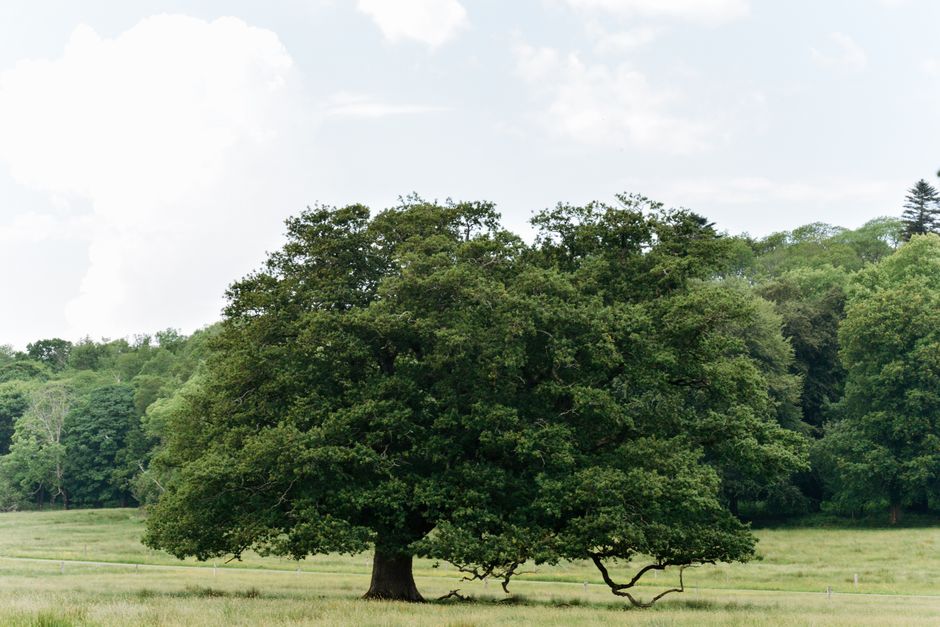
Plant an oak in Surrey and you're writing a cheque your grandchildren will cash. That's not a criticism — it's just the nature of the species.
An oak tree typically grows 1 to 2 feet per year for the first couple of decades. At 20 years it's a young tree with a decent canopy but nothing you'd call impressive. At 50 it looks like what people picture when they think "oak tree." At 80 it's genuinely mature — trunk girth that takes two arms to reach around, a crown worth protecting.
Quick answer: An oak takes 20–50 years to reach a size most people would call a proper landscape tree. Full maturity is 80–200 years depending on species. If you have a mature oak on your property, that tree is not replaceable on a human timeline. Protect it accordingly.
I reckon most homeowners asking about oak growth have one of two questions: how long until this sapling I planted actually looks like something? Or what happens if I have to remove this enormous old thing to build an extension?
Both are worth answering. But the better question is: what do I do in the first 10 years so I don't create problems later?
How fast does an oak tree grow per year?
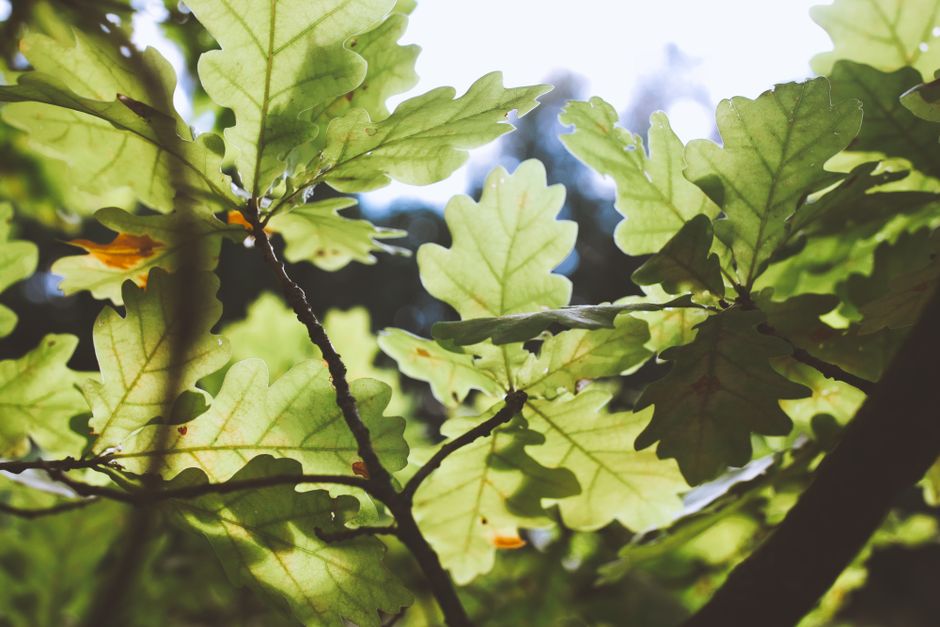
The honest range is 1 to 3 feet per year. You'll read that number everywhere, and it's technically accurate — but it covers a wide story.
For the first five years, most oaks put more energy into roots than canopy. Top growth is modest — sometimes under a foot a year — while the root system spreads and anchors itself. This is the phase where homeowners get impatient and start wondering if their tree is dying. It isn't. It's working. (This is, I'll grant you, more patience than most people expect when they buy a tree at the nursery.)
From years 5 to 20, top growth accelerates. Under normal Surrey conditions — decent rainfall, decent drainage, no major competition from structures or other trees — you'll see 12 to 24 inches of height per year. A healthy red oak in a good-sized yard can push 2 feet a year during this stretch.
Past 30, the growth slows again. Not because the tree is struggling — because the energy that once went into height now goes into thickening the trunk and extending the canopy. A 60-year-old oak isn't growing fast. It's becoming magnificent, which is a different kind of growth.
Rule of thumb: after 10 years you'll have a tree that casts some shade. After 20 you'll have one that casts a lot. After 50 you'll have a tree that defines the property.
Decade-by-decade timeline
Here's what to expect, starting from a sapling or containerised nursery tree:
| Age | What to expect |
|---|---|
| Years 1–5 | Root establishment. Top growth is slow — under 12 inches per year is normal. Don't panic. |
| Years 5–15 | Canopy starts developing. Height 8–20 feet. This is the window for formative pruning. |
| Years 15–30 | Significant height gain. Tree becomes a real presence. Canopy spreads noticeably. |
| Years 30–60 | Maturation. Trunk girth builds. Tree reaches characteristic shape for the species. |
| Years 60+ | Full maturity. A monument. Pruning now is about safety, not shaping. |
The formative pruning window — years 5 to 15 — is worth flagging. The decisions you make about the crown structure during those years will last 50 years. A well-shaped young oak at year 10 will never need the kind of intervention a neglected one at year 30 sometimes requires.
I've seen it go the other way too. A homeowner came to us a few years back with a 25-year-old oak that had developed four competing leaders because no one had done anything with it when it was young. Crown reduction got the situation under control, but it was a more involved job than a couple of pruning visits at year 5 and 10 would have been.
When does an oak tree start producing acorns?
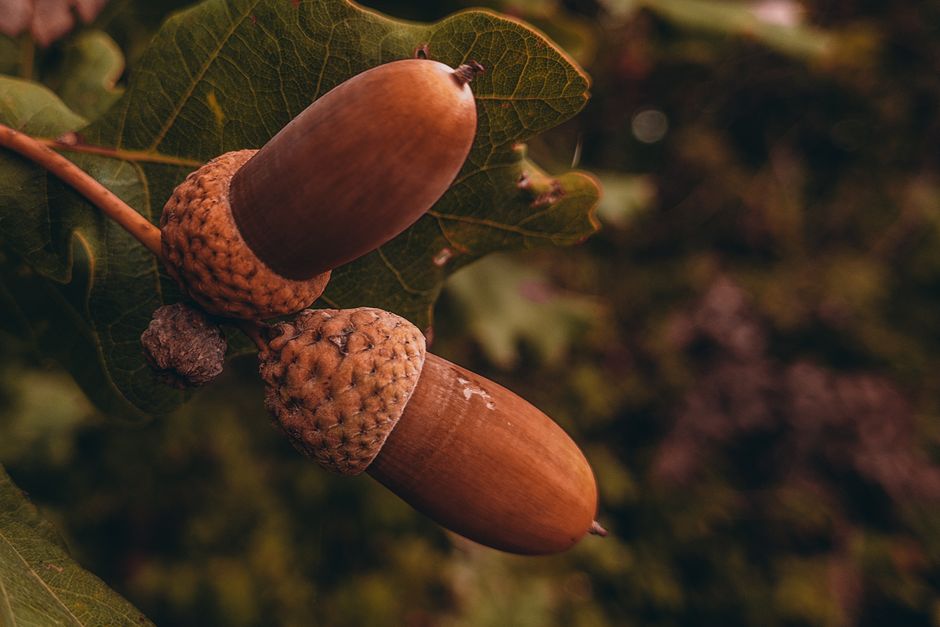
Most oaks don't produce acorns until they're 20–50 years old. This surprises people every time. You plant a sapling, wait five years, and wonder where the acorns are.
They're not coming yet. White oaks typically start around 20 years. Red oaks are similar. Garry oaks — BC's native species — can start somewhat earlier under the right conditions, but 25–30 years is more realistic.
Once they start producing, acorn crops come in cycles. Good mast years happen every 2–5 years, with lean years in between. The tree isn't being inconsistent. It's being strategic — a large crop overwhelms local wildlife, meaning more acorns survive to germinate. Trees are more considered than they look.
If you're planting an oak and hoping to see acorns in your lifetime, that's almost certainly possible. If you're planting one and hoping to see acorns in the next five years, plant something else.
Garry oak in BC — what actually grows here
Most online guides about oak growth are written by Americans describing red oaks and white oaks in the eastern US. That's not what's naturally growing in Surrey.
BC's native oak is the Garry oak (Quercus garryana). It grows naturally on Vancouver Island, the Gulf Islands, and along the south coast of the mainland. In Surrey, it's the species that belongs here — ecologically appropriate, climate-adapted, and worth protecting when it's already there.
A few things worth knowing about Garry oaks specifically:
Growth rate. Somewhat slower than eastern red oak — typically 8 to 15 inches per year under good conditions. They trade speed for longevity. A well-sited Garry oak in BC can live 500 years. BC's Ministry of Environment reports some Garry oaks on Vancouver Island exceeding 400 years of age.
Shape. Garry oaks develop a distinctive gnarled, open-crowned form with age. This is not poor health — it's how they grow. People sometimes mistake the natural lean and spread of an older Garry oak for "out of control" growth. It isn't. It's the tree doing exactly what it should.
Moisture needs. They prefer dry summers. Overwatering or planting too close to lawn irrigation systems stresses them badly. They don't want waterlogged roots, and they don't want grass competing for moisture in their early years.
A few years back we assessed a Garry oak in Surrey that was flagged for removal by another company because it was "leaning and unsafe." The lean was natural — toward the light, as Garry oaks do on the south side of a property. The tree was 120 years old and structurally sound. We did crown thinning and deadwood removal. The homeowner saved $1,450 and kept a heritage tree. It's still there.
If someone quotes you for removal of an old Garry oak on your property, get a second opinion before you agree. A 120-year-old tree is not replaceable. The Garry Oak Meadow Preservation Society is a good resource if you want to understand what you've got.
What affects growth in the Fraser Valley?
The same species planted two kilometres apart can perform very differently. Here's what makes the real difference in Greater Vancouver conditions:
Soil. Sandy loam with good drainage gives you the best growth rates. Heavy clay — common in parts of Surrey and Langley — slows things down and stresses roots. Soil amendment at planting makes a measurable difference in years 1–10.
Sunlight. Full sun is the baseline. An oak in full shade grows at maybe half the rate of one in full sun. If you're planting under an existing canopy, expect slow going for years.
Summer drought. BC's south coast gets plenty of winter rain. The problem is summer. July and August in Surrey average very low rainfall. Young oaks under five years benefit from supplemental watering through the dry months. Established oaks at 10+ years generally manage on their own.
Planting site. Give it room. An oak in a tight planting bed next to a driveway is working against itself from day one. A mature oak needs 20 to 40 feet of canopy space. That's not always possible on a suburban Surrey property — in which case a Garry oak, with its slower growth and more manageable canopy, is often the better choice than a red oak that will eventually demand more space than you have.
When to start pruning your oak — and how often
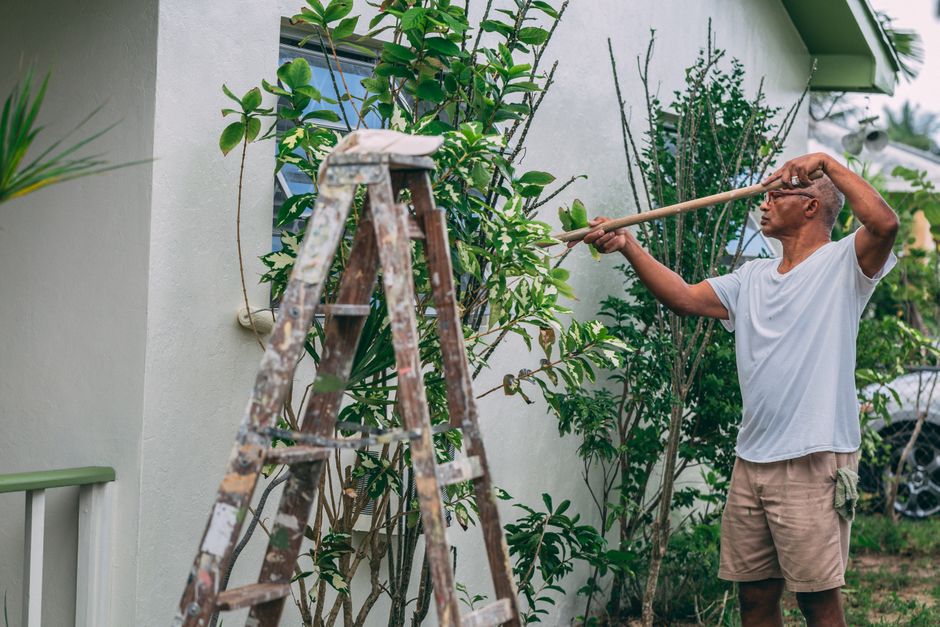
The best time to prune oaks in BC is late winter — February to early March — before bud break and before sap beetles become active. Sap beetles spread oak wilt, and fresh pruning cuts made during warm months attract them. Late winter pruning keeps that risk low.
Formative pruning (years 3–10). Focus on building a strong central leader and removing any crossing or competing branches. The cuts are small, the tree heals quickly, and you're setting up the structure for the next 80 years. This is low-stakes, high-reward work. An ISA-certified arborist can do formative pruning on a young oak in under an hour.
Maintenance pruning (years 10–30). Every 3–5 years, remove deadwood, thin the crown slightly for wind resistance, and check for structural concerns. Not optional if the tree is within fall distance of a structure. For more on our tree pruning services in Surrey — that's the page to look at.
Mature tree work (30+ years). This is where the stakes go up. A mature oak near a structure is not a DIY job. The structural assessment alone requires training — you're evaluating root plate health, union angles, internal decay. I reckon nine out of ten mature oaks I assess don't need removal. They need honest evaluation and sometimes modest work. The ones that do come down usually have root plate failure or extensive internal decay. A trained eye spots those years before the tree actually fails.
For more detail on when and how to prune oak trees, that post covers it specifically.
When not to call us
I'll say this even though it's not optimal for our booking calendar.
If your oak is under 10 years old and you want some light formative pruning, you can learn to do that yourself. The ISA publishes good guidance on pruning cuts — clean cuts just outside the branch collar, no stubs, no more than 10–15% of the canopy removed in any one year. Get decent hand pruners and spend an hour in late February.
Skip calling us for:
- Young saplings under 15 feet with minor shape issues — the ISA guide covers it
- Acorn cleanup — a rake and a weekend, not a crew
- Small deadwood on branches you can reach safely from the ground
Do give us a call for:
- Any crown work on a tree over 20 feet
- Structural concerns on a mature tree — especially within fall distance of the house
- Dead branches larger than your wrist
- Anything near power lines
- The pre-storm assessment — BC's storm season runs October to March. If you want your oaks looked at before it starts, book in September. You will not be the only person calling in November after the first windstorm, and the wait gets longer fast.
If you're not sure which bucket yours falls into, give us a call at (437) 771-4741. That conversation costs nothing, and nine times out of ten we can tell you in five minutes.