
Oak trees are patient. They've been here for 200 years in some cases. They'll wait for you to get around to pruning them. (They do not, however, wait for you to do it at the right time of year.)
The best time to prune oak trees in BC is November through March. Not "winter-ish." Not "before it gets warm." November through March. That window exists for a specific reason, and ignoring it can turn a routine pruning visit into a tree health problem that follows the oak for years.
Quick answer: Prune your oak between November 1 and March 31. Fresh cuts during warm months attract beetles that can spread oak diseases through the sapwood. If you have storm damage or a genuine hazard in summer, prune and seal the cuts immediately. For routine maintenance, wait for dormancy — the tree will thank you.

The pruning window — November through March
When an oak is dormant, two things happen. Its growth slows down, and it stops producing the fresh sap that attracts sap-feeding beetles. Those beetles matter because they're the main vector for fungal pathogens that damage oak sapwood.
November through March in the Lower Mainland is reliably cool. Beetle activity is low. A pruning cut made in January closes off faster than one made in July. The tree compartmentalises the wound — seals it off from the rest of the vascular system — without the race against a warm-season infection window.
The International Society of Arboriculture's guidance on oak health is consistent on this: dormant season pruning reduces disease risk. That's not opinion — it's the same recommendation from every credible arboricultural body in North America.
Rule of thumb: if there are leaves on the oak, think twice before cutting anything larger than a dead branch. If the tree is bare, you're in the window.
What happens when you prune at the wrong time
Summer pruning on oaks isn't catastrophic in every case. But it's a gamble you're making on behalf of a tree that might be 150 years old. I'd rather not take that bet.
Fresh pruning cuts in warm weather produce sap that's chemically attractive to certain beetles — specifically the ones that carry fungal spores from tree to tree. Once those spores get into the vascular system, the tree starts blocking its own water transport pathways as a defence mechanism. You end up with wilting, dieback, and in severe cases, full crown collapse.
If you're dealing with storm damage or a hazardous branch in summer, prune it — obviously. But seal the cut immediately with pruning paint or wound sealant, and monitor the tree through the season. Then have an arborist look at the pruning work during the next dormant window to assess healing.
If a company offers to prune your oak in June for a good price, ask them why they're not recommending November. Their answer will tell you something.

Garry oak: the BC species that needs extra care
BC has one native oak: the Garry oak (Quercus garryana). It grows on the south coast — the Gulf Islands, the Saanich Peninsula, and scattered through the Lower Mainland. Some of the ones still standing are 200 years old. They were here before most of the city.
Native species outperform introduced ones in BC. A Garry oak is adapted to local pests, local soil, local rainfall patterns. It doesn't struggle the way a non-native species does. But it's also not replaceable. When it's gone, it's gone. The seedling you plant instead will be a mature Garry oak in 80 years, give or take.
I assessed a Garry oak a few years back in Surrey. The homeowner had a quote for $2,400 removal — the tree was "leaning" and "unsafe." What I found: natural growth lean, not structural failure lean. Two were different things. Minor deadwood removal ($300) and crown thinning to improve the sightline to their garage ($650). No removal needed. They kept a 120-year-old tree and saved $1,450.
The Garry Oak Ecosystems Recovery Team has resources on heritage oak identification and preservation if you want to understand what you're working with before anyone touches your tree.
Before removing a mature oak anywhere in the Surrey or Fraser Valley area, get a second opinion. The assessment costs $150. It's credited toward the work if you proceed. A lot of oak removals I've seen quoted were trees that didn't need to come down.
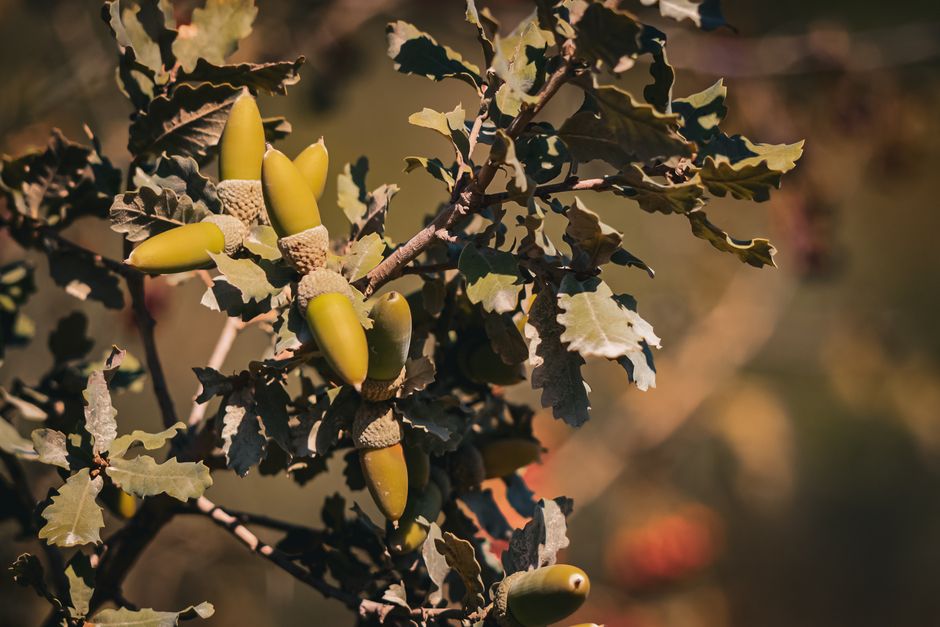
What proper oak pruning actually involves
An oak pruning visit isn't just showing up with a saw. There's a sequence, and shortcuts in that sequence are where trees get damaged.
Assessment first. Walk the tree. Identify deadwood. Identify crossing or rubbing branches. Identify the branch structure — which limbs are load-bearing, which are secondary growth, which crossing branches are a problem now versus a problem forming. None of this takes long with experience. But skipping it means the wrong cuts happen.
Cuts outside the branch collar. The collar is the slightly raised tissue at the base of a branch where it meets the trunk. Cut outside it, the tree heals. Cut through it or flush to the trunk, you've removed the tissue responsible for closing the wound. That stub decays. And decay on an oak can work inward.
No more than 25% of the canopy removed in a single visit. Taking more than that shocks the tree's ability to produce energy. The standard for crown thinning on mature trees is gradual — spread major work across multiple seasons if the tree is in poor condition.
No climbing spikes on oaks. Spikes damage the bark and create wound sites all the way up the tree. There are better techniques. If someone's approaching your oak with spikes strapped to their boots, ask them to stop.

What oak pruning costs in Surrey
Nobody lists prices. Here's what we actually charge.
| Service | Rate (CAD) |
|---|---|
| Crown thinning (standard residential oak) | $300–$800 |
| Deadwood removal | $250–$600 |
| Crown reduction (20–30% size reduction) | $500–$1,200 |
| Tree assessment / consultation | $150 (credited toward work) |
| Full removal (if required) | $800–$1,400 for medium oaks |
Stump grinding is included in removal quotes — that's part of finishing the job properly. Some companies quote removal without it and add it later. I reckon you should know that before you accept anyone's number.
For a full look at what we cover across all tree work in the area, see our tree services in Surrey and the Fraser Valley.
When you don't need to call an arborist
Honestly, there's a fair bit of oak pruning a careful homeowner can handle themselves.
Do it yourself if: the branch is under 2 inches in diameter, it's below shoulder height, you have a clean sharp saw, and you can clearly see the branch collar. Make the cut just outside the collar, not flush to the trunk and not leaving a long stub. That's it. Clean tools between cuts if you're moving between multiple trees.
Call an arborist for: anything requiring a ladder, anything over 2–3 inches in diameter, deadwood in the upper canopy, branches over your house or vehicle, any structural pruning decisions, or if the tree is over 20 feet. The injury risk on a tall tree isn't worth the saving. And a bad cut on a mature oak costs more to remediate than the arborist would have charged in the first place.
I've seen the DIY maple disaster enough times to have an opinion about it. (Short version: the homeowner pruned severely, left stubs, created competing leaders. Two years later it looked worse than before and cost $800 to properly remediate — more than it would have cost to do it right from the start.)