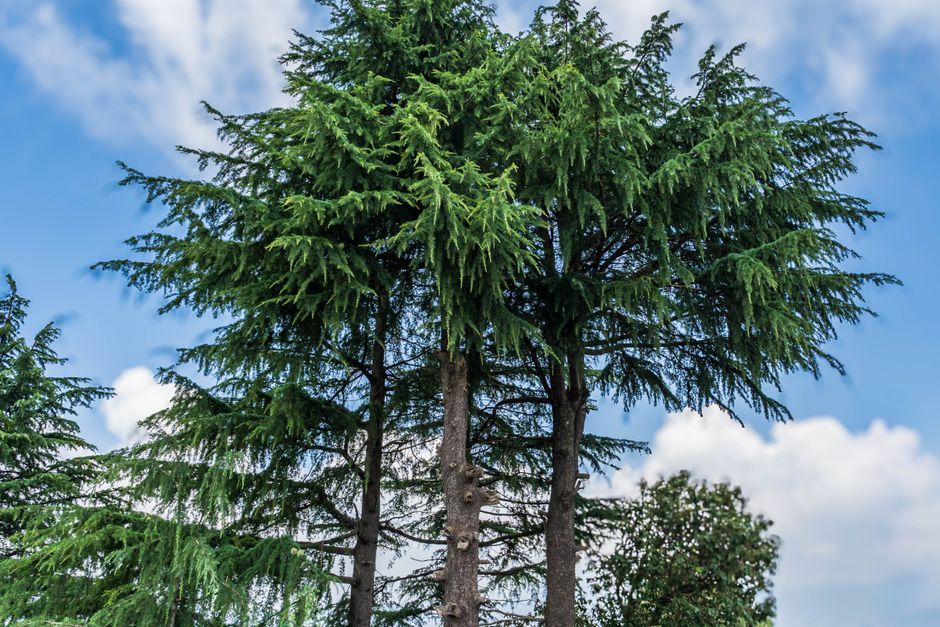
Western hemlock is BC’s provincial tree. Most Surrey homeowners have at least one on their property — and most of them don’t know it.
That’s not a criticism. A lot of BC confuses hemlock with Douglas fir, spruce, or young cedar. The hemlock doesn’t mind. It’ll grow in more shade than almost any other conifer on the coast, which is exactly how it ends up in the understorey of half the yards in the Fraser Valley without anyone planting it on purpose.
Direct answer: Western hemlock (Tsuga heterophylla) is a large native evergreen identified by its drooping tip, flat two-toned needles, and small papery cones. It’s generally low-maintenance. The main threats are hemlock looper defoliation, root rot, and an invasive pest called hemlock woolly adelgid that isn’t in BC yet but is moving this way. If yours is healthy, it mostly needs to be left alone.
How to identify a western hemlock tree
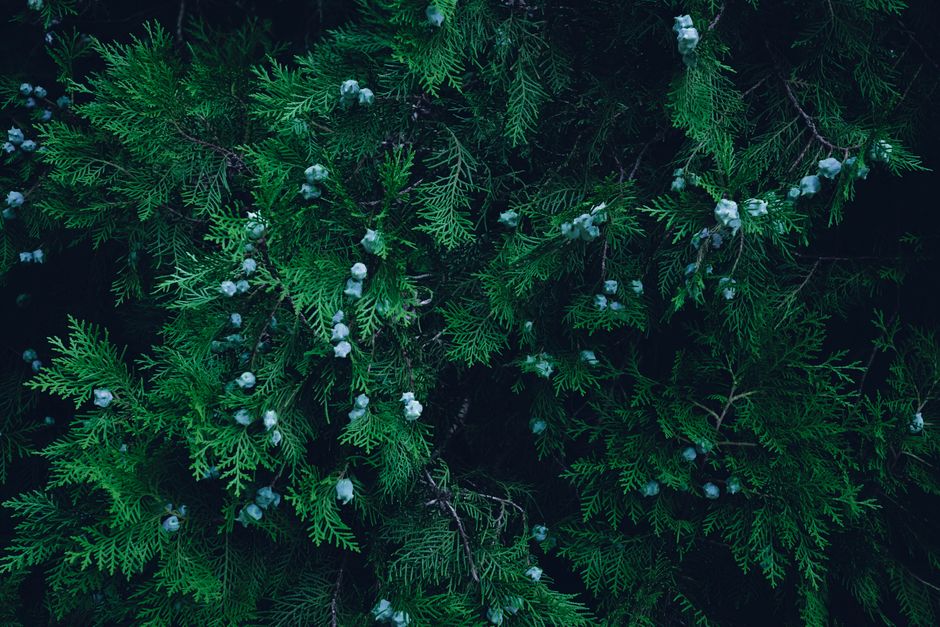
Western hemlock has a few distinctive features that separate it from other conifers once you know what to look for.
The most reliable tell is the drooping leader — the very tip of the main trunk bends downward, like the tree is permanently looking at its feet. Every other tall BC conifer stands rigid at the top. Douglas fir points straight up. Hemlock nods. (I reckon that’s how it ends up in so many Surrey yards before anyone notices it.)
The needles are flat and unequal in length. Pick a branch and you’ll see two distinct rows: longer needles on the sides, shorter ones on top, creating a feathery, almost layered look. Flip the branch over and you’ll find two white bands running along each needle — a sure identification mark. The texture is soft, not sharp. You can run a hemlock branch through your hand without the “ow” factor you’d get from a spruce or fir.
The cones are small — usually under an inch long — and papery. They hang from branch tips and don’t produce the mess you get from larger cones. The bark on mature trees is dark reddish-brown and develops deep, flat-topped ridges over time.
Full-grown western hemlocks can reach 50–70 metres in ideal forest conditions. Most Surrey specimens in residential settings are somewhere between 15 and 35 metres. Growth is moderate — faster in youth, slower as the tree matures. A hemlock planted today, in decent soil with reasonable moisture, could still be standing 400 years from now.
One thing worth clearing up: western hemlock has nothing to do with poison hemlock, which is a flowering plant (Conium maculatum) from the carrot family. The naming is an unfortunate coincidence. The tree is non-toxic and—honestly—shouldn’t have to share the PR burden.
Where hemlock grows in Surrey and the Fraser Valley
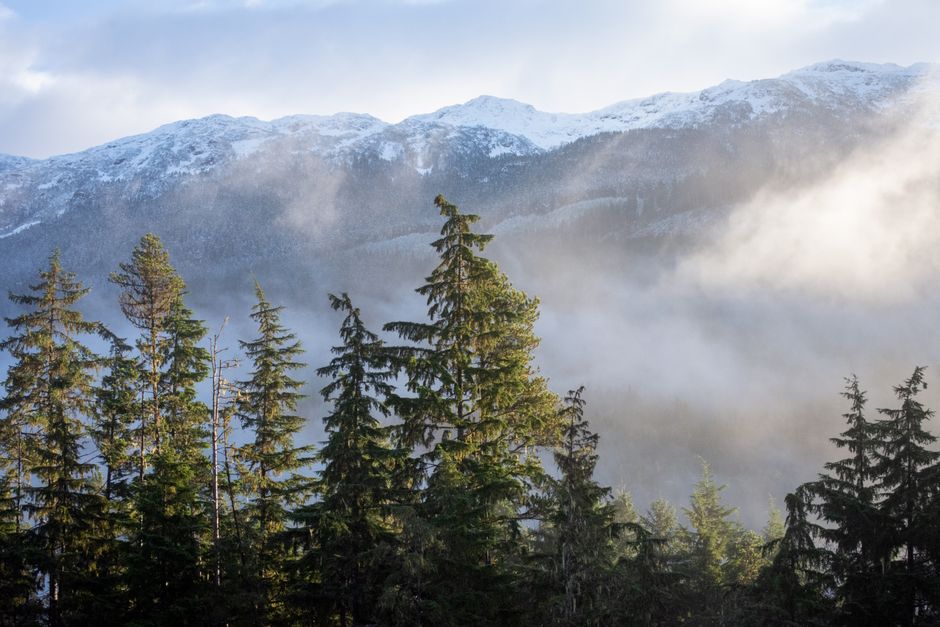
Hemlock is the dominant tree species along BC’s coast and in the wetter parts of the southern Interior. In Surrey, Langley, White Rock, Delta, and the surrounding Fraser Valley, it’s one of the most common conifers you’ll find — growing on property margins, in second-growth forest remnants, and in old-growth pockets in regional parks.
It favours shade. Where Douglas fir and cedar need sun to establish, hemlock will come up under an existing canopy. It’s why you often find it in the understorey of mature BC forest, quietly growing into a dominant tree over decades. If you have a stand of mature conifers on your property, there’s a reasonable chance several of those mid-size trees are hemlocks.
The species handles BC’s wet winters well. It doesn’t love extended drought — which is worth noting as summers in the Fraser Valley have been trending drier. A hemlock under drought stress shows first in the upper crown: lighter green, then yellowing needles from the top down. If you’re seeing that pattern after a dry August, the tree isn’t necessarily dying. But it’s worth having someone take a look before the next growing season.
For context on native species selection and what actually thrives long-term in this climate, the BC Ministry of Forests maintains solid resources on coastal species management.
Common problems affecting hemlock trees in BC
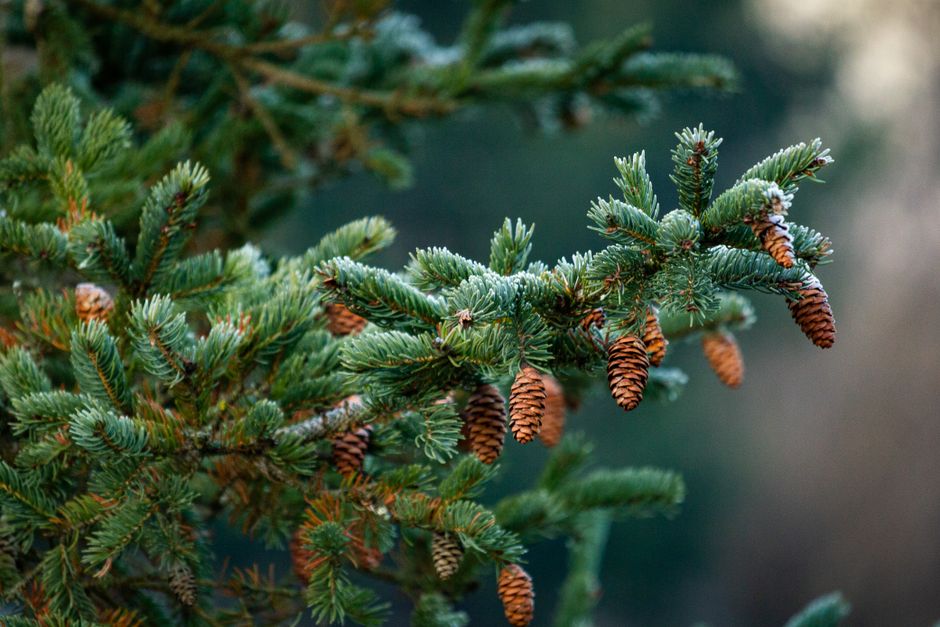
Most western hemlocks are healthy. But there are three threats that anyone with a hemlock on their property should know about.
Hemlock looper (Lambdina fiscellaria)
This is the most common defoliator of BC hemlocks. The hemlock looper is a native moth whose caterpillars feed on hemlock needles in spring and early summer. A single season of heavy infestation can strip an entire tree. A second consecutive season often kills it.
If you see widespread needle loss in late spring or early summer — the crown thinned-out and pale — combined with small inchworm-type caterpillars on the branches, that’s your diagnosis. The BC Ministry of Forests forest health program tracks hemlock looper populations and issues regional advisories when outbreaks are detected.
A defoliated tree that was otherwise healthy before the infestation can recover if it gets two or three seasons without a repeat attack. The problem is that looper populations cycle — boom years can run two or three seasons in a row. A tree already stressed by root disease doesn’t have the reserves to re-flush twice. That’s when you lose a tree that might otherwise have survived.
Root rot (Armillaria and Heterobasidion)
Two root diseases show up regularly in BC hemlocks: Armillaria root rot (caused by Armillaria ostoyae, the honey mushroom) and Heterobasidion root rot. Both spread through soil contact from infected stumps and roots — common on properties where older trees were removed years ago without stump treatment.
Signs include dark or resinous staining at the base of the trunk, clusters of honey-coloured mushrooms around the root collar in fall (Armillaria), upper crown decline, and eventually leaning or visible root plate lift. By the time you see trunk symptoms, the disease is well established.
There’s no cure for either. Management is about understanding the tree’s current structural integrity and making a clear-eyed call about removal timing. If you’re seeing any combination of root zone mushrooms, crown dieback, and new lean — that’s an assessment call, not a wait-and-see. A tree in that condition is unpredictable, and unpredictable over a driveway or a roofline is a different problem from unpredictable in an open field.
Our tree health assessment guide covers what a professional evaluation looks for and what information it gives you to make that call.
Hemlock woolly adelgid (Adelges tsugae)
This one is different. Hemlock woolly adelgid (HWA) is an invasive pest from Asia, currently established in eastern North America and moving west. It hasn’t reached BC as of 2026, but it’s regulated under the Plant Protection Act and CFIA is actively monitoring the coast.
HWA kills trees in four to fifteen years. Infested trees show white woolly masses at the base of needles — visible to the naked eye, looking something like tiny cotton balls attached to the branch. If you see anything like that on your hemlock, report it to the Canadian Food Inspection Agency before removing or pruning anything. This is a situation where the response matters more than the remedy. One mishandled removal can spread an infestation further than it would have gone on its own.
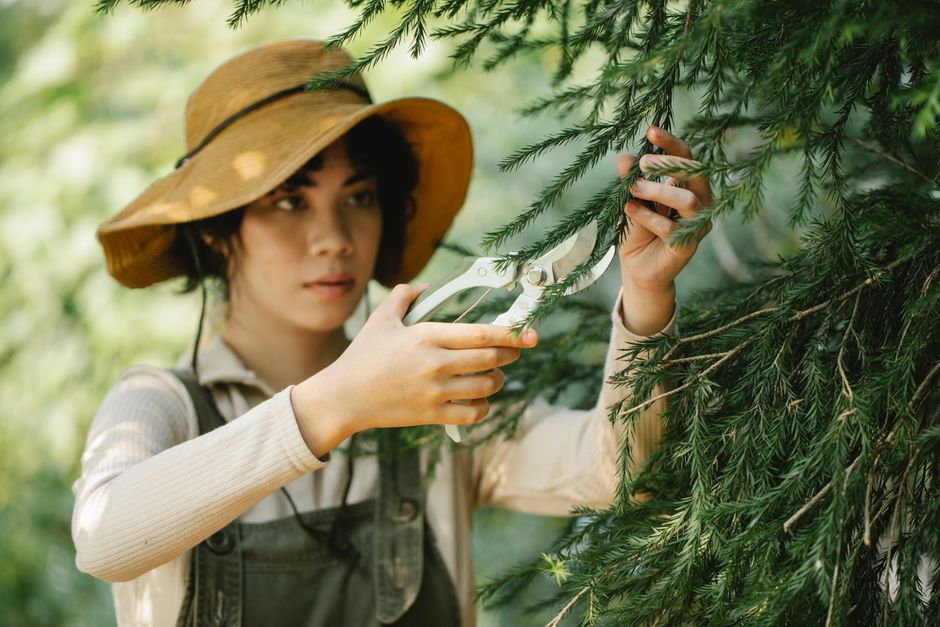
When to prune a western hemlock
The honest answer: most hemlocks don’t need pruning. They’re naturally columnar, don’t produce the crossing-branch problems you see in deciduous trees, and will self-prune their lower limbs as they grow and those branches lose light. Left alone, a healthy hemlock manages its own structure reasonably well.
That said, there are situations where pruning makes sense.
Deadwood removal is the most common. Dead branches in a hemlock can be significant in size — a 20-metre tree with a dead upper limb is a real fall hazard over a pathway or structure. The timing for deadwood removal is flexible; dead is dead year-round, and the sooner it comes down, the better.
Clearance pruning— raising the lower crown for sightlines or vehicle clearance — is best done in late winter or early spring, before new growth begins. This is minor structural work, not a health necessity, but it’s a common request in Surrey properties where hemlocks have grown into driveways or fences.
Competing leaders in young trees — very rare in hemlock, but worth addressing early if spotted. A young tree with two equal leaders will develop a structural weak point at the union as both trunks grow. One leader, addressed while the tree is still manageable, costs far less than the same issue in a 25-metre tree.
What not to do: topping. I’ve seen topped hemlocks in Surrey. The result is exactly what you’d expect — multiple competing leaders, rapid dieback of the stub sections, and a tree that now has two or three structural failure points instead of one. If a hemlock is too tall for your property, that’s a removal conversation. Topping makes it a bigger problem in a shorter time.
Rule of thumb: if a branch needs to come off a hemlock over 15 feet high, that’s a job for a certified arborist. The wood is heavy, the crowns are dense, and a mature hemlock crown is not the place for improvisation.
When removal is the right call
Nine times out of ten, a hemlock doesn’t need to come down. But there are situations where removal is the right answer and putting it off just adds risk.
Structural failure — root plate lifting, trunk split, or new lean that appeared in the last season. These are active hazard conditions. A structurally compromised hemlock over a structure is a tonight problem, not a next-spring problem.
Root disease advanced— Armillaria or Heterobasidion well established, with crown decline and visible trunk symptoms. At that stage, the tree is unpredictable. The question isn’t whether it’ll fail but when.
Wrong position— a hemlock seeded too close to a foundation, growing into power lines, or positioned to fail directly onto a structure. Position problems don’t resolve themselves. A tree that will eventually threaten your house in 10 years costs the same to remove now as it does then, except now the access is easier and you haven’t had a decade of compounding risk.
Full death — a dead hemlock becomes a hazard within 12–18 months. Hemlock wood degrades quickly once the tree stops protecting itself. The root system goes with it. A dead hemlock in a wind corridor is exactly the kind of tree that comes down on something expensive.
On pricing: a smaller hemlock under 15 metres in good access conditions runs around $1,000–$1,800 including stump grinding. A large specimen over 25 metres, or one in a confined yard, is $2,500–$4,500 or more. We provide flat-rate quotes before any cutting starts.
A word of caution on removal decisions: I’ve seen a lot of hemlocks recommended for removal that didn’t need to go. A homeowner in White Rock once got quoted $2,800 to remove a hemlock that was “a hazard.” We assessed it. It had early Armillaria activity at the root collar, but the crown was still 80% healthy and there was no meaningful lean. Crown thinning and deadwood removal ($650) addressed the structural concerns. The tree was still standing three years later. That’s $2,150 in the homeowner’s pocket and a heritage conifer still in the ground.
Get a second opinion before removing any large hemlock. We offer $150 tree assessments — credited toward any work that follows. If the tree needs to come down, we’ll tell you straight. If it doesn’t, we’ll tell you that too.
When not to do this yourself
For a hemlock tree: almost everything above ground level.
You can handle this yourself:removing small fallen branches from the ground, deep watering during drought, and monitoring — keeping an eye on needle colour, new lean, crown density changes, and root zone mushrooms, then calling us with what you’ve observed.
Call a certified arborist for:any live work above ground on a tree over five metres, assessment of suspected root rot or looper infestation, any tree within fall distance of a structure or power line, a hemlock that has started leaning, and crown browning that’s progressing downward.
The tools required to work safely in a mature hemlock — climbing gear, rigging, a proper chainsaw, planned drop zones — represent a significant investment. More importantly, the knowledge of how to use them safely in a large conifer took my crew and me years to develop. That’s not a sales pitch; it’s a liability disclosure. The consequences of a dropped limb in the wrong direction are not recoverable.
If you’re unsure whether what you’re looking at needs a professional or not — give us a call. We’ll tell you honestly. Half the time the answer is “it’s fine, just keep an eye on it.” The other half of the time it’s worth having us out.