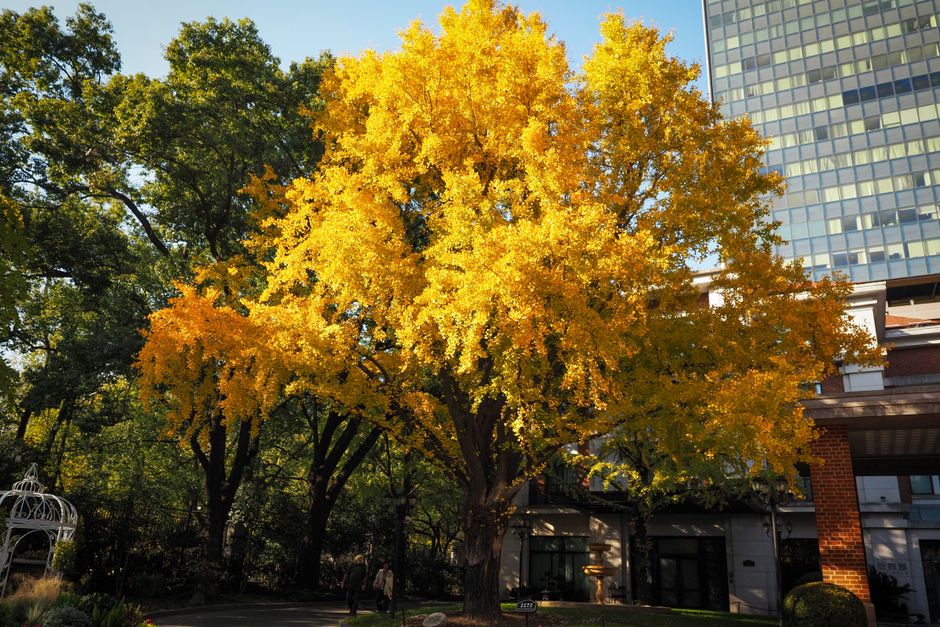
The ginkgo tree has been around for 270 million years. It survived the mass extinction that killed the dinosaurs, two ice ages, and the atomic bomb dropped on Hiroshima. (The female ones also produce a fruit in autumn that smells like vomit. Centuries of resilience, one awkward October.)
If you're looking at ginkgo trees for your Surrey yard — or you already have one and want to know what you're dealing with — this guide covers the lot. What they are, how they grow in BC's climate, how to care for them, and the one thing most people get wrong before they plant.
Quick answer: Ginkgo biloba is an excellent ornamental tree for Surrey, BC. Hardy, low-maintenance, and beautiful in autumn. The main decisions are: columnar vs standard size, and male vs female. Get those right before you plant. Everything else is straightforward.
What makes a ginkgo tree different
Ginkgo biloba is the only living species in its entire division. It has no close relatives. The tree you plant in your yard today is functionally identical to specimens from 270 million years ago — the fossil record and the living tree look the same.
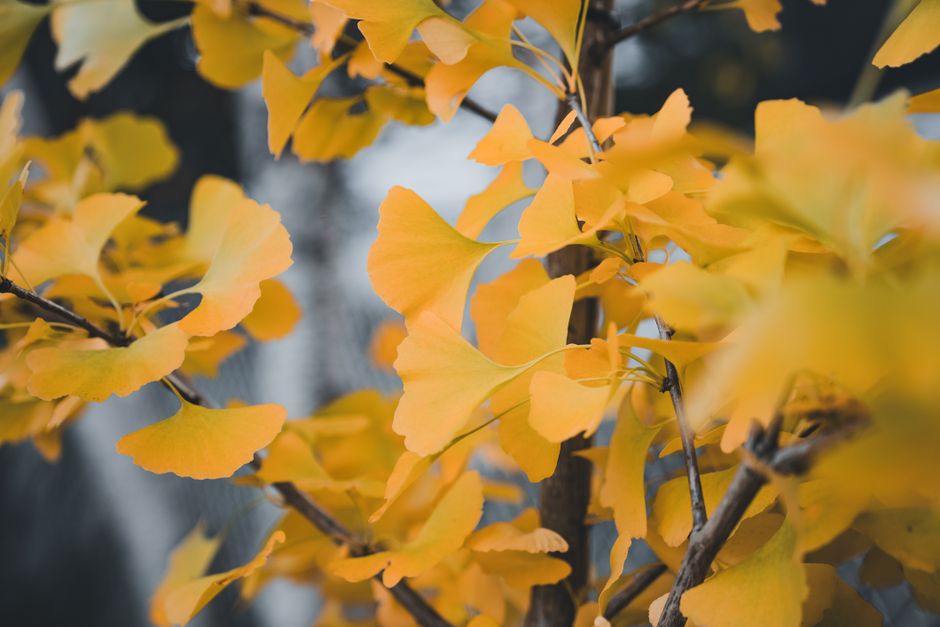
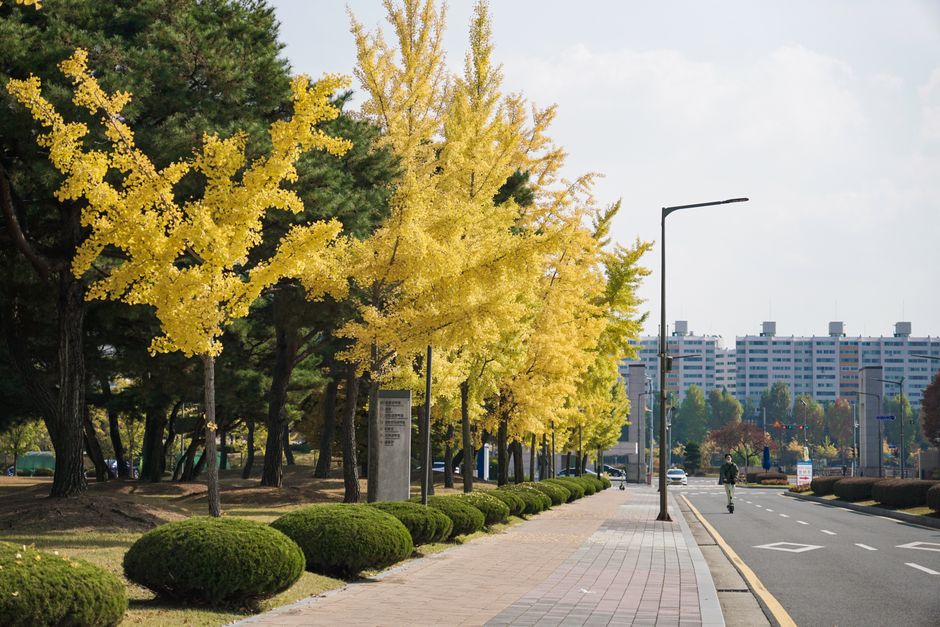
The leaves are the tell. Fan-shaped, with a notch in the middle that splits them into two lobes. No other tree has this leaf shape. In spring and summer they're a clean medium green. In autumn, they turn a uniform brilliant gold — not patchy, not gradual. One day the whole tree goes yellow. Then, within a week or two, every leaf drops at once. (Which is either beautiful or a lot of raking, depending on your perspective.)
The tree is also called the maidenhair tree, after the maidenhair fern whose leaves the ginkgo's resemble. That name is more common in older horticultural writing. Most people just say ginkgo.
What makes it genuinely useful for Surrey yards is the tolerance package. Ginkgos handle air pollution, salt spray, drought, compacted soils, and temperature swings that would stress most ornamental trees into decline. They're planted widely as street trees in cities across North America for exactly this reason. They also have virtually no serious pest or disease issues — which I'll cover in the problems section.
I've recommended ginkgo to homeowners who've burned through two or three ornamental trees trying to find something that thrives in a difficult spot near a road or a hard clay patch. Nine times out of ten, the ginkgo is still standing while the others came down.
Male vs female ginkgo: why it matters before you buy
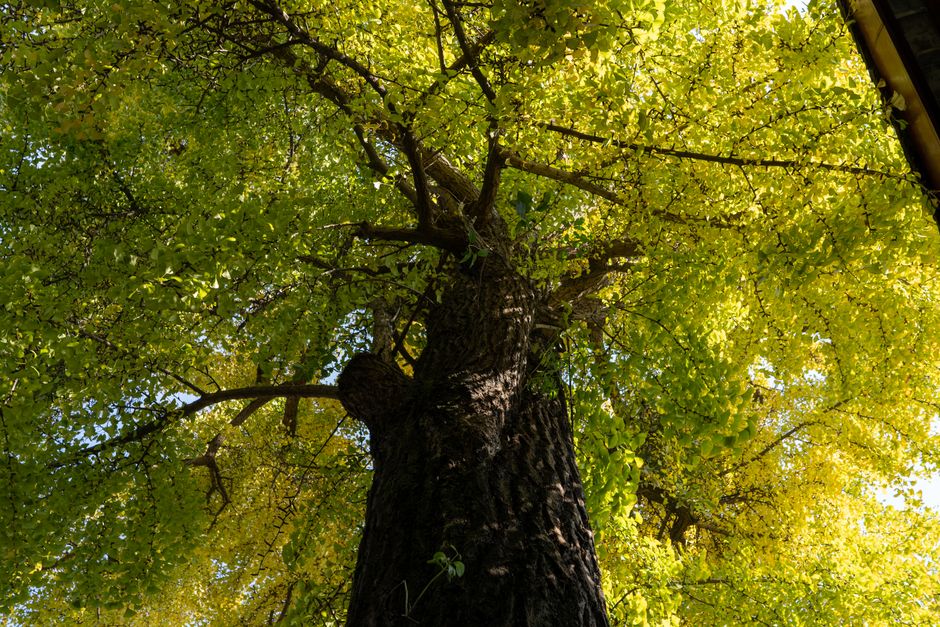
This is the one thing most homeowners get wrong. Ginkgos are dioecious — each tree is either male or female. Male trees produce pollen in spring. Female trees produce fruit in autumn.
The fruit is the problem. The fleshy outer layer contains butyric acid. It smells like rancid butter or, more accurately, vomit. It falls in quantity, stains paths and driveways, and the smell lingers. Cities that planted ginkgos as street trees before sex-testing was common have spent decades dealing with the fallout — some municipalities now ban female ginkgos on public property.
The fix is simple: buy a named male cultivar. Named cultivars are propagated vegetatively (by cuttings, not seed), so their sex is guaranteed. The reliable males include:
- Autumn Gold — broad, spreading form; brilliant autumn colour; 10–12 m tall
- Princeton Sentry — columnar habit; 8–10 m tall, 2–3 m wide; good for tight spaces or near overhead lines
- Fastigiata — narrow upright; similar to Princeton Sentry; older cultivar
- Magyar — very narrow; 6–8 m tall; useful where horizontal space is limited
If you have an existing ginkgo and aren't sure of the sex: watch for autumn fruit. If it produces fruit in October with a noticeable smell, it's female. Young ginkgos don't show their sex until they reach reproductive maturity, which can take 20–30 years from seed. If you bought a named cultivar from a reputable nursery, it's reliably male.
If you already have a female tree and want to deal with it, your options are: clean up fruit as it falls (quickly, before it sits and softens), or have an arborist assess whether the tree is worth keeping. Female ginkgos are otherwise identical to males — healthy, beautiful, long-lived. The fruit is the only issue.
For a deeper look at how tree sex affects care and management across different species, our guide on whether trees have genders covers the biology in plain terms.
Growing ginkgo in Surrey, BC
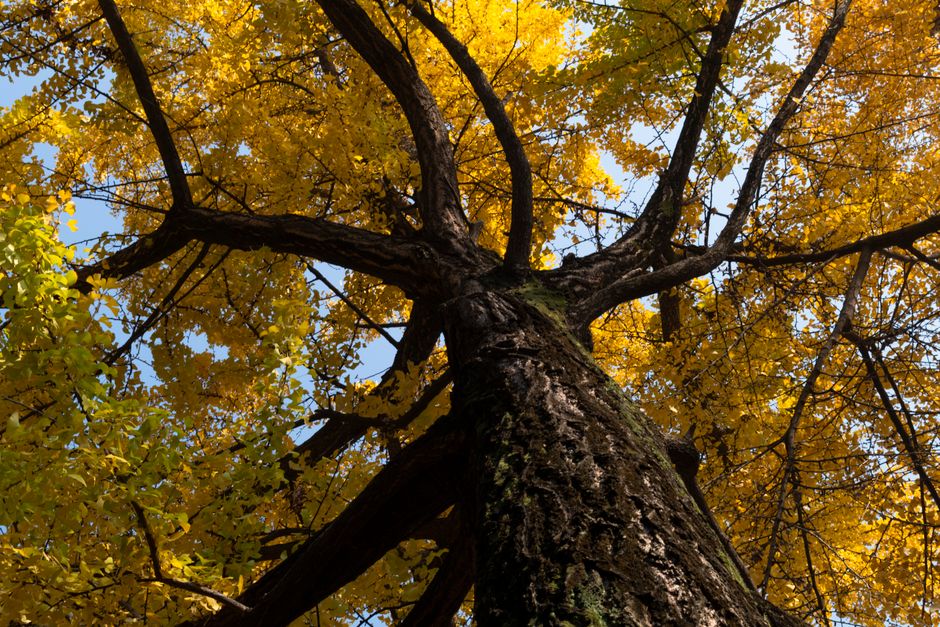
Surrey sits in USDA Hardiness Zone 8 (Canadian Zone 7b). Ginkgos are hardy to Zone 4 — they're not going to struggle with our winters. The main question isn't cold tolerance; it's soil and space.
Soil:Ginkgos prefer well-drained soil. They tolerate poor and compacted soil better than most trees, but they don't tolerate waterlogged conditions. Surrey has a lot of clay-heavy soil, particularly in established neighbourhoods. If your site drains slowly after rain, add drainage before planting — dig a wider hole, amend with coarse grit, and consider a raised planting mound. Root rot in poorly drained clay is the most common preventable failure I see with ornamental trees in the Fraser Valley.
Sunlight: Full sun preferred. Partial shade tolerated, though autumn colour is less vivid and growth slower.
Size and spacing:Standard ginkgos reach 15–25 metres tall at maturity. That is a large tree — check for overhead power lines before planting, and don't put one within 5 metres of the house. If you want the look without the footprint, the columnar cultivars (Princeton Sentry, Magyar) max out at 8–10 metres and stay narrow. I reckon most Surrey residential lots are better served by a columnar form unless you have a large back yard with clear overhead.
Growth rate: Slow. A newly planted ginkgo adds 20–30 cm per year in reasonable conditions. It will not look like the photos for several years. This is not a tree to plant if you want fast screening — for that, consider BC's native species list for faster-establishing options suited to this climate.
I had a conversation a few years back with a homeowner in South Surrey who'd replaced struggling Leyland cypress trees with native species on my recommendation — western red cedar for the privacy they needed. They also mentioned they'd always loved ginkgos and wanted one in the front yard. I told them straight: a ginkgo there would look modest for the first five or six years. They planted one anyway. Those cedars at the back are already taller than the fence. The ginkgo out front is about 1.5 metres and beginning to look like something. That's the honest timeline.
The ISA's tree risk guidance recommends leaving adequate space for root spread at planting — for standard ginkgos, aim for at least 7–8 metres of clear root zone from any structure.
Ginkgo care and pruning
This is the low-maintenance part of the guide. Established ginkgos need very little from you.
Watering:Water regularly in the first two years while the root system establishes. After that, a healthy ginkgo in Surrey's rainfall pattern is largely self-sufficient. Extended dry summers (which BC is having more of) warrant supplemental watering — a deep soak every two weeks during drought is better than shallow watering every few days.
Fertiliser:A balanced slow-release fertiliser in early spring is optional for young trees. Established trees in reasonable soil don't need feeding.
Pruning:Ginkgos have a naturally sound structure. They don't tend to produce the crossing branches and competing leaders that make other ornamentals a pruning headache.
Rule of thumb: prune in late winter to early spring, before bud break. Remove dead or damaged branches as you find them, year-round. Young trees benefit from light shaping to establish a clear central leader — remove any competing upright shoots early, before they get thick enough to leave a wound.
What not to do: don't top a ginkgo. Hat-rack cuts (removing the main leader or most of the canopy to a series of stubs) damage the structure, create dozens of weak-jointed regrowth shoots, and invite decay. I see this done to ginkgos occasionally, usually by homeowners who think the tree is getting too large. The right answer is a columnar cultivar at planting, not a removal cut later. A proper crown reduction — 20–30% size reduction to natural growth points — is the legitimate alternative to topping if size is a genuine concern, and it costs considerably less than removal and replanting.
For anyone considering what a proper crown reduction looks like and costs, our tree services page lists crown reduction pricing from $500–$1,200 depending on size and access.
Common ginkgo problems
Ginkgos are genuinely disease and pest resistant. This is not marketing language — the tree has outlasted almost every pest and pathogen that has come and gone over geological time. In a Surrey yard, the problems you'll encounter are almost always cultural (how the tree was planted or maintained), not biological.
Yellowing leaves in spring or summer: Usually overwatering or waterlogged soil. If the soil stays wet and the leaves go yellow-green and drop early, check drainage first. Ginkgos are more susceptible to root rot from wet clay than they are to any pest.
Leaf scorch (brown edges on leaves): Drought stress or reflected heat from hard surfaces. Common in hot summers. A deep soak and a layer of mulch around the base — keeping mulch away from the trunk — usually resolves it within a season.
Mechanical damage at the base:The most common cause of ginkgo decline in residential settings is lawn mower and string trimmer contact with the base of the trunk. This isn't a disease — it's a slow wound that opens the tree to secondary infection. Keep equipment away from the trunk. A proper mulch ring (30–60 cm radius) does the job and protects the root zone at the same time.
Pests:Aphids sometimes establish on young trees in spring. They're rarely a serious problem on established ginkgos. Scale insects occasionally appear on stressed trees. Both can be managed without chemicals — a strong water spray or horticultural oil if numbers are significant.
Autumn leaf drop: Not a problem, but worth knowing. Ginkgos are famous for dropping all their leaves over a short window — sometimes within a single day if the weather triggers it. This is normal. The tree is fine. Rake it up or let it decompose as mulch.
When to stop DIY-ing it
Here's the honest version of this section: ginkgos are low-maintenance trees. Most of what you'll do with one is straightforward, and I'd rather tell you when not to call us than have you spend money on work you can handle yourself.
You don't need an arborist for: routine inspection and watering, removing small dead branches within reach from the ground, applying mulch, or cleaning up autumn fruit from a female tree.
That's the time to call an arborist for:
- Any pruning work above 4 metres. Ginkgos grow slowly but eventually get tall. Chainsaws and heights are not a DIY combination.
- Crown reduction — removing 20–30% of canopy size properly requires knowing where to cut to a lateral branch, not just shortening to a stub.
- A tree that's declining (sparse canopy, large dead sections, significant yellowing without an obvious cause). An assessment at $150 often identifies a fixable problem before it becomes a removal at $1,500+.
- Any work near overhead power lines. This is non-negotiable — coordinate with BC Hydro first.
- Identifying whether your ginkgo is male or female, if you want a definitive answer before the tree fruits.
I want to be direct about one thing: removing a healthy ginkgo is almost never the right call. These trees are rare enough in residential Surrey yards that they add genuine value — property value, environmental value, and 270 million years of earned reputation. If someone quotes you for removal on a ginkgo that's otherwise structurally sound, get a second opinion. Nine times out of ten there's a pruning or crown reduction solution that costs a fraction of removal and keeps the tree.