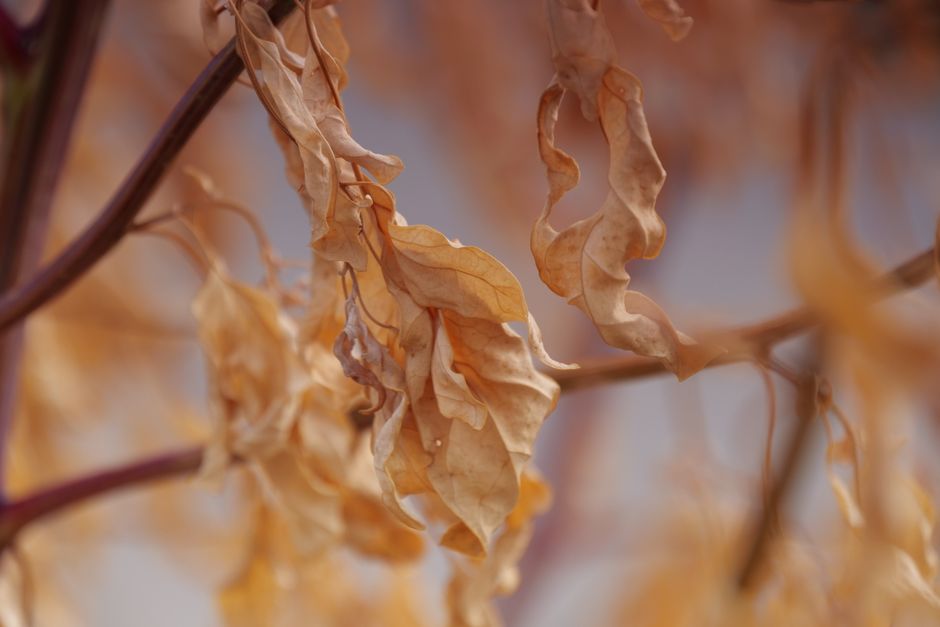
Your tree is rolling its leaves inward like it's trying to protect something. (It is, actually — that's the point. Leaves curl to reduce water loss or defend against something eating them. The trick is figuring out which something.)
The short answer: leaf curl is almost always one of four things — insects, water stress, fungal disease, or heat. The hard part is that the visual symptoms overlap considerably.
Quick answer: Start by flipping a leaf and looking at the underside. If you see tiny insects or sticky residue, you have pests. If the soil is bone dry or constantly waterlogged, that's your cause. If the leaves are puckered and reddish-purple on a stone fruit tree, that's peach leaf curl fungus. If it's July and Surrey just had a two-week heat dome, it might resolve on its own.
The four main causes at a glance
In fifteen years of tree work in the Lower Mainland, I reckon these four account for roughly 95% of the leaf curl calls I get:
| Cause | Quick clue | Typical fix |
|---|---|---|
| Aphids or mites | Insects visible on leaf underside; sticky residue | Water jet or neem oil for small trees |
| Drought stress | Soil bone dry 5 cm down; wilting by afternoon | Deep, infrequent watering |
| Overwatering | Soil stays wet; yellowing + curl together | Improve drainage; reduce frequency |
| Peach leaf curl (fungal) | Puckered, reddish-purple leaves on peach or nectarine | Copper fungicide at bud swell next spring |
Heat stress gets its own section below. It's a separate category, and in Surrey it's increasingly common after June.
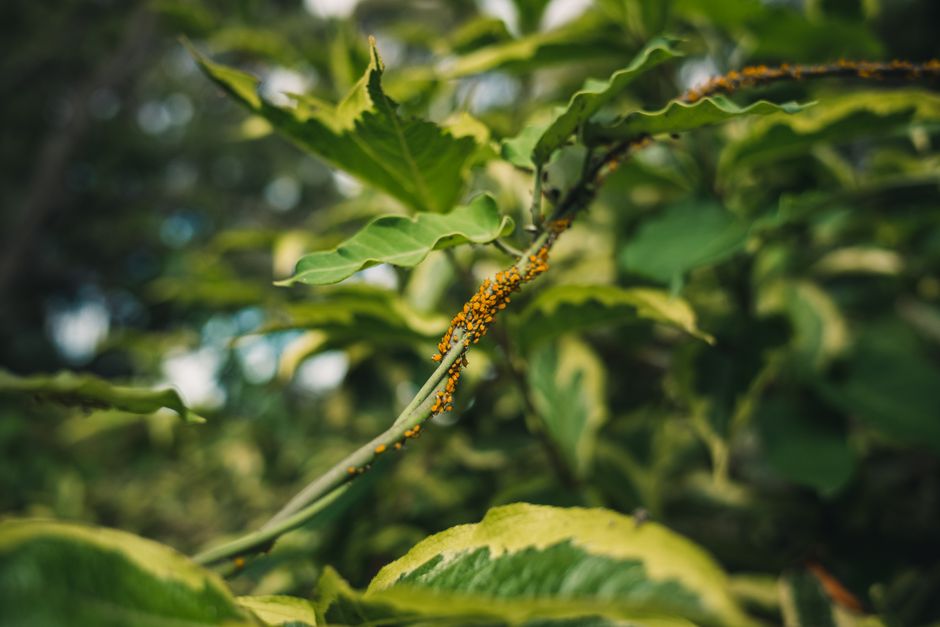
Pests: aphids, mites, and the rest
This is the most common cause of leaf curl in the Lower Mainland. Aphid pressure in Surrey and the Fraser Valley peaks between May and August.
How to check: Flip a leaf. Look at the underside. Aphids are tiny (1–3 mm), soft-bodied, and cluster in groups — they come in green, yellow, black, or the orange-bronze variety you sometimes see on ornamentals. You may also notice sticky honeydew residue on leaves below the colony, or ants moving steadily up and down the trunk. (Ants farm aphids. If you see a column of ants on your tree, look for aphids above them. It is not a coincidence.)
Spider mites cause a slightly different pattern — stippled, pale patches on the upper leaf surface, with fine webbing underneath. Both cause the leaf to curl inward as the tree reduces exposed surface area.
For small trees, a strong blast of water from a garden hose dislodges most aphid colonies. Neem oil spray works for persistent infestations and is less harmful to beneficial insects than systemic pesticides. Large trees with established infestations are a different matter — that's where a professional treatment makes more sense than trying to reach a 30-foot crown with a spray bottle.
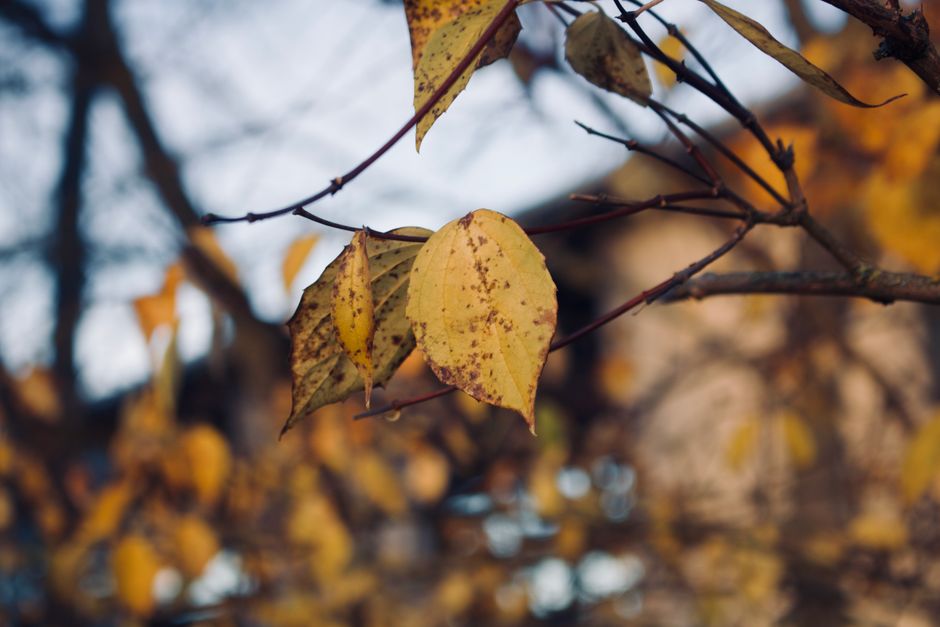
Water stress: drought and overwatering look almost identical
Both cause leaf curl. Both can cause yellowing. Both look like the tree is struggling, which it is. The difference is in the soil.
Drought: Push a finger 5 cm into the soil near the drip line of the tree. Bone dry in July? That's your answer. Established trees in Surrey can usually handle a week without rain, but during the dry summers we've been getting, even mature trees need supplemental watering. A slow, deep soak once a week is more useful than daily light watering — roots need to follow water downward, not stay shallow chasing surface moisture.
Overwatering: Same soil test, opposite result. If the soil stays saturated for days after no rain, the roots are suffocating. Waterlogged soil starves roots of oxygen, which impairs the tree's ability to take up water — so the leaves curl inward even though there's water everywhere. This is more common with trees planted in low spots, heavy clay soils, or near sprinkler systems that run on timers regardless of rainfall.
Rule of thumb: water a tree deeply and infrequently. Let the top 5 cm dry out between waterings. For established trees on a lawn irrigation system, check whether the tree zone is on a separate programme — lawn roots and tree roots need different amounts.
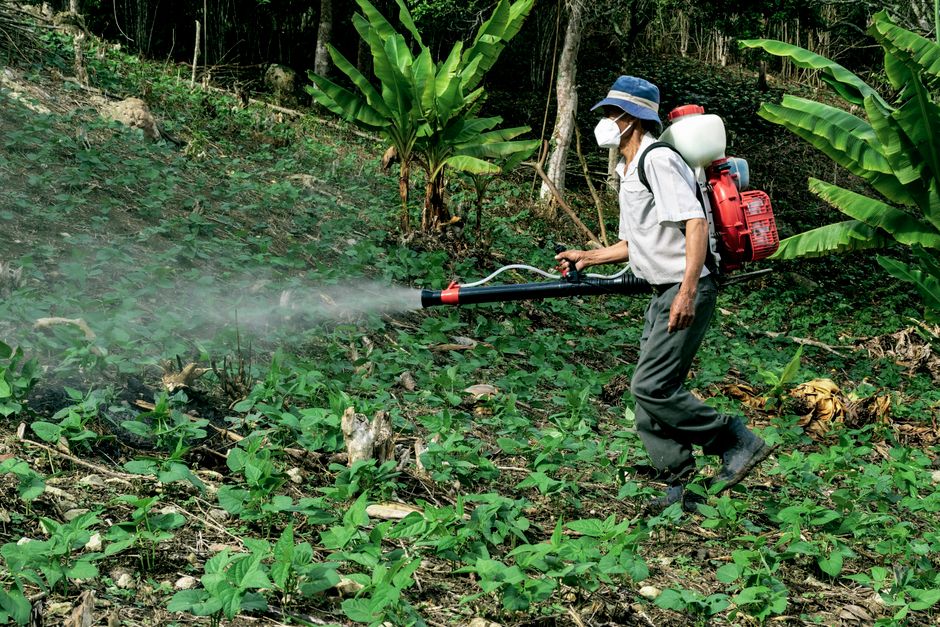
Fungal disease and peach leaf curl
Peach leaf curl is the one to know if you have a peach, nectarine, or almond tree. It's caused by Taphrina deformans, a fungus that infects emerging leaves during bud swell in late winter and early spring. Infected leaves curl, pucker, and turn shades of red-purple before yellowing and dropping. It can look alarming.
The treatment is straightforward but the timing is strict: a copper-based fungicide applied once at bud swell — in the Lower Mainland that's typically late February to early March, before the buds break. If you've already seen the symptoms this season, this year's window has passed. Treatment waits until next February.
Other fungal causes worth knowing:
- Powdery mildew — white powdery coating on curled or distorted leaves, common on maples, apples, and ornamentals in humid conditions
- Fire blight — curled, blackening leaves that look scorched, primarily on apples and pears; a bacterial infection, not fungal, but often mistaken for one
- Leaf spot diseases — brown or black spots accompanied by curl, mostly aesthetic damage on otherwise healthy trees
The BC Landscape and Nursery Association maintains regional disease information that's more relevant to our climate than most American extension guides.
How to narrow it down in five minutes
This is the actual diagnostic process. It takes five minutes.
Step one: Flip several leaves and look at the underside under direct light. Insects, webbing, or sticky residue means pests. If the underside is clean, move on.
Step two: Push a finger 5 cm into the soil at the base of the tree. Bone dry in warm weather means drought. Saturated and cool after no recent rain means overwatering or drainage problems.
Step three: Look at the curl pattern and colour. Puckered, reddish-purple, and dropping on a stone fruit tree in spring — that's peach leaf curl. White powder plus curl — powdery mildew. Curl with blackening and a scorched appearance on apples or pears — get an arborist, that's likely fire blight and it spreads.
Step four: Check whether other trees on the property are affected. Same species only? Probably a species-specific pest or disease. Multiple unrelated species? Environmental cause — heat, drought, or waterlogging — is more likely.
Nine times out of ten, those four steps give you a clear enough answer to act. When they don't, that's when a professional tree health assessment is worth the $150.
When not to call an arborist
There are times when the honest answer is: handle it yourself.
- Aphids on a small ornamental under 4 metres — hose them off or apply neem oil. No arborist required.
- One or two leaves curling during a July heat wave, with no other symptoms — wait. Most trees recover once temperatures normalise.
- Peach leaf curl that you've already confirmed this season — the treatment window for this year has closed. Mark your calendar for February and apply copper fungicide at bud swell. That's the whole job.
- Autumn leaf curl on deciduous trees in September or October — that's just the tree preparing to drop its leaves. It's not a problem.
I'd rather you not spend $150 on an assessment for something a hose can fix.
When to call an arborist about leaf curl
Call when the simple diagnostic steps above don't give you a clear answer. Also call when:
- The curling is spreading through the crown, not confined to a few branches
- The tree is losing a significant portion of its foliage before autumn
- You're seeing additional symptoms — dieback in the canopy, weeping sap, soft bark near the base, or significant early leaf drop
- It's a large or high-value tree — a mature Garry oak, bigleaf maple, or heritage cedar — and you want a proper diagnosis before buying treatment products
The single biggest thing I see is homeowners treating for the wrong cause because they guessed at the diagnosis. I've seen people spend $80 on fungicide for what turned out to be aphids, and $120 on systemic insecticide for what was drought stress. An assessment costs the same, gets it right, and credits toward anything we do next.
We assess trees every day across Surrey, Langley, White Rock, and Delta. You can reach us at our contact page or call directly at (437) 771-4741.