
You got two quotes for tree removal. One said $800. One said $2,200. Both companies came out, looked at the same tree, and walked away with very different numbers. The second company said something about “complexity” and “access constraints” — which answered nothing.
(Tree pricing: the only industry where “it depends” is somehow considered a complete sentence.)
Direct answer:Five factors drive tree removal service pricing — tree size and height, species and wood density, site access, tree condition, and what's actually included in the scope. Two companies quoting the same tree but with different scopes will never land at the same number. That's not dishonesty. That's math.
Here's what each of those factors actually means for your quote — and how to tell whether you're comparing apples to apples.
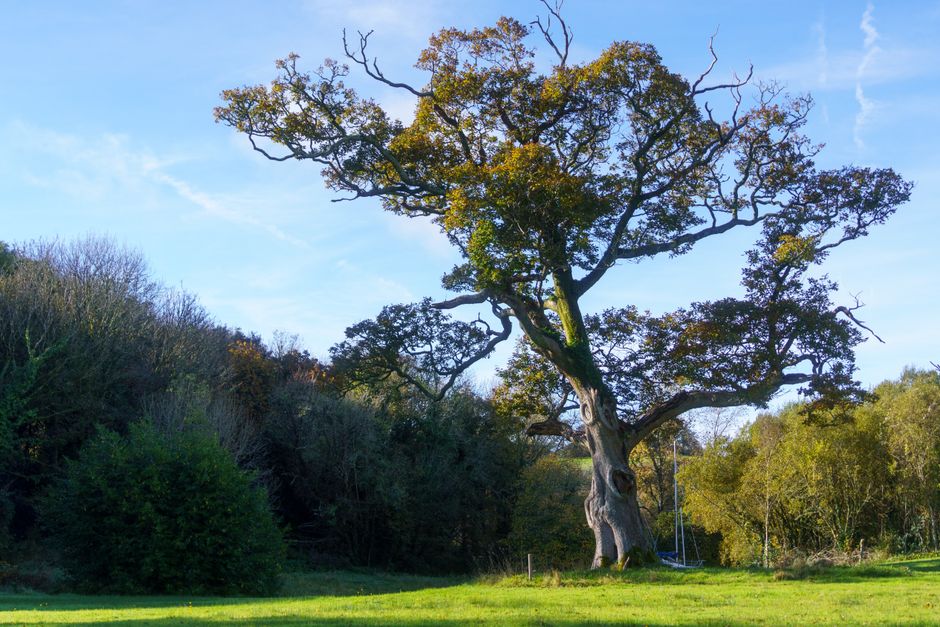
Tree size and height
This one's the obvious one, but the numbers still surprise people. A 5-metre tree might take two hours. A 20-metre tree can take most of a day — including rigging, staged lowering, and multiple trips up.
Most companies price by height bands: under 5m, 5–10m, 10–15m, 15–20m, 20m+. The jump between bands is significant. A Douglas fir sitting right at the 10-metre mark might fall into different bands depending on who's measuring — which is one reason identical-looking trees get quoted differently.
Rule of thumb: each additional 5 metres of height adds roughly 40–60% to the base removal cost. That figure is specific to BC because of the species we're working with.
Crown spread matters too. A wide-canopied maple generates significantly more debris volume than a narrow fir of the same height. More debris means more time on cleanup and more trips with the chipper.
Species and wood density
A birch and a fir at the same height are not the same job. The fir has harder wood, denser mass, and often a root system that takes significantly longer to grind if stump removal is on the table.
In Surrey and the Fraser Valley, these are the species that consistently add time and cost:
- Douglas fir: heavy, dense, often large crowns with significant deadwood
- Big-leaf maple: complex branching structure, heavy limbs, high debris volume
- Western red cedar: can get enormous, fibrous wood, often planted close to structures
- Black locust: invasive in BC and hard as iron — every chainsaw chain dies a little on these
Softer species — birch, red alder — come out faster. Same height, same access, genuinely different price. An arborist who doesn't factor in species when quoting is either new or guessing.

Location and site access
This is the factor that most homeowners don't think about until they're asking why one company is $600 more.
A tree in the open centre of a large lot is the cheapest version of tree removal. A tree in a back corner — fence on two sides, neighbour's garage behind it, and a gate narrower than 90cm — that tree requires hand-rigging, manual debris removal, and considerably more time. Everything that would normally go through a chipper leaves by wheelbarrow instead.
Specific access factors that affect what you pay:
- Gate width: under 90cm rules out a chipper entirely; add $300–$600
- Slope: steep lots slow down equipment movement and increase manual handling
- Power lines nearby: limits where sections can be directed; requires specific rigging techniques
- Proximity to structures: controlled dismantling piece by piece instead of a guided fell
Power lines nearby don't automatically make a job dangerous — but they do make it slower. A tree within fall distance of a live line has to come down in sections, each one carefully rigged. That extra precision takes time, and time is what you're paying for.
For trees near utility infrastructure, the BC Hydro safety guidelines set the minimum clearances and protocols. An arborist working near live lines must follow these; one who doesn't is worth questioning.
Tree condition
A healthy tree is predictable. You know what it will do when you cut it.
A dead or structurally compromised tree is not. Brittle wood fails in ways that healthy wood doesn't — sections break mid-cut in unexpected places, under loads you'd normally trust. A tree with internal rot might look solid from the outside and then the stem fails exactly where you didn't want it to.
That uncertainty means slower, more methodical work. Each section gets rigged rather than guided, every cut gets planned two moves ahead, and the crew moves more carefully throughout. That's not inefficiency — it's how you manage the unpredictability.
I've quoted two trees of identical size and access — one healthy, one dead with compromised root structure. The dead tree ran $400 more. Not because it was bigger or harder to reach, but because the work required a different level of control throughout.
Leaning trees add a related layer. The question stops being “how do we cut it” and becomes “how do we control the direction of fall given the existing lean.” That's more rigging, more time, and usually more cost — particularly if the lean is toward a structure.
What's actually included in the quote
Two quotes can differ by $500 and both be accurate. The most common reason: one includes stump grinding, one doesn't.
Standard tree removal typically means: felling the tree, cutting it into manageable sections, and chipping or removing the debris. What it often does not include:
- Stump grinding — usually a separate line item; $150–$400 depending on stump diameter
- Rounds left on-site — some companies leave wood cut to rounds; removal is extra
- Backfill of the stump hole — often not included even when grinding is
- Haul-away of green waste — chipped but left in a pile vs. taken away are two different things
Ask every company these four questions before comparing prices:
- Is stump grinding included?
- Is debris removal included?
- What condition will the site be in when you leave?
- What's not in this quote that I might need to add later?
Once you're comparing the same scope, the prices will make a lot more sense — and you'll have a better basis for deciding who to trust.

Getting quotes — what to watch for
A few years back, a homeowner in South Surrey called me after getting quoted $2,400 to remove a 120-year-old Garry oak. The reason given was that it was “leaning” and “unsafe.”
I went out to assess it. The lean was natural growth toward the light — that oak had been growing that way for decades without any structural failure. The dead branches were minor and easily removable without touching the main tree. I couldn't find a structural failure risk that justified removal.
Crown thinning ran $650. Deadwood removal another $300. The homeowner saved $1,450, kept a 120-year heritage tree, and ended up with a better outcome for the property. That's not a story about a dishonest company. It's what happens when you get a second opinion from someone who starts from “what does this tree actually need” rather than “what's the fastest way to bill this job.”
Nine times out of ten, removal is the most billable outcome for a tree service company. That's not a conspiracy — it's just math. The ISA Canada arborist finder can help you locate a certified arborist who's qualified to give an independent assessment — not just a removal quote.
When getting quotes, ask each company to walk through the scope line by line. Any company that can explain each cost factor — why the height changes the price, what the access issue adds, what's in and out of scope — has done this work before. Vague answers to specific questions are worth noting.
Also confirm liability coverage before signing anything. A company without valid insurance is not a bargain. For a full picture of what our tree removal service in Surrey covers, including scope and inclusions, see our service page.
When removal isn't the answer
I'll say this even though it's not good for our call volume: a lot of trees that get removed don't need to be.
Skip the removal quote if any of these describe your situation:
- Dead or dying branches — that's a pruning job, not a removal; see our guide to tree pruning in Surrey
- A lean that's been stable for years — get a risk assessment before any removal quote
- Too close to the house — cabling and crown reduction are often cheaper and preserve the tree
- A neighbour thinks it's a problem — get an independent arborist assessment before anything else
The BC Forest Safety Council has plain-language guidance on tree hazard assessment criteria — useful if you're trying to understand whether what you're looking at is a real risk or a concern worth monitoring.
Call for a quote when the tree is structurally compromised, dead, or within fall distance of a structure. Call for an assessment first if you're not sure which category you're in. Assessment is cheaper than removal, and it answers the right question.