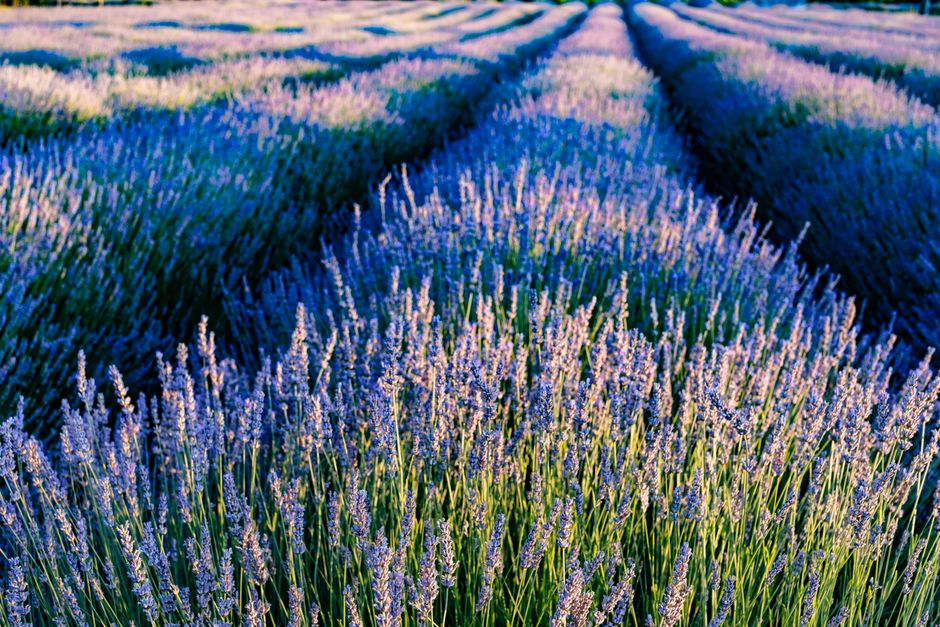
People call lavender a tree. It isn't one. (Neither is it a weed, a shrub you can ignore, or something that looks after itself — but let's start with what it actually is before we get into what kills it.)
A lavender tree is Lavandula — the same plant you grow in a pot or a garden bed — trained onto a single upright stem so it develops a rounded head, like a miniature tree. This form is also called a lavender standard or lavender topiary. Same plant, different growing method.
In Surrey, BC, it can work well. The caveat is drainage, and it matters more here than almost anywhere else in Canada.
What is a lavender tree, actually?
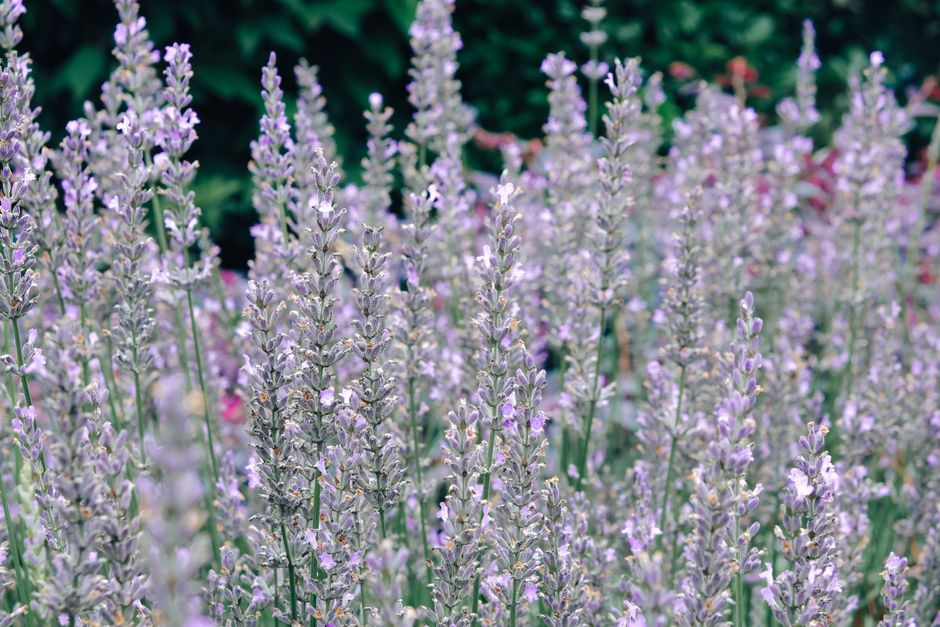
When people say "lavender tree," they usually mean one of two things. The first is a lavender standard — English lavender or a lavandin hybrid grown with a single clear stem, then allowed to branch and form a ball at the top. Garden centres sell these in spring. They range from 40 cm to about 90 cm tall and look elegant in pots or flanking a front entrance.
The second thing people sometimes mean is a jacaranda tree (Jacaranda mimosifolia). Jacaranda blooms in clouds of violet-purple and is spectacular to look at. It also needs a zone 9 or warmer climate to thrive. Surrey is zone 8a. Jacaranda will not make it here, and I'd rather tell you that upfront than let you spend money on one.
There's also a plant called Vitex agnus-castus — sometimes called chaste tree or lavender tree — that does grow here. It gets 3–4 metres tall, blooms in spikes of lilac-purple, and is a legitimate mid-size deciduous shrub for the Lower Mainland. Worth knowing about if you want something that provides a similar aesthetic at a larger scale.
For this guide, I'm focused on the lavender standard — the trained ornamental form that most people are actually asking about.
Can you grow a lavender tree in Surrey, BC?
Yes — but the question is really: can it survive winter here?
Surrey sits in hardiness zone 8a to 8b. Lavender is rated cold-hardy to zone 5. So the temperature isn't the issue. What kills lavender in the Lower Mainland is six months of West Coast rain sitting in soil that doesn't drain properly.
Lavender is a Mediterranean plant. It evolved in thin, rocky soil that dries out between rainfalls. Put it in BC clay with poor drainage and it'll look fine until around February, then quietly collapse. The roots rot, the crown dies, and come spring there's a dead stick where your lavender standard used to be.
The fix is simple to describe and sometimes annoying to execute: drainage. A raised bed with sandy, gritty soil. Gravel mulch around the base — not bark mulch, which holds moisture. A south or southwest-facing spot that gets at least six hours of sun. This is the Plant Hardiness Zones Canada guidance applied practically: zone suitability tells you about cold, not wet feet.
Container growing is an honest solution, not a cop-out. A terracotta pot with drainage holes gives you automatic drainage control. In the wettest months, you can move it under a covered area. Not to protect it from cold — zone 8 cold won't bother it — but to keep the root zone from sitting in standing water.
Best lavender varieties for the Fraser Valley
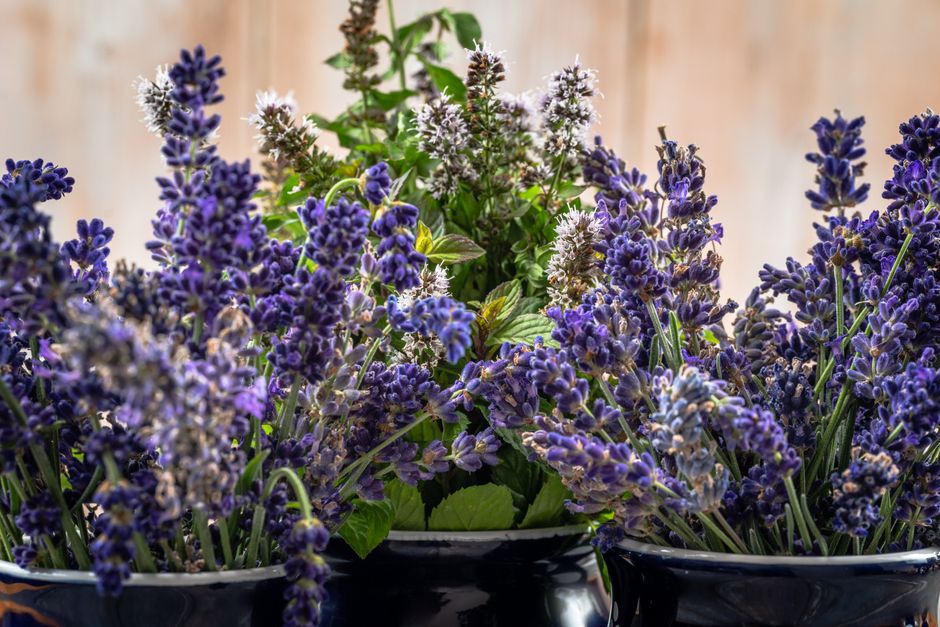
English lavender (Lavandula angustifolia) is the most reliable choice for Surrey. Cold-hardy to zone 5, reasonably tolerant of wet conditions compared to other species, and the fragrance is what most people have in mind when they think lavender.
Within English lavender, two varieties stand out:
Hidcote — compact, deep purple, 45–60 cm. The classic. This is the one you see in nurseries everywhere in spring for a reason. It performs well in zone 8 and takes to the standard form without much fuss.
Munstead— slightly smaller and more compact than Hidcote, lighter purple. A touch more forgiving in heavy soil. If you're working with a bed that doesn't drain quite as well as you'd like, Munstead is your better bet.
Lavandin (Lavandula × intermedia)hybrids — Grosso and Phenomenal are both good options for the Lower Mainland. These are taller plants than English lavender, bloom heavily, and have a slightly stronger fragrance. They're not quite as cold-hardy, but zone 8 isn't a problem. Phenomenal in particular has a reputation for surviving conditions that kill other lavender.
French lavender (Lavandula stoechas)— the showy one with butterfly-shaped bracts. It blooms earlier than English lavender and looks spectacular. It's also more finicky in wet winters. I've seen it do well in Surrey on south-facing beds with perfect drainage, and die reliably in anything less than ideal conditions. Worth trying once you've got the drainage right, not as your first attempt.
I had a client in White Rock who replaced the same French lavender standard three winters in a row before we moved it to a raised gravel bed near the south-facing fence. Same species, completely different result. The plant wasn't wrong for the climate — the location was. That's a lesson I've seen repeat itself across a lot of Lower Mainland gardens.
When and how to prune a lavender tree in BC

This is the part people get wrong most often. Pruning lavender in fall feels like the right thing to do — you're tidying the garden for winter. In most of Canada, it's the wrong move, and in BC it's a reliable way to kill a plant that was otherwise perfectly healthy.
Fall pruning cuts back into growth before it has time to harden off. Then the rain comes in. Then you lose the plant. The Ontario Ministry of Agriculture guidance on lavender pruning is clear: prune in spring in Canadian climates.
Rule of thumb for Surrey:prune once you see new green growth at the base of the plant — usually April or May, depending on how late the winter ran. Cut back the previous year's flowering stems, down to where you can see fresh green leaves. Stop there.
The critical point: never cut into old woody growth. Lavender does not regenerate from brown wood. The lower third of a lavender standard is typically old, woody tissue. Cut into that and the branch will not regrow. The plant becomes progressively gappier until it's not worth keeping.
For a lavender standard specifically, the head benefits from a second light trim after flowering in July. This keeps the ball shape tight and encourages another flush of growth. It's not a hard prune — more like a tidy — and you're cutting back to just above where this season's new leaves started.
I reckon the most common mistake I see on Surrey properties is fall pruning combined with cutting too deep. Both at once, and the plant doesn't come back in spring. Neither mistake on its own is always fatal. Both together usually are.
Common mistakes on Surrey properties
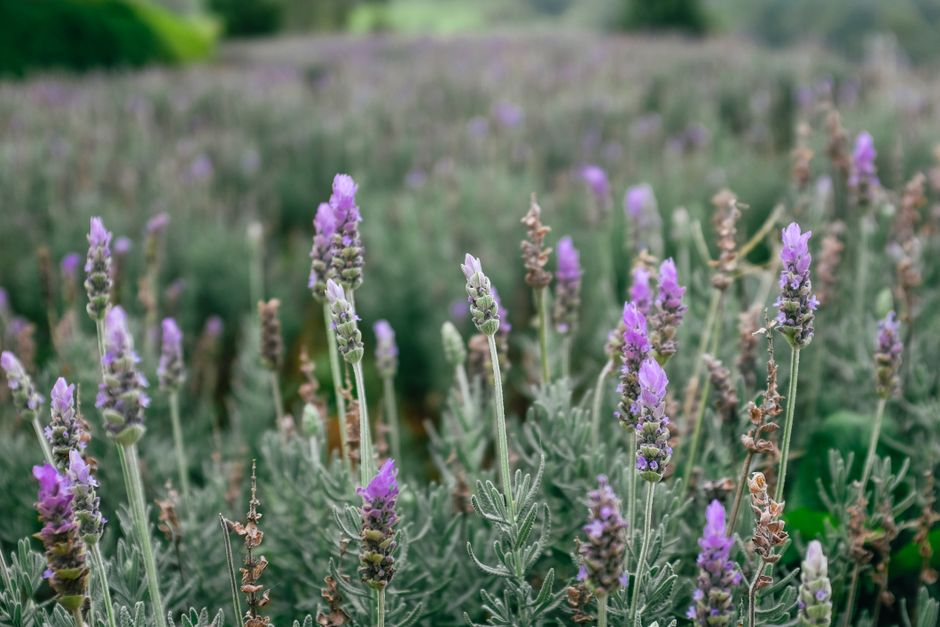
Beyond fall pruning and deep cuts, there are a few other patterns I see regularly:
Clay soil with no amendment.Surrey's native soil is heavy. If you're planting a lavender standard directly into an unamended clay bed, you are watering it with a syringe while it drowns. At minimum, work in coarse grit and organic matter to improve drainage. A raised bed is a more reliable long-term solution.
North-facing beds or partial shade.Lavender wants full sun. Not part-sun, not dappled shade — six hours of direct sun minimum, and more is better. A lavender standard in a north-facing bed will survive, but it won't thrive. The blooms will be sparse and the plant will be more vulnerable to disease. (This is one of those cases where "it's technically alive" is not the same as "it's doing well.")
Over-watering in summer.Lavender doesn't need much water once established. In Surrey's dry July and August, a deep soak once a week is plenty. The plant has deep roots by then and can handle drought far better than it can handle wet roots.
Bark mulch around the base.Bark mulch holds moisture. Lavender doesn't want moisture held around its crown. Use gravel or grit instead — it keeps weeds down without trapping the dampness that causes problems at the base of the stem.
When not to call an arborist
I'll be straight about this: a lavender standard is usually not an arborist job. It's a plant maintenance job. Clean secateurs, correct timing, and a bit of knowledge — that's the whole toolkit.
You don't need us for spring pruning of a single lavender standard. You don't need us for deciding which variety to plant, or for replanting one that died over winter. These are things you can handle yourself, or with the help of a good local garden centre. West Coast Gardens in the area has solid advice on lavender culture specifically for this climate.
Where we can help is when lavender is part of a larger planting — a mixed hedge, an ornamental border, a formal garden where overall health and structure matter — and you want the whole thing assessed and pruned properly. We also handle the larger Vitex trees (chaste tree / lavender tree in the broader sense) that can get to 3–4 metres and benefit from proper crown management. Our tree and shrub pruning services cover ornamental shrubs when they're part of a larger job.
And if you've got a lavender standard that's become a woody, gapped mess — the result of a few years of fall pruning into old wood — it's worth having someone look at it. Nine times out of ten, recovery pruning is possible. But it's a different approach than the standard spring tidy, and it helps to have someone assess what's viable and what isn't before you commit to a cut.
Give us a call if you're in that situation or if you're dealing with a broader property where lavender is one piece of a planting that needs proper management. Otherwise — go get some secateurs and plan for April.