
Hibiscus trees look forgiving right up until they're not. You skip a trim, then another, then cut them back hard trying to fix it. The shrub sulks for a full season. (I've seen this play out on more Surrey properties than I'd like.) Here's what actually works, and when to step away from the shears entirely.
The short version: trim a hibiscus tree in late February or March. Cut each branch back by a third, above an outward-facing bud. That's the whole method. Everything below is the why, the tool list, and the things most people get wrong.
Rose of Sharon vs. tropical hibiscus — which one are you actually dealing with?
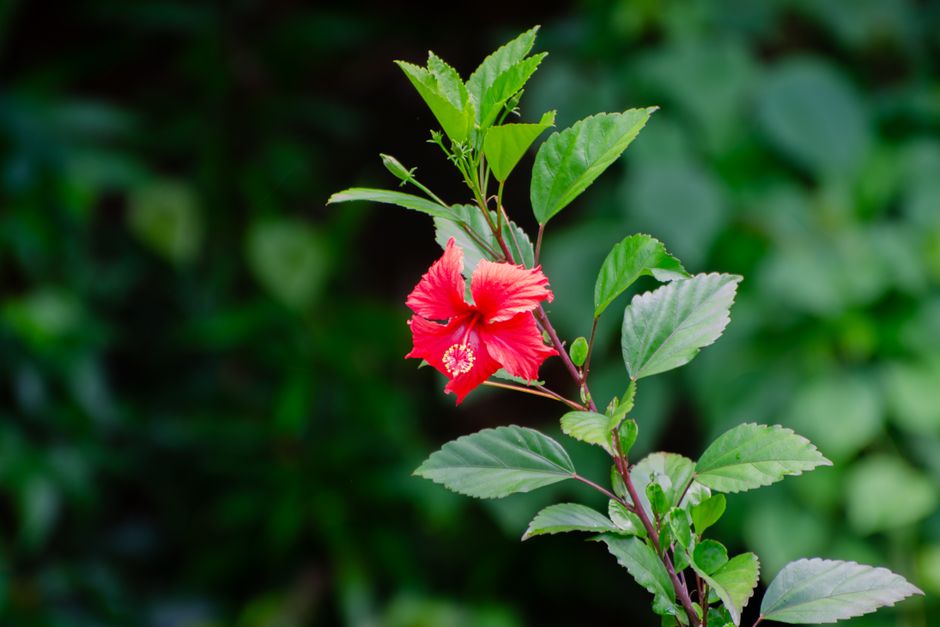
Before you start cutting, it helps to know which type you're working with. In Surrey and the Fraser Valley, nine out of ten hibiscus plants in residential yards are Hibiscus syriacus — Rose of Sharon. Hardy to zone 6, it survives BC winters without much fuss. Deciduous, multi-stemmed, reaches six to fifteen feet if left alone for a few years. Blooms in July and August on new wood, which is the key fact that drives everything about how you prune it.
Tropical hibiscus — Hibiscus rosa-sinensis — is the one with the big, showy flowers you see in Hawaii or on a resort patio. In BC, it lives in a pot. It comes inside in October, goes back outside in June, and never goes fully dormant. Pruning rules are similar but the timing differs.
If your hibiscus lost its leaves in November and came back in April, you have Rose of Sharon. That's what this guide is mostly about.
When to trim a hibiscus tree in Surrey, BC

Late February to mid-March. That's the window in Surrey.
You're waiting for two things at once: frost risk to drop significantly, and the plant to show the first signs of bud activity. Don't wait until it's leafed out — you'll miss the window and lose flowers. Don't start while there's still a real chance of a hard frost — you'll push tender new shoots out right before they get hit.
I reckon the easiest rule of thumb is to check the branch tips. If you see green swelling at the buds, you're at the right moment. Tight, brown, and dry — wait another week.
What happens if you trim late, say June? You lose flowers that season. Rose of Sharon sets buds on new wood early in the growing season. Trim then and you're cutting off this year's blooms. The plant survives fine. But your neighbour's hibiscus will look better than yours for a summer. Small consequence, worth knowing.
How to trim a hibiscus tree: what actually works

Start with clean tools. Bypass pruners wiped down with isopropyl alcohol before you start. Trimming six plants without cleaning between them transfers fungal spores from one to the next. Hibiscus aren't particularly disease-prone, but there's no reason to start with a disadvantage.
Remove the dead and crossing branches first. Before touching healthy growth, take out anything dead (cuts easily, dry pale wood inside), anything visibly diseased, and any branch that's crossing another or growing inward toward the centre. This is the step that actually improves long-term plant health. Everything else is cosmetic.
Find the outward-facing buds. These are the small bumps along each branch where leaves and new branches will grow. The ones facing outward push growth out and up — that's what you want. The ones facing inward push growth toward the centre, creating crossing branches and poor air circulation later. Always cut just above an outward-facing bud, roughly a quarter-inch above it, angled slightly so water runs away from the cut surface.
Cut back by a third. Remove between a third and a half of each branch's length. This sounds aggressive. For hibiscus, it's correct. The plant blooms on new wood — more new growth means more flowers. Going light, just nipping the tips, creates weak twiggy growth at the branch ends and fewer blooms. Cut properly and the plant will reward you.
For an overgrown or neglected hibiscus: you can go harder — up to two-thirds — for a full rejuvenation cut. The plant will come back. It won't flower much that first season. By the following year it'll be better structured and more productive than it has been in years. The ISA Canada arborist directory is useful if you want a second opinion on a severely overgrown specimen before cutting.
Tools that make the job easier
Bypass pruners for anything under three-quarters of an inch in diameter. Loppers for the thicker stems at the base if they've grown over the years. A pruning saw for branches over an inch and a half that loppers won't cut cleanly — forcing a lopper through a branch it can't handle creates a ragged wound.
The mistake most people make: anvil pruners. They work by crushing the stem against a flat edge rather than slicing cleanly. Crushed plant tissue heals poorly and becomes an entry point for disease. Bypass pruners cut like scissors — clean, precise, and better for the plant in every way. If yours are dull, sharpen or replace them. A dull bypass pruner pushes branches sideways rather than cutting through them, and you'll feel it immediately.
You don't need anything specialist for a standard hibiscus trim. Sharp hand tools, a clean cut, the right timing. That's the whole toolkit. Our tree pruning service uses professional-grade equipment for situations where hand tools aren't enough — but for a residential hibiscus, they almost always are.
Common mistakes that set your hibiscus back years

Trimming in fall. The most common one. The plant has slowed down, the structure is visible, you have time. Seems logical. But fall trimming stimulates new growth right before the first hard frosts — that tender growth dies, and you enter winter with fresh die-back rather than a well-hardened plant. Wait for February.
Only trimming the tips. You'll hear this called haircut pruning — taking an inch or two off everything to keep the shape. It feels tidy. The result is a dense knot of weak growth at the perimeter of the plant with very little happening in the centre. The hibiscus looks managed but flowers poorly. Cut properly by a third, and you'll notice the difference within one growing season.
Not removing the crossing and dead branches first. Most people work from the outside in. The right order is to take out the structural problems — dead wood, crossed branches, inward-facing growth — before you do anything else. The final shape follows from that work, not the other way around.
A homeowner near White Rock called us a couple of years back. They'd been tip-trimming their hibiscus every spring for five or six years — just taking the ends off to keep the size down. The plant looked tidy from the outside. Inside: a dense tangle of crossed branches, very little air movement, flowering down to maybe a third of what it should have been producing.
We did a proper rejuvenation cut — back by more than half, clearing all the crossing interior wood. Cost them $400. First season was quiet. Second season, that hibiscus was the best-performing plant in the yard. If they'd been cutting it properly from the start, an annual tidy would have been under $200. The first shortcut always costs the most in the end.
The UBC Botanical Garden has solid notes on Rose of Sharon cultivation for BC conditions, including pruning. Worth bookmarking if you want to go deeper on the plant biology.
When to skip the DIY and give us a call
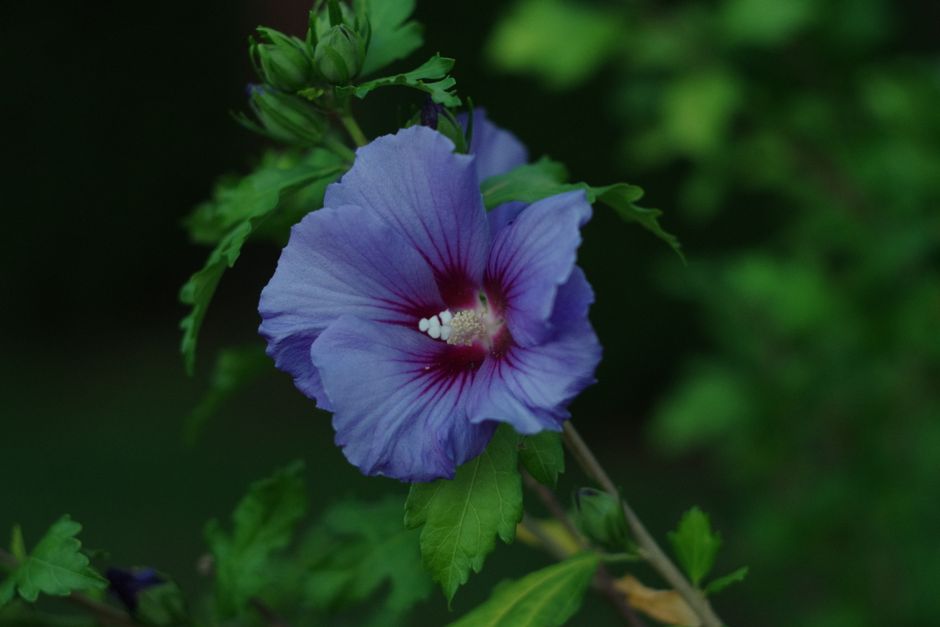
Hibiscus trimming is genuinely a DIY-appropriate task for most homeowners. The plant is forgiving. The technique isn't complicated. You don't need climbing equipment or a chainsaw.
Call an arborist when:
The plant is over twelve feet and requires a ladder you're not comfortable on. Ladder work around shrubs is more awkward than ladder work on a flat surface — branches push back. The risk isn't worth it for a plant that can be dealt with professionally for a few hundred dollars.
It's growing near power lines or eave overhangs. Height plus proximity to structures changes the risk profile considerably. This is a job for someone with the right equipment and insurance.
It hasn't been trimmed in five-plus years and has significant dead wood throughout. A heavily neglected hibiscus benefits from a professional assessment before you start cutting — sometimes what looks like a pruning job is closer to a partial removal.
You're not sure whether it's alive. Scratch the bark on a few branches. Green and slightly firm underneath means alive. Pale, dry, crumbly — dead. A hibiscus that's died back heavily over winter might look like it just needs a trim, but might actually need most of it removed. Worth knowing before you invest two hours in it.
Our consultation is $150, credited toward any work we do. For a hibiscus trim and tidy — depending on the size and condition — you're typically looking at $300–$500 from us. Not every job needs a professional. But when it does, it's usually clear. Read more about what our tree care services cover if you want a sense of where we fit in.