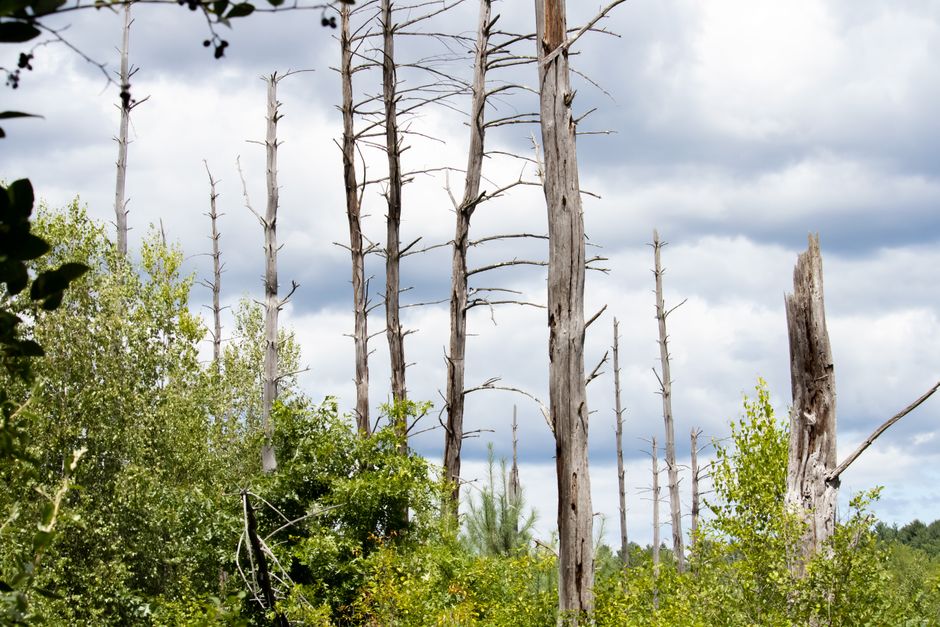
Your tree just dropped every leaf and you're convinced it's dead. Nine times out of ten in October, you've got a perfectly healthy maple doing exactly what maples do. (Deciduous trees drop their leaves. This is normal.) But if it's July, or the leaves simply never came back this spring — keep reading.
Quick answer: A dead tree shows it in five places — failed scratch test, snapping branches, no buds in late spring, loose or cracking bark, and fungal growth at the base or trunk. Any two together is enough to book an assessment with an ISA-certified arborist.
Dead or dormant — the confusion that costs money
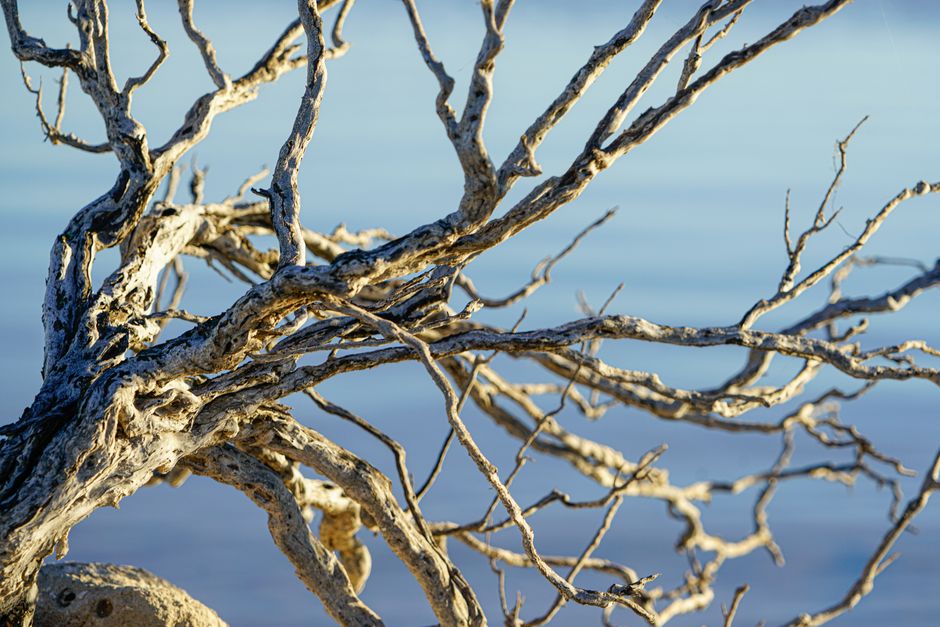
Most dead-tree calls I get in November are for maples. Which are sleeping. Not dead. Sleeping.
A deciduous tree drops its leaves every autumn and looks completely dead until April. That's not dying — it's dormancy. Trying to diagnose a tree in January is like diagnosing someone who's asleep as unconscious. The information isn't there yet.
Rule of thumb: a dormant tree has buds. Small, tight, and not yet opened — but there. If you look closely at a twig in March and there are buds forming at the nodes, that tree is alive. A dead tree has no buds. The twigs look uniform, grey, and brittle all the way to the tip.
The exception is leaves that don't drop cleanly. If it's November and the leaves are brown and hanging rather than turning colour and releasing — the tree may have died before it could let go. That's worth looking at before winter sets in.
Conifers are a different story. An evergreen that turns uniformly brown isn't dormant — it's stressed or dead. Brown tips on a cedar or yellowing patches on a spruce are early warning signs. A full brown-out is an emergency, particularly in summer.
The 60-second scratch test
This is the most reliable thing you can do yourself, without tools, in about sixty seconds.
Find a small twig or branch near the end of a section you're worried about. Scratch the surface with your fingernail — just enough to lift the outer bark, about a centimetre or two.
If the tissue underneath is green or creamy white and feels slightly moist — alive.
If it's brown, dry, and dull — dead.
Do it in three or four spots before drawing any conclusions. I've done this test on trees homeowners were convinced were dead and found green tissue on every branch. I've also done it on trees someone was certain were 'just a bit sad' and had to deliver difficult news. The scratch test doesn't get opinions. It just shows you what's there.
One important note: do it on twigs and small branches, not on the main trunk. Trunk bark is too thick and layered to give you a clean read. The ends of branches are where you'll get the clearest answer.
Branches, buds, and the snap test
A live branch bends. A dead branch snaps clean. That's the whole test.
Pick something you can reach from the ground — nothing overhead, nothing you're going to climb for. Bend it gently toward you. If it flexes and springs back, alive. If it snaps clean with a grey, dry interior — dead.
While you're at it, look for these:
- Branches that haven't leafed out when the rest of the tree has
- Twigs with no visible buds in March or April
- Bark pulling away from the wood at the branch tips
- Small dead twigs dropping from the crown — more than normal seasonal shedding
A few dead branches scattered through an otherwise healthy crown is normal. Trees shed lower branches as they mature. If you're looking at more than a third of the crown showing these signs, the tree has a serious problem.
The cost of removing a declining tree goes up significantly once it's been standing dead for a season or two. Deadwood is harder to work with, more brittle under rigging, and harder to predict during a cut. The earlier you know, the lower the removal cost.
Bark and fungal growth
Healthy bark is tight, firm, and consistent. Bark in decline starts peeling, cracking deeply, or falling off in sheets. If you press on an area of loose bark and hear a hollow sound — or if the bark lifts away with nothing green behind it — that section is dead.
But the sign that gets my attention fastest is shelf fungi.
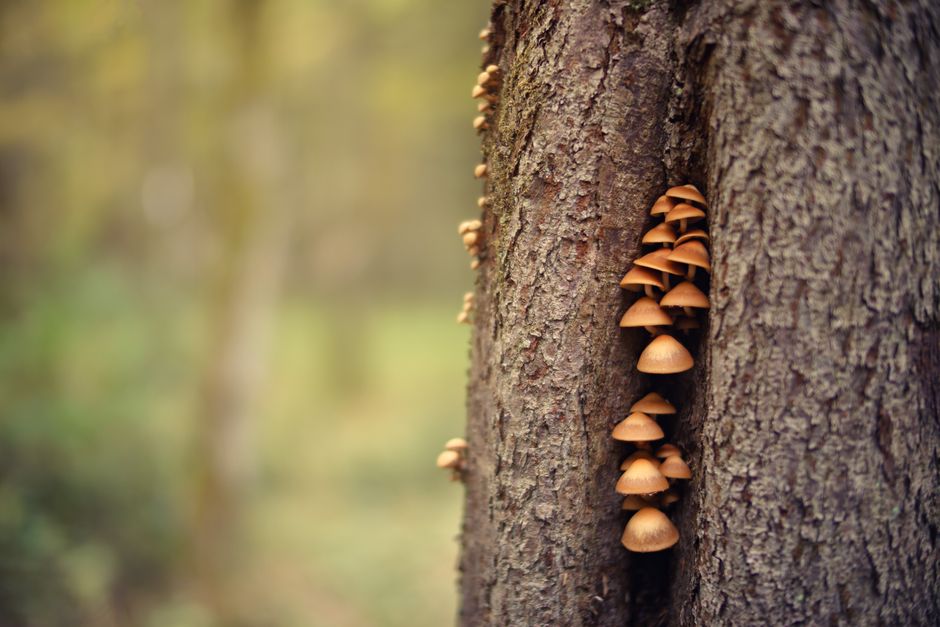
Conks — the hard, bracket-shaped fungi that grow out of trunks or root flares — are not growing on the tree. They are growing through it. The mycelium runs deep into the heartwood and signals decay that is already well advanced by the time you can see it from the outside.
The ISA's guidance on tree hazard assessment treats fungal colonisation as a primary structural failure indicator. Not a cosmetic concern. A structural one.
Mushrooms at the root flare are the same message. The fungus is doing its job: breaking down dead wood. If your tree is showing this, get someone out before the next major windstorm. We get those on the coast — usually between October and March — and that's not when you want to discover your tree was already gone.
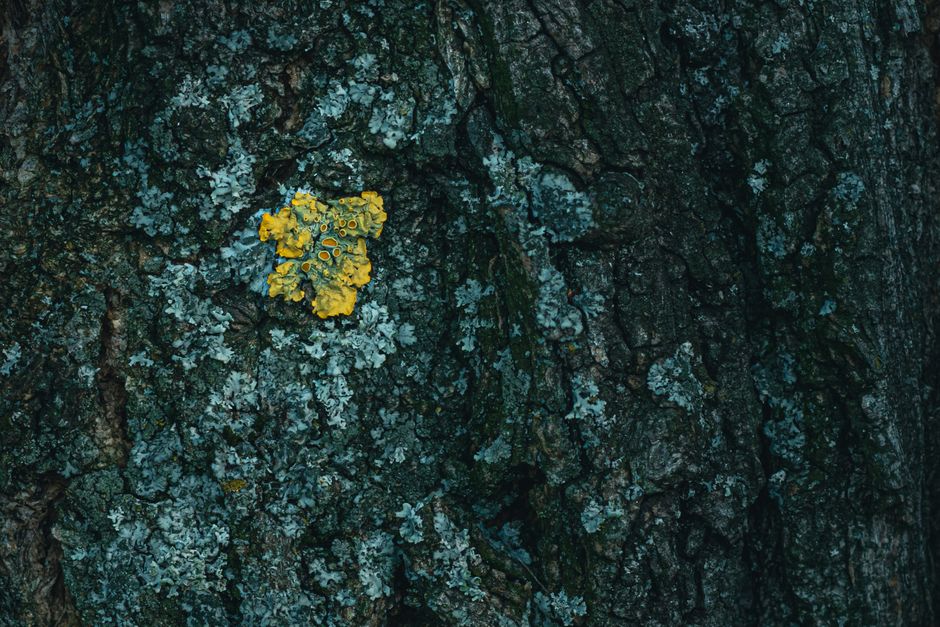
Moss and lichen on bark are not the same thing. Moss on a trunk is normal and doesn't harm a healthy tree. Lichen is an indicator of slow-growing wood or reduced vigour — worth noting, but not a red flag on its own.
When to stop guessing and call an arborist
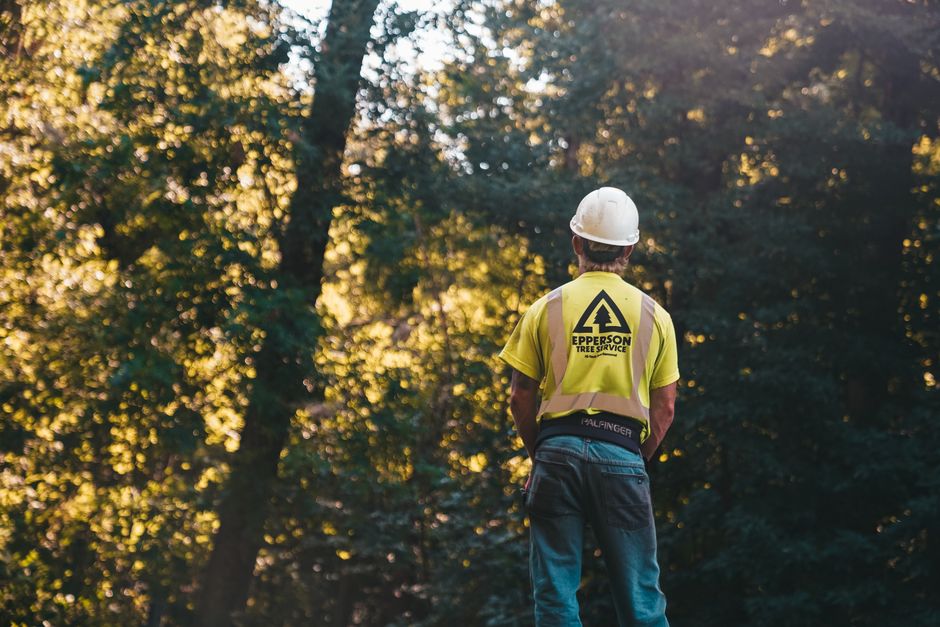
A homeowner in Langley called us a couple of years back after another company quoted $2,400 to remove a 120-year-old Garry oak. The reason: it was leaning and "looked unsafe." They wanted a second opinion before they committed.
I assessed it. The lean was natural growth — decades of reaching toward the light. The dead branches were minor. Crown thinning at $650 and deadwood removal at $300 handled the problem. The tree is still standing. The homeowner kept a heritage tree and saved over $1,400.
This is why I'd always rather you call for an assessment than book a removal based on a visual from the street.
Call when you see two or more of the signs listed above. Call when a large tree near your house has any single red-flag indicator — particularly fungal growth or a trunk that sounds hollow when tapped.
The tree assessment service costs $150, credited toward any work you proceed with. That's the price of a proper on-site look with a written recommendation. For most people, it's either a relief (tree was dormant, all clear) or the thing that stops a 60-foot hazard tree from becoming a garage repair.
According to BC forestry guidance on hazard trees, a tree showing multiple decline indicators near a structure should be assessed by a qualified arborist before the next storm season. In the Lower Mainland, storm season starts in October. That's not a coincidence for when you're reading this.
When not to call us
If your maple looks dead in November and hasn't dropped anything alarming — it's dormant. Don't call an emergency tree line. Book a spring check. We'll assess it when there's enough new growth to give you a clear answer.
If a single branch has come down and it's on the ground with nothing threatening — that's urgent, not an emergency. Give us a call during business hours and we'll book you in. Save the 24/7 line for trees actively threatening structures, power lines, or people.
How long a dead tree stays standing
I reckon most people underestimate how fast the clock runs on a dead tree.
In the BC Lower Mainland, a dead tree has roughly one to three years before it becomes a genuine fall hazard. That's an optimistic range — and it's shorter for species like alder and bigleaf maple, which decay fast in our wet climate. Cedar and Douglas fir hold their structure longer. But even they fail, and they fail suddenly.
The risk isn't a slow lean. It's sudden failure during a windstorm, or after a wet winter followed by a freeze-thaw cycle that fractures already-compromised wood. By the time a dead tree looks dangerous to the untrained eye, it's usually already past the point of stability.
If the tree is within fall distance of your house, a utility line, a fence, or anywhere people regularly walk — remove it this season. Not eventually. This season.
If it's standing alone in a back corner with nothing underneath it, you have more time. Check it each spring. A standing dead tree can also provide habitat value for birds and small mammals, so removal isn't your only option if risk is genuinely low.
What I'd push back on is the idea that "it's been standing fine for years." A tree that's been dead for three years isn't safer because it hasn't fallen yet. It's less safe. Every season that passes, the wood dries and weakens, and the roots lose their grip. It's a timer that doesn't show you the count.