
Your tree has a bee hive in it. Could be the hollow in the oak you've been meaning to look at for two summers. Could be a swarm that showed up on a branch last weekend. Either way, you're standing at a respectful distance wondering who to call. (The bees, for what it's worth, are already sure it's not their problem.)
Short answer: don't spray it. Don't poke it. Don't call a tree company before you know what kind of bee you're dealing with. That last one matters more than most people expect.

Honeybee or wasp: knowing what you're dealing with
This is the first question because it determines everything about how removal goes.
Honeybeesare round, fuzzy, golden-brown. They build a waxy golden comb. A swarm looks like a dense, surprisingly quiet cluster of thousands hanging on a branch. Under BC guidelines, honeybees have significant protections because of their pollination value — you can't simply spray them, and you probably wouldn't want to. A local beekeeper may be willing to relocate the entire colony alive, sometimes for free.
Wasps and hornetsare different. Thinner, shinier, and they build a papery grey nest — tear-drop or football-shaped, often tucked into a tree cavity or hanging under a branch. They're considerably more aggressive than honeybees when disturbed, and a licensed pest control operator handles them. No relocation, no second opinions.
Rule of thumb: if it looks like something from a farmer's market honey stall, call a beekeeper. If it looks like something from a horror movie, call pest control.
For wasp identification and seasonal patterns in BC, Health Canada's guide to wasps and hornets is worth a read.
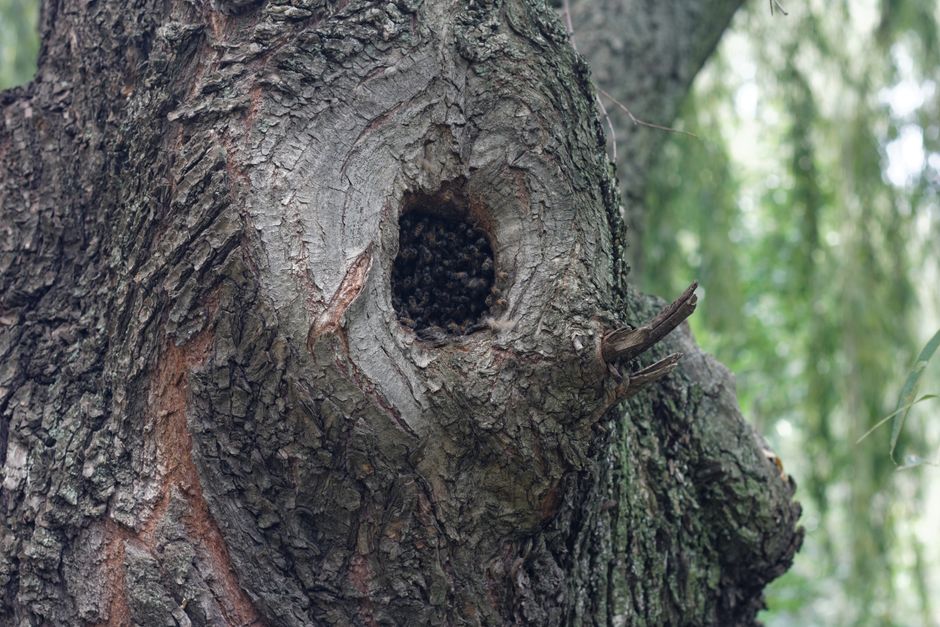
Is the hive harmful to the tree?
A swarm resting on a branch isn't going to damage anything. They're scouting. Nine times out of ten, they move on within a few days once they find a better spot.
A hive inside a hollow is a different conversation — not because the bees are the problem, but because the hollow already existed. Rot, a healed-over wound, an old pruning cut that wasn't made properly. The bees didn't create the cavity; they moved into one that was already forming.
The important part:the hive is a symptom, not the cause. The bees are telling you there's a hollow in the tree. How significant that hollow is — how deep the decay goes, what's structural and what isn't — that's a separate assessment.
A hollow in a small ornamental cherry is a minor thing. A hollow at the base of a 60-foot fir overhanging your garage is a question worth answering properly. Get the bees sorted, then have an arborist look at what's behind them.

Beekeeper vs. arborist: who to call first
Call a beekeeper first if you have an active honeybee colony and you want to try relocation before any structural work on the tree. The BC Beekeepers Association maintains a list of members who do swarm calls — many do them at no charge because they want the colony.
Call an arborist first if the hive is inside a cavity and you have questions about the tree's structural condition, or if reaching the hive requires removing a major branch.
In most cavity hive situations, you'll need both. The beekeeper handles the colony; the arborist handles the tree after the hive is cleared. Work is coordinated. The arborist doesn't start cutting until the pest control or beekeeper side is dealt with.
One thing worth saying plainly: if a tree company's first response to a honeybee hive is "we'll cut it out," that's not the right answer. A beekeeper should have first shot at a live colony. Any company worth calling will tell you that.
Why you shouldn't remove it yourself
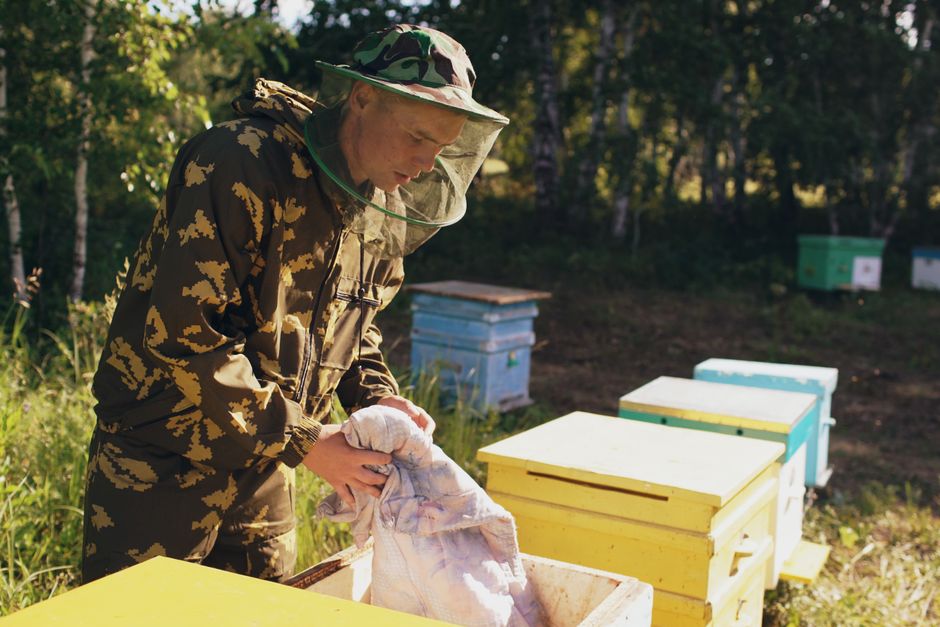
A few times a year, a homeowner calls us after a DIY bee removal went sideways. The story is usually the same — garden sprayer, a ladder, a lot of confidence — and then a very rapid retreat. (And usually a call to the neighbour explaining why they also have bees now.)
Here's the practical reality: a mature honeybee colony has 20,000 to 80,000 bees. Disturbing them without proper protective gear and smoke management doesn't reduce the hive. It makes them defensive. And a defensive swarm doesn't stay in the tree.
Beyond the bees: if the hive is inside a tree, getting to it means cutting into the trunk or removing a major branch. That's the kind of work where a miscut drops 200 kilograms of wood in a direction you didn't intend. Combine that with an active colony and you have a situation that would concern almost anyone, including me.
I reckon homeowners get through a DIY hive-in-tree removal without incident roughly one time in ten. The other nine call us afterward — usually after something involving the ladder, the neighbours, or both.
See our tree assessment and removal services for how we approach complex canopy work safely.
What professional bee hive removal from a tree involves
Surface swarm on a branch:a beekeeper can often brush or shake the swarm into a collection box in under an hour. Clean, non-destructive, the colony survives and moves to a managed hive. This is the ideal outcome. If the swarm is accessible, it's often the fastest resolution too.
Established hive inside a cavity: more involved. The beekeeper needs access to the comb. That may require an arborist to open up the cavity or remove a branch section first. The work is sequenced, not simultaneous. Beekeeper assesses what access they need, arborist provides that access, beekeeper relocates the colony, arborist completes any remaining tree work.
Hive inside a structurally compromised hollow: the arborist assessment comes first. Sometimes the cavity is in a branch that should come down regardless of the bees. Sometimes the trunk decay is significant enough to change the whole picture. That assessment happens before any cutting starts — not after.
I've been working trees in Surrey and the Fraser Valley for fifteen years. The first time I assessed a hollow fir with an active colony in it, the homeowner's main concern was the bees. The bees were the straightforward part. The 30% trunk decay behind them was the real conversation.
What it costs — honest numbers
Nobody publishes these numbers. We think they should be public.
| Service | Typical cost (CAD) |
|---|---|
| Beekeeper swarm relocation (accessible) | Free to $300 |
| Licensed pest control — wasps/hornets | $150–$350 |
| Arborist tree assessment | $150 (credited to work) |
| Branch removal for hive access (single branch) | $400–$800 |
| Deadwood / cavity work after hive cleared | $250–$600 |
Honestly — the "bee hive removal from tree" quotes you find online usually cover only the pest control side. If there's arborist work involved, get clarity on that before you agree to anything. The full scope is beekeeper or pest control, plus arborist for any tree work that requires it.
Get a second opinion if someone quotes you removal of a healthy-looking tree because of a hive. A lot of trees get taken down that didn't need to be. In 15 years and 3,200+ jobs, I've seen this exact situation more than I'd like. The tree is often fine.
When to leave the hive alone
This is the answer most tree companies won't give you, which is exactly why I'm giving it.
If the hive is in a back corner of your property, not near a path or play area, and the tree shows no structural concerns — you can leave it. A healthy honeybee colony actively helps your garden and the broader neighbourhood. They're not going anywhere unless they decide to.
Leave it alone if:
- It's a surface swarm on a branch — it'll move on within days as the scouts find a better spot
- It's in an area with no foot traffic and no structural concern in the tree
- It's been peacefully in place for a season with no aggressive incidents
That said: if you're unsure about the tree's structural condition, that question is worth a quick call. An assessment costs $150. That's a reasonable price for knowing whether the hollow behind your bees is something to monitor or something to act on.