
A hedge takes years to grow and about an afternoon to kill if you plant the wrong species or shape it badly in the first two seasons. That's not meant to put you off. It's meant to stop you making the mistake most people make, which is buying whatever the garden centre has on the front table in spring and hoping for the best.
Quick answer: To grow a hedge, choose a species suited to your site conditions, plant bare-root or container stock in autumn or early spring, space plants 30–60cm apart, cut them back by a third at planting to encourage low branching, and trim lightly every year from the start. The shaping decisions you make in years one and two determine what the hedge looks like for the next thirty.
Here's the full picture, starting with the question most guides skip.
Is a hedge actually what you want?
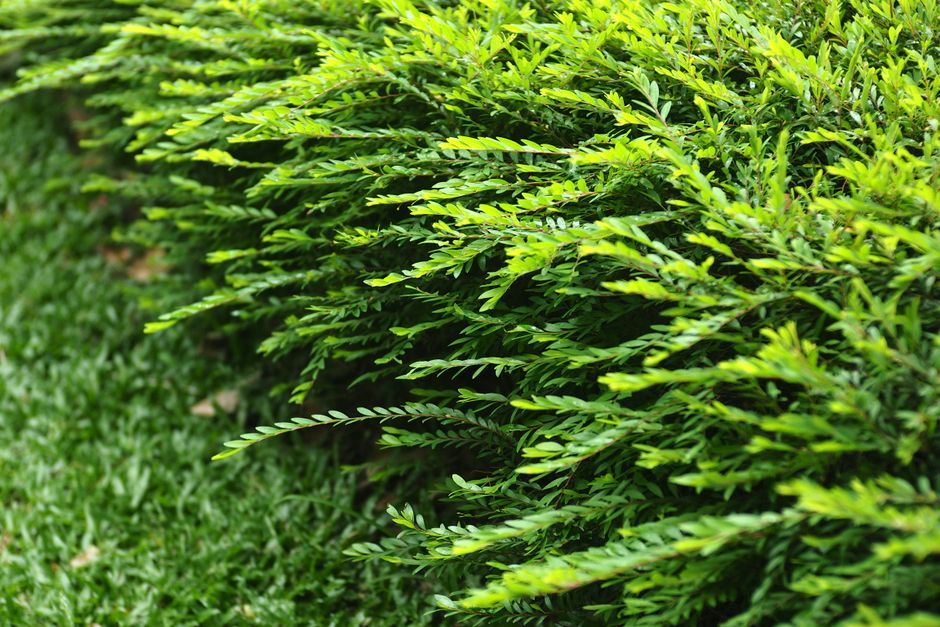
Hedges are slow. A fence is fast and cheap and goes up in a day. If your only goal is privacy and you need it now, a fence wins. A hedge wins if you want something that improves every year, supports wildlife, acts as a windbreak, and adds real value to the property — but you need to be patient.
There are two main hedge types and the choice shapes everything else:
Formal hedges are clipped to a defined shape — tight, dense walls like you see in older Surrey neighbourhoods. They require regular trimming (twice a year, sometimes three times for fast growers) but give you a clean, structured look. Yew, boxwood, and western red cedar are the usual choices.
Informal or wildlife hedges are left to grow more naturally, trimmed once a year at most. Hawthorn, snowberry, and red osier dogwood are good examples. They flower, fruit, and provide habitat — and they need far less work once established. They also look messy to anyone expecting a formal garden, so be honest with yourself about which you actually want.
Once you've decided, species choice follows logically.
Best species for Surrey and the Lower Mainland

I reckon the single biggest mistake Surrey homeowners make is planting Leyland cypress. It's sold everywhere, grows fast, and looks tidy in the pot. The problem is it wasn't built for this climate.
A few years back, a family in Langley came to us after their Leyland cypress row — planted about eight years before — had started failing section by section. Seridium canker, bagworm, and two storm events had taken out four of the twelve plants. The remaining eight were struggling. We replaced the whole row with a mix of western red cedar and native hawthorn. Those plants are now thriving, and the homeowner has stopped calling us every spring to deal with another dead section.
Nine out of ten times, native and near-native species outperform introduced ones here. They're adapted to wet winters, dry summers, and the specific pest pressure of the Lower Mainland. BC Native Plant Society has good species guides if you want to go deeper.
Good species choices for the Lower Mainland:
Western red cedar (Thuja plicata) — the best all-round formal hedge for this region. Fast-growing once established, dense, evergreen, and genuinely adapted to BC. Spacing: 60–90cm.
English hawthorn (Crataegus monogyna) — thorny, wildlife-friendly, and extremely tough. Grows well in sun or partial shade. Good for informal or mixed hedges. Spacing: 30–45cm.
Pacific ninebark (Physocarpus capitatus) — a BC native that tolerates wet soils, produces white flowers in spring, and provides good bird habitat. Informal use only. Spacing: 60cm.
English laurel / cherry laurel (Prunus laurocerasus) — fast and easy but not native, can self-seed into natural areas, and is on BC's invasive plant watch list. Fine in a contained urban setting with regular management — just know what you're taking on.
Yew (Taxus baccata) — slow but exceptional for formal hedges. Very long-lived and responds well to hard cutting. Keep away from livestock and children (berries are toxic). Spacing: 45–60cm.
Avoid: Leyland cypress (disease-prone, storm-vulnerable), privet in wet areas (root rot), and any species recommended for UK or Australian conditions that you found on a general gardening site (different climate, different results).
Planting your hedge — the right way
The best time to plant is autumn (October to November) or early spring (February to March). In the Lower Mainland, mild wet winters do the work for you — roots establish without heat stress and you don't need to water constantly through the first season.
Here's the process:
1. Mark the line. Use string and stakes. A hedge planted in a gentle curve looks deliberate. A hedge planted in an accidental curve looks like a mistake. Take ten minutes to get the line right before you dig anything.
2. Dig a trench. At least 30cm deep and 45cm wide. Wider if your soil is compacted or heavy clay — which it is, in many parts of Surrey and Langley. Work in compost or well-rotted manure through the full trench, not just the planting holes. This is the step most people skip and most hedges pay for later.
3. Plant at the right depth. Match the soil level on the stem to the ground level. Too deep and the stem rots. Too shallow and the roots dry out. Straightforward, but worth saying.
4. Cut back at planting.This is counterintuitive but important. Remove the top third of the main stem and any long side shoots. This forces energy into low branching and gives you a dense hedge from the base up. Skip this step and you'll spend ten years trying to fix a bare bottom third.
5. Mulch. A 7–10cm layer of bark mulch around the base suppresses weeds, retains moisture, and feeds the soil as it breaks down. Keep it away from the stem itself.
6. Water through the first dry season.That means June through September. A newly planted hedge will look fine until it doesn't, and by the time it looks stressed it's already struggling. Weekly deep watering is better than daily light watering — it encourages roots to go down rather than stay near the surface.
Shaping — start young, not late

The shape you want is a trapezoid: wider at the base than at the top. This isn't an aesthetic choice — it's physics. A hedge that's wider at the top shades its own lower branches, which then go bare. A bare-bottomed hedge is difficult to fix and, in my experience, the most common mistake people make when trimming hedges.
For the first two years, trim lightly — not hard. You're building structure. Tip-prune side shoots by a few centimetres to encourage bushy growth. Don't let the hedge get away from you in height before the sides are filled in. A 1.8m tall but 30cm wide hedge is basically a row of thin sticks with ambitions.
Rule of thumb: trim twice a year for formal hedges (late spring after the first flush, and again in late summer), once a year for informal ones (late winter before nesting season begins, or late summer once birds have finished nesting — typically after 1 September).
Use a guide string or a board at the angle you want when cutting the sides. Freehand trimming looks fine while you're doing it and then looks like a wave pattern from the kitchen window. Ask me how I know.
What to expect in years one through three
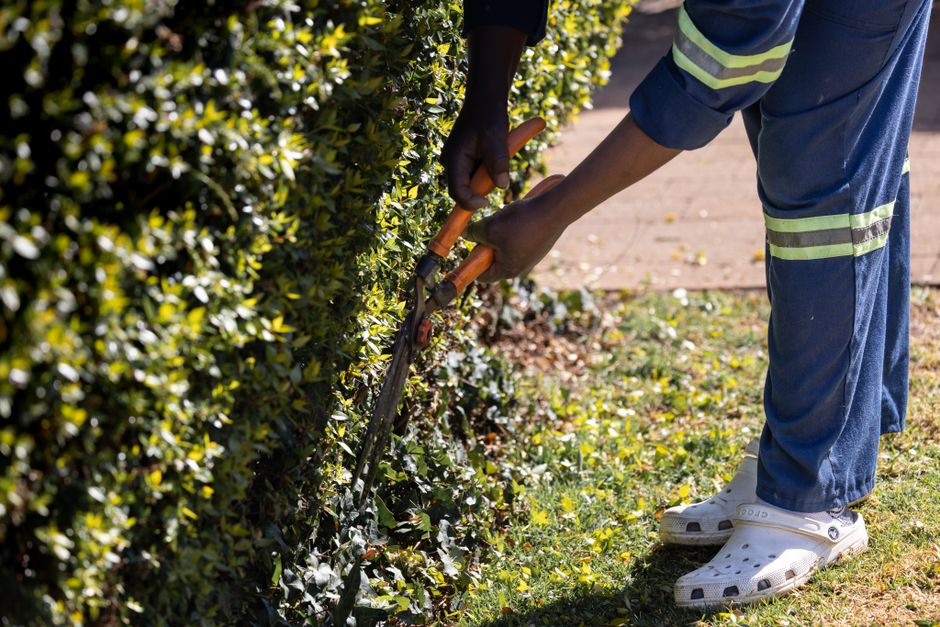
Year one:Not much happens above ground. This is the root-establishment year. Plants may look the same in October as they did in March. That's normal. What's worrying is if they go bronze or start dropping leaves in midsummer — that's stress, usually from insufficient watering. Light trim once to encourage branching. Mulch again in late autumn.
Year two:Growth picks up. For fast-growing species like cedar, you might gain 30–50cm. Trim twice — once in late spring, once in late summer. Start forming the taper now. Don't let individual plants get ahead of others; trim back the leaders to even the line.
Year three onwards: The hedge starts to look like a hedge. For most species, this is when it begins providing meaningful privacy and windbreak. Continue twice-yearly trimming, check for any gaps (usually caused by one plant dying — replace immediately or the gap gets harder to fill), and top-dress the base with compost each spring.
Once a hedge is established, the main annual hedge maintenance service most homeowners book us for is two cuts per year plus an inspection for disease or structural issues. That's usually all it takes.
When not to call us
If your hedge is under two metres tall and you're comfortable using manual shears or a hedge trimmer from the ground — trim it yourself. There's nothing complicated about cutting a low hedge if you take the time to set a guide string and work methodically. Timing the cut correctly matters more than technique for most domestic hedges.
Call us when:
The hedge is over 2.5 metres and you need a ladder. Working at height with a powered trimmer is where most hedge injuries happen. It's not worth it.
The hedge is growing against or close to a structure, fence, or boundary where cutting in the wrong place could create a legal or property dispute.
You've got a hedge that's gone years without trimming and needs renovation pruning. Hard rejuvenation cuts require knowing which species respond to being cut back hard and which won't recover. Most conifers will not regrow from old wood. Most deciduous shrubs will. Getting this wrong means starting over.
Frequently asked
- How do you grow a hedge from scratch?
- Choose a species suited to your light and soil conditions, plant bare-root or container stock in autumn or early spring, space plants 30–60cm apart depending on species, and cut back by a third at planting to encourage low branching. Water through the first dry season and mulch the base each spring. Most hedges take 3–5 years to reach a useful height.
- How long does it take to grow a hedge?
- Most hedges take 3–5 years to reach a useful privacy height of 1.5–2 metres, though fast-growing species like cedar or cherry laurel can do it in 2–3 years. Slower native species like hawthorn or hazel take longer but are generally more resilient and lower maintenance in the long run.
- What is the best plant for a quick-growing hedge in BC?
- For speed, western red cedar is the most reliable fast-growing option that actually suits the Lower Mainland climate. Cherry laurel grows quickly too but is not native and can have disease issues. Avoid Leyland cypress — it's commonly sold but struggles here with canker, bagworm, and storm damage.
- How far apart should hedge plants be spaced?
- As a rule of thumb: 30–45cm apart for small or upright species like boxwood and yew; 45–60cm for medium shrubs like hawthorn and hazel; 60–90cm for large-growing species like cedar or laurel. Closer spacing gives a faster result but costs more at planting. Wider spacing takes longer but each plant develops a stronger root system.
- Should I trim a new hedge in the first year?
- Yes, and sooner than most people expect. Cut the main shoots back by a third at planting time to encourage branching low on the plant. Light trimming in year one and two builds the dense structure you want. Leaving it alone until it reaches the height you want usually results in a tall, bare-bottomed hedge that's hard to fix.
- When is the best time to plant a hedge in Surrey BC?
- Autumn (October to November) or early spring (February to March) are the best windows. The Lower Mainland's mild, wet winters mean roots establish well without summer heat stress. Avoid planting in July or August unless you can water daily.
- How do you make a hedge thicker at the bottom?
- Taper the sides so the hedge is wider at the base than the top. This ensures sunlight reaches the lower branches, which is the main reason hedges go bare at the bottom. Hard-prune straggly side growth in early spring to encourage bushy regrowth. If the base is already bare and woody, renovation pruning — cutting the whole hedge back hard over two years — is often the only fix.
- Do you need to fertilise a new hedge?
- Compost worked into the planting trench is usually enough for the first year or two. A balanced slow-release fertiliser in early spring helps during the establishment years. Once a hedge is mature and well-established, most species are fairly self-sufficient given the rainfall we get in the Lower Mainland.