
Yes, you can plant a new tree where an old one came down. But nine out of ten times, planting 1–2 metres away from the old spot gives your new tree a better start. (Trees, like some houseguests, rarely leave a place better than they found it.)
The old tree left behind decomposing roots, depleted soil, and potentially whatever fungus or disease caused its problems in the first place. Your new sapling will be fighting all of that from day one.
Here is why the same hole works against you, how long to actually wait, and which species thrive in Langley/Aldergrove and the Fraser Valley once you get the spot right.
Why the same spot fights back
Three things work against you when planting in the exact same location.
Depleted nutrients. A mature tree mines the soil for decades — nitrogen, phosphorus, potassium, the inputs your new sapling needs most. That ground is not empty exactly, but it has been working hard and it is not generous.
Root decomposition. The old root system is still breaking down underneath. Voids open as root mass rots. Your new tree hits patches of inconsistency — firm in one spot, soft and saturated in the next — right when it is trying to establish.
Soil-borne pathogens. If the original tree declined due to disease — honey fungus (Armillaria), Phytophthora root rot, or similar — those organisms remain in the soil and can persist for years without a host. Plant the same species in the same hole and you have handed the problem a fresh target.
Moving 1–2 metres sideways sidesteps most of this.
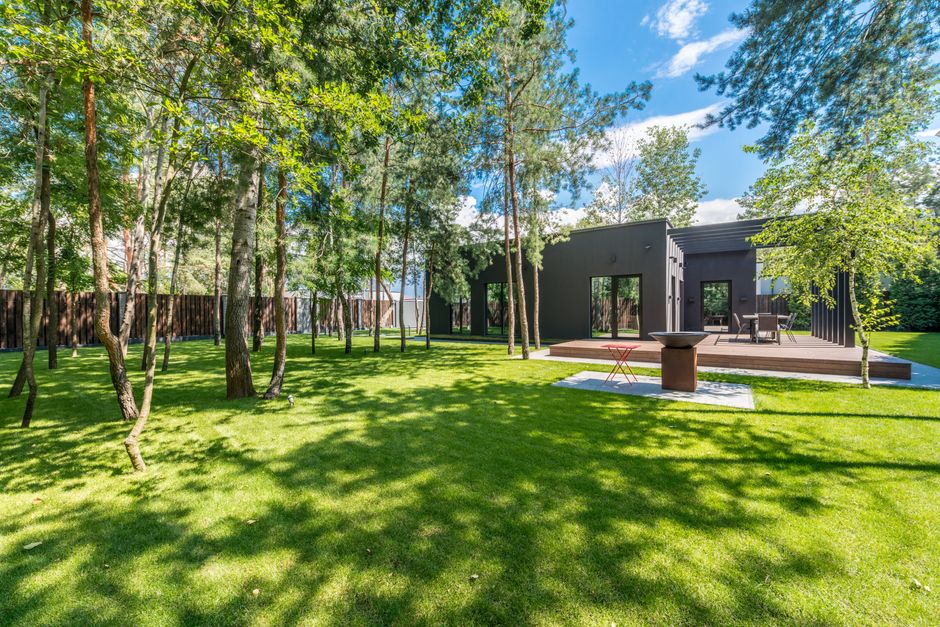
The stump grinding sawdust problem
Stump grinding leaves a volume of wood chips mixed into the soil. That wood is high in carbon and low in nitrogen. As it decomposes, bacteria pull nitrogen from the surrounding soil to do it — meaning the ground actively robs nitrogen from anything trying to grow in it.
Plant a tree in that spot right away and it will struggle through the whole establishment period, showing pale leaves and slow growth that looks like disease but is really just starvation.
Rule of thumb: give the sawdust at least 6 months before planting. Work in nitrogen-rich compost or a balanced fertiliser to counteract the deficit. Most homeowners never hear this because nobody mentions it during the job.
If we handle the stump grinding as part of your removal, we flag this before we leave. Saves the grief of wondering why your replacement tree looks rough a season later.

How long to wait before replanting
The timeline depends on where you are planting and why the original tree came down.
- Same spot, same species: 12–18 months minimum. You need root decomposition and pathogen die-down.
- Same spot, different species: 6–12 months, depending on whether disease was involved.
- Offset by 1–2 metres: plant as soon as the stump is ground and the site is stable.
If the original tree failed due to soil-borne disease, wait longer and consider a professional soil assessment. The Canadian Food Inspection Agency can point you toward testing if you suspect a specific pathogen remains.
Langley/Aldergrove's climate helps: wet winters accelerate root decomposition faster than colder inland regions. Six months of autumn and winter rain does real work. But the nitrogen deficit from sawdust stays regardless of season — do not skip the compost.
If you must plant in the same hole
Sometimes the spot matters — the sight line, the drainage, the position relative to the house. Fair enough.
If you are going ahead regardless:
- Remove as much old root material as physically accessible
- Replace at least 50% of the fill with fresh topsoil
- Work compost in generously — do not be stingy
- Choose a different species than the original
- Skip the first growing season after grinding
If the original tree died of disease, drench the soil with a broad-spectrum fungicide before planting. It will not sterilise everything, but it reduces the pathogen load enough to give your new tree a fighting chance.
The International Society of Arboriculture has detailed guidance on planting depth and backfill — two areas where homeowners most commonly go wrong.
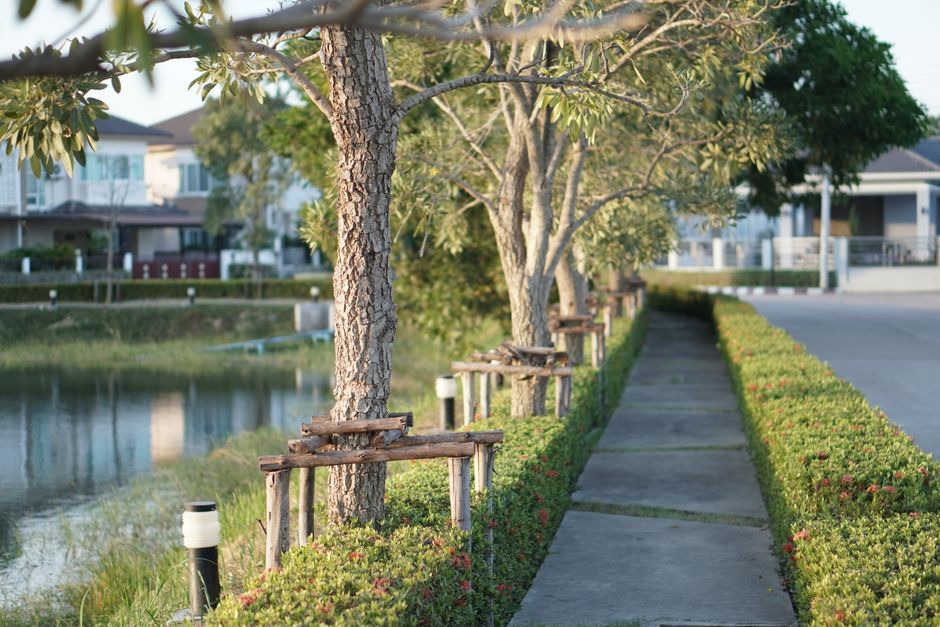
Best trees to plant in Langley/Aldergrove after a removal
A homeowner in Cloverdale had a row of Leyland cypress — not native to BC, not suited to our climate — that kept failing. Disease, die-back, the same story every couple of years. He asked what to do with the space.
I recommended Sitka spruce and western red cedar. He thought about it, then did it. Those trees thrived. He has been telling neighbours to call us ever since because, as he puts it, we know what actually grows here.
That is the whole argument for native species. They are adapted. They know this soil and this weather. And they live extraordinarily long — a western red cedar can reach 500+ years; a Douglas fir 500–750 years. A struggling Leyland cypress that barely makes a decade is not a fair comparison.
For Langley/Aldergrove and the Fraser Valley, I reckon these are the strongest choices after a removal:
- Western red cedar — suited to moist conditions, long-lived, and genuinely beautiful on a residential property.
- Douglas fir — among the most resilient trees in BC. Does best on well-drained sites. Lifespan measured in centuries.
- Garry oak — slower-growing but heritage specimens in this region are 200+ years old. Plant one for the people who live here after you.
- Bigleaf maple— the Fraser Valley's underrated champion. Fast-establishing, tough, and beautiful. Most people do not appreciate them until they are gone.
Avoid Leyland cypress and most ornamental non-natives. They struggle here — not sometimes, consistently.
When to call an arborist — and when not to
Planting the tree itself is usually fine to handle yourself. Site preparation is where people run into trouble.
When you genuinely do not need to call us: the removal happened 2+ years ago, the stump is fully decomposed, you are planting 2 metres away, and you are choosing a healthy native species. In that case, save the $150 and put it toward the tree. I mean that.
When a professional assessment is worth it: you are planting near the house or underground utilities, the original tree died of disease and you are unsure what remains in the soil, or you want confirmation on species and placement before anything goes in the ground. A $150 consult is considerably cheaper than replacing a second failed tree two seasons later.
Give us a call if you want a second opinion before you plant — or if you just want us to tell you that you do not need one. Either answer is fine.